Article at a GlanceThe explosive spread in 2025 of Ghibli-style images, Nano Banana-based 3D figurines, and AI videos such as “Anx Hamzzi Kim” represents a new cultural phenomenon emerging from the convergence of technological advancement, emotional branding, hyper personalization desires, and fandom-based community structures. Generative AI provides users with an “instant, high-quality creative experience.” Users, in turn, embrace this as a tool for self-expression and collective play, becoming active “prosumers.” Characters are no longer fixed IPs created by companies but fluid content that is continuously transformed and reinterpreted according to users’ faces, preferences, and emotions. Characters created by consumers can immediately expand into diverse business domains, including digital personas, brand mascots, and virtual models. In this era, companies must adopt core strategies centered on consistent persona management for user-generated characters, multi-platform distribution strategies, the integration of technology and emotional storytelling, monetization based on customized merchandise and licensing, and systems for real-time experimentation and rapid feedback.
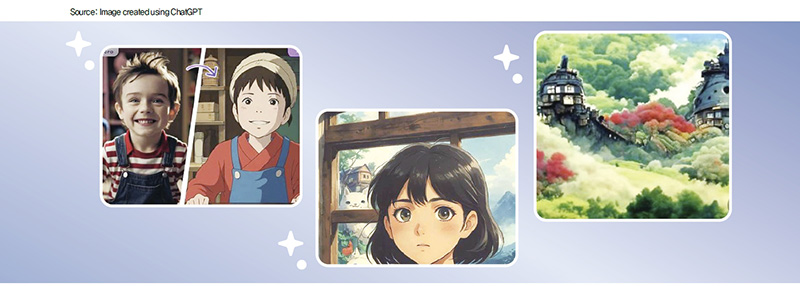
“Draw it in Ghibli-style.” It was a single line of prompt that instantly turned the AI image generation feature of “GPT-4o,” unveiled by “OpenAI” on March 25, 2025, into a global sensation. As users began transforming their photos into Ghibli-style images and sharing them on social media (SNS), trends in AI image and video generation exploded in earnest. This feature, which converts a user into a Ghibli-style animation protagonist within seconds using just a single photo, generated a cumulative 500 million images within three months of its launch, while related hashtags on TikTok and Instagram Reels surpassed 2 billion views. This marked a decisive moment when generative AI images shifted from being simple digital filters to a new way of expressing “personal identity.”
This momentum accelerated further with the emergence of Gemini-based “Nano Banana.” Users moved beyond simply converting photos into animation styles and began “recreating themselves as 3D figurines.” By using Nano Banana, users could generate realistic 3D figurines with just a single photo and a short text prompt. While preserving the originality of the source, the tool allows style changes such as clothing and photo compositing edits, making it easy for anyone to transform their desired subject into a figurine. This, in turn, fueled the spread of the AI figurine creation trend across social media (SNS).
The protagonist character of subsequent AI videos, “Anx Hamzzi Kim,” completed a distinctive identity by expressing emotions, facial expressions, and speech patterns consistently and naturally across short-form platforms such as TikTok and YouTube, earning strong resonance from Millennials, Generation Z, and Alpha Generation audiences. The Anx Hamzzi Kim channel surpassed 500,000 subscribers within three months and has now established itself as a trend-leading emotional character brand through collaborations with prominent brands ranging from “Sevenbrau Brewery” and “Salady” to “Apple iPhone”.
Copyright Ⓒ 동아비즈니스리뷰. All rights reserved. 무단 전재, 재배포 및 AI학습 이용 금지





 경제·경영 질문은