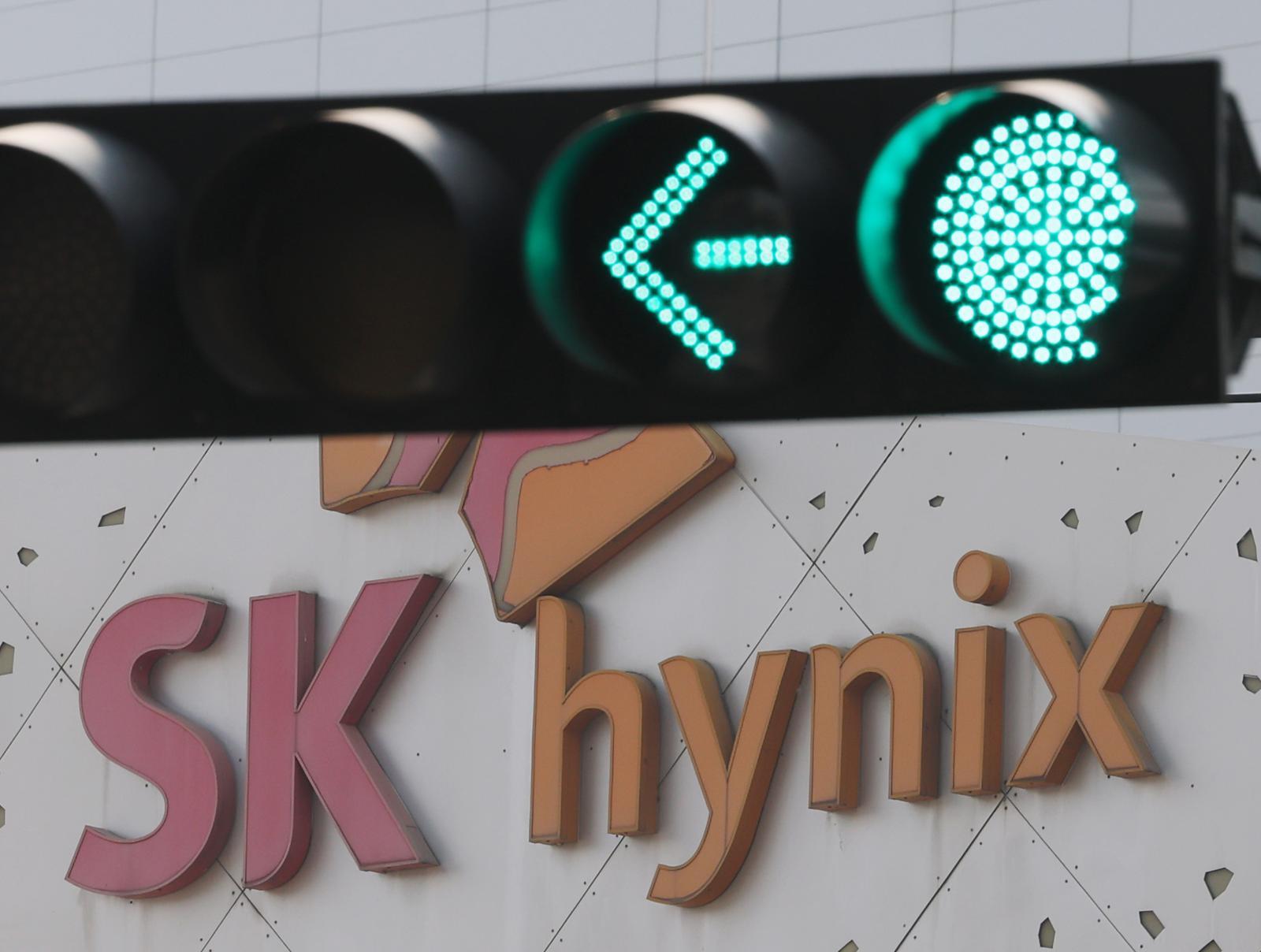
View of SK hynix headquarters in Icheon, Gyeonggi Province. 2026.2.12/News1
South Korea’s major conglomerates are concentrating investment in the United States, which is regarded as the “heart” of the artificial intelligence (AI) industry.
Samsung Electronics, LG Group, and SK hynix are establishing AI-focused entities in the US or expanding equity investments in promising startups through in-house venture capital (VC) and corporate venture capital (CVC) units, in a push to expand their “AI territory.”
This move reflects a sense of crisis that without establishing a presence in Silicon Valley—where global AI capital and talent are being drawn in like a black hole—they could fall behind in the race for leadership in future technologies, going beyond a simple strategy of targeting overseas markets.
● SK hynix establishes US entity for AI investment… Samsung and LG also expanding AI investment in the USOn January 28, SK hynix officially announced plans to establish an AI solutions company in the United States that will oversee AI investment and be responsible for cooperation with the local ecosystem. The company made clear its intention to move beyond its semiconductor hardware-centered business structure and expand into AI software and solutions.
Having secured a leading position in the high bandwidth memory (HBM) market, SK hynix plans to use the establishment of this entity as a springboard to accelerate strategic investment and collaboration with promising AI companies in the US.
In particular, the company aims to strengthen its technological capabilities related to the construction and operation of AI data centers, with a strategy to evolve from being a simple memory supplier into a core partner in AI infrastructure. This reflects a vision to expand its influence across the entire AI value chain—from semiconductor production through to service implementation—and is seen as a concrete realization of SK Group Chairman Chey Tae-won’s “AI-centered growth strategy.” Chey’s recent visit to the US, during which he met consecutively with Nvidia CEO Jensen Huang, Broadcom CEO Hock Tan, Microsoft CEO Satya Nadella, Meta CEO Mark Zuckerberg, and Google CEO Sundar Pichai, is interpreted as an extension of this trend.
Samsung Electronics building in Seocho-gu, Seoul. Newsis
Samsung Electronics and LG Group are also increasing investment in US AI and robotics startups via in-house VCs and CVCs. Samsung Electronics is reported to have invested more than USD 100 million last year in over 10 US AI startups through Samsung Next, its investment arm. Representative examples include Music AI, which uses AI technology to separate and edit vocals or instrument sounds from audio tracks, and SafelyYou, which detects falls among the elderly in real time and alerts caregivers or guardians. Technology companies that use AI platforms to solve everyday problems have been included among the investment targets.
LG Group, for its part, is continuing to invest in the “ABC (AI, Bio, Cleantech)” sectors, which it has identified as future growth engines, mainly through its CVC, LG Technology Ventures. Representative investments include humanoid robot startup Figure AI and Skilled AI, which develops general-purpose AI technology for robots. Figure AI is working with OpenAI to develop robots that can communicate with humans and carry out tasks, while Skilled AI is regarded as a company that builds “AI brains” applicable to various types of robots.
● “Investment must be focused on the US, where capital and talent are concentrated”The push by domestic conglomerates to accelerate investment in the US is underpinned by the overwhelming difference in market size and pace of technological advancement. According to an analysis by the Korea Chamber of Commerce and Industry (KCCI) of venture investment statistics from the OECD-affiliated AI Policy Observatory, 72% of global AI venture investment in the first to third quarters of last year was concentrated in the United States. By contrast, the amount flowing into South Korea accounted for only about 1% of the global total. In a structure where capital disparity directly translates into technological disparity, US startups are rapidly advancing their technologies on the back of abundant funding.
In addition, Silicon Valley is considered the world’s largest “AI talent reservoir,” where large numbers of engineers from global big tech firms such as Google, Meta, and OpenAI are launching startups. The prevailing view in business circles is that, to secure the most advanced foundational technologies, companies are effectively compelled to invest in regions where both capital and talent are heavily concentrated.
Observers inside and outside the business community are also paying attention to the possibility that this trend will not end with short-term increases in investment, but could lead in the long term to a shift in research and development bases and business centers. This underscores the severity of the concern that, if they fail to gain a technological edge in the US, Korean companies could lose ground in global competition. At the same time, there are concerns that the expansion of overseas investment by domestic companies could relatively weaken the AI ecosystem at home.
ⓒ dongA.com. All rights reserved. Reproduction, redistribution, or use for AI training prohibited.
Popular News