Article at a GlanceThe revival of “UNIQLO,” which had struggled as the fallout from the COVID-19 pandemic in South Korea was compounded by a domestic boycott of Japanese brands, has attracted renewed attention. In 2024, its sales in South Korea recovered to the 1 trillion KRW level for the first time in five years, while in Japan it recorded sales of 1.026 trillion yen (about 9.5254 trillion KRW) over the past year, breaking through the “1 trillion yen” threshold. By reducing the number of stores and strengthening the fundamentals of top-performing locations through a “scrap-and-build” strategy, UNIQLO improved efficiency. It differentiated itself with a “LifeWear” philosophy focused on clothing designed to be worn for a long time, rejecting the “fast fashion” trend often regarded as the essence of SPA. Collaborations with renowned designers added diversity and appeal to its existing “economies of scale.” It stands as a successful case of redrawing a growth curve through strategic transformation amid crises.
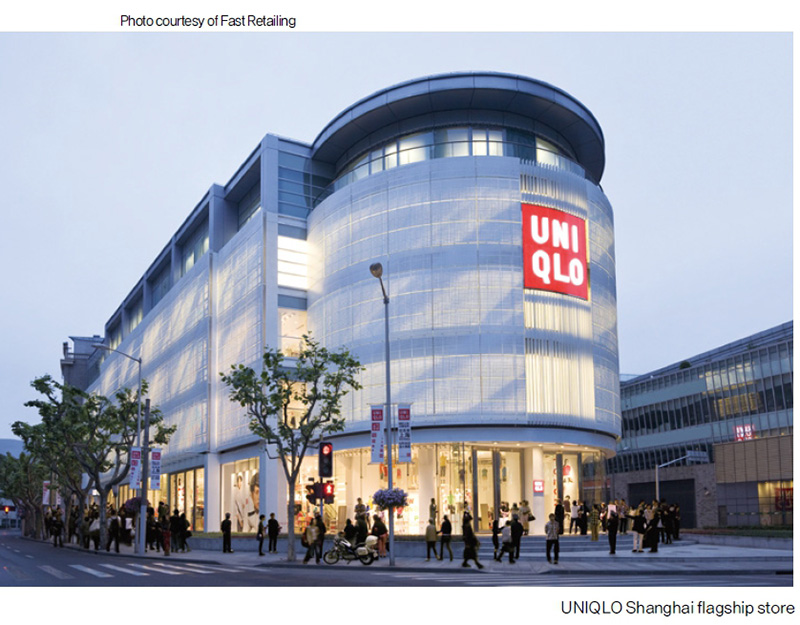
In 2025, a major upheaval that shook the global fashion industry occurred. Fast Retailing, the parent company of the Japanese SPA
1
brand UNIQLO, achieved its best-ever performance, surpassing Kering’s 2024 revenue, the French luxury group that operates “GUCCI,” “Bottega Veneta,” and “Balenciaga.” From September 2024 to August 2025, Fast Retailing posted revenue of 3.4 trillion yen (about 32.27 trillion KRW) and operating profit of 551.1 billion yen (about 5.23 trillion KRW). Compared with the previous fiscal year, revenue rose 9.6 percent and operating profit increased 13.6 percent, enabling the company to overtake Kering’s 2024 revenue of 17.2 billion euros (about 28.67 trillion KRW). Given Fast Retailing’s business structure, which centers on reasonably priced casual fashion brands such as GU, Theory, and J Brand, the achievement is even more exceptional.
These results are widely seen as being driven by UNIQLO, the largest brand within the group. As of August 2025, roughly 2,500 of Fast Retailing’s approximately 3,500 stores worldwide are UNIQLO locations. Growth has been especially explosive in Japan, where the brand achieved sales of 1.026 trillion yen (about 9.5254 trillion KRW) over the one-year period, breaking through the 1 trillion yen mark. In overseas markets as well, sales reached 1.912 trillion yen (about 17.7343 trillion KRW), which went up 11.6 percent from last year. The achievement is particularly meaningful given that it reflects a turnaround from crises UNIQLO had faced in some countries. Despite the impact of tariff policies under the Trump administration, sales in the U.S. market rose a solid 24.5 percent. In South Korea, where the brand had struggled due to a boycott of Japanese products that began in 2020, sentiment has also reversed. In 2024, sales reached 1.0601 trillion KRW, successfully recovering to the 1 trillion KRW level for the first time in five years.
Copyright Ⓒ 동아비즈니스리뷰. All rights reserved. 무단 전재, 재배포 및 AI학습 이용 금지








 경제·경영 질문은


 닫기
닫기