Preparing for mass production in the first half, supply to begin in the second half “Data processing improved by 33% and power consumption by 20%… Expected to be used mainly for on-device AI” After HBM, SoC/packaging technology emerges as the next battleground Unprecedented R&D投入 by Samsung and others
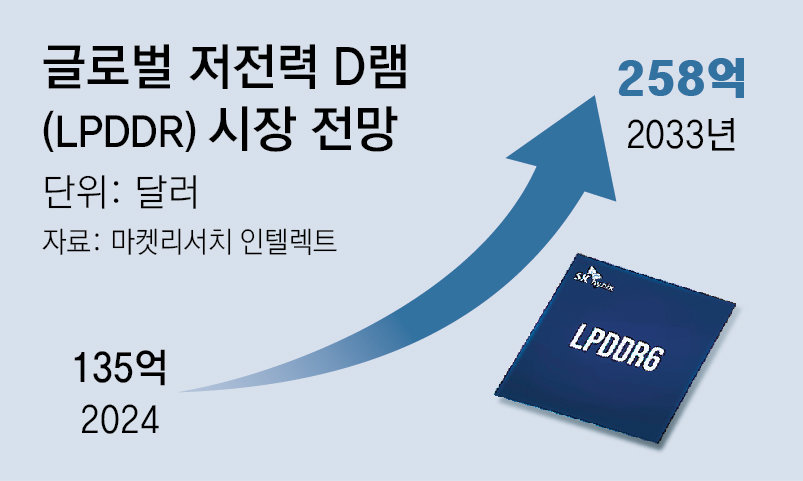
As artificial intelligence (AI) becomes more advanced, demand is growing for low-power, high-efficiency memory semiconductors. The AI memory market is beginning to open in earnest for “cost-effective” products, moving away from an exclusive focus on expensive, high-performance high bandwidth memory (HBM). In line with this trend, competition in new products among the three major memory makers—Samsung Electronics, SK hynix, and Micron—is intensifying.
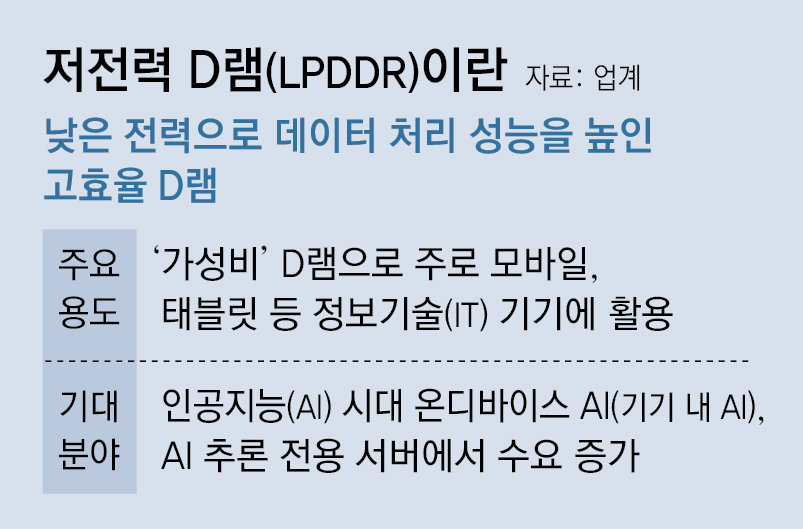
On the 10th, SK hynix announced that it had become the first in the world to develop a 16Gb (gigabit) low-power (LP) DDR6 DRAM manufactured with its 6th-generation (1c) process. LPDDR is a type of DRAM used in mobile products such as smartphones and tablets. The 1c node is currently the most advanced process among DRAM fabrication technologies that are commercially available in the memory industry. SK hynix’s LPDDR6 delivers a 33% improvement in data processing speed compared with the previous generation LPDDR5X. It is designed to reduce power consumption by more than 20%.
SK hynix plans to complete preparations for mass production in the first half of the year (January–June) and begin supplying products in the second half (July–December). SK hynix stated, “It will be mainly used for on-device AI, which embeds AI within devices such as smartphones and tablets,” adding, “We will build a general-purpose memory lineup optimized for AI.”
LPDDR is expected to see wider use not only in on-device AI but also in the AI server segment. LPDDR is a core component of SOCAM (System-On-Chip Attached Memory Module), which is attracting attention as a complementary product to HBM. SOCAM is a DRAM module created by combining four LPDDRs. It is seeing rising demand as it reduces power consumption and improves performance compared with conventional server DRAM. The latest commercially available product is SOCAM2, which is based on LPDDR5X. Samsung Electronics has already begun mass production ahead of rivals, while SK hynix is currently optimizing its product for supply to customers. Micron has developed a product with capacity increased by about 33% compared with Samsung Electronics’ and SK hynix’s SOCAM2 and has recently sent samples to customers.
The reason SOCAM technology is in the spotlight is that AI’s required memory functions have changed as the focus shifts from training to inference. When AI was centered on training, HBM was essential because it enabled the rapid processing of massive volumes of data. In contrast, inference AI focuses on quickly finding answers from a pre-trained model. At this stage, AI does not require the full performance level of HBM. In fact, HBM can create inefficiencies due to excessive power consumption and high heat generation. Instead, SOCAM can play an optimal role, offering higher performance than standard DRAM while providing better power efficiency and thermal management than HBM. An industry insider commented, “As competition in SOCAM intensifies going forward, demand for LPDDR will also increase.”
To keep pace with the rapidly changing AI market, the semiconductor industry is investing massive research and development (R&D) budgets to advance various memory product lines, including HBM and SOCAM. According to a recently disclosed consolidated audit report, Samsung Electronics’ R&D spending last year reached a record high of KRW 37.7404 trillion, up 7.8% from the previous year. SK hynix also invested a record KRW 6.7325 trillion in R&D last year.
Park Hyun-ik
AI-translated with ChatGPT. Provided as is; original Korean text prevails.
ⓒ dongA.com. All rights reserved. Reproduction, redistribution, or use for AI training prohibited.