After bipedal and quadrupedal robots, now adding ‘wheel’ robots
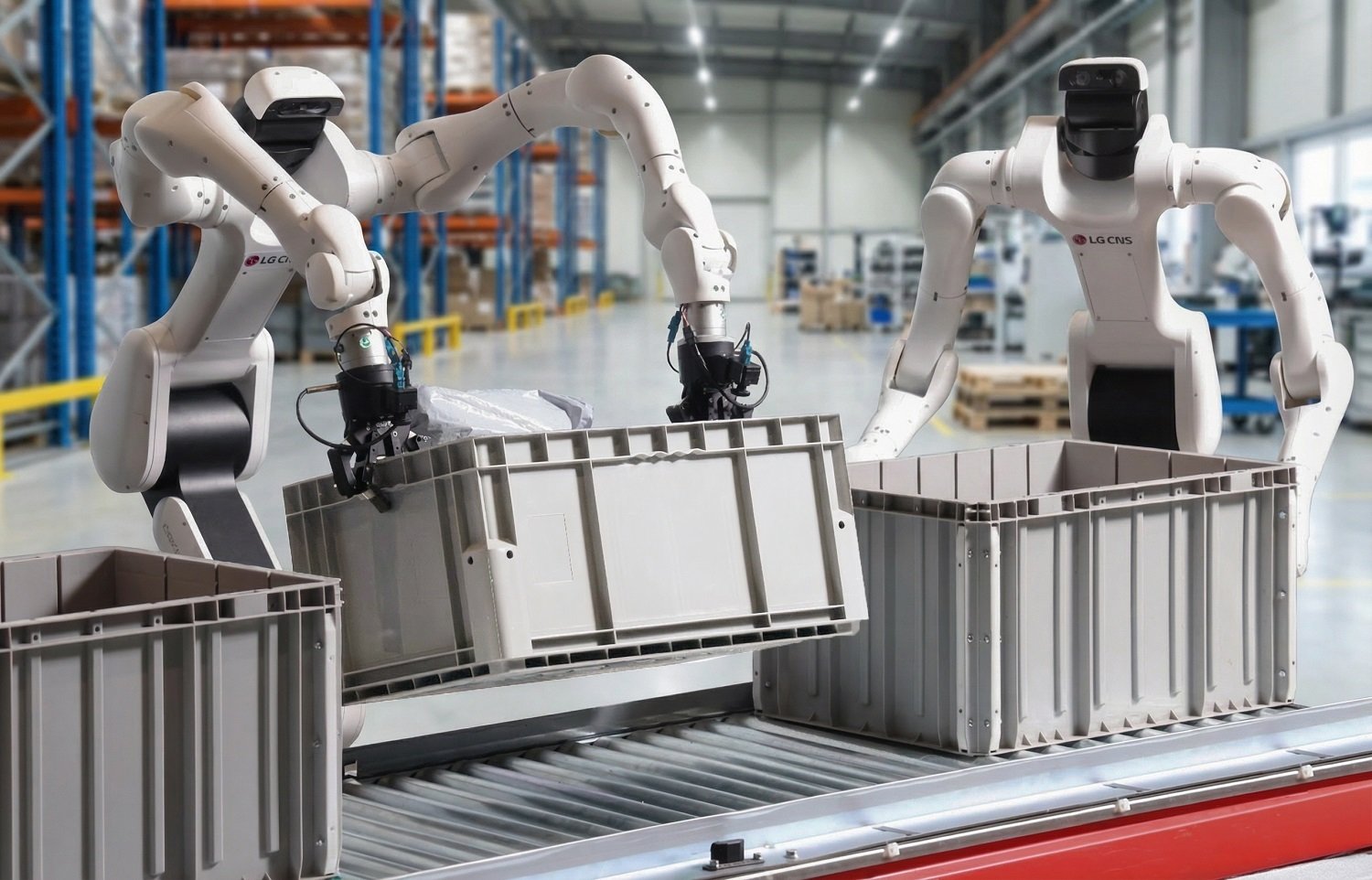
An LG CNS humanoid robot, Dexmate, being trained for deployment at industrial sites. (AI-generated virtual image · provided by LG CNS)
LG CNS is accelerating its entry into the physical artificial intelligence (AI) industry, focusing on industrial humanoid robots, through an investment in a U.S. robotics company.
On the 10th, LG CNS announced that it had made a strategic investment in the U.S. robotics company “Dexmate.” Dexmate, which manufactures humanoid robots, is a Silicon Valley company whose quality and performance have been recognized to the extent that its robots have been adopted as standard research hardware by global robot brain development companies. A key feature of Dexmate’s robots is the use of wheels instead of legs to ensure long-duration, stable operation, while maintaining the task performance capabilities of humanoid robots.
An LG CNS official said, “Because they move on wheels, they have a more stable lower-body structure than bipedal robots, making them easier to apply at industrial sites such as logistics centers and manufacturing plants, and they have the advantage of enabling precise, two-handed cooperative tasks.” The robots support a payload of about 15 kg based on both arms and can operate for more than 20 hours on a single charge.
LG CNS is the first Korean company to invest in Dexmate. The investment was made through LG Technology Ventures, LG’s corporate venture capital arm. With this investment, LG CNS has secured wheel-type humanoids in addition to bipedal humanoids and quadruped robots, thereby building a diverse portfolio of robot hardware. Based on this, LG CNS plans to provide “full-stack” robot transformation services that combine robot training with a learning platform.
Jeon Hye-jin
AI-translated with ChatGPT. Provided as is; original Korean text prevails.
ⓒ dongA.com. All rights reserved. Reproduction, redistribution, or use for AI training prohibited.