[Driving Force of Innovation: Venture Capital] 〈2〉 Supporting ‘deep-tech’ startups from the earliest stages
Expanding into new industries like AI and quantum to tackle complex challenges
Investment in deep tech surges amid global power competition
Domestic investment exceeds KRW 5 trillion, accounting for 76% of all venture funding
KRW 50 trillion-sized parent fund also plays a key role
As global rivalry for supremacy over advanced technologies intensifies, a growing number of Korean startups are distinguishing themselves in the “deep tech” sector. This is seen as a result of more companies overcoming the “valley of death” (the insolvency risk faced by early-stage firms that fail to secure financing) and expanding their business territories, backed by support from venture capital and the Fund of Funds (MoTae Fund).
According to the Ministry of SMEs and Startups on the 20th, venture investment in deep tech startups last year reached KRW 5,201.4 billion, accounting for 76.4% of total venture investment (KRW 6,811.1 billion). Startups focused on artificial intelligence (AI) models and infrastructure, which have recently become a major topic, attracted 19.6% of total investment. Deep tech refers to fields that, based on science and technology, solve complex problems that were previously difficult to address or create entirely new markets.
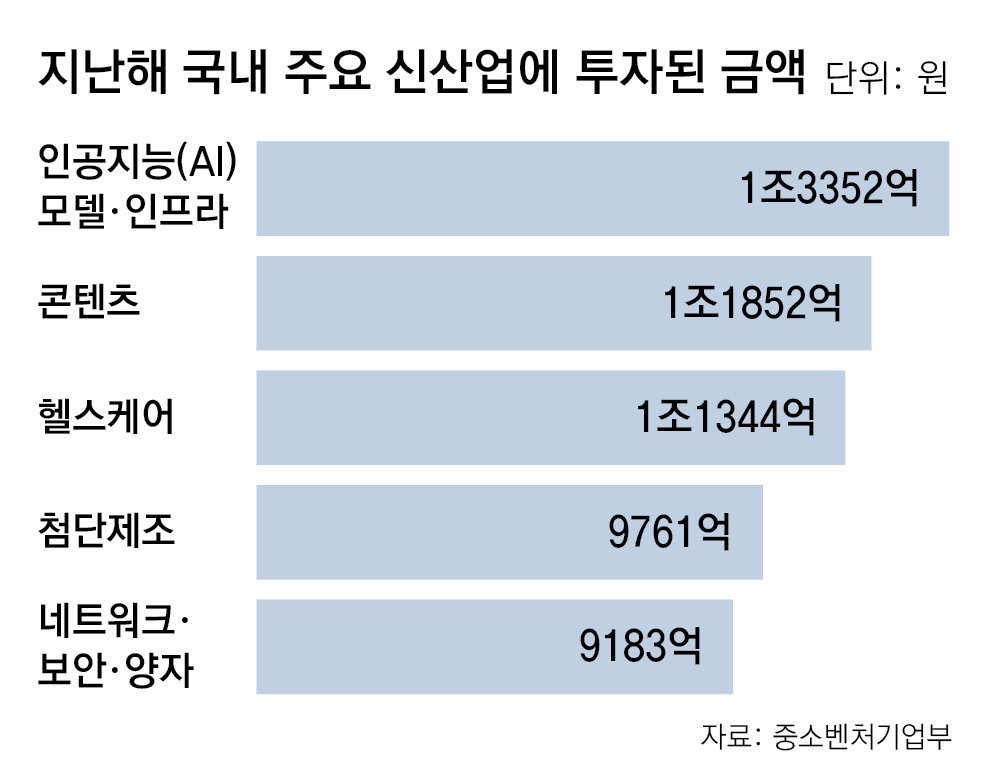
The government has classified 12 areas, including AI, semiconductors, quantum technology, security and networks, as new industries and is strengthening support for related startups. In April this year, the Ministry of SMEs and Startups and Korea Venture Investment decided to provide a total of KRW 400 billion through the first regular round of capital commitments from the Fund of Funds to foster deep tech unicorns (unlisted companies with a recognized enterprise value of at least KRW 1 trillion).
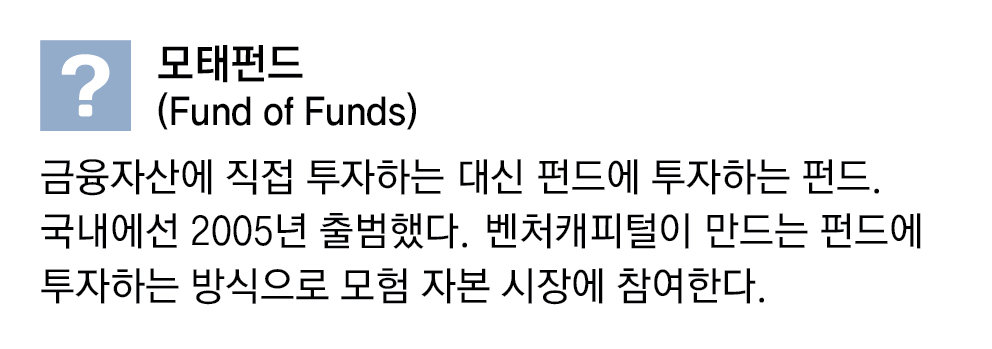
The Fund of Funds was created with government finances and public funds and was launched in 2005. In the early 2000s, after the “dot-com bubble,” the government directly stepped into the weakened venture ecosystem to reinvigorate it. The Fund of Funds is viewed as playing a role in inducing private capital participation in venture investment. Its cumulative capital commitments through this year amount to approximately KRW 17 trillion, and domestic venture capital firms, led by the Fund of Funds and joined by corporations and financial institutions, have formed funds totaling KRW 50 trillion.
Among deep tech startups that have received venture investment, Rebellions and FuriosaAI are drawing market attention. These companies have challenged Nvidia, which dominates the global AI semiconductor market. FuriosaAI also made headlines after receiving an acquisition offer from U.S. big tech company Meta.
Both companies endured the valley of death with venture capital backing and have recently attracted capital from the National Growth Fund, emerging as representative deep tech unicorns.
However, few venture capital firms reached out to them in the early stages of their businesses. Only those venture capital firms that highly evaluated the R&D capabilities of key talent and their commitment to localizing AI semiconductors participated in the investments. Yoon Geon-soo, CEO of DSC Investment, said, “FuriosaAI was a startup founded by five engineers, and we and Naver each invested KRW 500 million as early investors,” adding, “I believed that for Korean AI semiconductors to survive, FuriosaAI had to survive.” Jo Jang-ho, executive director at Jiyu Investment, which participated as an early investor in Rebellions, also said, “At the time of investment, there was no prototype, but it was impressive that world-class developers had joined as founding members in large numbers,” and “I thought they would quickly achieve visible results in the global AI semiconductor market.”
Song Eun-gang, CEO of Capstone Partners, described the relationship between venture capital and startups, saying, “Venture capital invests after looking at who the founder is and how that founder is trying to change the world through entrepreneurship.”
ⓒ dongA.com. All rights reserved. Reproduction, redistribution, or use for AI training prohibited.
Popular News