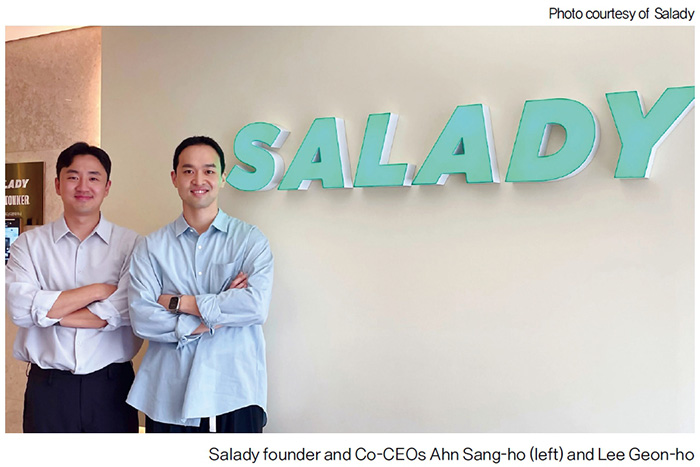
Article at a Glance“Salady” took note of the phenomenon in the early 2010s in the United States where salads were consumed as a full meal. Salady anticipated that as economic conditions and quality of life improved in South Korea, interest in health would increase and demand for salads would grow, and it launched a salad franchise business in South Korea ahead of others. Moving away from the United States-style ordering method in which customers assemble their own menus, it simplified the menu around recommended combinations and introduced a fast-food franchise-style interior, persuading domestic consumers that salads could become a main dish. After establishing its operations and distribution system, it began its franchise business in earnest in 2016, and as the scale and functions of the headquarters expanded and fixed costs increased, it succeeded in attracting investment to achieve scale-up and overcome the “Death Valley.” After the pandemic, as people’s interest in health and immunity surged, Salady also experienced rapid growth. Salady established its own farms and factories to secure raw materials in a stable manner and built a system to process them with consistent quality and supply them to stores nationwide. After building this foundation, Salady received investment from a private equity fund to secure large-scale capital and began expanding its scope in earnest by acquiring the handmade burger brand “Downtowner” and entering overseas markets such as the U.S. and Taiwan.
There are still people who feel reluctant about terms such as vegetarian or vegan, which refer to those who make plant-based food their main diet. However, looking back in time, the roots of South Korea’s food culture already contain a deep tradition of plant-based eating. Various seasonal greens that sprout each season, as well as plants considered poisonous weeds overseas, have long been used as ingredients through methods such as blanching, drying and fermenting. Even when eating meat, the absence of leafy wraps can make a meal feel incomplete, showing that vegetables have long been an everyday presence on the South Korean table. Nevertheless, vegetables rarely become the “main character” of a meal. They may go beyond the role of a side dish for meat, but it still feels unfamiliar for them to become the “central dish” responsible for a hearty meal.
The salad franchise brand “Salady” goes beyond this bias and places salad at the center of the table. It proposes that salad is not a light appetizer served before the main menu but can be a sufficiently hearty meal on its own. Not only menus with clear identities by name such as Ranch Cobb Salady and Tandanji Salady, but also dishes that do not appear to be salads at first glance, such as Bibim Buckwheat Noodle Bowl, are generously filled with vegetables.
In particular, the signature menu Beef Loin Buckwheat Noodles adds buckwheat noodles and beef loin on top of fresh salad greens, considering not only nutritional balance but also taste and satiety. This reflects a strategy to redefine salad from a symbol of “lightness” to a hearty meal.
Can vegetables truly become a hearty meal as Salady proposes? Salady’s performance is proving that possibility. Salady’s revenue, which was 800 million KRW in 2016 when it began its franchise business in earnest, surpassed 100 billion KRW in 2025 based on consumer sales, 10 years later.
Copyright Ⓒ 동아비즈니스리뷰. All rights reserved. 무단 전재, 재배포 및 AI학습 이용 금지





 경제·경영 질문은