LG Group is transforming into a future-oriented tech company focused on services and solutions. Building on the solid technological capabilities accumulated in traditional manufacturing areas such as home appliances and chemicals, the group is now accelerating a major shift toward becoming a “platform” company that goes beyond simple product sales to solve customer problems and deliver new experiences. Chairman Koo Kwang-mo has emphasized a management philosophy of “speed,” stating that rapid execution takes precedence over perfect planning. This “speed of execution” is driving strong structural improvements across LG’s core businesses. In particular, in the field of artificial intelligence (AI), the group is accelerating AI transformation (AX) across all areas from manufacturing processes to customer services by leveraging its proprietary model “EXAONE.” Growth in next-generation mobility-centered automotive electronics and battery businesses is also drawing attention. By combining its battery technology with solutions that cover most mobility domains, from in-vehicle infotainment to lamps and powertrains, LG is solidifying its position as an integrated key partner. This article looks at the quiet yet rapid changes taking place within LG Group.
The expansion of the electric vehicle market combined with the advancement of autonomous driving technologies is intensifying the electrification of vehicles. LG Electronics is accelerating its push into the market by maintaining an aggressive investment stance in its vehicle component solutions business, which it has identified as a future growth engine. In particular, it is fleshing out a strategy to strengthen its position in the future mobility market based on integrated automotive electronics capabilities that encompass both hardware and software.
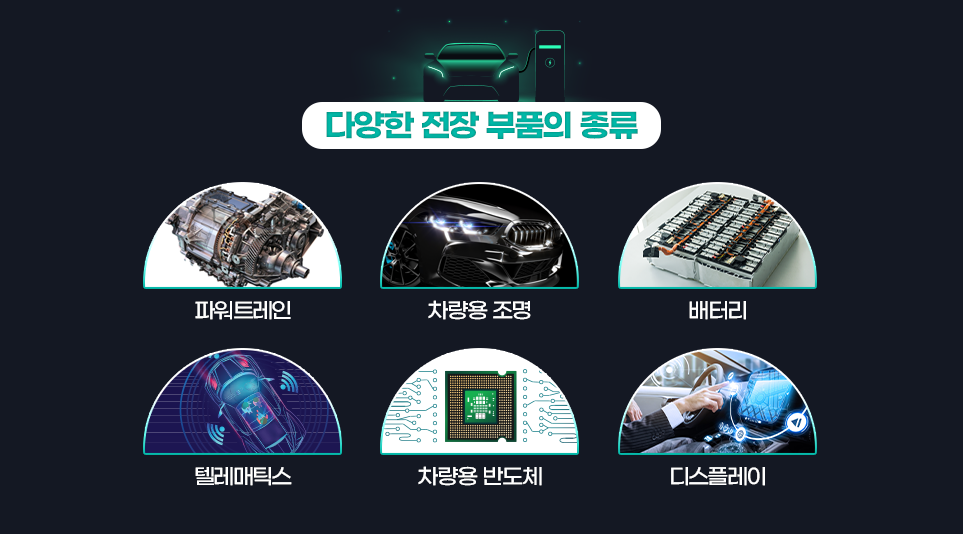
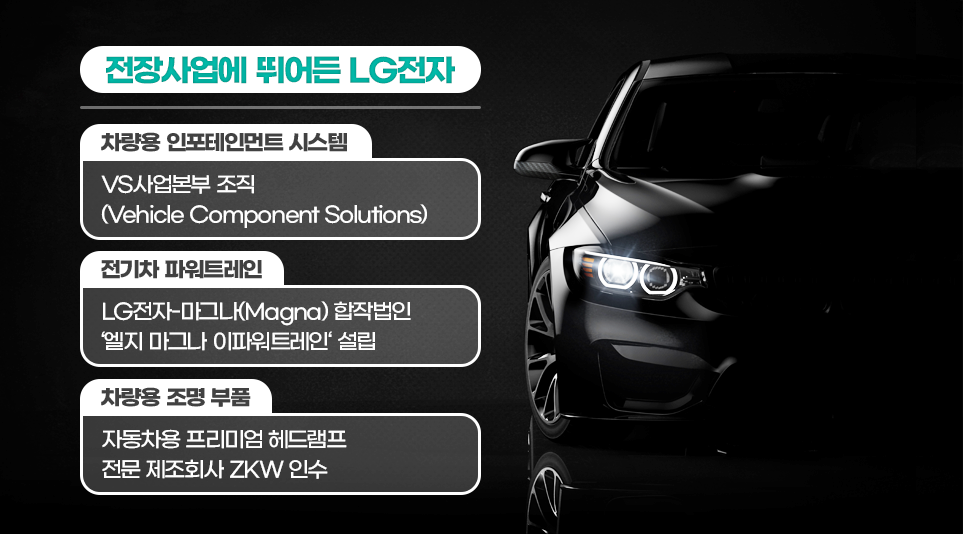
Currently, LG Electronics’ vehicle component solutions business is operated around a “three-pronged” system consisting of the VS Business Division, which is responsible for in-vehicle infotainment (IVI); LG Magna e-Powertrain, which handles electric vehicle powertrains; and ZKW, which specializes in automotive lighting systems. These businesses respectively cover in-vehicle digital experiences, drive systems, and vehicle exterior and safety technologies, generating synergies across the entire automotive electronics value chain.
The core of the automotive electronics business is AI… Transforming into a “car that understands”This trend was clearly visible at the Consumer Electronics Show (CES) in the United States earlier this year. LG Electronics presented a concrete vision of how AI can organically connect the in-vehicle experience and the entire journey. It defined the vehicle as a “platform” and set a direction to evolve it into an intelligent space that understands and responds to users’ lifestyles and contexts. This illustrates how mobility is expanding into a living space that provides personalized experiences.
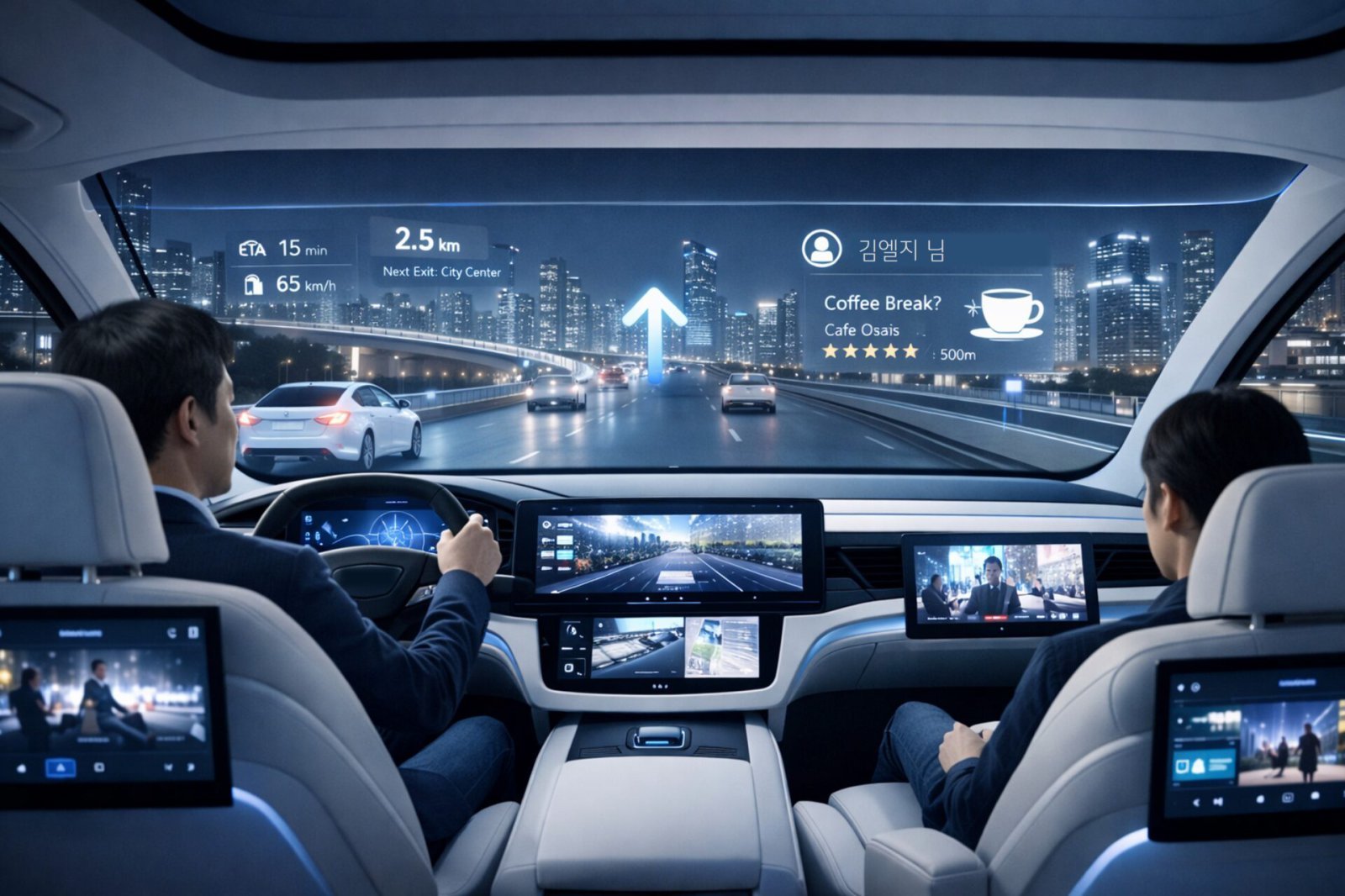
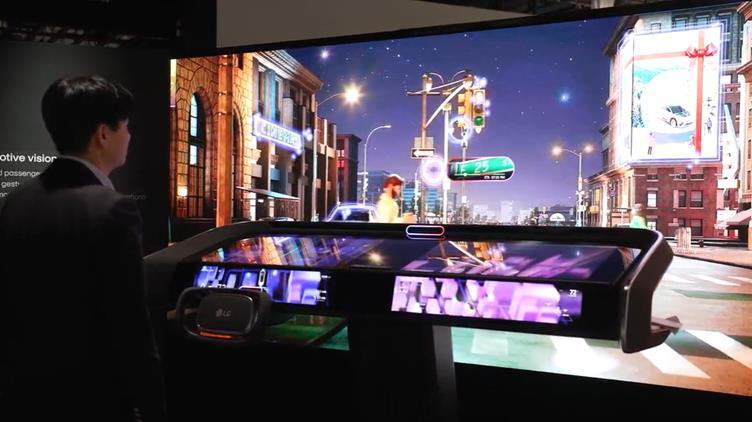
In particular, a variety of solutions that allow users to tangibly experience AI technology, cited as the core of SDV (software-defined vehicle), attracted attention. A representative example is the front windshield with transparent OLED, which serves as an “augmented reality interface” that selectively provides information only when needed. Through this, the company demonstrated how it can simultaneously enhance safety and convenience based on analysis of the driver’s line of sight. In autonomous driving mode, the vehicle interior transforms into an immersive entertainment space, highlighting efforts to redefine the travel experience itself.
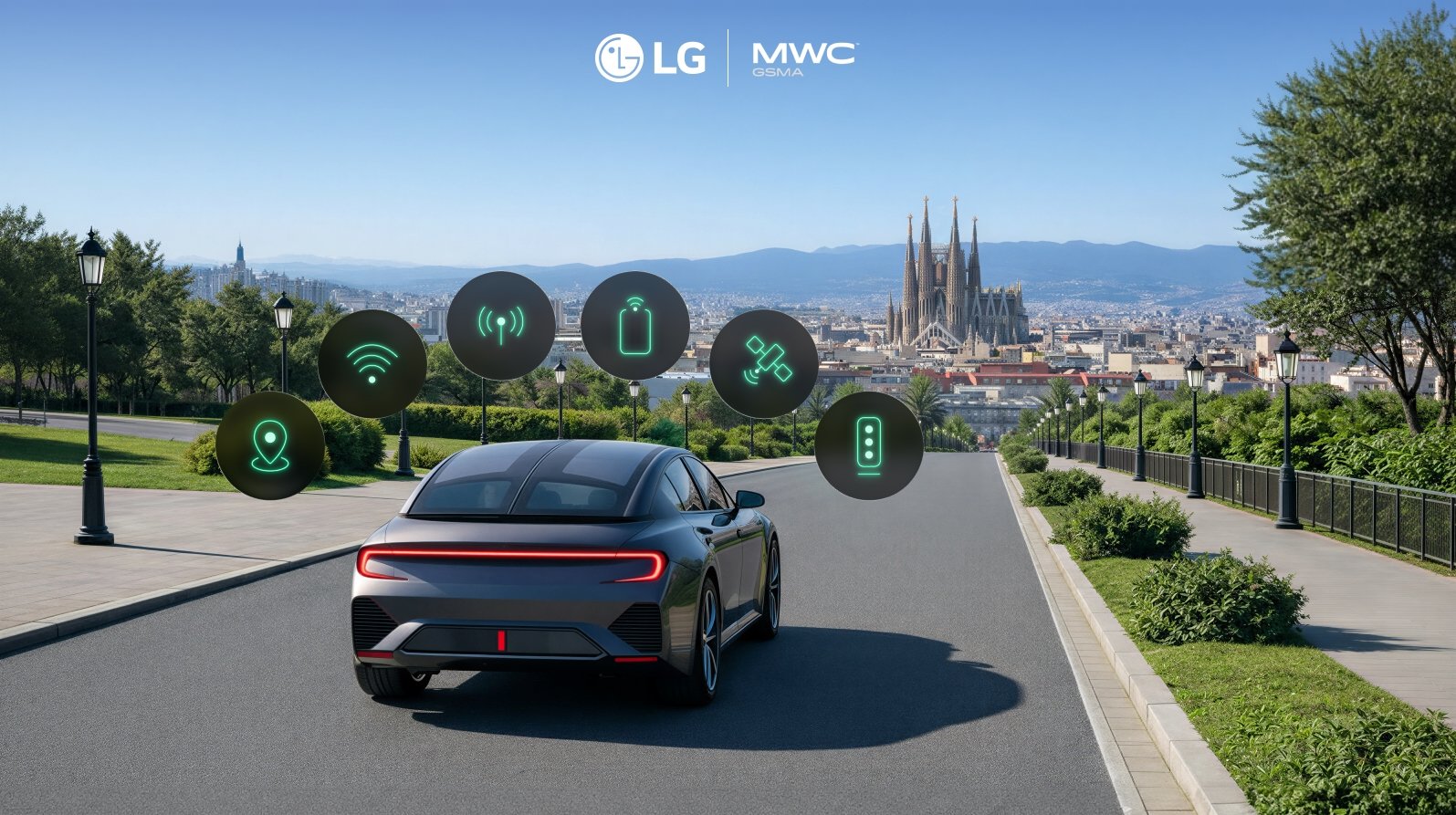
LG Electronics is seeking to preempt mobility competitiveness by moving beyond SDV to AIDV. With its telematics solution that integrates the TCU and antenna, the company is able to process 5G, GPS, V2X, and satellite communications within a single module, securing both minimal signal loss and stable data processing. Based on hardware miniaturization and advanced software algorithms, vehicles are being turned into data hubs, and AI is used to analyze drivers and environments in real time to autonomously optimize functions and services, thus realizing intelligent, personalized mobility.
CES 2026 LG Electronics exhibition booth, where a visitor experiences an AI-based in-vehicle solution. Provided by LG Electronics
The company’s automotive vision solution, part of its “AI-based in-vehicle solutions,” is also noteworthy. This solution analyzes the driver’s line of sight and condition and recommends the optimal driving environment for the situation, such as switching to autonomous driving mode if attention is distracted for a certain period of time. In addition, by using internal and external vehicle cameras to identify passengers’ interests and providing product information based on external billboard content that can lead to purchases through gestures, it presented new possibilities that combine mobility and commerce.
This type of technology is viewed as a turning point similar to when “rearview cameras” were first introduced. Once considered a technology of the future, rearview cameras have now become a standard feature, and it is widely expected that AI-based vehicle solutions will likewise become a basic element of automobiles in the future.
Another key concept presented by LG Electronics is “emotional intelligence.” Building on the AI technology accumulated in home appliances and robotics, the company plans to extend to vehicles its capability to understand users’ emotions and situations and interact with them. In practice, the natural movements and personalized services demonstrated by the home robot “LG CLOi” intuitively show the direction in which vehicles will evolve into user-customized spaces.
Automotive electronics market growing rapidly… Cars evolving into “electronic devices”Market conditions are also supporting these changes. According to Strategy Analytics, the global automotive electronics market is projected to grow from about USD 400 billion (approximately KRW 520 trillion) in 2024 to USD 700 billion (approximately KRW 910 trillion) in 2028. For electric vehicles, the share of electronic components in total parts is expected to expand to as much as 70%. This demonstrates that the core of the automotive industry is shifting from mechanics to electricity and electronics.
However, some point out that the industrial base is still not sufficiently prepared relative to the sector’s growth potential. Of the approximately 9,300 automotive parts companies in Korea, it is known that only a little over 2% are capable of producing core electronic components for future vehicles. High technological barriers, strict safety regulations, and the accumulated know-how of incumbent players are cited as factors hindering new entrants. This also represents an opportunity for companies with the required technological capabilities.
In this market environment, LG Electronics has swiftly strengthened its position through preemptive investment and strategic partnerships. Starting with the launch of the VS Business Division in 2013, the company has built its automotive electronics portfolio through the acquisition of automotive lighting company ZKW in 2018 and the establishment of a joint venture with Magna in 2020.
The powertrain is a core component that encompasses the drive system, including the electric motor, inverter, and reduction gear. As it is responsible for the entire process of converting electrical energy into actual driving force and delivering it to the wheels, it is directly linked to improving energy efficiency and securing driving range. Given that battery capacity is limited in electric vehicles, how much energy efficiency can be improved is a key factor that determines competitiveness, and accordingly, the technological maturity of the powertrain is considered an important criterion that defines a vehicle’s fundamental performance.
Automotive lighting has also emerged as an important pillar of automotive electronics technology. Fundamentally, it is a safety device that facilitates communication on the road by transmitting signals between vehicles, but recently its role as a design element that shapes brand identity has greatly expanded. Headlamps and taillamps not only determine a vehicle’s first impression, but also perform functions directly related to safety, such as securing visibility and enabling pedestrian recognition during night driving. In addition, as intelligent lighting technologies such as adaptive driving beam (ADB) and pixel light, which adjust light patterns according to driving conditions, have advanced, convenience and information delivery functions have been further enhanced.
Powertrains and automotive lighting are thus core electronic components for electric vehicles, respectively responsible for “driving performance” and “safety and emotional quality,” and they are areas requiring high technological capabilities and extensive know-how. LG Electronics has actively pursued strategic collaborations and mergers and acquisitions to rapidly secure competitiveness in these two domains.
In the electric vehicle powertrain segment, the company established LG Magna e-Powertrain in partnership with Magna International, the world’s third-largest automotive parts supplier, thereby securing technology across motors, inverters, and drive systems. This has provided a foundation for supplying high-efficiency, high-performance electrification solutions that meet the requirements of completed vehicle manufacturers.
In the automotive lighting segment, LG Electronics significantly boosted its global competitiveness by acquiring Austrian lighting company ZKW. Recognized for its technological prowess in premium automotive headlamps, ZKW has enabled LG to secure both advanced lighting technologies and smart manufacturing capabilities. As a result, the company’s technology has been acknowledged with honors such as the “German Innovation Award.” LG is also expanding its global customer base of completed vehicle manufacturers by supplying lighting systems for Volvo electric vehicles and Jaguar Land Rover SUVs, among others.
LG Electronics is also accelerating its push into the North American market by building an electric vehicle parts manufacturing plant in Mexico. North America is a key market where global demand for electric vehicles is growing rapidly, and securing a local production base is viewed as a strategic choice that can simultaneously enhance supply chain stability and customer responsiveness.
LG Electronics’ vehicle component solutions business in Q&A
Q. Why is the automotive electronics business attracting attention?
The spread of electric vehicles and advances in autonomous driving technologies are driving vehicle electrification, leading to rapid growth in the related market. LG Electronics has established a three-pronged system spanning infotainment (VS Business Division), electric vehicle powertrains (LG Magna), and automotive lighting (ZKW), and is strengthening its medium- to long-term growth base by securing integrated capabilities that cover both hardware and software.
Q. What is LG Electronics’ SDV strategy?
LG Electronics is pursuing a strategy to realize SDVs (software-defined vehicles) as “AI-based intelligent platforms.” The core is to shift vehicles to a software-centric architecture and provide tailored experiences by using AI to understand drivers’ and passengers’ conditions, situations, and contexts in real time. To this end, the company aims to organically connect various in-vehicle systems such as infotainment, displays, and telematics, and to build a structure that continuously expands functions through OTA (over-the-air) updates. Furthermore, it is focusing on evolving vehicles into personalized living spaces and service platforms through technologies such as transparent OLED and automotive vision solutions.
Q. What are LG Electronics’ competitive strengths in the automotive electronics business?
The company has rapidly secured technological capabilities in core component areas through strategic collaborations and mergers and acquisitions. Representative examples include strengthening powertrain capabilities through the joint venture with Magna and securing premium lighting technologies through the acquisition of ZKW. In parallel, it is enhancing market responsiveness by building a global supply chain, including expanding production bases in North America.

ⓒ dongA.com. All rights reserved. Reproduction, redistribution, or use for AI training prohibited.
Popular News