Article at a Glance“Homeplus”, the second largest hypermarket chain in South Korea, filed for corporate rehabilitation due to a liquidity crisis. “MBK Partners” carried out an aggressive leveraged buyout when it acquired Homeplus in 2015 for a massive 7.2 trillion KRW, leaving the company scrambling to service interest and rent payments with operating profit. During this period, the company missed the critical window for digital transformation and lost its footing as it was pushed aside in competition with e-commerce players such as Coupang. This also reveals the inherent limitations of a private equity ownership structure that makes long-term investment difficult. The incident has plunged employees, partner companies, and individual investors into crisis, leaving a painful lesson about the social responsibility of financial capital.
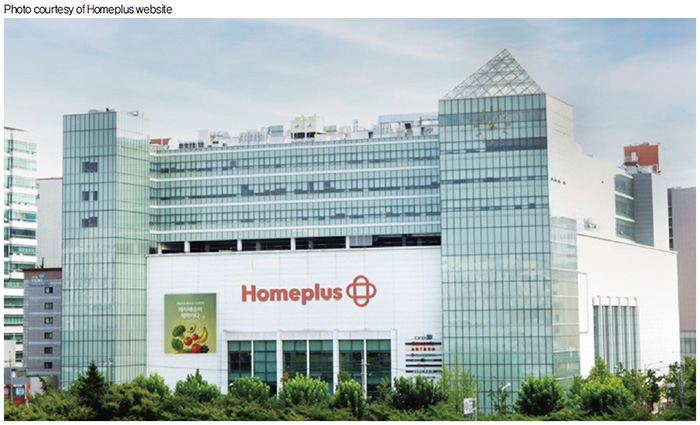
On March 4, 2025, shocking news spread through South Korea’s retail industry. Homeplus, the second largest player in the hypermarket sector, applied for corporate rehabilitation proceedings at the Seoul Bankruptcy Court. The court approved the start of rehabilitation proceedings at an unusually rapid pace just 11 hours after the filing, underscoring that little golden time remained for the retail giant.
The immediate trigger for Homeplus’s application for rehabilitation was a credit rating downgrade. In late February 2025, credit rating agencies Korea Investors Service and NICE Investors Service lowered the credit ratings of Homeplus’s commercial paper and short-term bonds from A3 to A3 minus. This signaled a tightening of liquidity. Until the downgrade, Homeplus had raised approximately 649.8 billion KRW through short-term borrowings and commercial paper. However, as refinancing was blocked and interest rates rose following the downgrade, the company preemptively filed for rehabilitation to prevent a worst-case default, anticipating cash shortages and delays in payments to suppliers.
Homeplus’s financial condition was dire. Amid chronic losses that have continued since 2020, as of the end of February 2024
1
its revenue stood at 6.9 trillion KRW and its operating loss at 260 billion KRW, showing a slight improvement from the previous year. However, as financial costs rose to 450 billion KRW, an increase of 60 billion KRW from a year earlier, the net loss worsened to 570 billion KRW, compared with a loss of 440 billion KRW the previous year. In particular, as of the end of February 2024, Homeplus’s total borrowings reached 8.5 trillion KRW, pushing its debt ratio up to 3,215%. Liquid assets that could be converted into cash within one year amounted to 830 billion KRW, only about 23% of current liabilities totaling 3.49 trillion KRW that needed to be repaid, leaving its short-term debt repayment capacity extremely weak. The company was in a situation where it could not even pay interest with money earned from operating activities.
Copyright Ⓒ 동아비즈니스리뷰. All rights reserved. 무단 전재, 재배포 및 AI학습 이용 금지





 경제·경영 질문은


 닫기
닫기