Smartphone market grows around premium segment… Samsung and LG post 8.5–12% Q2 revenue gains
Mid- to low-end market stalls on price hikes… China’s four major suppliers including BOE all see contraction
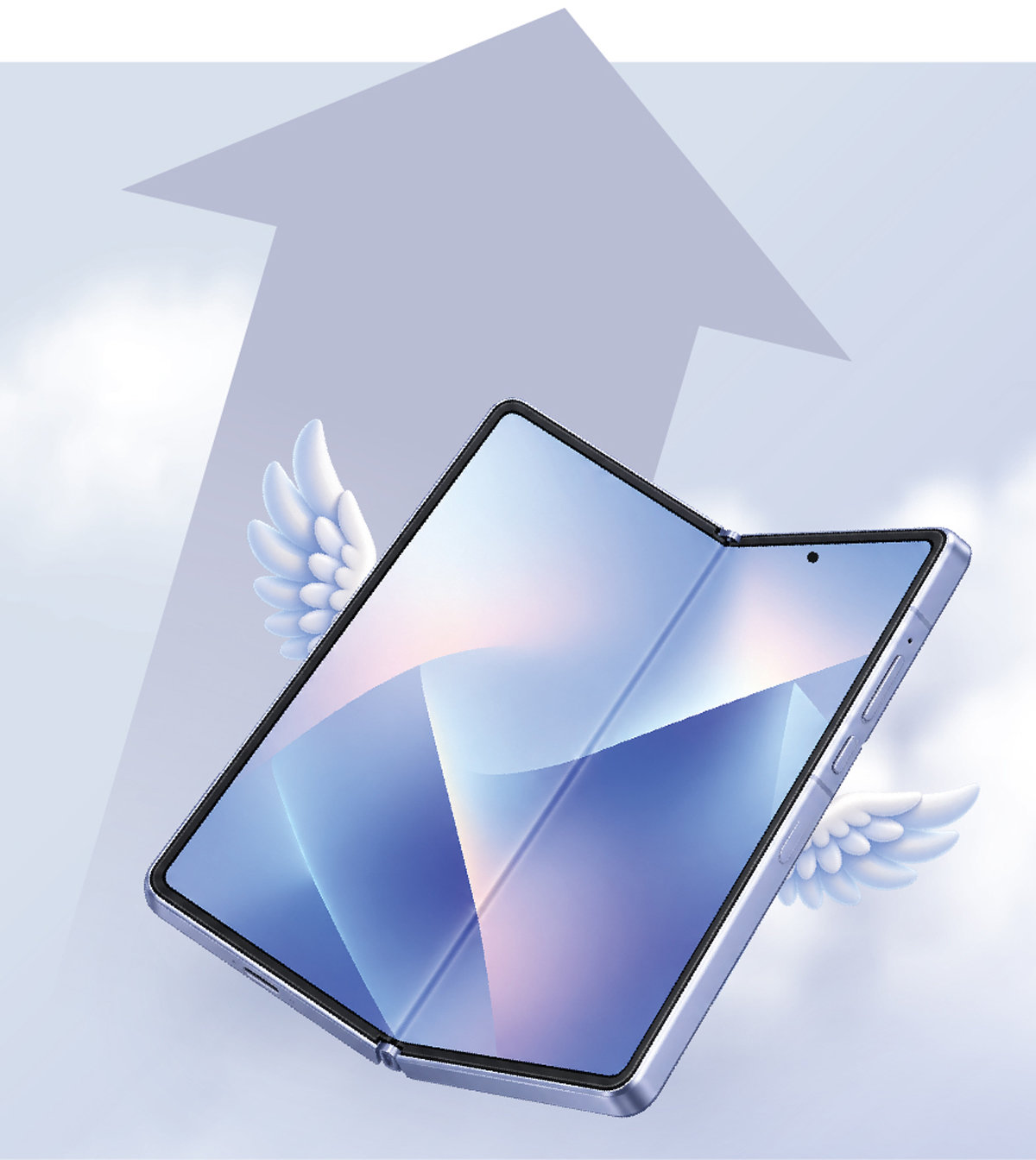
Foldable phone race to stay led by Korea in the second half
Due to the sharp rise in semiconductor prices and the resulting so-called “chipflation” (chips + inflation), Korean and Chinese display companies have seen diverging fortunes in the smartphone market. While the price-sensitive mid- to low-end smartphone segment has stagnated, the market has expanded around premium phones, strengthening the position of Korean companies that have advantages in high value-added panels.
● Samsung Display surpasses 50% global market share
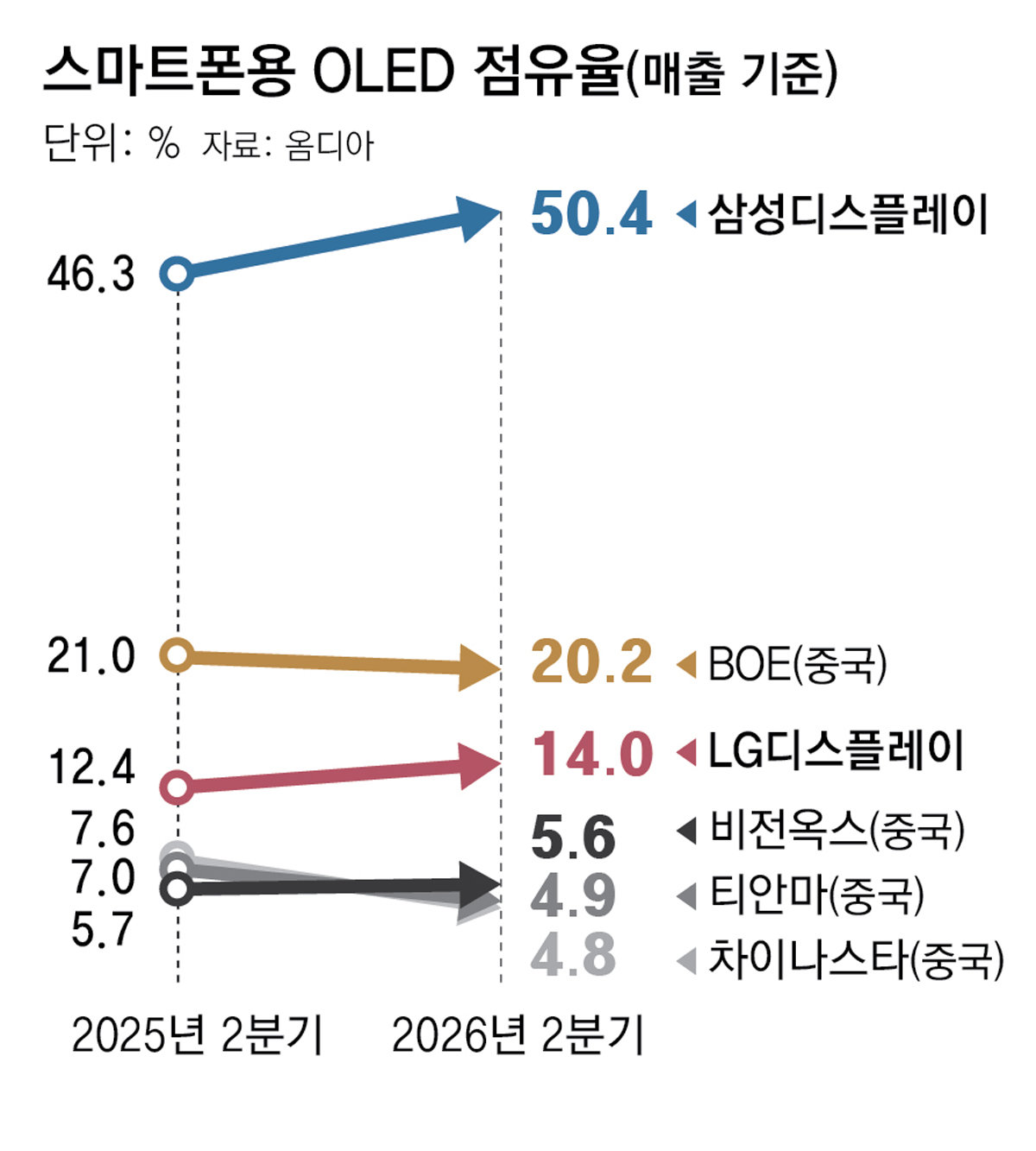
According to market research firm Omdia on the 17th, Samsung Display’s smartphone organic light-emitting diode (OLED) revenue in the second quarter (April–June) was USD 4,203.10 million (approximately KRW 581.37 billion), up 8.5% from a year earlier. Over the same period, LG Display also posted revenue growth of 12.3% to USD 1,169.39 million.
In contrast, China’s four major display makers BOE (−4.0%), Visionox (−2.2%), Tianma (−30.5%), and China Star (−37.4%) all recorded negative growth.
Total revenue in the smartphone OLED market also declined 0.5% to USD 8,331.27 million. With the overall market stagnating, only the Korean companies, which have a high proportion of premium OLED products, achieved growth. As a result, their market shares increased. In the second quarter, Samsung Display’s share rose from 46.3% to 50.4%, giving it a majority of the global market. LG Display’s share also climbed from 12.4% to 14.0%. Combined, the two K-display companies account for 64.4% of the market.
This “leap forward” by K-display is analyzed as the result of demand holding up only in the premium smartphone segment this year, while demand for mid- to low-end phones has fallen sharply. As memory semiconductor prices have surged, smartphone prices have also risen, and consumers of mid- to low-end phones have reacted more sensitively to price increases than premium phone buyers.
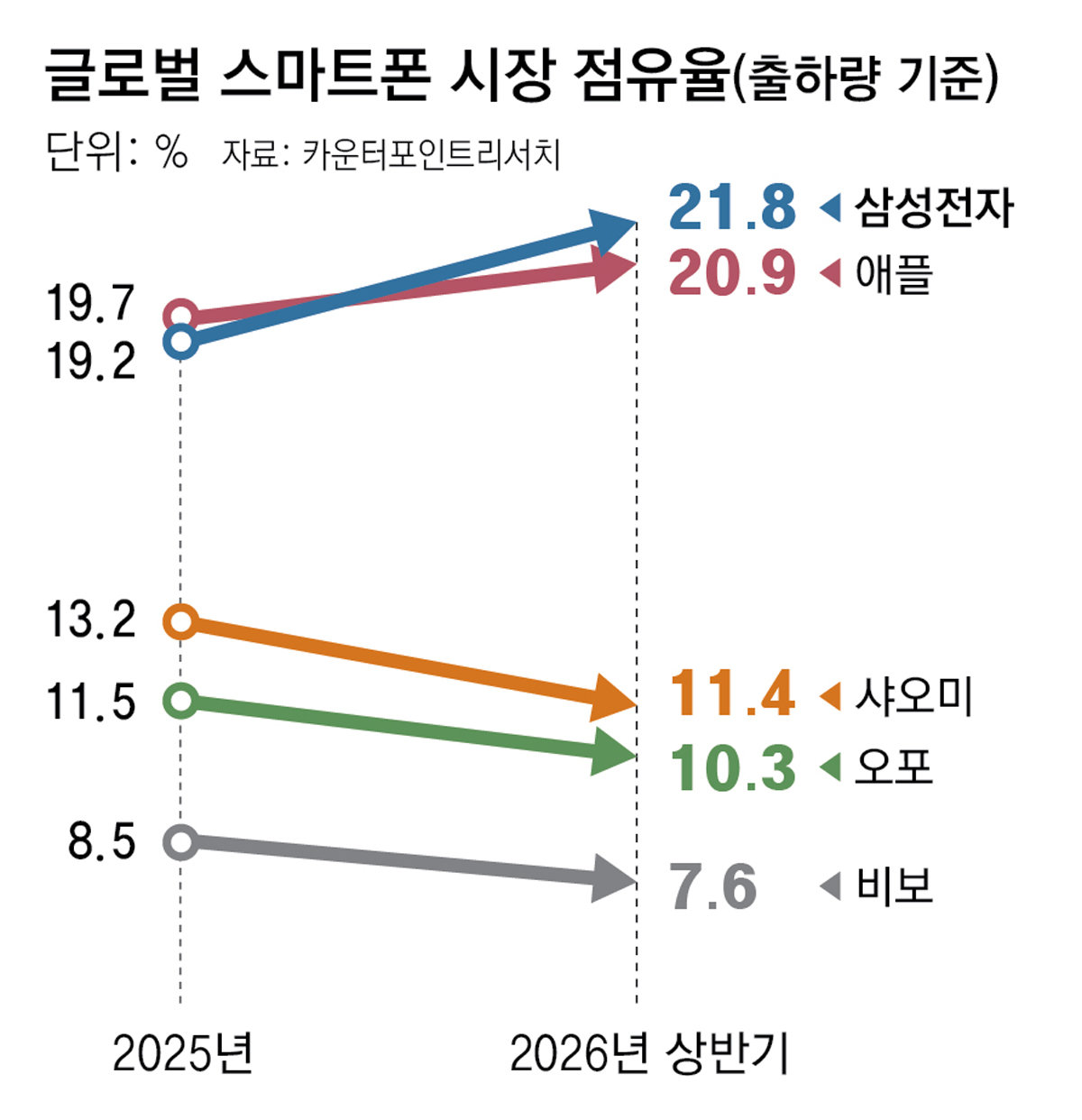
In fact, according to statistics released the same day by another market research firm, Counterpoint Research, Samsung Electronics’ share of global smartphone shipments in the first half of this year (January–June) stood at 21.8%, up 2.6 percentage points from its full-year share of 19.2% last year, overtaking Apple to claim the top spot. Although Apple ceded first place, its own share also rose over the same period from 19.7% to 20.9%. By contrast, Xiaomi, Oppo and Vivo, which have emphasized “value for money,” all saw their shares decline. Counterpoint said, “Chinese manufacturers have been hit directly by rising memory costs due to their product portfolios being heavily weighted toward mid- to low-end models.”
Chinese display makers are reported to be under pressure not only from falling demand but also from smartphone manufacturers seeking to control production costs. Smartphone manufacturers are said to be pressuring display partners to cut unit prices in order to minimize the impact of chipflation.
● K-display set to dominate in the second half as well In the second half (July–December), semiconductor prices also show no sign of stabilizing. The emergence of foldable phones as a new battleground in the smartphone market is also expected to work in favor of Korean rather than Chinese display makers. The foldable phone market is regarded as having significant growth potential following the recent launch of Apple’s “iPhone Duo.” Samsung Display and LG Display supply most of the panels for Apple’s premium phones. In particular, Samsung Display is known to be the sole supplier of panels for foldable phones.
Foldable phone panels are more expensive per unit than panels for conventional smartphones and require higher technological capability. The average selling price of foldable phone OLED panels in the third quarter of this year (July–September) is estimated at USD 182.3, about four times higher than the USD 47.2 average selling price of OLED panels for standard smartphones. Counterpoint said, “Shipments of foldable phone panels will increase by 71% in the second half,” adding, “Apple is the key variable.”
ⓒ dongA.com. All rights reserved. Reproduction, redistribution, or use for AI training prohibited.
Popular News