Professor Kim Sung-rae, Division of Endocrinology and Metabolism, Bucheon St. Mary’s Hospital, The Catholic University of Korea. Reporter Hwang So-young fangso@donga.com
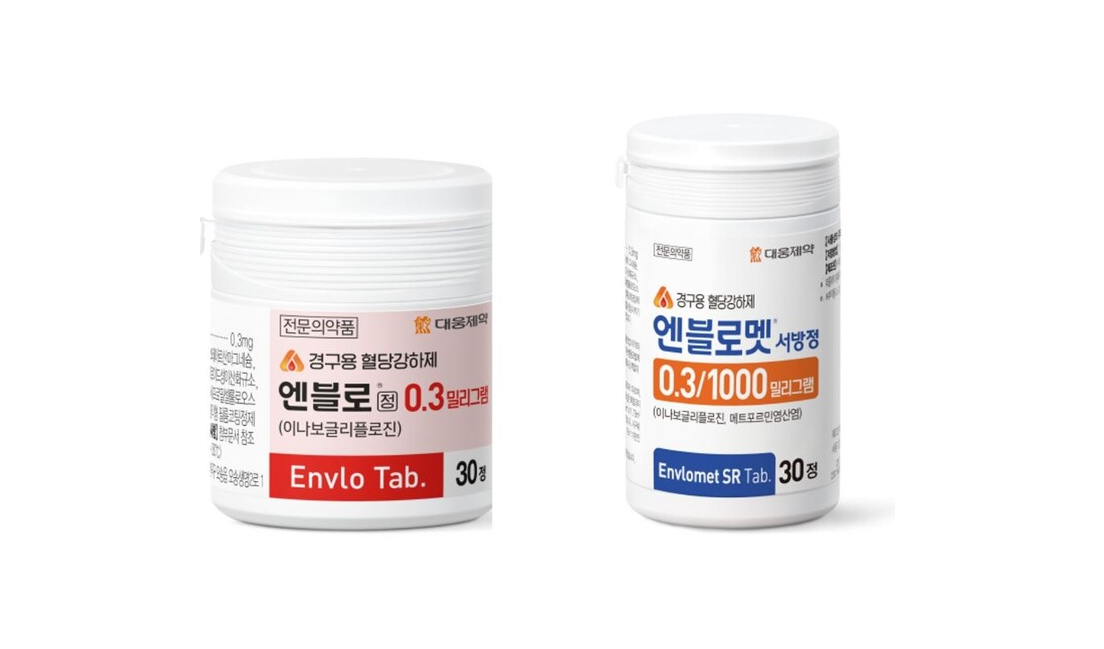
Daewoong Pharmaceutical’s new diabetes drug “Enblo” (ingredient name: inavogliflozin) demonstrated glycemic control effects equivalent to the reimbursed original product (dapagliflozin) in a clinical trial that evaluated blood glucose–lowering indicators. Observers say this brings Enblo one step closer to the possibility of being reimbursed, like the original, in triple combination therapy.
Professor Kim Sung-rae of the Division of Endocrinology and Metabolism at Bucheon St. Mary’s Hospital, The Catholic University of Korea, stated that the phase 3 triple-combination trial “ENHANCE-D” confirmed that Enblo achieved blood glucose–lowering effects at a level equivalent to dapagliflozin.
Enblo is Korea’s 36th domestically developed new drug, launched by Daewoong Pharmaceutical in 2023. It is also the first SGLT2 inhibitor–class type 2 diabetes treatment developed in Korea. SGLT2 inhibitors lower blood glucose by preventing glucose reabsorption in the kidney and promoting its excretion in the urine. Original products such as dapagliflozin and empagliflozin belong to the same class. However, as a later entrant, Enblo currently faces restrictions on reimbursement coverage from the National Health Insurance Service (NHIS).
In particular, for triple combination therapy, dapagliflozin is reimbursed for a wide range of combinations, whereas Enblo is reimbursed only for limited combinations. This is why the present clinical trial led by Professor Kim is attracting attention. Beyond triple combination therapy for diabetes, Enblo is not reimbursed for prescriptions in renal and cardiovascular indications, unlike the originals. On this, Professor Kim commented that more evidence needs to be accumulated.
The ENHANCE-D trial enrolled 270 patients with type 2 diabetes who were taking metformin and the DPP-4 inhibitor gemigliptin but had not achieved target blood glucose levels. The trial compared 24-week outcomes by adding Enblo 0.3 mg or dapagliflozin 10 mg as a third agent in patients whose glucose remained inadequately controlled despite the two-drug regimen.
After 24 weeks, the reduction in glycated hemoglobin (HbA1c), which reflects average blood glucose over the preceding 2–3 months, was -0.92 percentage points (p) in the Enblo group and -0.86%p in the dapagliflozin group. Numerically, Enblo showed a greater reduction in blood glucose, but the difference was assessed as not statistically significant. The primary endpoint of non-inferiority versus dapagliflozin was met. Professor Kim emphasized that the trial design reflected treatment pathways frequently encountered in real-world clinical practice, making the findings particularly meaningful. The Dong-A Ilbo interviewed Professor Kim, who led the ENHANCE-D clinical study of Enblo. The following is a Q&A.
―It was said that ENHANCE-D reflects real-world clinical practice. How so?
“In Korea, there are many patients who use a combination of metformin and a DPP-4 inhibitor. However, some of these patients fail to reach the target HbA1c despite using both drugs. In actual practice, in such cases, an SGLT2 inhibitor is often added as a third drug. ENHANCE-D is a study designed to see what effects appear when Enblo is added for such patients. Rather than creating an artificial patient cohort purely for research, the enrolled patients were very similar to those we typically see in the hospital. The study essentially reproduced real treatment steps—if two drugs do not adequately control blood glucose, a third is added.”
―Enblo demonstrated non-inferiority in blood glucose–lowering efficacy compared with dapagliflozin, the original drug. What is the significance of this?“When a new drug is introduced, it is more common to investigate whether its efficacy is at least not inferior to that of widely used existing drugs, rather than proving superiority from the outset. The main objective of ENHANCE-D was likewise to confirm that Enblo is not inferior to dapagliflozin. We successfully achieved the primary endpoint of demonstrating non-inferiority. In terms of the magnitude of blood glucose reduction alone, the Enblo group showed a somewhat greater decrease than the dapagliflozin group. However, this difference was not statistically significant. Therefore, it cannot be claimed that Enblo is superior to dapagliflozin in glucose-lowering efficacy, but it is meaningful that we confirmed it is at least not inferior.”
―Dapagliflozin and empagliflozin are backed by extensive research data. What is an appropriate strategy for Enblo as a latecomer?“If it merely follows one by one the studies that global companies have already conducted, it will always remain in a catch-up position. The clinical strategy should instead focus on areas that global pharmaceutical companies have not explored or have not yet sufficiently investigated. Rather than expending research funds and time on replicating all existing studies, it is necessary to identify new areas where Enblo can demonstrate unique value.”
―There is criticism that Enblo’s reimbursement coverage is limited relative to its clinical results. What is the impact on actual prescribing?
“The impact is considerable. Because each patient has different characteristics, various combinations of diabetes medications are required. However, for Enblo, the combinations currently eligible for reimbursement are quite limited. Its main reimbursed uses include monotherapy, combination with metformin, and use as a third drug added to metformin plus a DPP-4 inhibitor. But in treating patients, there are situations where another class of drug needs to be added. For example, if a patient is taking Enblo and a physician wants to add another diabetes drug, but that particular combination is not reimbursed, it is difficult to keep Enblo in the regimen. In the end, Enblo must often be replaced with another SGLT2 inhibitor, such as dapagliflozin or empagliflozin, whose combinations are reimbursed. If reimbursement differences stemmed from clear differences in safety or efficacy, that would be understandable. However, it is difficult to accept from a medical standpoint that the usable scope varies so widely within the same class of drugs simply based on whether a particular combination trial has been conducted. Enblo is effectively competing on an uneven playing field.”
―Why do combination reimbursement criteria differ within the same SGLT2 inhibitor class?“Korea’s reimbursement system tends to strictly require clinical evidence for specific combination regimens. To expand its reimbursement scope, Enblo is also undergoing separate studies in combination with sulfonylureas, insulin, and others. Each of these studies requires substantial time and research funding. Given that safety and efficacy have already been sufficiently confirmed for this class, it is worth asking whether it is truly rational to conduct new studies for every single possible combination. Allocating that time and funding to other, more innovative research might ultimately benefit patients more.”
―If Enblo’s reimbursement conditions become similar to those of other SGLT2 inhibitors, will actual prescriptions increase?“Enblo is already being prescribed quite frequently, even under the current limited reimbursement conditions. If it could be used under the same reimbursement conditions as other SGLT2 inhibitors, I believe prescriptions could increase by fivefold, or even up to tenfold. There are cases where other products are reimbursed but Enblo is not. It is difficult to ask patients to use Enblo on a non-reimbursed basis in such situations. Ultimately, reimbursement scope has a substantial impact on real-world prescribing.”
―Do reimbursement restrictions affect overseas expansion as well?“At a recent conference in Indonesia, many local clinicians asked about experiences combining Enblo with other classes of diabetes drugs. However, in Korea, there are combinations that are not used in practice because they are not reimbursed. From the perspective of overseas physicians, it may be puzzling that a drug developed in Korea is not widely used in those combinations in its home country. If safety and efficacy have been sufficiently confirmed, creating an environment where the drug can be used for a broader range of patients domestically would support its overseas expansion.”
Professor Kim Sung-rae, Division of Endocrinology and Metabolism, Bucheon St. Mary’s Hospital, The Catholic University of Korea. Reporter Hwang So-young fangso@donga.com
―Does the fact that it is a domestically developed new drug influence prescribing decisions?“The fact that it was developed domestically does not automatically make physicians prefer it. Physicians are responsible for patients’ health, so they must ultimately choose drugs based on evidence of efficacy and safety. From that perspective, Enblo has demonstrated blood glucose–lowering efficacy comparable to dapagliflozin through ENHANCE-D. It also showed potential for differentiation in patients with higher urinary glucose excretion or somewhat impaired renal function. Considering the evidence accumulated so far, I believe it is a drug that clinicians can prescribe with sufficient confidence and trust. If long-term data on renal and cardiovascular outcomes are added in the future, the range of situations where Enblo can be used in real-world practice could broaden further.”
―Aside from glycemic control, what other notable findings emerged from ENHANCE-D?“The extent of glucose excretion in urine is quite interesting. SGLT2 inhibitors act by blocking glucose reabsorption in the kidney, thereby increasing urinary excretion—this is their most fundamental mechanism. In the study, Enblo showed a statistically higher level of urinary glucose excretion compared with dapagliflozin. This suggests the possibility that Enblo may exert a relatively stronger SGLT2 inhibitory effect. However, a drug cannot be deemed unequivocally better simply because it induces more urinary glucose excretion. Having higher glucosuria and actually slowing renal function decline or reducing cardiovascular risk are separate issues.”
―You have also highlighted findings in patients with somewhat impaired renal function.“When SGLT2 inhibitors were first introduced, there were many recommendations against using them in patients with poor renal function—not because they were harmful to the kidney, but because their glucose-lowering effect diminishes as renal function declines. However, in analyses related to Enblo, it was observed that the glucose-lowering effect was well maintained even in patients with an estimated glomerular filtration rate (eGFR) below 90, which measures how well the kidneys filter blood. Although these are not patients with severe renal impairment, in this subgroup the reduction in HbA1c with Enblo was statistically significantly greater than with dapagliflozin. While in the overall study population it could not be concluded that Enblo reduced blood glucose more than dapagliflozin, the statistically confirmed difference in patients with somewhat reduced renal function is meaningful. This suggests a potential area where Enblo might differentiate itself.”
―Does that mean Enblo can be considered to have a renal-protective effect?“That point must be distinguished clearly. Demonstrating good glycemic control even in patients with impaired renal function is different from demonstrating a long-term protective effect against renal deterioration. To confirm renal protection, long-term follow-up is required to assess whether renal function decline is reduced, and whether progression to end-stage renal disease or dialysis is decreased. SGLT2 inhibitors launched earlier, such as dapagliflozin and empagliflozin, have been evaluated in large-scale trials conducted over several years, requiring very substantial research funding. It is a reality that a domestically developed new drug faces constraints in securing data of the same scale from the outset.”
―Are long-term studies on renal and cardiovascular outcomes the next challenge for Enblo?“Exactly. The SGLT2 inhibitor class has already demonstrated multiple positive outcomes in renal and cardiovascular fields. Over time, Enblo will also need more such data. Long-term outcome studies are currently underway, and there are large-scale studies being conducted in collaboration with academic societies. Once these results are available, we expect to have stronger evidence on whether Enblo can actually slow renal function decline or influence cardiovascular disease outcomes.”
ⓒ dongA.com. All rights reserved. Reproduction, redistribution, or use for AI training prohibited.
Popular News