[Samsung Biologics Enters Obesity Drug Market] KRW 2.7 trillion, largest-ever K-bio M&A
Acquisition of peptide-focused CDMO
Expansion from antibody therapeutics into obesity drugs… Securing six hubs worldwide, including the U.S., and 1,500 staff
“Potential to expand beyond obesity to treatments such as dementia”
The world’s largest contract development and manufacturing organization (CDMO) for biopharmaceuticals, Samsung Biologics, is set to acquire Swiss peptide‑specialized CDMO company PolyPeptide Group for approximately KRW 2.7 trillion, the largest merger and acquisition (M&A) deal in the history of the Korean pharmaceutical and biotech industry. By expanding its business scope, which has been focused on antibody drugs, into peptides, the raw materials for obesity and diabetes treatments, the company is seen as taking direct aim at the rapidly growing obesity drug market.
● KRW 2.7 trillion bet on the “golden egg” obesity drug market
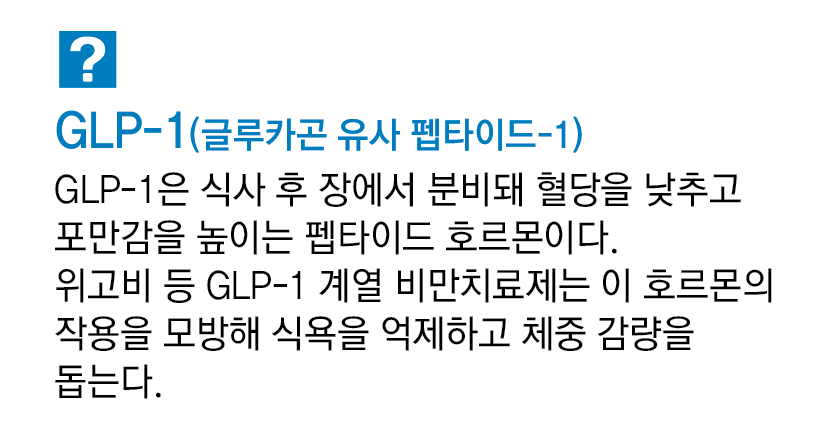
Peptides are substances in which amino acids are linked in chains and act as signaling molecules in the body, similar to hormones. Recently surging glucagon‑like peptide‑1 (GLP‑1) class obesity and diabetes treatments are also made from artificially synthesized peptides. Eli Lilly’s “Mounjaro” and Novo Nordisk’s “Wegovy” are representative examples. As sales of these drugs, which mimic hormones that suppress appetite and increase satiety, have soared, the corporate values of the two companies have surged. In particular, Eli Lilly’s market capitalization has exceeded USD 1 trillion (approximately KRW 1,479.5 trillion), making it the world’s largest pharmaceutical company by market value.
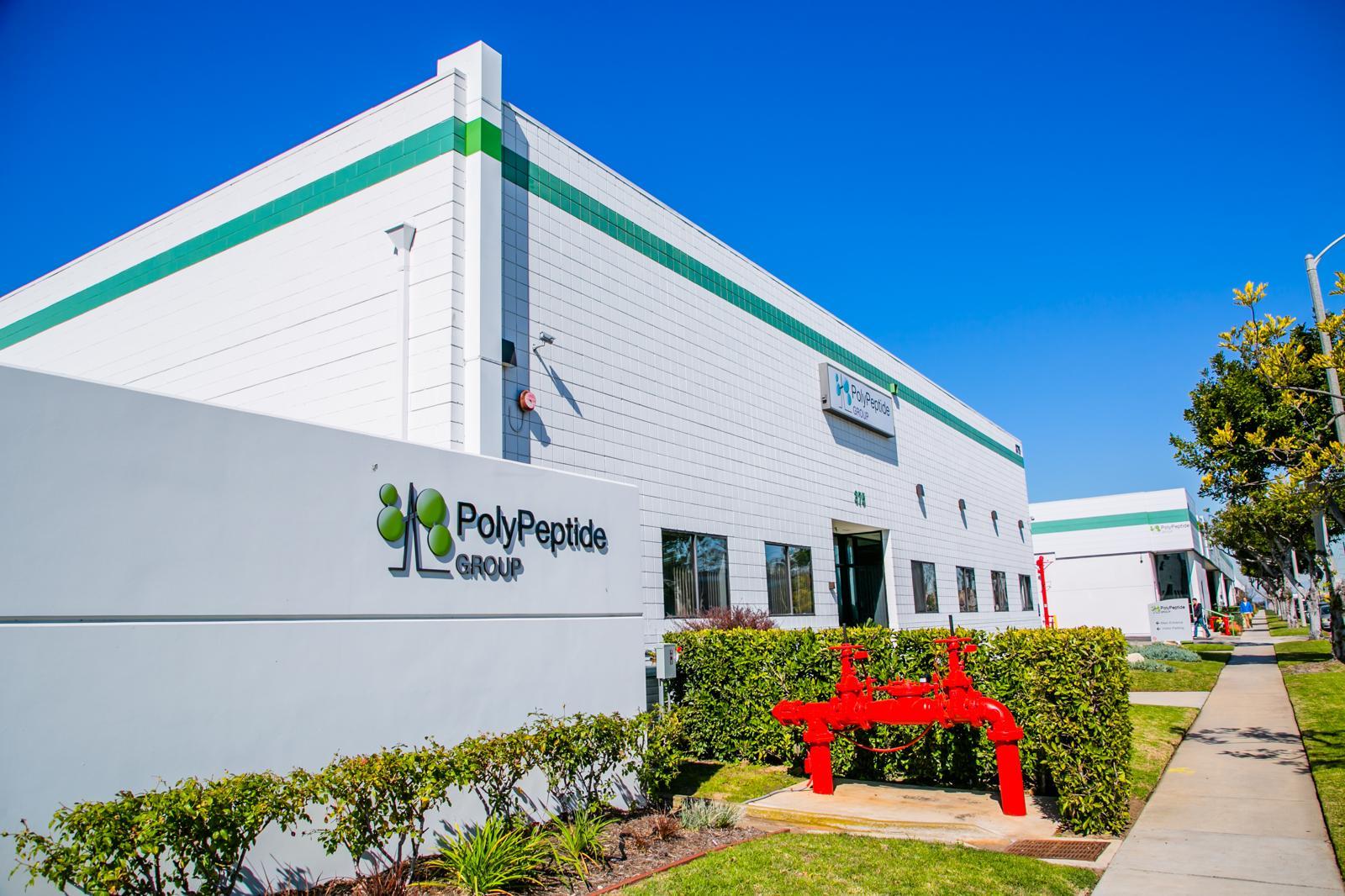
PolyPeptide Group, which Samsung Biologics is acquiring, was spun off from global pharmaceutical company Ferring in 1996 and, together with Swiss company Bachem, forms the leading group in peptide‑based therapeutics development and production. The acquisition is also viewed as targeting the rapidly increasing demand for peptide‑based obesity drugs. Goldman Sachs Research has projected that the global GLP‑1 obesity drug market could grow to as much as USD 150 billion (about KRW 222 trillion) around 2030–2035, while Morgan Stanley forecasts expansion to as much as USD 190 billion (about KRW 281 trillion) by 2035.
The emergence of oral obesity drugs and expanded coverage for obesity treatments under the U.S. public insurance program Medicare are also expected to underpin market growth. Lee Seung‑kyu, Vice Chairman of the Korea Biotechnology Industry Organization, said, “The fact that Samsung Biologics has expanded its business from cell‑based biopharmaceutical CDMO into the chemically based peptide segment will become a new milestone for the Korean bio industry.”
● Peptide production to expand in line with obesity drug growth
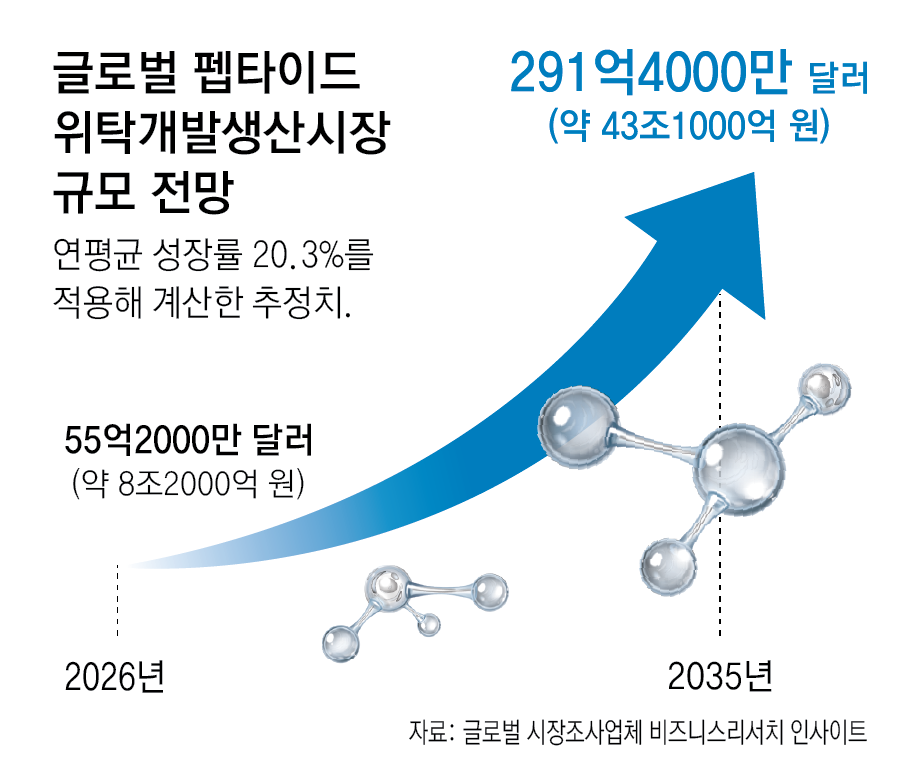
The more explosively the obesity drug market grows, the more demand rises for contract manufacturing of peptides, the key raw materials. Peptide production is also regarded as having high entry barriers. Because amino acids must be linked one by one, the process is complex and requires large‑scale facilities, leading many pharmaceutical companies to outsource production to specialized CDMOs instead of producing in‑house. Market research firm Business Research Insights forecasts that the global peptide CDMO market will grow from USD 5.52 billion (about KRW 8.2 trillion) in 2026 to USD 29.14 billion (about KRW 43.1 trillion) by 2035, representing an average annual growth rate of 20.3%. Roughly one‑third of the additional production capacity during this period is expected to be allocated to metabolic disease drugs such as GLP‑1 therapies.
Through this acquisition, Samsung Biologics will secure six production sites in five countries—Sweden, Belgium, France, the United States, and India—as well as more than 1,500 skilled personnel. It will also take over existing contracts under execution by PolyPeptide, enabling Samsung Biologics to continue ongoing business immediately after the acquisition. Jung Yoon‑taek, head of the Korea Pharmaceutical Industry Strategy Research Institute, said, “The peptide field is experiencing rapid market growth centered on obesity treatments, and it also has significant potential to expand into therapies for brain diseases such as dementia in the future.”
Samsung has recently been accelerating large‑scale investments, successfully closing a series of trillion‑won M&A deals. In May last year, it acquired German climate control company FlaktGroup for about KRW 2.4 trillion, followed by the current acquisition of PolyPeptide. Since Samsung Electronics Chairman Lee Jae‑yong was definitively acquitted by the Supreme Court last July and freed from legal risks, analysts say Samsung’s M&A moves have gained further momentum. Jung Yeon‑seung, a professor of business administration at Dankook University, said, “Decisions on major investments such as large‑scale M&As require the controlling shareholder’s resolve, and with legal risks now resolved, the current environment appears favorable for large‑scale investments.”
ⓒ dongA.com. All rights reserved. Reproduction, redistribution, or use for AI training prohibited.
Popular News