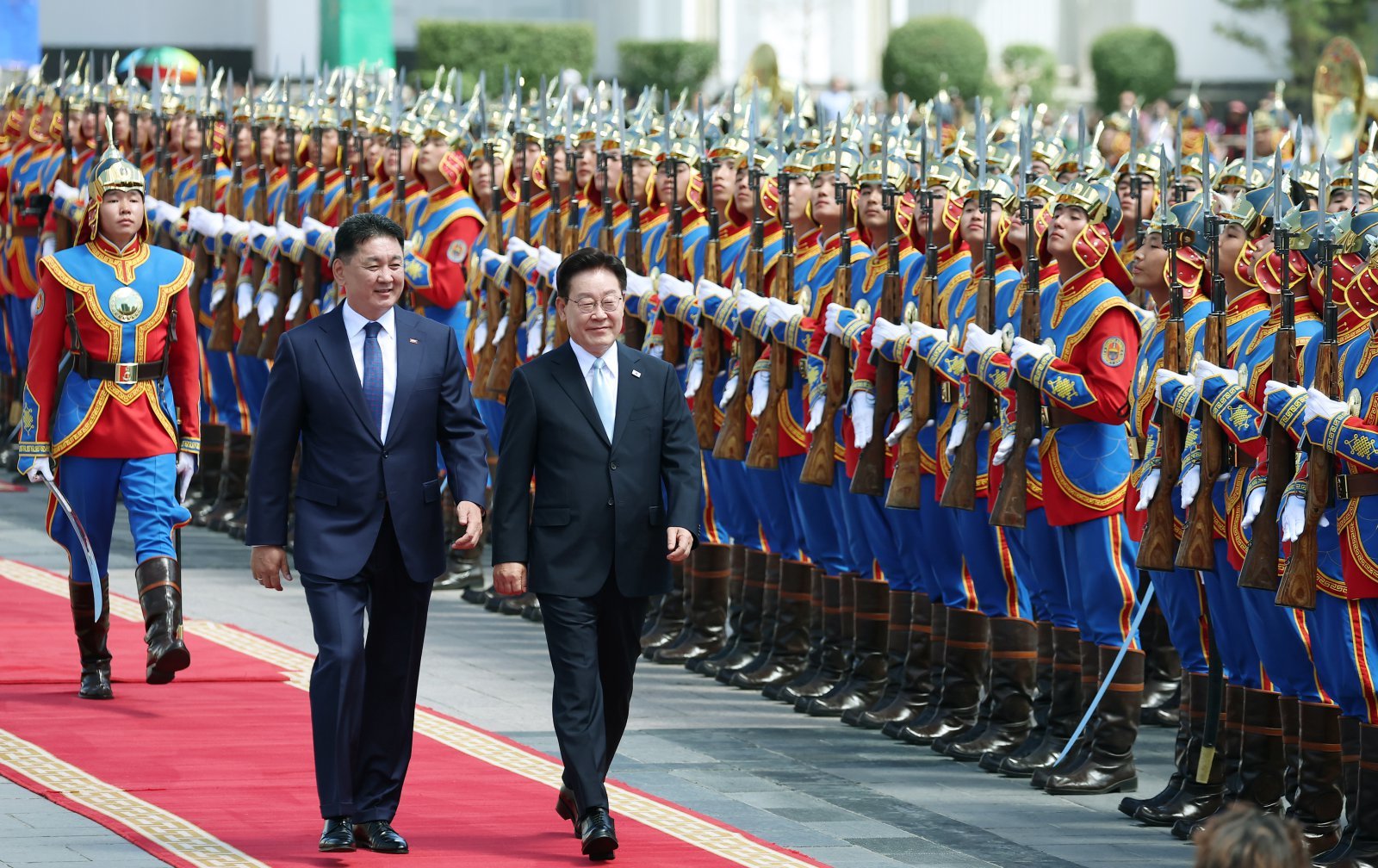
President Lee Jae-myung, on a state visit to Mongolia, inspects the honor guard together with Mongolian President Ukhnaagiin Khürelsükh during an official welcome ceremony held at Sükhbaatar Square in Ulaanbaatar on the 9th (local time). 2026.07.09. Newsis
“I heard that with Korean shops, restaurants, cafés, and companies clustered in Ulaanbaatar, such a vibrant Korean economic zone has formed that it is even called ‘Mongtan New Town’.”
President Lee Jae-myung, paying a state visit to Mongolia on the 10th, said this, remarking, “Mongolia’s nomadic spirit of seeking new paths across vast grasslands as the stage of life and Korea’s distinctive pioneering spirit serve as a major link that enables mutual understanding.”
As President Lee noted, Mongolia in reality closely resembles Korea. Among Korean tourists visiting Mongolia, there are reviews saying “it feels as if being in Korea,” supporting the assessment that the label “Mongtan New Town (a portmanteau of Mongolia and Dongtan)” is quite fitting.
● K-convenience stores dominate neighborhood commerce… hypermarkets accelerate territorial expansion
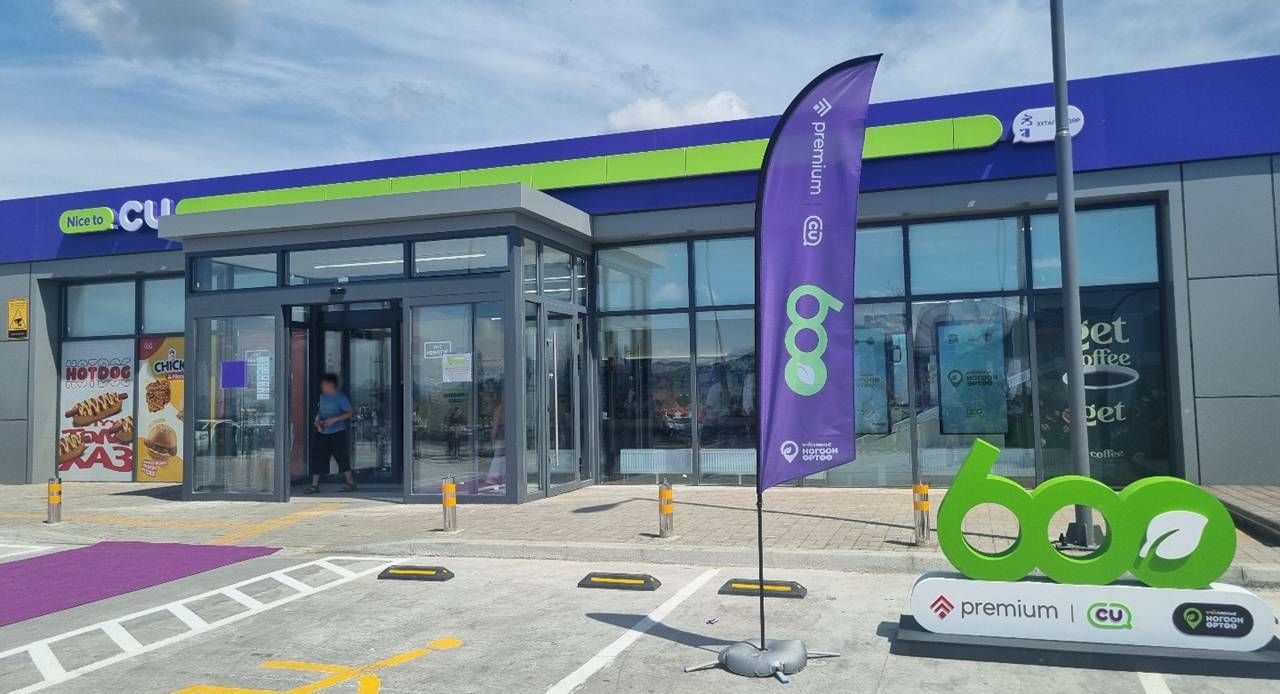
Major domestic retail companies moved early to enter the local market and build distribution networks. CU, a convenience store chain operated by BGF Retail, opened its 600th outlet in Mongolia, the “Khotag-Undur District Store,” last month. CU explained that this was the result of consistently pursuing locally tailored operating strategies and strengthening its business competitiveness.
Exterior view of CU’s 600th store in Mongolia. Provided by BGF Retail
CU entered the market in 2018 by signing a master franchise contract with local company Premium Nexus Group, starting with 21 outlets in the first year and expanding to 56 in 2019, 103 in 2020, 441 in 2024, and 541 in 2025. From the outset it dispatched Korean specialists to oversee overall operations including merchandise, quality control (QC), and facilities. Based on this, its partner established a ready-to-eat food center capable of producing a total of 80,000 meals. Last year, it doubled its ambient-temperature logistics centers to two buildings and introduced Korea’s digital picking system and BGF’s global IT system into the local market.
Latecomer convenience store chain GS25 is also mounting a strong pursuit. Having entered Mongolia in May 2021 in partnership with Shunkhlai Group, the country’s second-largest conglomerate, GS25 has increased its number of outlets to nearly 300 in just three years. Its market share has surpassed 40%. Analysts say its strategy of localizing K-food such as tteokbokki and fried chicken, and developing convenience stores as multi-purpose infrastructure combining restaurant, café, and rest area functions, has proved effective.
Large-scale retail channels are also extending their footprint across Mongolia. Emart, which opened its first store in Mongolia in 2016, now operates six outlets. With an average of about 30,000 visitors per day on weekends, it has established itself as a leading local retail channel. Last year, sales of No Brand products in Mongolia exceeded KRW 10 billion, and this year they are expected to reach more than KRW 12 billion.
Exterior view of the first standalone No Brand store opened in Ulaanbaatar on the 10th. Provided by Emart
Having confirmed No Brand’s competitiveness, Emart opened the first standalone No Brand store in Ulaanbaatar on the 10th of this month. The store has a floor area of 836㎡ (about 253 pyeong), making it the largest among overseas No Brand standalone outlets. Starting with the second store at the end of this month, the company aims to expand to 15 stores by 2028.
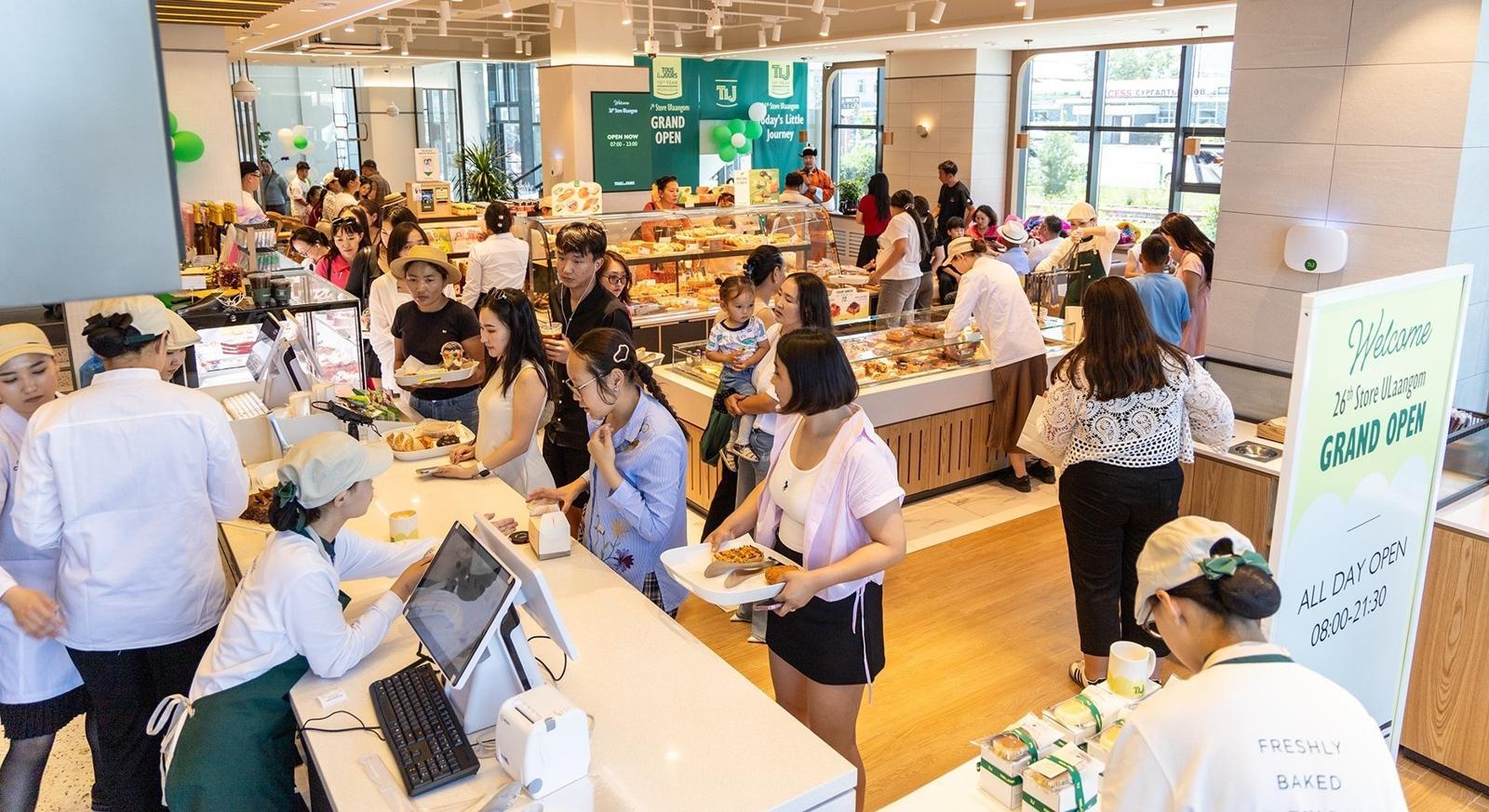
Food companies seeking breakthroughs in the stagnant domestic market are also accelerating their expansion into Mongolia. Tous Les Jours, operated by CJ Foodville, opened a new store of 241㎡ (about 73 pyeong) on the 13th of this month in Ulaangom, the key city in northwestern Mongolia. This is the first time a Korean brand has entered Ulaangom. On opening day, more than 600 customers visited the store.
Tous Les Jours entered Mongolia in 2016 as the first Korean bakery brand in the market, after signing a master franchise agreement with local company Artisan LLC. As of this month, it operates 26 outlets: 24 in Ulaanbaatar, one in Darkhan, and one in Ulaangom. A CJ Foodville official said, “It is highly meaningful in that we have expanded into a regional hub city farthest from the capital.”
● Young population clustered in the city prefers one-stop shopping… strong affinity for Korea also a factor
The backdrop to retail companies putting down roots in Mongolia lies in the country’s unique demographic structure and environment. Mongolia is a city-centric market, with about 1.7 million people—around half the population—concentrated in the capital Ulaanbaatar. Due to the long winters, demand is high for one-stop shopping that can satisfy multiple needs in a single location.
More than 60% of the population is aged 34 or under, which also contributes to the high receptiveness to global culture and trends. Analysts say that young generations clustered in the city are leading consumption patterns and trend formation, thereby creating an environment in which foreign brands can quickly take root.
Interior view of the Tous Les Jours Ulaangom store. Provided by CJ Foodville
A high level of affinity toward Korea in Mongolia is also cited as a major factor. According to the Ministry of Justice, about 60,000 Mongolians currently reside in Korea. In addition, many Mongolians have experience living in Korea for study or employment, which has spread Korean culture and lifestyle widely throughout Mongolian society. As a result, cultural barriers are low and the probability of success at the initial market-entry stage is high.
With President Lee’s recent state visit serving as a catalyst, the two countries have reached a principled conclusion on a Comprehensive Economic Partnership Agreement (CEPA), and market watchers expect Mongolian entry by consumer-goods companies to become more active. Once the agreement takes effect, tariffs on cosmetics will be eliminated immediately, and those on instant noodles and seasoned laver will be abolished within five years.
In particular, the expansion of K-beauty is expected to accelerate. Mongolia’s imports of Korean cosmetics totaled USD 44.93 million (about KRW 67.1 billion) last year, up 21.6% from the previous year and marking a record high.
The strength of K-beauty is seen as the result of a combination of factors: strong brand recognition, reasonable prices relative to quality, rapid reflection of trends, competitiveness in skincare, and effective social media-based marketing. The Korea Trade-Investment Promotion Agency (KOTRA) stated, “Among Mongolia’s young consumers, Korean cosmetics have established themselves as premium yet accessible brands.” Observers forecast that K-beauty’s growth momentum will intensify further with the latest tariff eliminations.
ⓒ dongA.com. All rights reserved. Reproduction, redistribution, or use for AI training prohibited.
Popular News