Toward a century-old enterprise, ESTRAFFIC Co., Ltd.
Targeting global markets with AI-powered traffic infrastructure
From Gwangandaegyo Bridge to the New York subway
Aiming for KRW 700 billion in orders and KRW 600 billion in sales
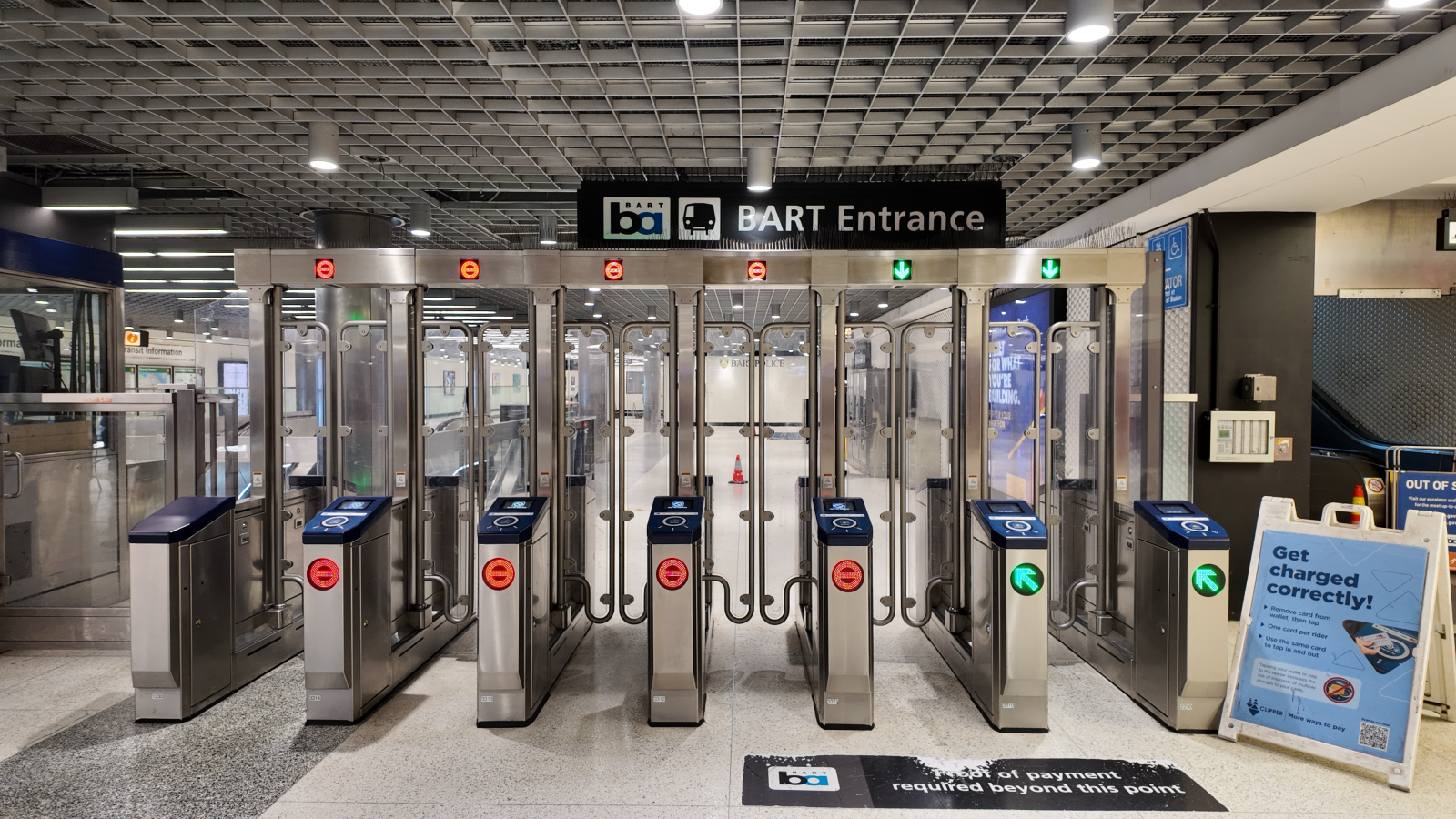
ESTRAFFIC reduced the fare evasion rate by more than 50% through the introduction of next-generation gates for BART in San Francisco, USA. Provided by ESTRAFFIC
The global transport infrastructure market is shifting its focus from “new construction” to “intelligent transformation.” Roads are being reorganized around non-stop, automated payment such as Hi-Pass, and railways around dedicated ultra-high-speed communication networks, unmanned operation, and artificial intelligence (AI)-based safety control systems. Market research agencies project that the smart transport infrastructure market, estimated at USD 140 billion (about KRW 210 trillion) in 2026, will more than double by 2031.
In particular, in the United States and Europe, “remodeling demand” to upgrade aging fare collection and control facilities into advanced systems is emerging as a new growth driver. In Korea, the companies that pioneered this market are not widely known by name. However, a closer look at the field tells a different story.
The company that replaced subway gates in Washington and San Francisco in the United States and implemented a smart tolling, non-stop toll collection system on the Gwangan Bridge in Busan is ESTRAFFIC Co., Ltd., a transport infrastructure specialist that spans roads, rail, and communications.
Founding pledge of “no failure,” 4 years and 6 months to listing CEO Moon Chan-jong founded ESTRAFFIC in 2013 by taking over the transport solution business from Samsung SDS. Based on accumulated transport technologies and infrastructure, he established the company as an employee-owned holding structure together with 30 fellow employees to ensure business continuity. ESTRAFFIC thus started as a company that inherited Samsung’s transport business DNA while pioneering an independent path.
That commitment bore fruit at a remarkable pace. Just 4 years and 6 months after its founding, the company surpassed KRW 100 billion in sales and completed a listing on KOSDAQ. Since then, the company has gone through Vision 2020 and Vision 2025 and is now promoting Vision 2030 under the slogan “BUILDING TRUST, MOVING FIRST.”
The core values shared by executives and employees are encapsulated in “D.R.I.V.E.”, an acronym for Discover (new possibilities), Reinvent (innovation), Integrity (trust), Value, and Expertise. These are linked to the company’s founding mission of “creating value on the road” and function as a growth engine for the company.
ESTRAFFIC evolves transport infrastructure with AI The path chosen by ESTRAFFIC, which was seeking growth beyond mere survival, was internalization of technology. The company defines its identity as “a company that uses AI software to make the transport facilities that ordinary citizens encounter every day smarter.” Vehicle imaging devices for the nationwide highway Toll Collection System (TCS), single-lane Hi-Pass system (ETCS), and multi-lane free-flow system (MLFF) have increased license plate recognition accuracy to 99.9% using deep learning technology and have been deployed across more than 250 tollgates nationwide and the Korea Expressway Corporation’s integrated video system. The company also trained its system on Bengali script, which uses a completely different character system from Korean, and applied it to the toll collection systems of the Padma Bridge and the N8 Expressway in Bangladesh, proving that its technology works overseas as well.
Taking a step further, the company developed “smart tolling,” a multi-lane free-flow toll collection system. This technology, which processes payments using only vehicle license plate numbers without Hi-Pass onboard units, is currently in operation on the Gwangan Bridge in Busan and the Seoul Jemulpo Tunnel.
In the subway sector, AI cameras that detect fare evasion are integrated with gates and deployed at BART in San Francisco and LA Metro in the United States. In the rail communications sector, LTE-R technology and smart stations, which were the first in the world to be commercialized, are operating in the Daegu and Incheon urban railways.
The company’s manufacturing capability, which directly develops and produces core equipment such as Hi-Pass antennas, imaging devices, vehicle detectors, and integrated lane controllers at its Pangyo R&D Center and its own plant in Seongnam, supports quality control and customized responses for customers. Recently, the company has also been leading the commercialization of “tagless gates” that process payments simply by walking through, using Bluetooth (BLE) and ultra-wideband (UWB) technologies.
Last month, ESTRAFFIC was finally selected as the lead institution for the Ministry of Land, Infrastructure and Transport’s “Wonju K-AI City (AI-specialized pilot city project).” As the lead company in a consortium of seven institutions, including Hyundai Motor, NHN Cloud, and other major Korean enterprises and IT leaders, it will spearhead a large-scale national project to build an AI center and demonstrate and visualize autonomous mobility technologies using LiDAR-based road object recognition and digital twin technologies.
Technology recognized in the United States, home of modern transport The technological capabilities thus built up are also gaining recognition overseas. In particular, they have been proven in practice in the U.S. market, known as one of the most demanding in the world. Building on its experience of replacing the second-phase transit card system at 277 Seoul subway stations in just 13 months, ESTRAFFIC successfully completed a project for 98 stations of the Washington Metro (WMATA) even during the COVID-19 pandemic, and finished the project for 50 BART stations in San Francisco four months ahead of schedule.
As a result, fare evasion rates at WMATA and BART have been cut by more than half. On the strength of this performance, ESTRAFFIC received the top program award together with Washington Metro for the WMATA project at the “Transport Ticketing Awards 2026” in London. The BART next-generation gate project also won successive awards from the International Partnering Institute (IPI), an international collaborative project organization, and the Construction Management Association of America Northern California Chapter (CMAA NorCal).
The company is currently piloting fare evasion prevention gates at six New York City subway stations, the largest subway system in the world. The secret behind ESTRAFFIC’s ability to deploy its technology even in unfamiliar cities lies in its system integration experience, accumulated since the Samsung SDS era, in places such as Beijing and Guangzhou in China and Delhi and Bengaluru in India. The company explains that “interfacing capabilities” that seamlessly connect diverse existing infrastructures with new systems in each city are the key to successful localization.
Targeting KRW 700 billion in orders and KRW 600 billion in revenue Building on its track record at home and abroad, ESTRAFFIC is now preparing for the next leap. Under Vision 2030, the company has set targets of KRW 700 billion in orders and KRW 600 billion in revenue. Over the next five years, it aims to restore scale by focusing on U.S. Automatic Fare Collection (AFC) projects and domestic rail and road projects, expand into the O&M (operation and maintenance) sector, and then, over the following 10 years, transform into a high value-added business encompassing AI, payments, and Mobility as a Service (MaaS).
To this end, the company recently decided to integrate its telecommunications business organization by merging its wholly owned subsidiary ST Jeonki Tongsin, thereby unifying planning, manufacturing, and communications network construction and maintenance. It also plans to accelerate the establishment of an AI center for Wonju K-AI City and the demonstration of autonomous mobility technologies using LiDAR-based road object recognition and digital twin technologies. The recently awarded ITS (Intelligent Transport System) project for the Gwangmyeong–Seoul Expressway (KRW 35.6 billion) is an extension of this transition. In addition, in the domestic rail signaling sector, its independently developed urban rail train control system KTCS-M will be applied for the first time to the Busan–Yangsan Line, with commercial operation scheduled to begin at the end of this year, while KTCS-2 for high-speed rail has recently completed development and is preparing to enter the market. Based on this, the company plans to aggressively pursue not only new and renovation markets in Korea but also markets in Southeast Asia and the United States.
“Innovation beyond one-off system builds toward subscription-based platforms”
[Interview] Moon Chan-jong, CEO of ESTRAFFIC Co., Ltd.
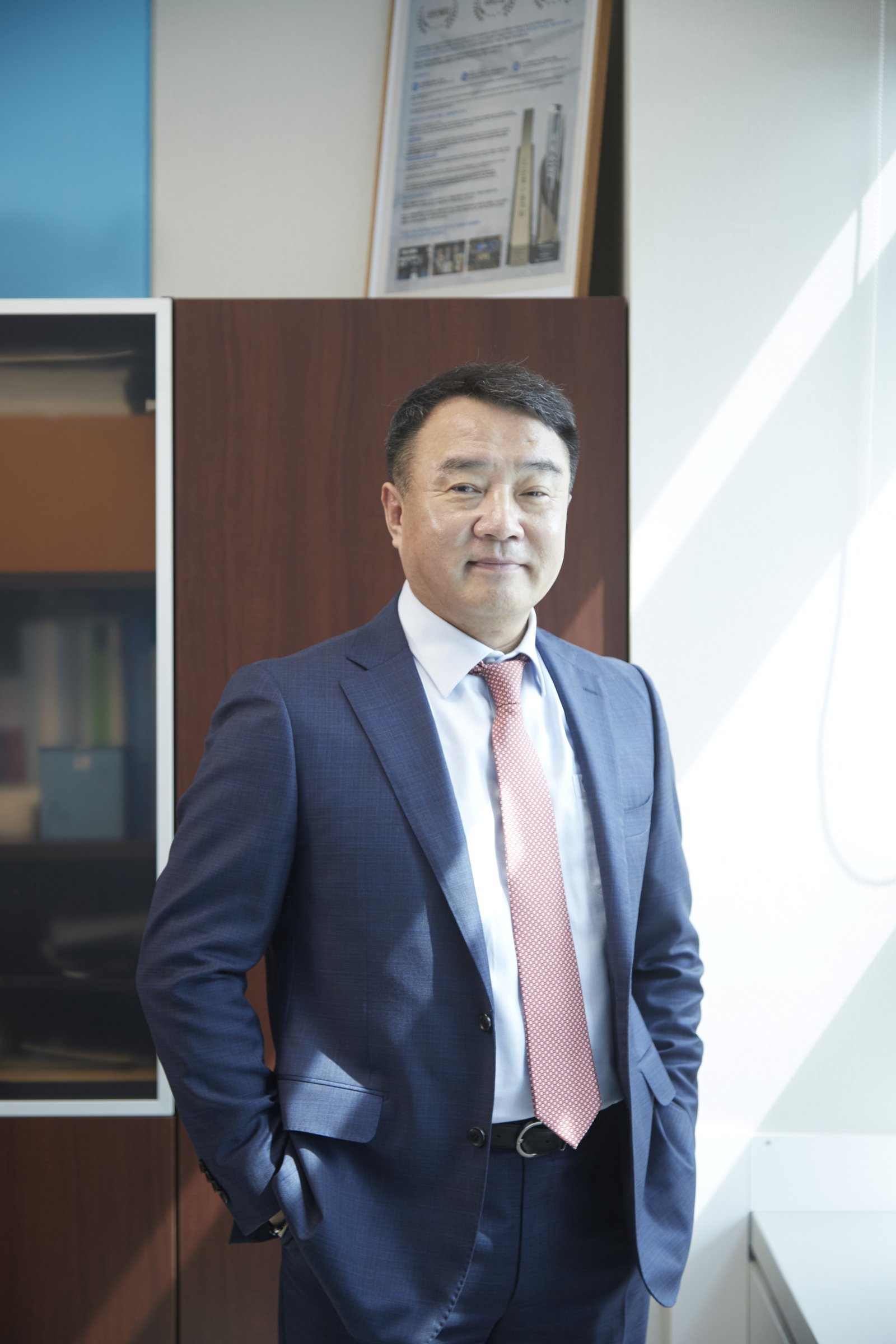
CEO Moon Chan-jong
“No less important than expanding our scale is the effort we are putting into changing the profit structure itself.”
CEO Moon Chan-jong of ESTRAFFIC (photo) believes that a business model that ends with merely building transport solution systems makes it difficult to enhance corporate value in the long term, and has presented diversification of the revenue model as a new task.
The key pillars are the open payment business, where monthly fees accumulate from payment traffic, and the transition of smart tolling and control systems to cloud-based SaaS. In the rail signaling sector, the company is preparing to expand overseas using the track record of its domestically verified train control system (KTCS-M), while in the road sector, it plans to foster road usage charging (RUC), which levies charges based on road usage in response to tax revenue gaps from fuel tax reductions due to the spread of electric vehicles, as a new growth engine.
Moon also stressed the need for institutional support at the government level to ensure the sustainable growth of Korea’s transport solution industry. He argued that fee calculations for public procurement projects should be made more realistic so that companies can secure R&D resources and compete on the global stage, and that when bidding for large-scale overseas projects, a “One Team Korea” financial support system should be established, where national financial institutions and private-sector technologies operate in tandem. As many small and medium-sized enterprises that lack collateral and creditworthiness win export contracts but fail to receive financial support, he believes one-stop support from the government or the Export-Import Bank of Korea is necessary.
Moon said, “We must constantly push beyond our limits without being bound by past successes,” adding, “We will broaden our technological touchpoints in overseas markets through strategic collaboration with global companies, and in AI transport technology and platform fields, we will expand our business scope through bold investments and mergers and acquisitions (M&A).”
ⓒ dongA.com. All rights reserved. Reproduction, redistribution, or use for AI training prohibited.
Popular News