Photo = Getty Images Bank
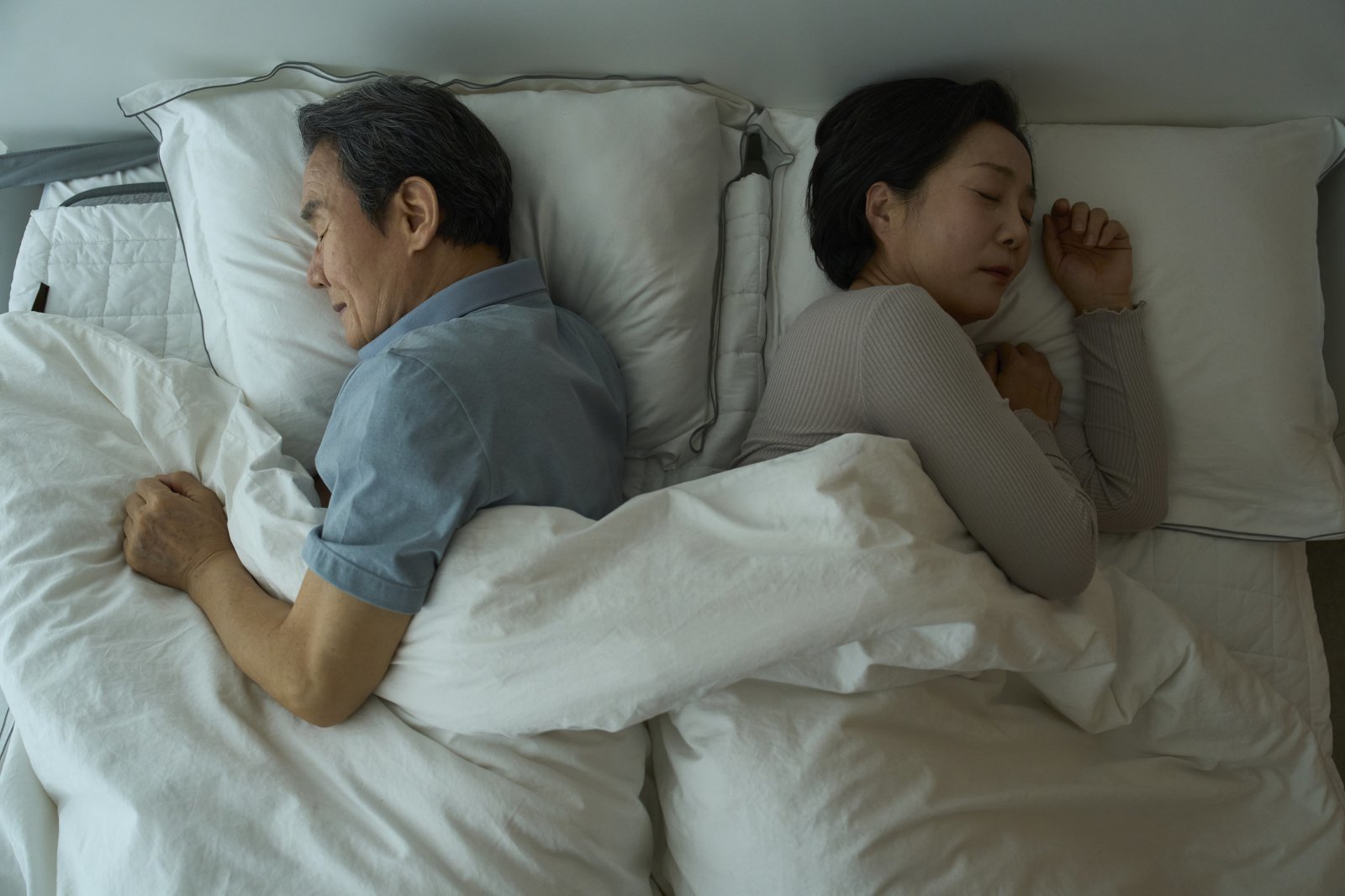
Contrary to the common belief that “seven hours of sleep a day is necessary,” new research has found that there is no single “correct” sleep duration that can be uniformly applied to everyone.
A joint research team from Sungshin Women’s University, Samsung Medical Center, Samsung Electronics, and Harvard Medical School published a study analyzing sleep data from 274,128 healthy adults in the United States who wore Samsung Galaxy Watches.
This study is characterized by its use of sleep data measured in real everyday life rather than in hospitals or laboratories. Unlike previous studies that mainly relied on restricted laboratory settings or surveys, the researchers used smartwatches equipped with sleep-tracking algorithms to analyze the actual sleep patterns of hundreds of thousands of people.
● “How many hours count as normal?”…The “7-hour rule” is challengedThe analysis showed that the sleep duration of healthy adults ranged from an average of 6 hours 30 minutes to 9 hours, depending on age group. Even among healthy adults, there was a difference of more than two hours in sleep time.
Based on these results, the research team concluded that there is no single sleep standard that applies equally to everyone. The amount of sleep needed can vary significantly from person to person.
● The age group with the least sleep is people in their 40s…“Chronic sleep debt”
Photo = Getty Images Bank
The study also confirmed that middle age is a vulnerable period for sleep health. Although it is commonly said that “sleep decreases with age,” the age group with the shortest sleep duration in reality was those in their 40s.
The average daily sleep duration for people in their 40s was 7 hours 32 minutes, the lowest among all age groups. The increase in sleep time on weekends compared with weekdays was also the largest at about 34 minutes. The researchers interpreted this as a phenomenon of “chronic sleep debt” among people in their 40s, who simultaneously face work, childcare, and parental care responsibilities.
In particular, 25.1% of people in their 40s slept less than 7 hours a day, meaning that more than 1 in 4 slept under 7 hours. In contrast, among people in their 20s, the proportion sleeping less than 7 hours a day was under 1 in 5.
● Research team: “No need to fixate on a specific number of sleep hours”
Photo = Getty Images Bank
The research team explained that this study is meaningful in that it can provide a more precise answer to the question “How many hours should one sleep per day?” by taking into account age, gender, and lifestyle patterns.
Professor Seo Soo-yeon of the Department of Psychology at Sungshin Women’s University said, “It is generally recommended to sleep 7–8 hours, but big data analysis showed that there is no single ‘correct’ sleep duration that applies to everyone,” adding, “Across all age groups examined, the range of normal sleep duration differed by more than two hours.”
She continued, “Rather than fixating on a specific number, it is important to consider whether one feels sufficiently rested and is functioning properly during the day.”
Eric S. Zhou, a sleep medicine specialist at Harvard Medical School, said, “This reference distribution can serve as a practical guideline when physicians counsel patients about sleep in clinical settings, and when public health authorities design sleep recommendation messages.”
The study was published in SLEEP, an international academic journal in sleep medicine.
ⓒ dongA.com. All rights reserved. Reproduction, redistribution, or use for AI training prohibited.
Popular News