[Hyundai Rotem – K-Defense Industry Takes Flight on the Global Stage]
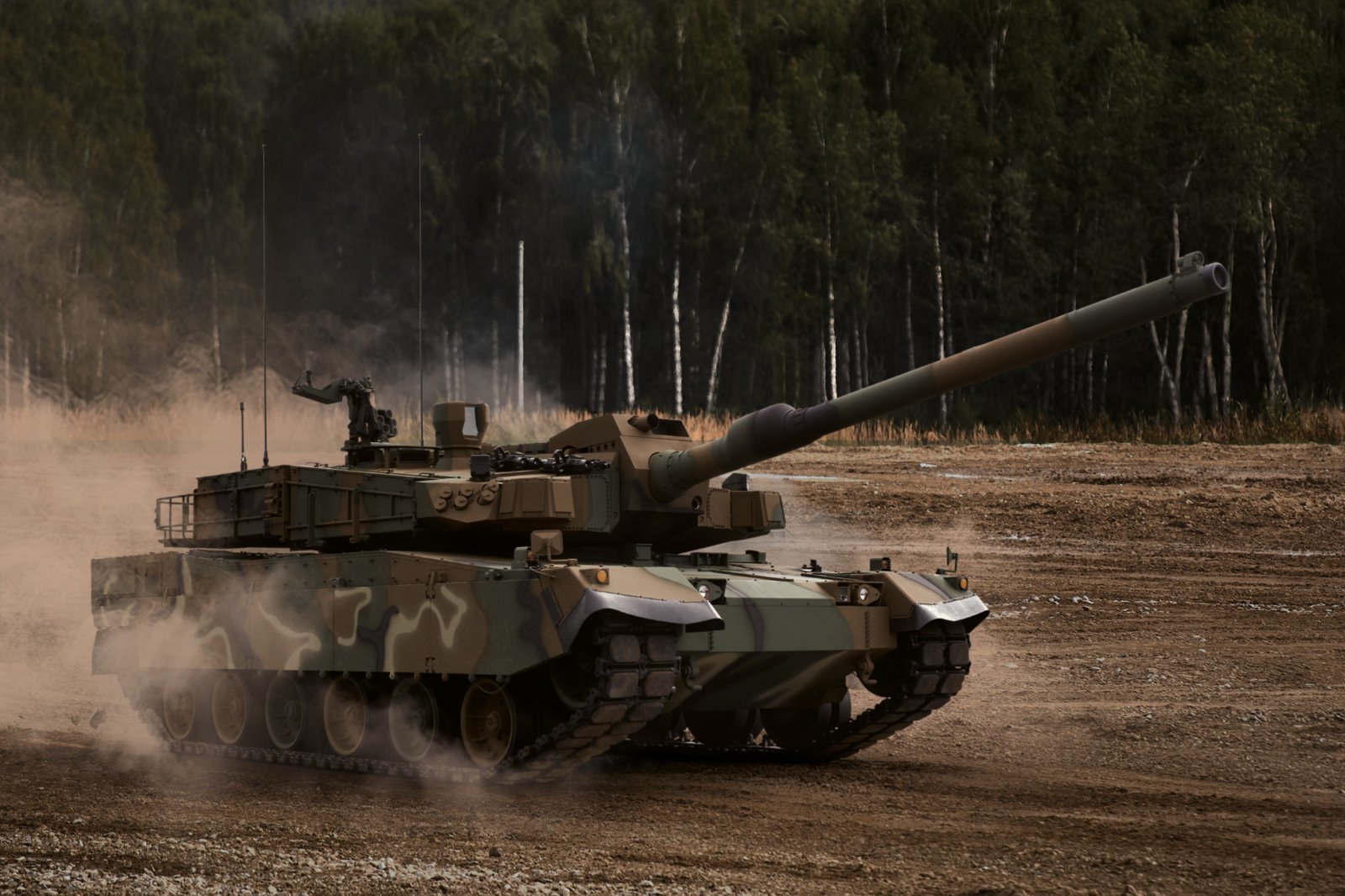
K2 tank. Provided by Hyundai Rotem
Hyundai Rotem is accelerating its global expansion beyond the domestic market, based on the technological capabilities and know-how accumulated over decades in the defense sector. The company is strengthening its market competitiveness around state-of-the-art ground weapon systems such as its flagship K2 tank, wheeled armored vehicles, and multi-purpose unmanned ground vehicles.
Furthermore, Hyundai Rotem is stepping up efforts to foster its aerospace business and expand its portfolio into advanced technology-based operations. Based on products mounted on space launch vehicles and guided weapons, such as methane engines, ducted ramjet engines, and hypersonic dual-mode ramjet engines, the company is presenting a vision of becoming a “comprehensive defense company” spanning both ground and space, and is working to build the related industrial ecosystem.
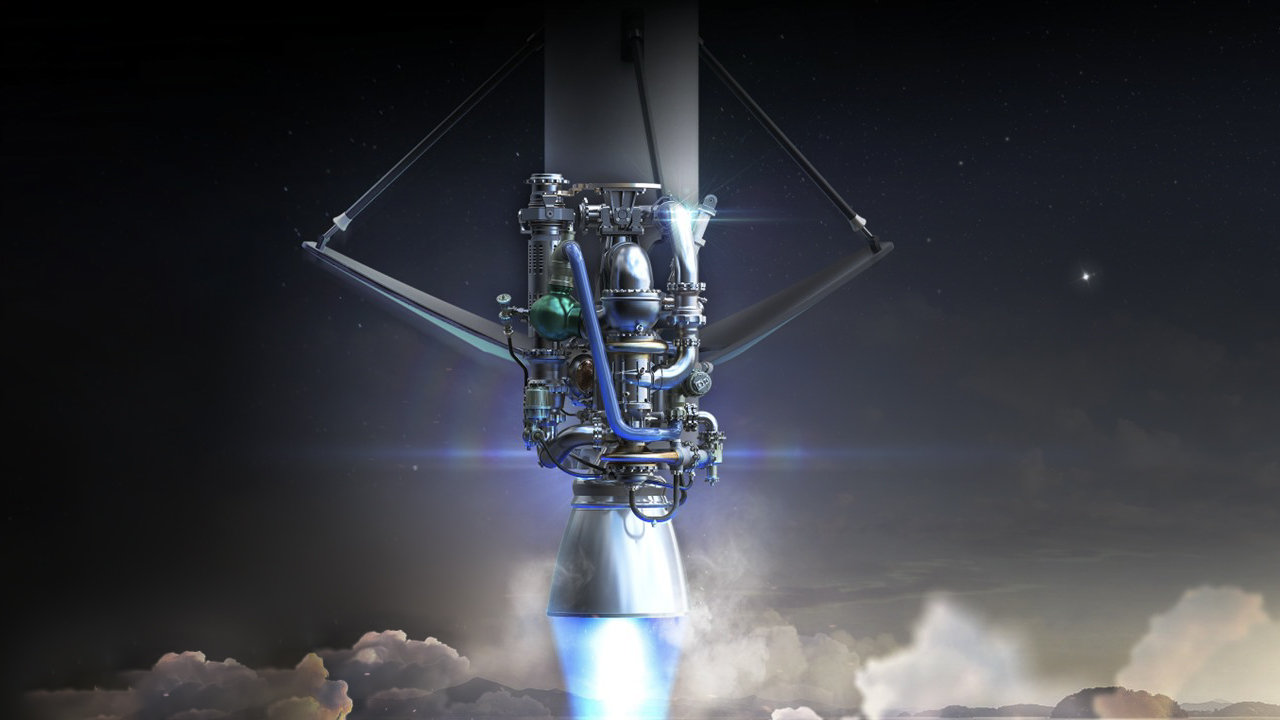
Rendering of methane engine.
The methane engine generates relatively little soot during combustion and is easy to maintain. It is also suitable for reusable launch vehicles due to its low propellant cost, high efficiency, and strong economic viability. The ducted ramjet engine and hypersonic dual-mode ramjet engine are mounted on cruise vehicles flying at supersonic speeds or higher. Unlike turbojet engines, ramjet engines operate by compressing air using shock waves generated by supersonic flight without turbines or compressors, making them a concentration of high-level advanced technologies with a high degree of development difficulty. The ducted ramjet engine improves efficiency by controlling airflow through a duct structure, while the dual-mode ramjet engine can switch between ramjet and scramjet (high-speed) modes depending on velocity.
Hyundai Rotem began producing ducted ramjet engines last year through the Agency for Defense Development’s project to develop a prototype for a Korean long-range air-to-air guided weapon. The company also participated in the “HICORE” program, a Korean hypersonic vehicle equipped with a dual-mode ramjet engine, and demonstrated its technological capabilities in flight tests by achieving a speed of Mach 6 (7,344 km/h), exceeding the development target of Mach 5 (6,120 km/h).
Hyundai Rotem has also secured testing capabilities for various aerospace devices and components. To verify sustained combustion at speeds approaching Mach, it built Korea’s first dedicated HICORE test facility. In the Nuri (KSLV-II) launch vehicle project, which succeeded in its launch in 2022, the company established propulsion system and propellant supply system test facilities and successfully carried out various performance tests.
Ground weapon systems are also continuously advancing. In 2022, Hyundai Rotem signed an export contract with Poland for K2 tanks, achieving the first-ever export of a domestically produced finished tank. The company has continued to post steady results, concluding a second executive contract last year. The K2 tank is evolving into customized models tailored to the needs of end users, accelerating its push into global markets.
The wheeled armored vehicle is also being exported beyond the domestic market. Hyundai Rotem won a contract for a wheeled armored vehicle project ordered by the Peruvian Army’s Arsenal in 2024, marking its first entry into the Latin American region. In addition, last year it signed a framework agreement with Peru for the supply of tanks and wheeled armored vehicles, opening up the possibility of further exports.
Hyundai Rotem is actively responding to future core technologies such as unmanned operation, automation, and electrification. Through research and development of advanced technologies based on the Fourth Industrial Revolution, the company is introducing products optimized for the manned-unmanned teaming (MUM-T) systems that have emerged as a global trend, preparing for growing demand in future markets.
The company has unveiled a next-generation tank design concept model based on a manned-unmanned teaming concept with unmanned turrets and drones, and is responding to market needs with the development of the HR-SHERPA multi-purpose unmanned ground vehicle.
The HR-SHERPA is an electrified unmanned platform independently developed by Hyundai Rotem that can perform missions in hazardous environments in place of personnel, thereby protecting human life. Depending on its mission, it can be equipped with various devices, and it offers multiple unmanned operating modes, including follow-me convoy driving, remote driving, and waypoint-based autonomous driving.
Hyundai Rotem was the first to propose the development of a multi-purpose unmanned ground vehicle as next-generation unmanned equipment to the Defense Acquisition Program Administration, and in 2020 it won, on an exclusive basis, the rapid prototyping project for the multi-purpose unmanned ground vehicle.
ⓒ dongA.com. All rights reserved. Reproduction, redistribution, or use for AI training prohibited.
Popular News