※ Kyungpook National University Startup Support Group, together with SKT, operates the “Startup Leap Package (Large Enterprise Collaboration Track)” for startups. It promotes innovative growth by activating startups’ ideas and technologies based on collaboration with large enterprises. IT Donga introduces promising startups that participated in the Kyungpook National University–SKT collaboration track of the Startup Leap Package.
“This is an era in which many domestic companies and startups are taking on autonomous driving technology. The problem is that even if they develop the technology, it is difficult for them to independently build the processes for testing and verification. They must secure expertise in standard specifications, testing capital, and even verification infrastructure. Implementing all these elements appropriately brings double and triple burdens. People and Mobility is a company that provides autonomous driving testing services for SMEs, mid-sized companies, universities, and research institutes. It does not stop at simply selling solutions or equipment, but cooperates across the board, from test agency services to consulting.”
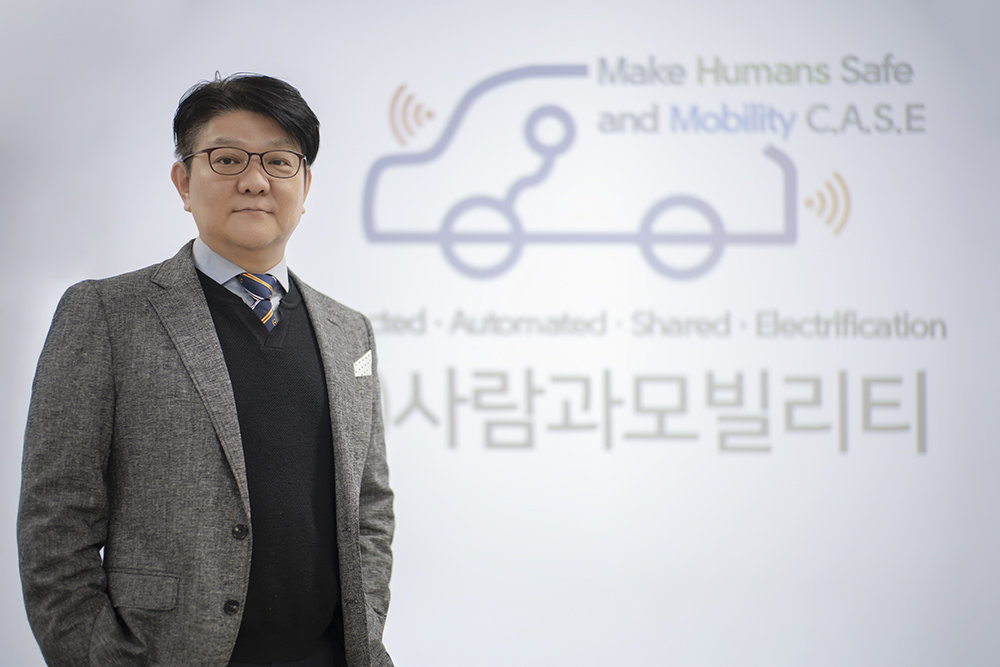
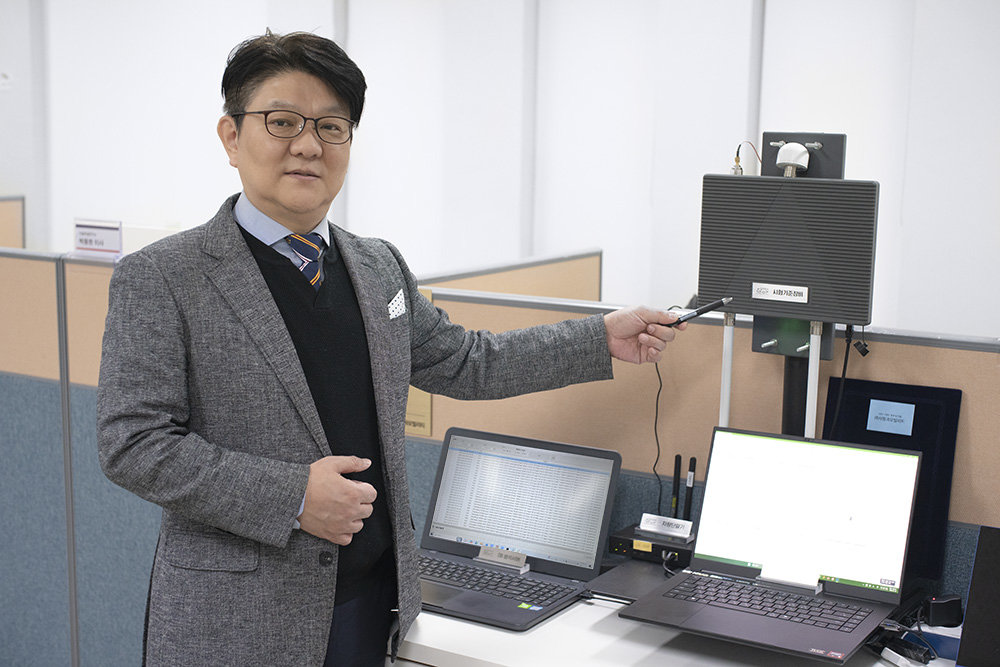
CEO Kwon Oh-yong of People and Mobility worked in the related industry for about 30 years at institutions including the Korea Research Institute for Human Settlements and the Korea Intelligent Transport Systems Association, and founded People and Mobility in 2019 / Source=IT Donga
People and Mobility is a specialist company in autonomous cooperative driving and connected car service development and testing, conducting business in various areas related to vehicle-to-everything communication (V2N2X), including manufacturing and sales of test equipment hardware, test agency services, and consulting on standard specifications. CEO Kwon Oh‑yong has worked in the mobility-related industry for nearly 30 years since 1998 at the Korea Research Institute for Human Settlements and the Korea Intelligent Transport Systems Association, as well as at non-profit organizations such as the e-Mobility Research Association, and as head of the Korea office of Cenex, the UK state-owned low-emission vehicle certification body.
On the practical side, he led the vehicle safety service standards working group in the Daejeon–Sejong C-ITS pilot project, Korea’s first C-ITS (Cooperative Intelligent Transport Systems) project, and recognized early on the importance of digital road infrastructure and mobility-related industries. In 2019, he founded People and Mobility with the conviction of internationalizing Korea’s digital road infrastructure standards and building people- and safety-centered infrastructure. IT Donga met with CEO Kwon Oh‑yong of People and Mobility, who has continuously contributed to Korea’s autonomous driving industry and digital road infrastructure.
What is autonomous cooperative driving V2N2X, and why is standardization necessary?
People and Mobility is introduced as a “specialist company in developing standards for autonomous cooperative driving V2N2X vehicle safety function-related services and standard conformity test methods.” In plain terms, V2N2X refers to technology that combines cloud connectivity with vehicle-to-vehicle communications in autonomous vehicles and connected cars. Today’s autonomous driving technology is executed within the vehicle itself, but it collects and recognizes information only within roughly a 200-meter range while driving. As a result, sensors may collect incorrect information or experience errors and malfunctions.
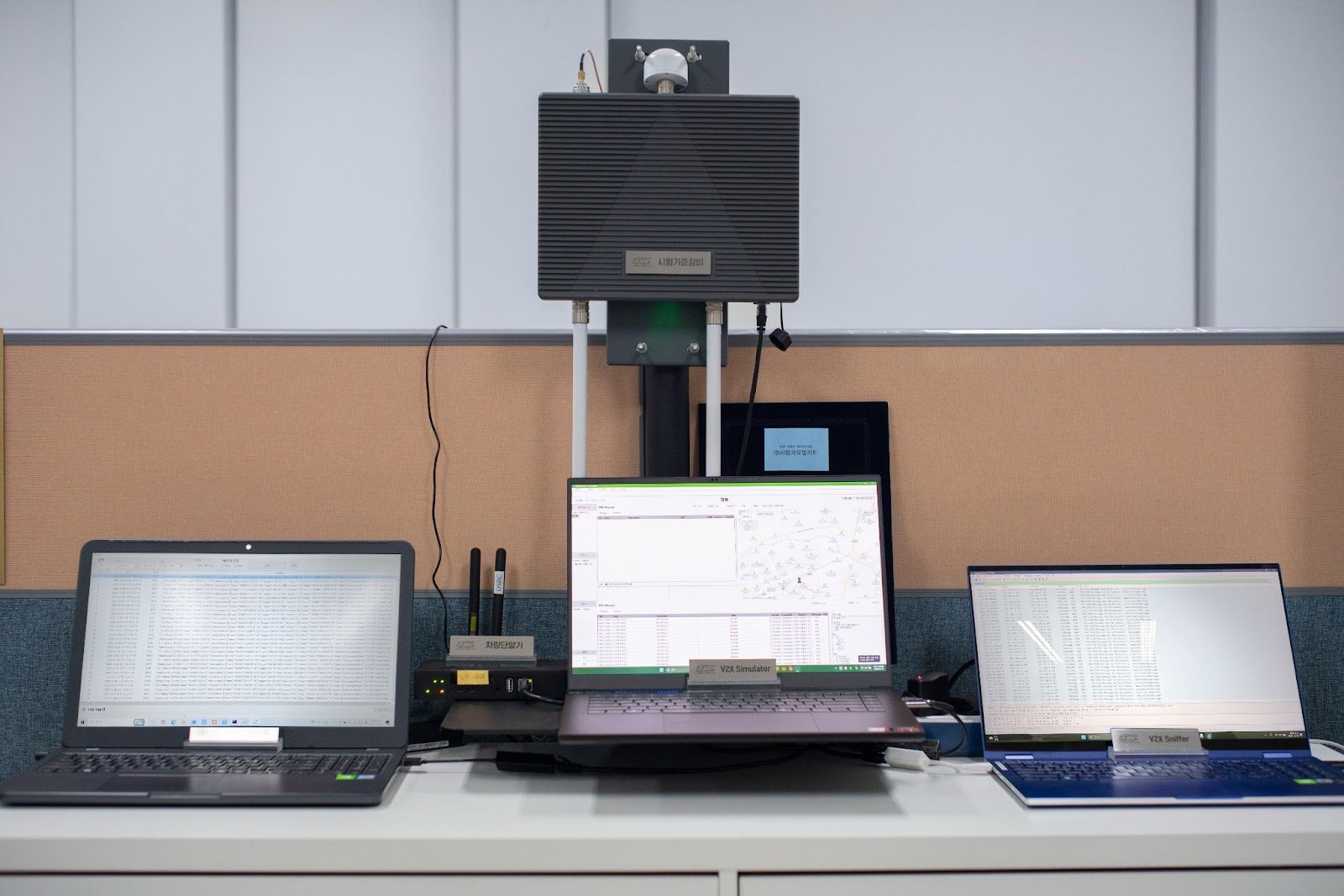
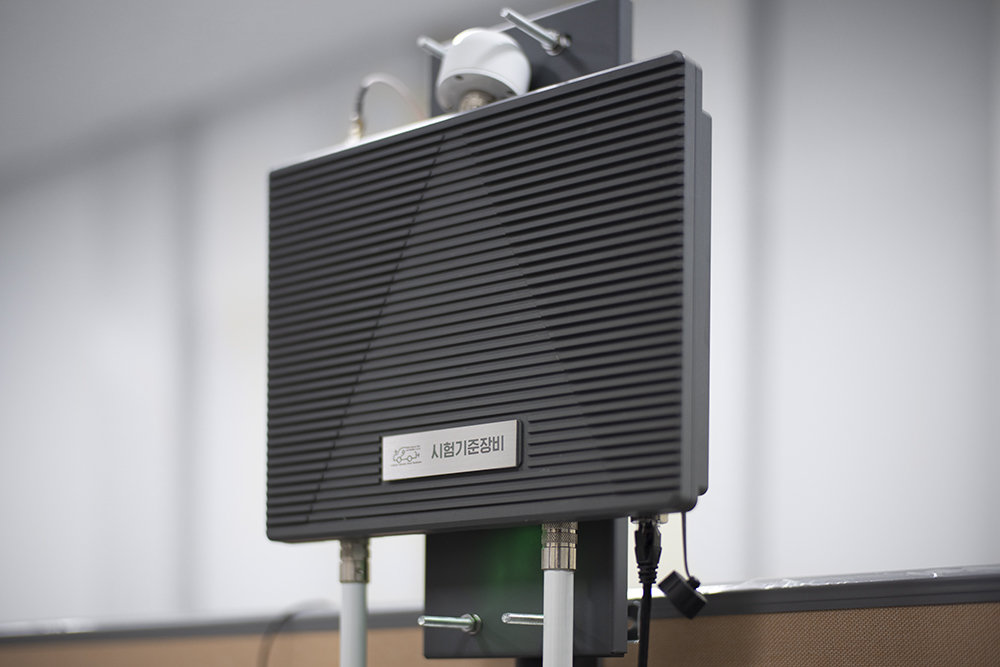
CEO Kwon Oh‑yong introduces reference equipment for confirming standard conformity via LTE-V2X wireless communication, completed through open innovation with SK Telecom / Source=IT Donga
The concept that emerges to compensate for this is “autonomous cooperative driving.” Through information exchange between mobility units, road conditions and collected information are shared, and further, data are collected and exchanged through various types of roadside infrastructure to support autonomous driving. For this to be possible, not only vehicle-to-vehicle communication standards but also road infrastructure must be unified under standard specifications for smooth communication. People and Mobility develops the necessary communication specifications, corresponding equipment, and standardization tests for autonomous cooperative driving.
CEO Kwon Oh‑yong added, “In addition, we participated in a Ministry of Oceans and Fisheries project to develop automatic loading and unloading technology for import-export autonomous vehicles, where we designed services between import-export carriers and autonomous vehicles, and in Gunsan, Jeonbuk, the mecca of commercial vehicles, we defined 14 services and 28 scenarios applied to the autonomous driving demonstration road, and proposed test methods and inspection plans.”
In response to a question about whether there are competitors in the road infrastructure or autonomous driving test sector, he replied that there are only companies with similar businesses. CEO Kwon Oh‑yong said, “WAITZ, an LIG affiliate, and Germany’s Rohde & Schwarz can be considered peers in the digital road infrastructure sector. However, WAITZ focuses on equipment and manufacturing for test evaluation and vehicle-to-vehicle communication, while Rohde & Schwarz is a radio and communications company that covers not only vehicle infrastructure but all fields. People and Mobility is the only company that mainly provides consulting for interoperability and standard conformity testing between equipment as required by the government.”
Business scalability expanded through the Kyungpook National University Startup Support Group’s ‘Leap Package’
Reference equipment for confirming standard conformity via LTE-V2X wireless communication, used to verify the reliability of autonomous vehicles / Source=IT Donga
In May last year, People and Mobility was selected for the “Startup Leap Package” of the Ministry of SMEs and Startups and the Korea Institute of Startup & Entrepreneurship Development, and met the Kyungpook National University Startup Support Group as the implementing institution. CEO Kwon Oh‑yong said, “Until just before that, commercialization of our test evaluation services centered on consulting work related to service specifications and test methods, but upon being selected for the Leap Package, we completed an environment for reference equipment to check standard conformity via LTE-V2X wireless communications, and applied for a patent related to wireless communication test methods that enable indoor tests at real-road levels.”
He continued, “Specifically, together with SK Telecom’s Public Solutions Business Team and the Jeonbuk Institute of Automotive Convergence Technology, we participated in building demonstration infrastructure for autonomous transport commercial vehicles in Saemangeum, and promoted the development of services and equipment for demonstrating commercial-vehicle-specific technologies, as well as standard conformity test evaluations.”
He added, “For this project, after the Jeonbuk Institute of Automotive Convergence Technology placed the order and SK Telecom built the Digital Hub Center, we cooperated across the board in test and evaluation of autonomous transport services. There, we proposed service specifications and test methods, and directly participated in inspections related to digital road infrastructure, sensors, and equipment, including information linkage between road users, autonomous transport commercial vehicles, and infrastructure, driving data collection, driving strategy information provision, and the establishment of autonomous transport processes.”
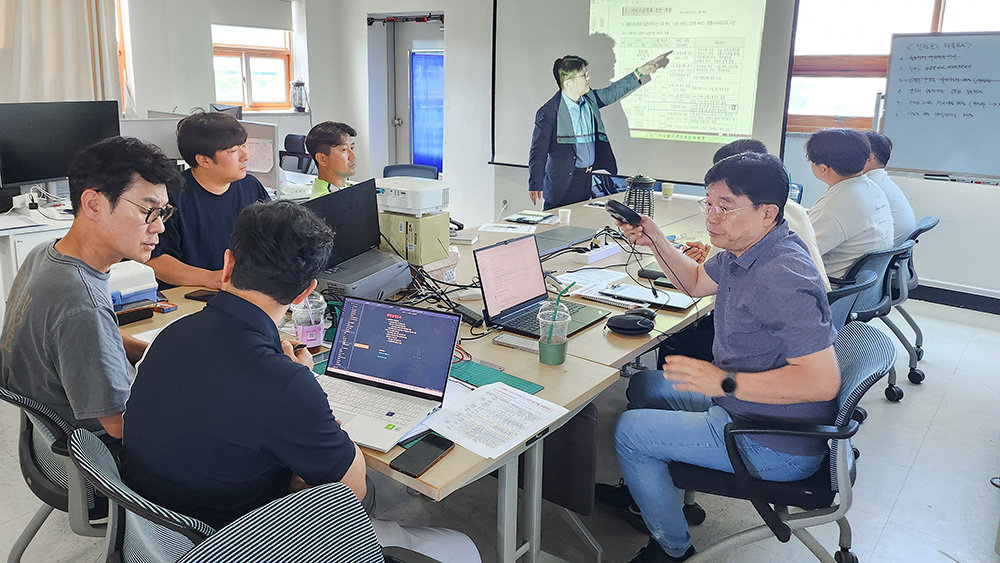
People and Mobility and SK Telecom’s Public Solutions Business Team conduct a meeting related to their collaboration / Source=People and Mobility
Manager Kwon Gap-jong of SK Telecom said, “Among the autonomous transport services applied to this project, the region-specific services defined for the Saemangeum demonstration road require a mandatory process of proactively developing and validating service specifications,” adding, “People and Mobility led specification development from the definition of region-specific services to test method specifications, system implementation plans, and service inspection plans, and provided test evaluation equipment and patented technology, collaborating with SKT so that conformity test evaluations could be carried out in an integrated manner.”
Team Leader Park Hyun-bae of the Jeonbuk Institute of Automotive Convergence Technology also said, “The Saemangeum autonomous transport commercial vehicle demonstration infrastructure is highly important as it is specialized in freight transport technology demonstration among the nationwide autonomous driving pilot operation zones,” adding, “As a tenant company of our institute, People and Mobility will have many areas for collaboration not only in autonomous transport but also across future commercial vehicles and software-centric vehicle fields.”
People and Mobility was able to complete this reference equipment thanks to R&D support from the Startup Leap Package / Source=IT Donga
The Kyungpook National University Startup Support Group provided the foundation for People and Mobility to focus on collaboration and operate its business smoothly. CEO Kwon Oh‑yong said, “Since May last year, after the Startup Leap Package, the Startup Support Group has connected us with the specialized consulting firm Darae Strategic Commercialization Center to support national R&D support programs, and has helped with everything necessary for business operations, including IR (corporate introduction) evaluations, business plan drafting, and other support. We developed and filed patents for the reference equipment for autonomous transport service test and evaluation—which is at the core of the Saemangeum project—using the Leap Package budget, and they are also helping define the direction of follow-up projects.”
“Autonomous driving requires public–private cooperation… Korea’s institutional gaps and blind spots must be improved”
Last year, People and Mobility generated revenue from equipment, testing, and consulting, confirming its market potential, and CEO Kwon Oh‑yong regards this year as a takeoff year. He said, “Through collaboration with a large enterprise, we opened up one possibility with SK Telecom, but the broader framework of autonomous driving lies in the realm of public infrastructure. This year, we plan to commercialize equipment, testing, and consulting altogether, and expand the scope of autonomous cooperative driving centered on Gunsan and Iksan.” He continued, “Another goal this year is to work with international certification body KIWA, AI and software certification agency AIWORKX, and Professor Kim Byung-cheol of the Department of Industrial and Management Engineering at Dong-A University to challenge and preempt certification for the scenario-based international standard (ISO 34505:2025-06) for autonomous driving mobility.”
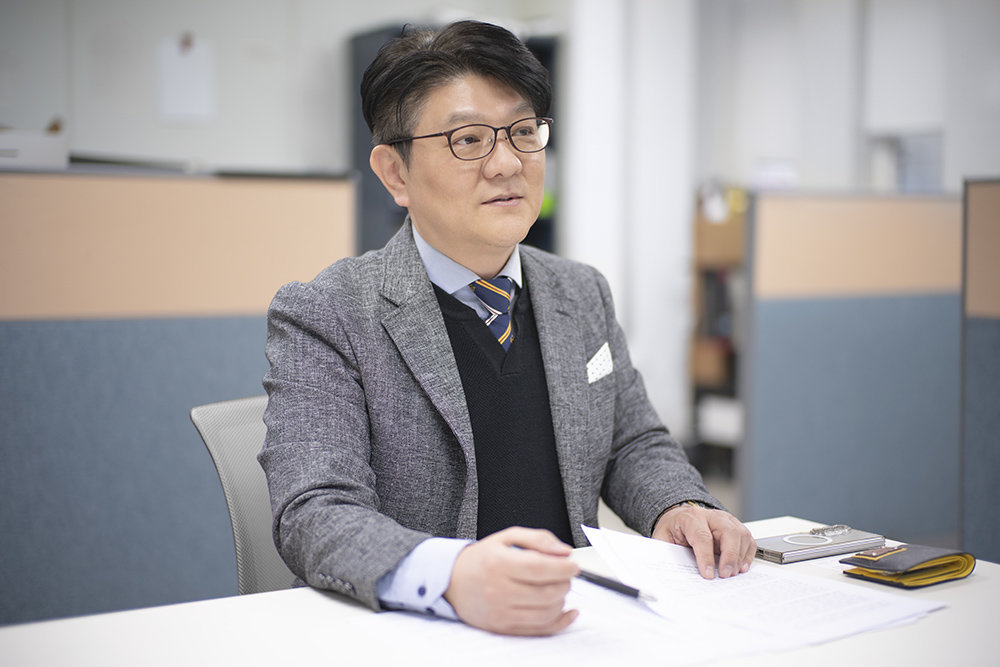
CEO Kwon Oh‑yong said that defect prevention and design responses for autonomous cooperative driving infrastructure are not being implemented, and that the Ministry of Land, Infrastructure and Transport must establish countermeasures / Source=IT Donga
Meanwhile, CEO Kwon Oh‑yong said that before the popularization of autonomous driving, it is urgent to design and implement measures to prevent malfunctions, defects, and failures in autonomous cooperative driving infrastructure. He said, “Our government has announced that it will complete nationwide digital road infrastructure construction by 2027. However, although we proposed and planned R&D on design and response technologies to prevent malfunctions, defects, and failures caused by permanent facilities for which the state is responsible, the Ministry of Land, Infrastructure and Transport decided not to pursue it. Most facility-related R&D projects consider only physical safety, and may lack safety in terms of electricity and electronics, automation, and AI stability. Even at this moment, this is a nationally urgent issue, and safety measures must precede digital road infrastructure as a prerequisite.”
In simpler terms, the point is that digital road infrastructure deployed for autonomous cooperative driving may send incorrect information due to errors or malfunctions and thereby cause accidents, yet only the digitalization of infrastructure is being pursued, while basic measures to prevent and preempt such issues are lacking. It means that there is a possibility of casualties caused not by autonomous vehicles themselves but by commands from road infrastructure, and all responsibility for this lies with the state. Damage may be covered by taxes, leaving only victims behind. This reveals CEO Kwon Oh‑yong’s conviction that safety must be secured before business expansion through digitalization.
In closing, CEO Kwon Oh‑yong stated, “People and Mobility will continue to grow as a company that sets standards for safe mobility and infrastructure, and provides the verification infrastructure and expertise needed by the government and industry. To build a safer society through autonomous cooperative driving infrastructure, thorough and gap-free safety verification is essential. We will help build a market and society that considers not only mobility but also infrastructure safety.”
IT Donga reporter Nam Si-hyun (sh@itdonga.com)
ⓒ dongA.com. All rights reserved. Reproduction, redistribution, or use for AI training prohibited.
Popular News