If a startup has technology and ideas but cannot realize its potential due to a lack of funding, manpower, or brand recognition, it is a regrettable situation. The Seoul National University of Science and Technology (hereinafter SeoulTech) Startup Support Group, in cooperation with the Ministry of SMEs and Startups and the Korea Institute of Startup & Entrepreneurship Development, has implemented the “Global Corporate Collaboration Program” to provide collaboration opportunities between such startups and global conglomerates, thereby supporting promising startups in expanding domestically and internationally. In 2025, this program again achieved notable results.
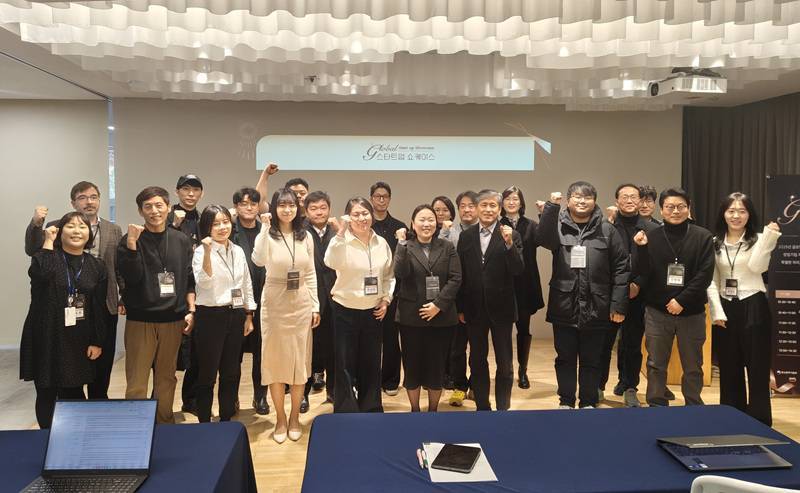
Stakeholders from startups in the collaboration program gathered together at the Seoul National University of Science and Technology “Global Startup Showcase” on December 18 / Source=ITDongA
This program is a scale-up support initiative designed to enhance the technology of domestic startups founded within the last seven years and assist their overseas expansion. In 2025, 364 startups were selected through 14 programs nationwide, of which 58 companies participated in the program led by SeoulTech.
According to the SeoulTech Startup Support Group, as the scale of the program expanded in 2025, participating companies’ performance also increased significantly. The total revenue of the 2025 participating companies reached KRW 267.6 billion, with KRW 48.9 billion in investment attracted, 211 companies entering global markets, and 160 new jobs created.
The three-year growth trend is also clear. Since the program was fully launched in 2023, the total revenue of participating companies has grown from KRW 37.9 billion to KRW 60.4 billion (2024), and then to KRW 267.6 billion (2025). Investment attracted increased from KRW 18.7 billion to KRW 27.1 billion and then to KRW 48.9 billion, while the number of companies entering global markets expanded from 76 to 181 and then to 211. New employment rose from 49 to 113 and then to 160.
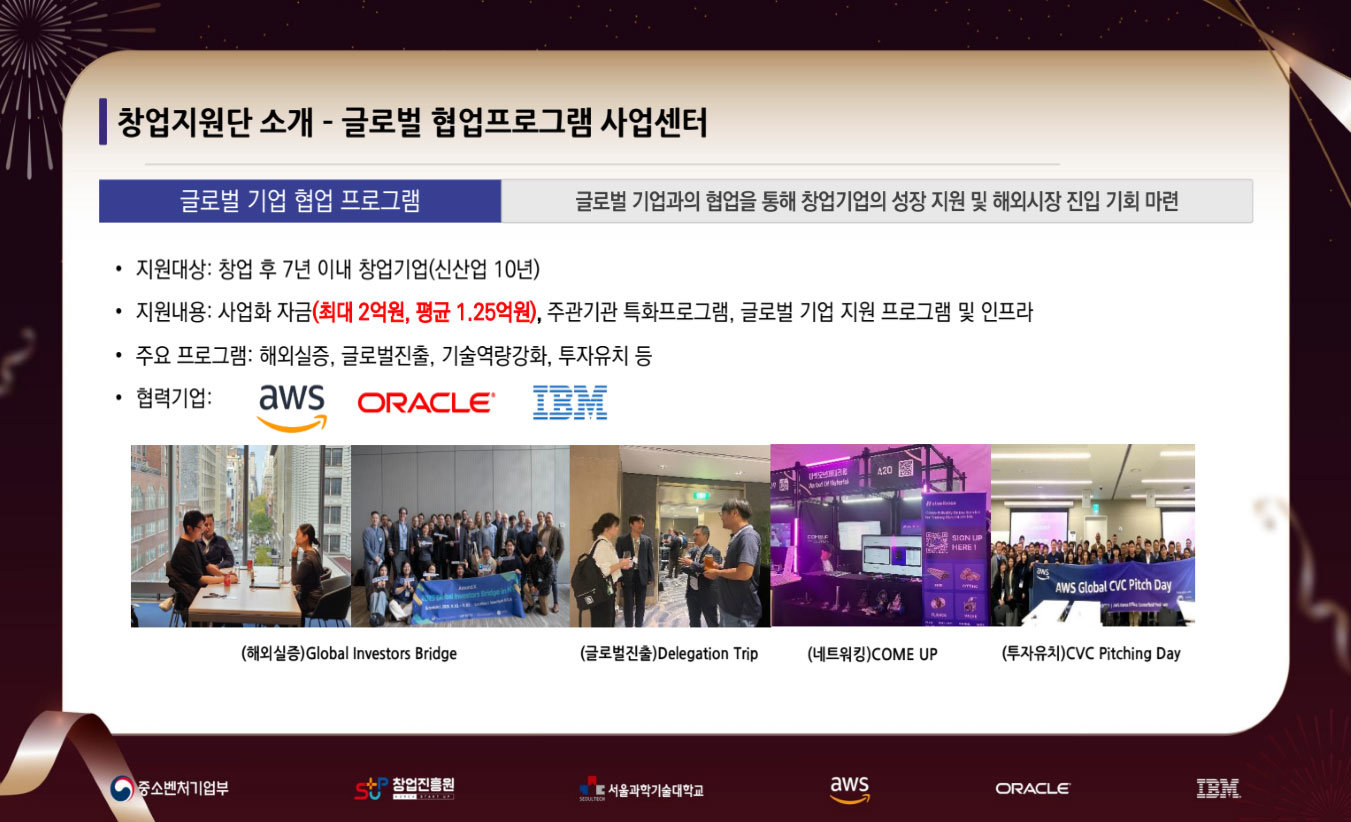
Collaboration between global conglomerates such as AWS, Oracle, and IBM and startupsThe programs led by SeoulTech in 2025 consisted of three tracks in collaboration with AWS, Oracle, and IBM. The “Jungle” program, in partnership with AWS, supported 30 startups in the artificial intelligence and SaaS sectors. The “Miracle” program, in partnership with Oracle, selected 25 companies in the cloud, big data, and artificial intelligence sectors. The “IBM Quantum” program supported five startups in advanced technology fields such as artificial intelligence and autonomous driving that apply quantum computing technology. According to the Startup Support Group, the participating companies received an average of KRW 125 million (up to KRW 200 million) in commercialization funds per company along with cloud credits, and were also given the opportunity to access Yonsei University’s IBM quantum computer system.
Overview of collaboration programs by major global companies participating in the initiative / Source=Seoul National University of Science and Technology
In 2025, SeoulTech operated a systematic program divided into Phase 1 and Phase 2 to strengthen the global capabilities of participating companies.
Phase 1 focused on building fundamental capabilities. Through a Global Kick-off Day, it facilitated networking among participating companies and provided program orientation. Through the global market validation program “RE:PORTER,” it assessed how each company’s products and services would be received in overseas markets. The Global StoryBridge PR program provided training on how startups can effectively communicate their stories.
Particularly noteworthy was the provision of actual overseas expansion opportunities. Through the Global Market Entry Expedition, participating companies directly explored the San Francisco and Japanese markets. In Japan, they attended the Global Open Innovation Day to seek collaboration opportunities with local companies. In addition, through collaboration training with global corporations, infrastructure networking linked to COMEUP2025, and the Global IR Summit, the program helped lay the groundwork for attracting investment and expanding overseas.
Phase 2 focused on generating more tangible business outcomes. The Startup Global Matching Day offered opportunities to meet overseas buyers and partners directly, while the Global GTM (Go-To-Market) workshop helped them refine their overseas market entry strategies. The Global Investors Bridge created linkages with foreign investors, and the Global Start-up Showcase gave participating companies an opportunity to publicly present their achievements.
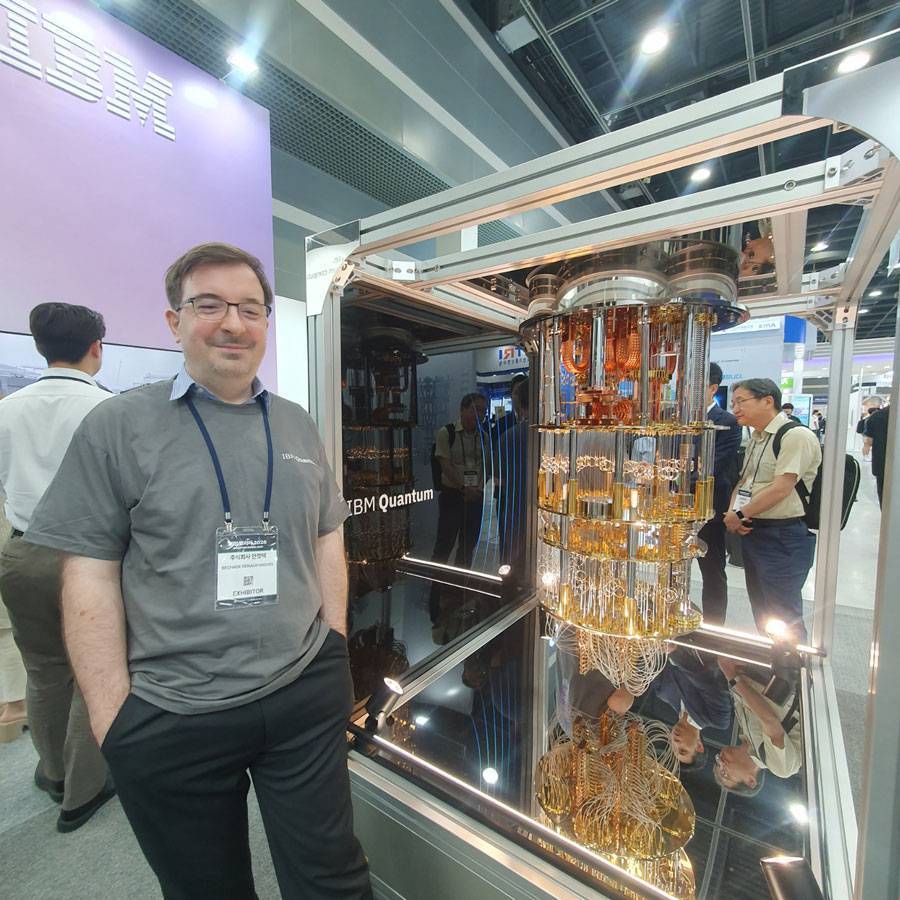
Renaud Michel Bechade, CEO of Angetech, standing in front of an IBM quantum processor (QPU) / Source=Angetech
Participating startups generally gave positive evaluations of the program’s support. According to interviews with the reporting team, quantum AI company Angetech (CEO Renaud Michel Bechade) gained access to Yonsei University’s IBM quantum computer system through the IBM Quantum program. The company also announced plans to launch “QFL Explorer” in December, a solution that enables hospitals to train AI without sharing data, in collaboration with Seoul National University Bundang Hospital.
AI research tool developer Korca (CEO Jung Young-hyun) stated that through the AWS Jungle program, it participated in the IVS conference in Japan and visited AWS headquarters in Tokyo, building partnerships for entry into the Japanese market. Its AI PDF reader for researchers, “Moonlight,” is currently recording 4–5x quarterly revenue growth and is being used in more than 100 countries.
HR platform CUPIT HR developer Miraein Technology (CEO Min Seung-jung) reported that it upgraded its technology through the Oracle Miracle program and recently won a contract with a general hospital with 12,000 employees. The company emphasized that this is the first case in Korea of supplying a domestic HR performance evaluation system to an organization with more than 10,000 employees. It is currently preparing pilot tests with Oracle for entry into the Vietnamese and Thai markets.
The SeoulTech Startup Support Group stated that, based on these results, it has set more ambitious medium- to long-term targets. From 2026 to 2028, over three years, it aims to achieve cumulative total revenue of KRW 780 billion for participating companies, KRW 280 billion in investment attracted, 1,400 cases of global expansion, and 540 new jobs. Compared with the 2023–2025 performance, these targets represent approximately 2.3 times higher revenue, three times more investment, about three times more global expansion, and 1.7 times more employment.
A triangular cooperation model of university–government–global corporationsThe Global Corporate Collaboration Program is drawing attention because it is a unique model that combines university infrastructure, government financial support, and the technological capabilities of global corporations.
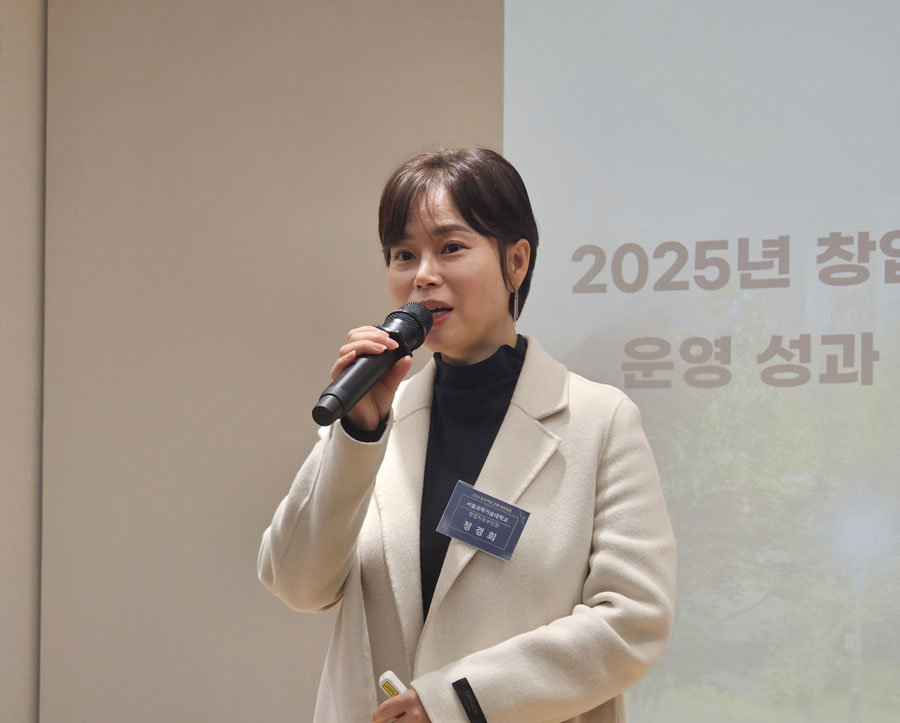
At the Global Startup Showcase held at SeoulTech’s SangSang Hall on December 18, Deputy Director Jung Kyung-hee of the Startup Support Group said, “Through this year’s outcomes, we have confirmed the practical effectiveness of the Global Corporate Collaboration Program,” and added, “Next year as well, the Startup Support Group will provide the best possible support so that more startups can grow in domestic and overseas markets.”
Jung Kyung-hee, Deputy Director of the Seoul National University of Science and Technology Startup Support Group / Source=ITDongA
The Global Corporate Collaboration Program goes beyond simply providing funding by offering collaboration opportunities with global conglomerates, thereby lowering the barriers to technology validation and market entry. It is particularly noteworthy that as the scale of the program continues to expand, participating companies are achieving substantial increases in total revenue and investment attracted. In 2026, this type of program is expected to continue expanding, laying the foundation for more startups to succeed on the global stage.
※ Seoul National University of Science and Technology operates various programs to support the global expansion of Korean startups. With support from Seoul National University of Science and Technology, ITDongA presents the achievements of these programs.
ITDongA reporter Kim Young-woo (pengo@itdonga.com)
ⓒ dongA.com. All rights reserved. Reproduction, redistribution, or use for AI training prohibited.
Popular News