Hyundai Engineering & Construction (Hyundai E&C) is actively collaborating with startups. By participating in various public-private partnership open innovation projects and conducting its own startup contests, Hyundai E&C discovers and collaborates with startups possessing excellent technological capabilities. This approach helps in concretizing innovative ideas and applying them to actual sites. Notable collaborations include Jaychi Global, which possesses photocatalyst-based heat-reducing rubber chip paving technology, Applause, which provides AI-based music curation services, and Planning Nature, which offers natural asset value analysis solutions.
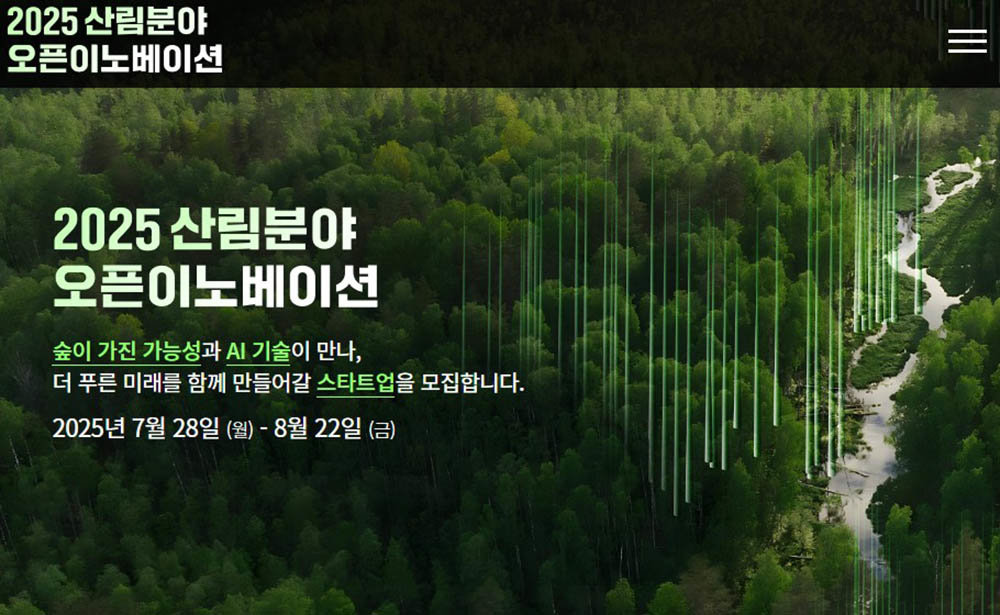
Currently, Hyundai E&C is participating in the '2025 Forest Sector Open Innovation,' organized by the Korea Forest Service and hosted by the Korea Forestry Promotion Institute, and operated by the Seoul Creative Economy Innovation Center. The forest sector open innovation is a support project aimed at creating new businesses by providing practical collaboration and commercialization opportunities between large corporations and startups. Through this project, Hyundai E&C is advancing the landscaping tree management process for apartment complexes. To this end, it is collaborating with startups such as Raydot, which possesses technology for measuring and collecting tree growth environment data, and Save Tree, which has technology for building tree databases and inventories.
A conversation was held with Lee Seung-hwan, the manager of the Exterior Team at Hyundai E&C's Housing Business Division, regarding Hyundai E&C's open innovation activities with startups and the 2025 Forest Sector Open Innovation.
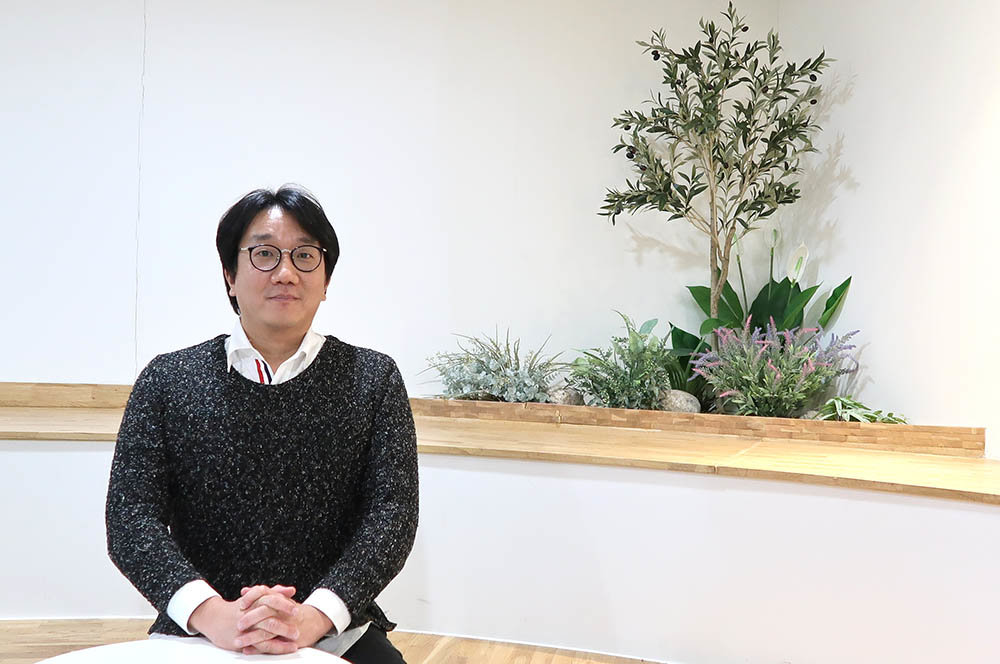
Lee Seung-hwan, Manager of the Exterior Team at Hyundai E&C's Housing Business Division / Source=IT Donga
Active Collaboration with Startups, Hyundai E&CIT Donga: Hello, Manager Lee. Could you please introduce yourself and your team?
Lee Seung-hwan: Hello, I am Lee Seung-hwan, working in the Exterior Team at Hyundai E&C's Housing Business Division. The Exterior Team oversees the design of exteriors, landscaping, lighting, and common spaces for apartment complexes. Through this, we visualize the brand identity of Hyundai E&C's apartment brands, THE H and Hillstate. Our goal is to provide customers with a moving experience through distinctive and high-quality designs of external spaces in apartment complexes. Currently, I am in charge of landscaping in the Exterior Team.
IT Donga: Hyundai E&C is active in open innovation activities with startups. What activities are you engaged in?
Lee Seung-hwan: Each business division has needs for new technologies or products. However, even if innovative ideas are planned, it is not easy to realize them. In such cases, the management strategy team proposes various programs to collaborate with startups that have technological capabilities. We actively utilize these programs to collaborate with startups.
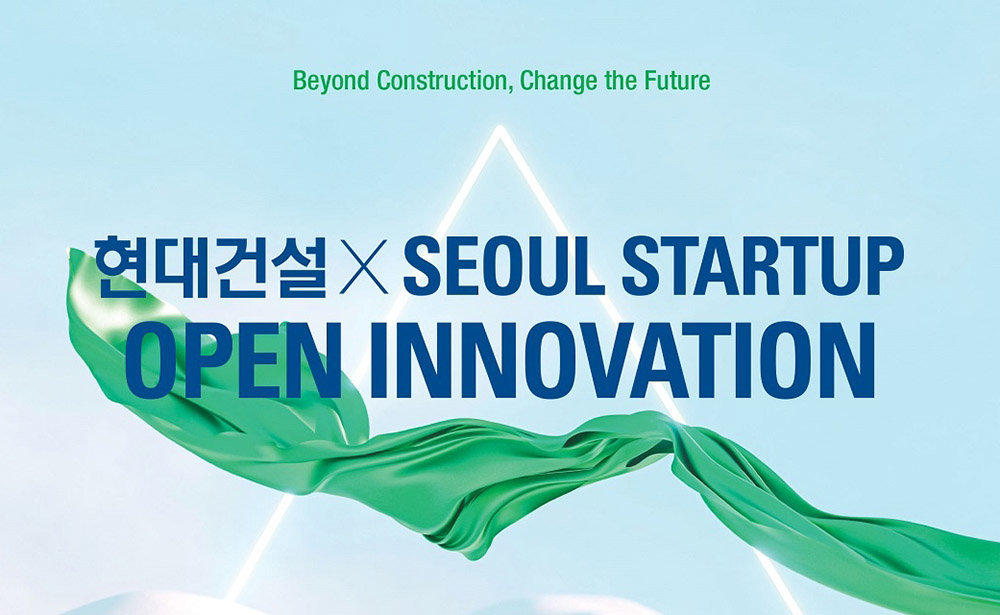
We also host our own contests. Since 2022, Hyundai E&C has been conducting the 'Hyundai E&C X Seoul Startup Open Innovation' contest annually with the Seoul Economic Promotion Agency. This program discovers startups with potential in the construction sector, collaborates with them, and supports various follow-up connections such as the Startup Leap Package and the Super Gap Support Project. Through this, we are provided with opportunities to collaborate with various startups.
Hyundai E&C hosts the 'Hyundai E&C X Seoul Startup Open Innovation' contest annually / Source=Hyundai E&C
IT Donga: How has the experience been collaborating with startups?
Lee Seung-hwan: Collaborating with startups is a great opportunity for startups and large corporations to meet and create synergy. Startups have fresh ideas and technological capabilities, but they face limitations in capital, technology verification, and credibility. However, through collaboration with large corporations, they can conduct technology verification on-site and secure credible references, allowing them to grow. Additionally, we can undertake various and novel attempts by collaborating with startups. Through this, both parties can further develop and coexist.
For these reasons, the company also actively encourages collaboration with startups. Especially in our team, we have achieved various results through collaboration with startups over the past three years, so we are actively collaborating with them. We are now even planning separate topics for collaboration with startups.
IT Donga: Could you introduce the achievements gained through collaboration with startups?
Lee Seung-hwan: Among our team's achievements, I can introduce the cases of Jaychi Global, Applause, and Planning Nature.
Jaychi Global is a startup with photocatalyst-based heat-reducing rubber chip paving technology. This is an eco-friendly technology that reduces harmful environments and mitigates temperature rise. We applied this material to the playground floor of an apartment complex under construction and tested it for about a year. We also supported follow-up connections by supporting tests at nationally accredited testing institutions. Currently, we are applying photocatalyst-based heat-reducing rubber chip paving to Hillstate apartment complexes.
Applause is a startup that provides AI-based music curation services. We sometimes play music in common spaces and external landscaping spaces, and through collaboration with Applause, we provide music optimized for specific spaces. Services such as composing exclusive music for apartment complexes, healing sounds specialized for external rest areas, and sound masking to reduce external noise like roads by highlighting specific frequencies are also provided.
Planning Nature provides natural asset value analysis solutions. We are currently collaborating with Planning Nature to achieve residential environment improvement through landscaping and enhance efficient space design.
In addition, Hyundai E&C has achieved various results through collaboration with several startups, including Sixty Hertz, which develops optimal control module software for charging and discharging, Mobin, which developed an autonomous delivery robot, and Alabs, which developed a modular carbon dioxide resource system.
2025 Forest Sector Open Innovation / Source=Seoul Creative Economy Innovation Center
Advancing Landscaping Tree Management Process through Open InnovationIT Donga: You are currently participating in the 2025 Forest Sector Open Innovation conducted by the Korea Forest Service, Korea Forestry Promotion Institute, and Seoul Creative Economy Innovation Center. What led you to participate in this project?
Lee Seung-hwan: Residents of apartment complexes face many difficulties in maintaining trees. To manage trees, it is necessary to understand the growth environment of trees and take preemptive measures to reduce defects. However, in apartment complexes, there can be thousands of trees to manage. The specifications of trees vary greatly, and there is a lack of analysis of the tree growth environment, data measurement, and collection technology. Therefore, after the completion of the apartment complex, when the management responsibility shifts to the residents, it becomes difficult to maintain the trees.
Thus, we contemplated the DB creation through data measurement and collection related to apartment complex trees and the advancement of the tree maintenance process, and submitted it to the Hyundai E&C Seoul Startup Contest last year. However, there was no suitable partner at the time. Then, the management strategy team introduced the 2025 Forest Sector Open Innovation. Hyundai E&C participates in various public-private partnership open innovation projects operated by the Seoul Creative Economy Innovation Center, and the forest sector open innovation was one of them.
Upon examining the forest sector open innovation, we found that our proposed topic aligned with the business areas of the Korea Forest Service and the Korea Forestry Promotion Institute, and we thought specialized startups in the forest sector would show interest. So, we decided to participate.
IT Donga: Could you tell us about the current progress of the open innovation?
Lee Seung-hwan: We are currently focusing on advancing the landscaping tree management process for apartment complexes. We are collaborating with Raydot for precise measurement and analysis of tree growth environment data suitable for external landscaping spaces in apartment complexes, and with Save Tree for developing an integrated tree management solution for apartment complexes.
Raydot is an agricultural technology startup. It possesses capabilities in developing sensors and devices for measuring and managing temperature, moisture, and crop nutritional status in indoor farms. With Raydot, we are developing IoT devices that can measure and transmit data on the growth environment of trees, such as temperature, moisture, and soil dryness in external spaces. Once development is complete, we expect to secure and DB the tree growth environment data, enhancing maintenance efficiency and establishing a process automation system.
Save Tree is a startup that collects data related to street trees using LiDAR equipment and DBs it to build an inventory. This allows for measuring quality risks and increasing maintenance efficiency. Save Tree already possesses sufficient capabilities in the tree maintenance area that we require. Therefore, we are developing an integrated tree management solution suitable for apartment complexes with Save Tree. Once development is complete, we expect to be able to build a precise data inventory related to trees, monitor tree quality, and predict maintenance risks.
In fact, we identified the problem and proposed the task, but we did not know how to solve it. However, by meeting startups with the technological capabilities to solve such problems, we were able to concretize solutions and implement actual solutions. This is the synergy between large corporations and startups and the charm of open innovation.
IT Donga: What is the future schedule for the 2025 Forest Sector Open Innovation?
Lee Seung-hwan: The open innovation is scheduled to continue until July 2026. Since it is difficult to closely check the condition of trees during the winter season, we plan to focus on ideas, planning, design, and development until March and conduct actual demonstrations on-site after April. We plan to wrap up the first phase by July, measure the results, and then decide on whether to proceed with follow-up connection programs.
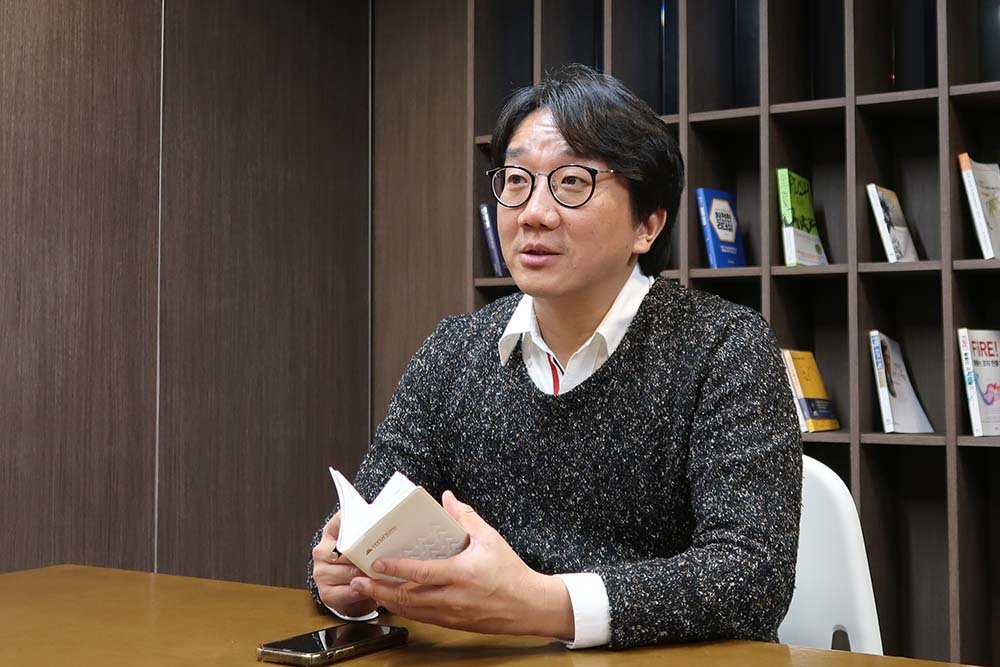
Lee Seung-hwan explaining collaboration with startups / Source=IT Donga
Expectations for Coexistence between Large Corporations and Startups through Open InnovationIT Donga: What do you expect from this innovation?
Lee Seung-hwan: Primarily, the goal is to advance the landscaping tree management process for apartment complexes. By building a precise tree data inventory through tree growth environment data, we aim to increase maintenance efficiency and establish a process automation foundation. Of course, we also hope that the startups collaborating with us will have significant growth opportunities.
Furthermore, we hope these solutions will expand beyond our apartment complexes to various construction companies' apartment complexes, parks managed by local governments or national institutions, increasing tree management efficiency, improving environmental issues, and contributing to enhancing citizens' quality of life. Additionally, we hope that government institutions like the Korea Forest Service and the Korea Forestry Promotion Institute will take more interest in this field and expand support programs such as follow-up connections.
IT Donga: Lastly, could you tell us about your future plans regarding open innovation?
Lee Seung-hwan: Having achieved many results through open innovation, not only our team but Hyundai E&C as a whole is open to collaboration with startups. We will continue to collaborate with startups, making various attempts to realize innovative ideas. We aim to continuously discover and collaborate with innovative startups related to new products and technologies, and through these achievements, establish a virtuous cycle where large corporations and startups develop together. Additionally, we hope that our collaboration cases, which are achieving visible results, will become widely known, leading to the spread of a culture of coexistence where more large corporations and startups collaborate.
IT Donga Han Man-hyuk, Reporter (mh@itdonga.com)
ⓒ dongA.com. All rights reserved. Reproduction, redistribution, or use for AI training prohibited.
Popular News