Savetree is a company specializing in landscaping services based on tree assetization (green asset), providing tree data measurement and analysis solutions. Savetree collects tree data using LiDAR, artificial intelligence (AI), and its self-developed device DTx, offering a solution called 'Treemap 360' that provides tree management consulting and services. Treemap 360 allows for the prediction of tree stability or risks of death and defects in advance, enhancing management efficiency. Through this, Savetree aims to improve tree management efficiency and promote the environmental and economic value of trees.
Savetree is currently participating in the '2025 Forest Sector Open Innovation' organized by the Korea Forest Service and hosted by the Korea Forestry Promotion Institute, operated by the Seoul Creative Economy Innovation Center. The Forest Sector Open Innovation is a project designed to create new businesses by combining the demands of large companies with the creative ideas of startups based on the rich public data of the Korea Forest Service. Through this project, Savetree is collaborating with Hyundai Engineering & Construction to develop an integrated tree management dashboard. This serves as an opportunity to expand Treemap 360, which was previously applied only to public infrastructure, into the private sector.
An interview was conducted with Ha Yong-hoon, CEO of Savetree, regarding Treemap 360 and the collaboration with Hyundai Engineering & Construction.
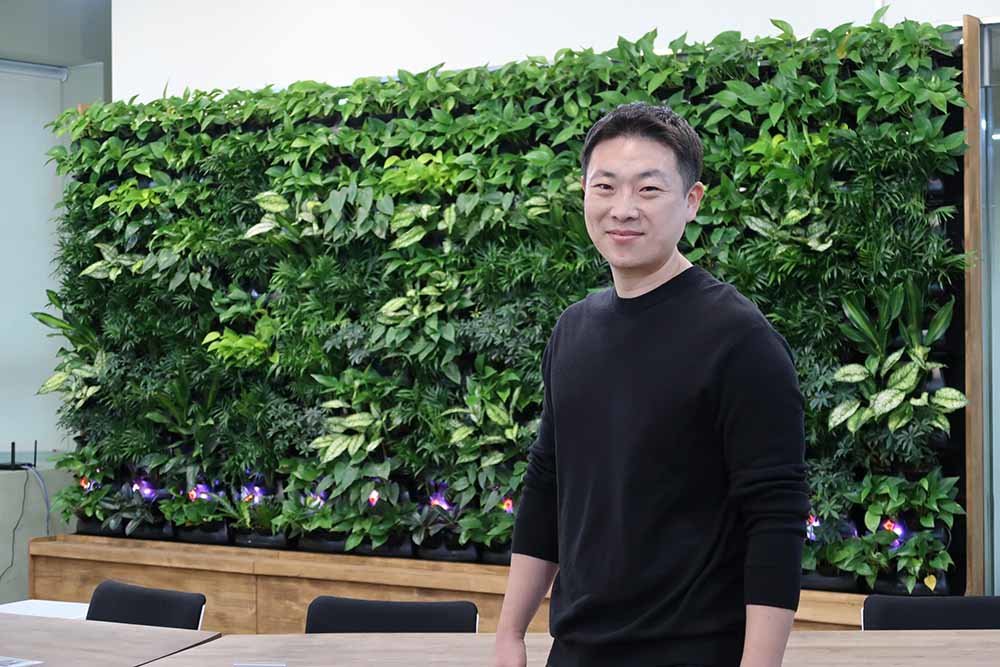
Ha Yong-hoon, CEO of Savetree / Source=IT Donga
Savetree, a company specializing in landscaping services based on tree assetizationIT Donga: Hello, CEO Ha Yong-hoon. Please introduce yourself.
CEO Ha Yong-hoon: Hello, I am Ha Yong-hoon from Savetree. Previously, I worked at the Facilities Corporation and GS Construction affiliate Xi S&D, handling landscaping-related tasks for about 15 years. At Xi S&D, I was in charge of overall landscaping management for apartment complexes, providing defect management, management guides for resident representatives and management offices, consulting, and education. Then, I founded Savetree in 2022.
IT Donga: What motivated you to start Savetree?
CEO Ha Yong-hoon: Landscaping management in apartment complexes or parks often relies on experience or intuition due to the lack of objective data like tree data or medical records. This sometimes leads to disputes over responsibility when a tree dies. Experiencing such situations, I questioned, 'Why do we rely on experience and intuition for tree management?' and thought about approaching it technologically.
In 2018, the Tree Doctor system was implemented through the amendment of the Forest Protection Act. This regulation requires following the guidance of a tree doctor who diagnoses and prescribes tree damage and is responsible for prevention or treatment.
I thought a solution similar to the Electronic Medical Record (EMR) used in the medical industry for patient records was necessary for easy tree management, and developed an EMR for tree doctors in 2021. This system records diagnoses, prescriptions, and other information about trees. With this system, we participated in the '2022 Forest Public and Big Data Utilization Startup Competition' and received the Korea Forest Service Director's Award. This gave me confidence in the objective evaluation of the growth potential of the tree data-related business, leading to the founding of Savetree.
IT Donga: Please introduce Savetree. What kind of company is it?
CEO Ha Yong-hoon: Savetree is a company specializing in landscaping services based on tree assetization, helping urban trees grow healthier and providing safe and pleasant green infrastructure.
We view trees not just as simple landscaping elements but as important urban assets that store carbon and mitigate urban heat while creating ecological value. This trend is strengthening globally. Many cities in the U.S. and Europe treat urban forests as key elements of carbon neutrality policies or nature-based solutions (NBS). However, in practice, it is difficult to clearly diagnose the causes of tree death, and disputes over responsibility are increasing. Managers still rely on experience. This is due to the slow digital transformation (DX) of tree management.
To bridge this gap, we are quantifying tree data and creating a predictable management system to protect the value of landscaping assets in the long term.
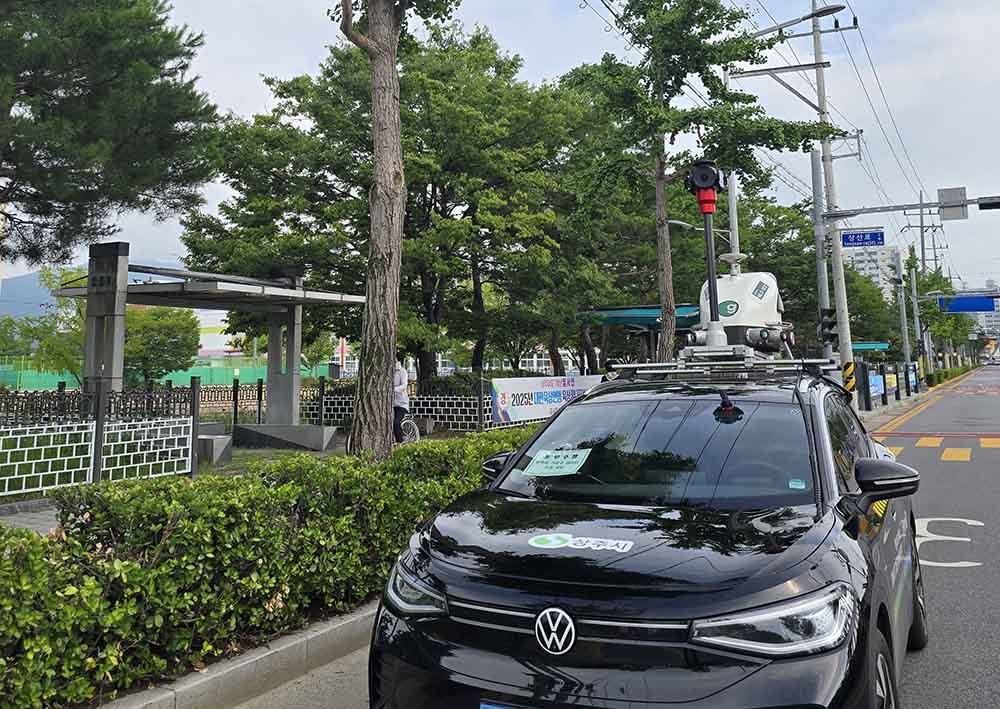
Savetree's LiDAR equipment collecting tree data in Sangju / Source=Savetree
Collecting and analyzing tree data with LiDAR, AI, and DTx, Treemap 360IT Donga: Please introduce Savetree's solution.
CEO Ha Yong-hoon: Our core solution is Treemap 360. It is a solution that collects tree data using LiDAR and AI, along with our self-developed device DTx, and provides tree management consulting and services based on this data.
Using LiDAR, we collect data on tree specifications, trunk and crown inclination, vitality, etc., and measure physiological data such as trunk electrical resistance, temperature, acidity, and surrounding soil moisture retention, acidity, and moisture using DTx. Based on this, we analyze the degree of interference with the surrounding environment and the environmental value of the tree.
Treemap 360 predicts risk factors and suggests management strategies before the occurrence of tree death or defects, rather than post-management. This can reduce costs or disputes related to responsibility for tree death and defects for construction companies or local governments.
IT Donga: Could you share any case studies of Treemap 360 adoption?
CEO Ha Yong-hoon: Treemap 360 is utilized in Gangnam-gu and Sangju, Gyeongsangbuk-do. Gangnam-gu was connected through the Korea International Trade Association's Open Innovation and successfully completed tree assetization in November after collecting street tree data since July. In Sangju, street tree management officials contacted us first for collaboration. We have completed an inventory of street trees on major roads in Sangju and plan to expand it citywide. Based on these achievements, we are preparing to expand to other local governments.
Additionally, we are building a Treemap to manage trees in Seoul Grand Park. A Treemap is a map containing attribute information of individual trees. Famous parks worldwide, such as Central Park in New York and the Singapore Botanic Gardens, have built Treemaps to efficiently manage trees within the park. Although attempts were made to build Treemaps in Korea in the past, manual data collection took a long time and lacked accuracy.
We aim to build a more efficient and effective Treemap through Treemap 360. We started customizing Treemap 360 in October and plan to complete it by August 2026. Through this project, we expect to create a successful case of systematic park tree management in Korea.
Collaboration with Hyundai Engineering & Construction, developing an integrated tree management dashboardIT Donga: You are currently participating in the 2025 Forest Sector Open Innovation project. What motivated you to apply for this project?
CEO Ha Yong-hoon: The issues of landscaping and urban forest management in the era of climate crisis cannot be solved by construction companies, landscaping companies, or public institutions alone. We need to collaborate and create an industrial structure and ecosystem. The Forest Sector Open Innovation provides an opportunity for the public and private sectors to collaborate and solve these issues. I sympathized with this purpose and applied for the program. Additionally, I thought it could be an opportunity to expand Treemap 360, which was applied only to public infrastructure, into the private sector.
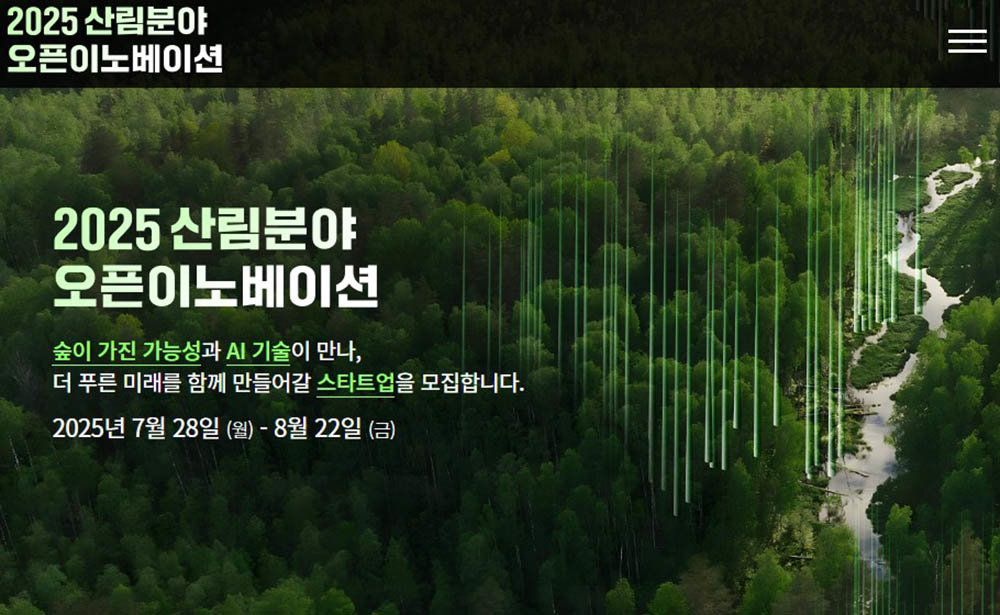
2025 Forest Sector Open Innovation / Source=Seoul Creative Economy Innovation Center
IT Donga: You are collaborating with Hyundai Engineering & Construction through this project. Why did you apply for the 'Enhancement of Landscaping Tree Management Process for Residential Complexes' task proposed by Hyundai Engineering & Construction?
CEO Ha Yong-hoon: I applied because I thought a new paradigm could be created by combining Hyundai Engineering & Construction's field experience with Savetree's technology. Hyundai Engineering & Construction is one of the largest construction companies in Korea, viewing landscaping as a core element of apartment complex value rather than a simple auxiliary facility. By accumulating tree data from apartment complexes built by Hyundai Engineering & Construction, I thought we could further improve the predictive accuracy of our solution. By precisely analyzing and predicting tree conditions based on various conditions such as region, species, and soil, we can reduce tree-related risks for construction companies, enhance maintenance efficiency for landscaping companies, and improve the environmental quality of apartment complexes. Furthermore, we can quantify the asset value of apartment complex landscaping with objective indicators. It becomes a key asset influencing ESG evaluations, carbon credit trading, and real estate value. With these expectations, we applied for Hyundai Engineering & Construction's task.
IT Donga: Please introduce the ongoing task.
CEO Ha Yong-hoon: Through the task of enhancing the landscaping tree management process for residential complexes, we are building an integrated tree management dashboard. By customizing Treemap 360 to suit Hyundai Engineering & Construction, we are developing it to easily check the quality, defects, and other conditions related to landscaping trees at Hyundai Engineering & Construction sites nationwide.
Once the dashboard is completed, it will allow for the evaluation of tree conditions based on tree data and proactive response to defect or death risks. It can enhance not only tree maintenance but also landscaping design efficiency. This is because it allows for the selection of tree species that are easy to manage according to the soil or climate of a specific area. The dashboard is expected to complete prototype development in the first half of 2026 and be demonstrated in actual field settings.
IT Donga: How is the experience of collaborating with a large company through open innovation?
CEO Ha Yong-hoon: It was very positive. Understanding the needs of actual users and creating solutions to meet those needs is a significant advantage of open innovation. Having worked in a construction company, I thought I understood their needs well, but through meetings with Hyundai Engineering & Construction, I discovered aspects I had not considered. This will likely reduce trial and error.
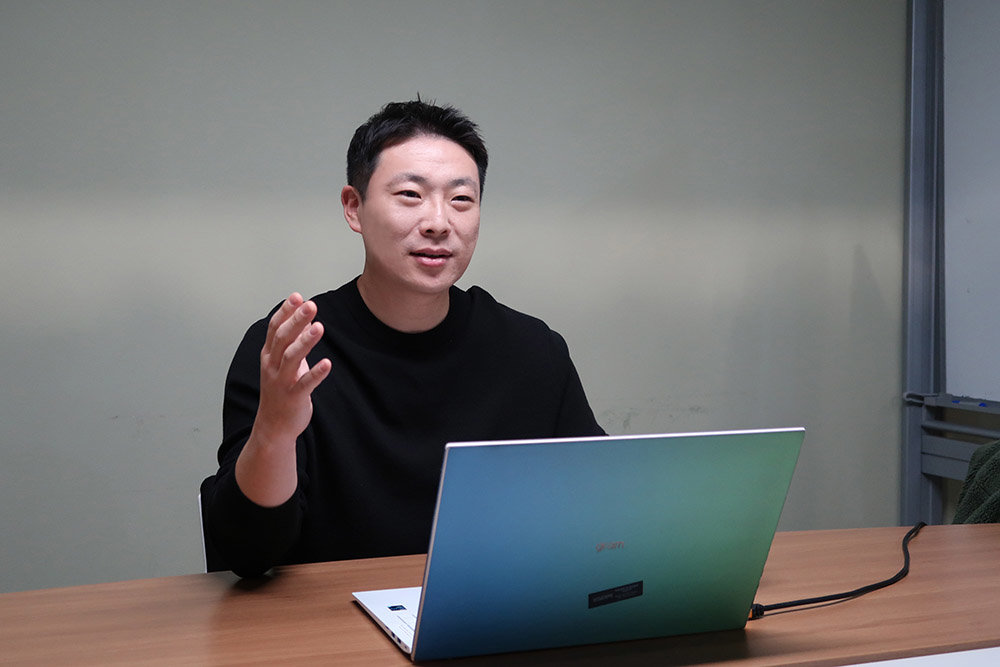
Ha Yong-hoon explaining about Savetree and Forest Sector Open Innovation / Source=IT Donga
IT Donga: Lastly, please share Savetree's future plans and goals.
CEO Ha Yong-hoon: Savetree's goal is simple: to make the era of managing urban trees with data, not intuition, a reality. In the short term, we plan to commercialize a digital transformation solution for landscaping quality dedicated to construction companies through collaboration with Hyundai Engineering & Construction, and expand it to local governments and public institutions to complete a city-scale green infrastructure model.
In the mid to long term, we plan to create a structure for assetizing and managing city-scale green infrastructure in conjunction with services like Apartmentner and Officener from our shareholder company, Toad World. Through this, we aim to promote the environmental and economic value of green infrastructure to more people. We will focus on establishing leading technical standards in this field. We hope these standards will contribute to global green infrastructure management systems beyond Korea.
IT Donga Reporter Han Man-hyuk (mh@itdonga.com)
ⓒ dongA.com. All rights reserved. Reproduction, redistribution, or use for AI training prohibited.
Popular News