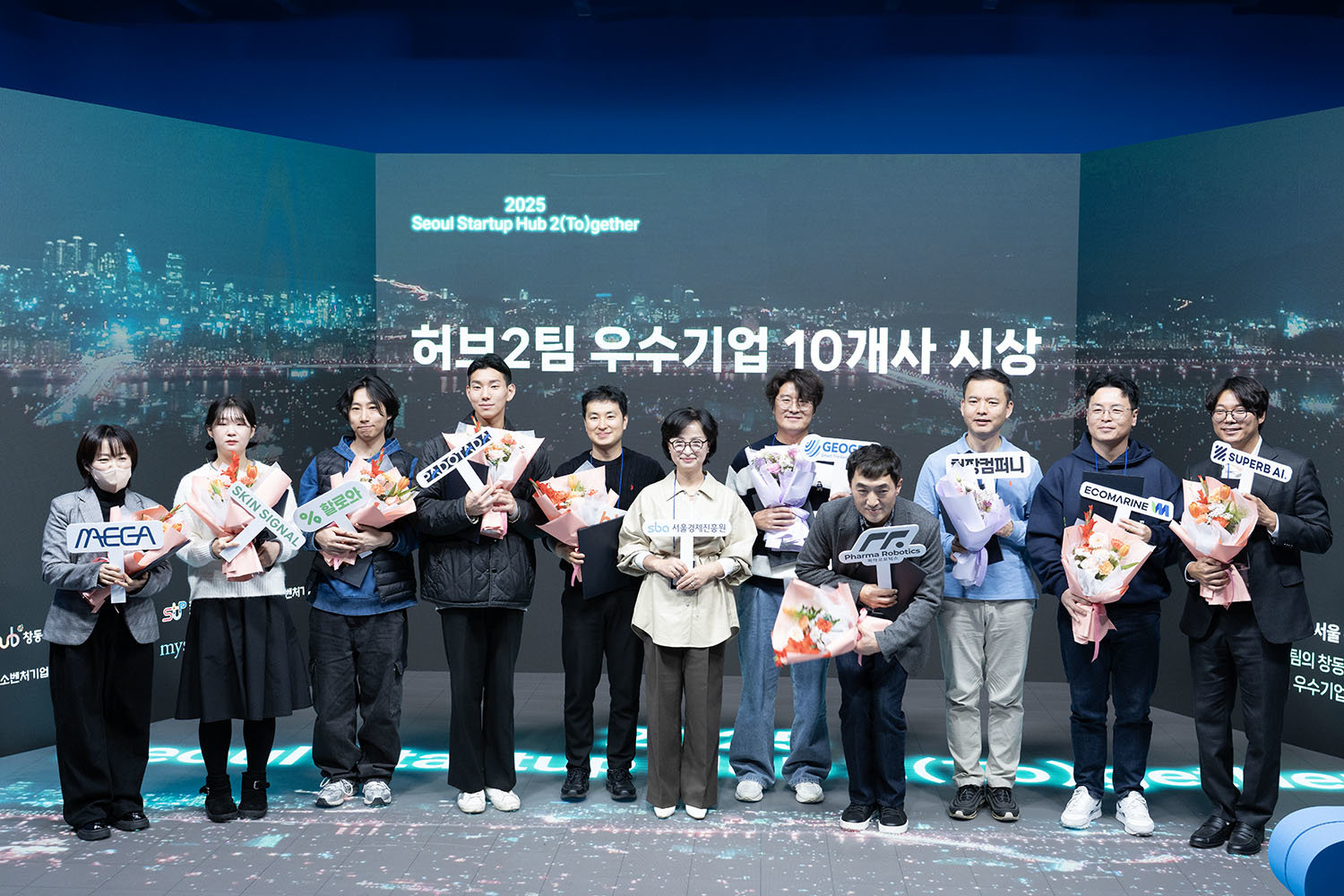
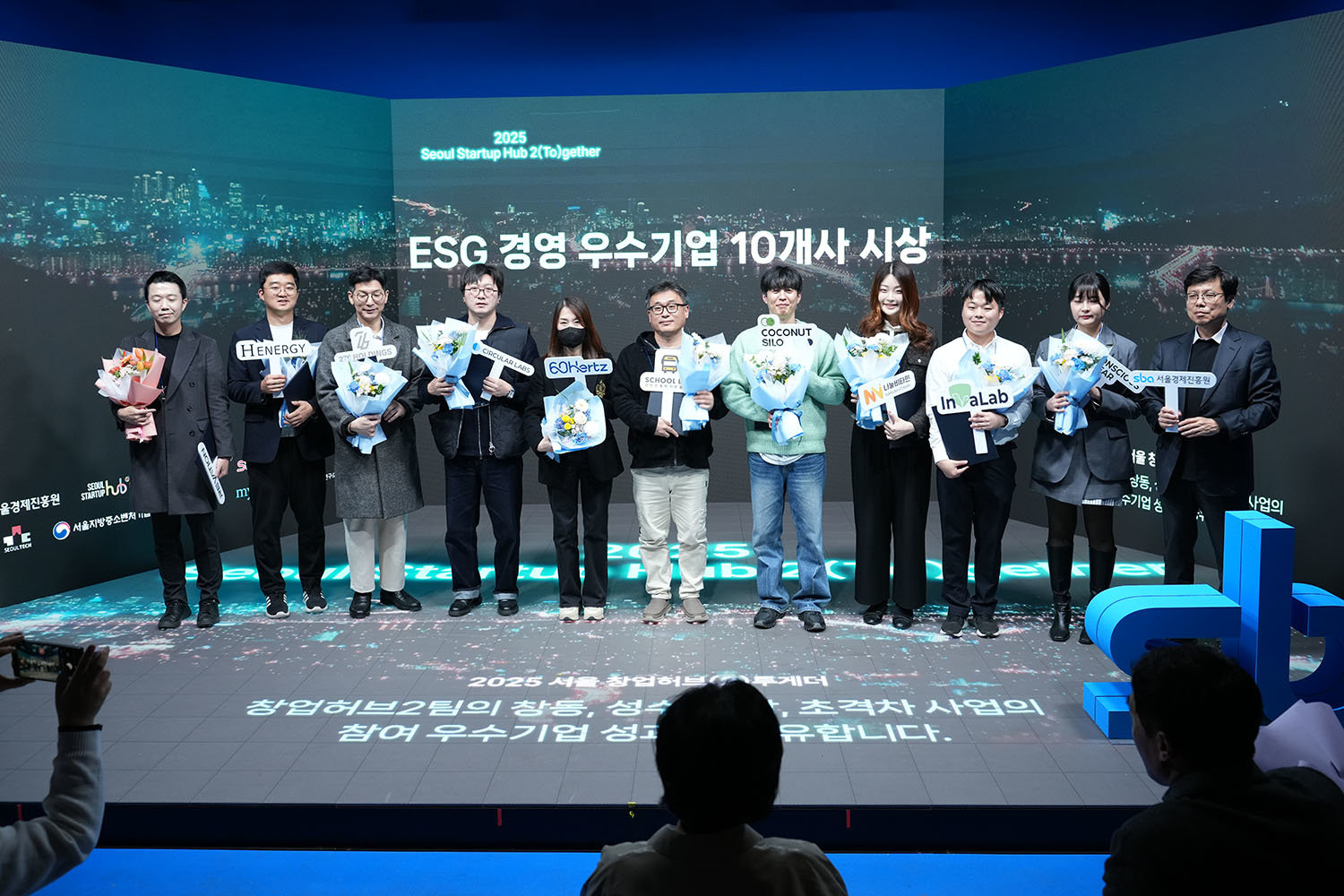
Park Bo-kyung, SBA Business Director (center), and representatives from 10 outstanding companies participating in the 2025 Seoul Startup Hub (2) Together Performance Sharing Event / Source=IT Donga
The enthusiasm of startups towards innovation was intense. The '2025 Seoul Startup Hub (2) Together', hosted by the SBA Startup Hub 2 Team, was more than just a platform for sharing achievements; it was a stage presenting a blueprint for future industries to be drawn together by the public and private sectors.
On November 27, 2025, the SBA held the '2025 Seoul Startup Hub (2) Together' performance sharing event at the Seoul Startup Hub in Chang-dong. This event gathered 10 promising startups discovered and nurtured by the SBA Startup Hub 2 Team throughout 2025, including those from the Seoul Startup Hub Chang-dong and Seongsu, Seoul Startup Center Dongjak, and the Super Gap Program, to share their growth stories.
This event focused on performance presentations and creating practical connections within the startup ecosystem. Companies from various fields, including bio-healthcare, deep tech, eco-friendly materials, and artificial intelligence (AI), revealed their problem-solving methods and market strategies.
The 2025 Seoul Startup Hub (2) Together performance sharing event featured 10 companies selected through the Seoul Startup Hub Chang-dong and Seongsu, Seoul Startup Center Dongjak, and the Super Gap Project, who took the stage to showcase their technologies and achievements. In the subsequent awards ceremony, DearC, Geogrid, Pharmarobotics, and Superb AI were recognized.
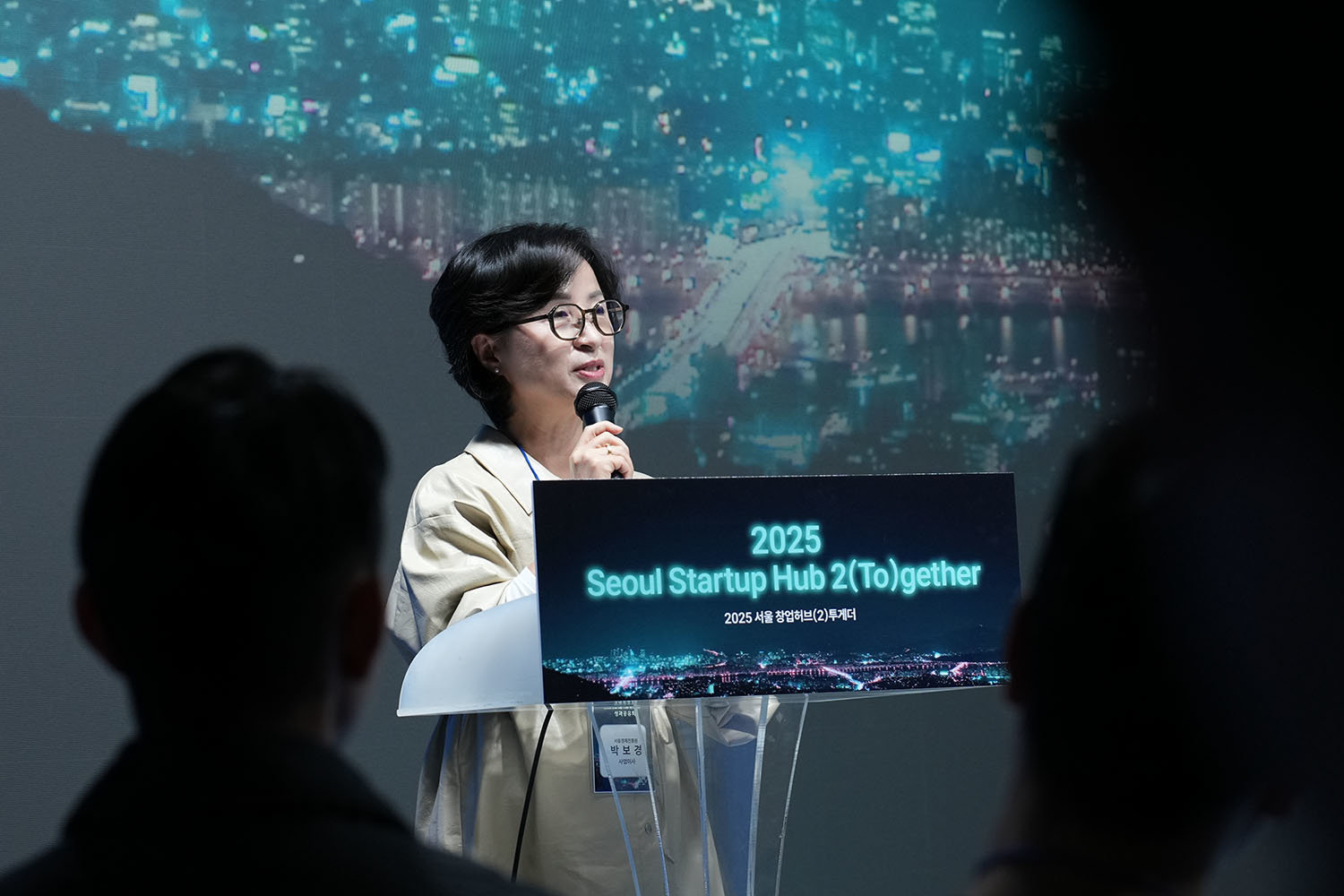
Park Bo-kyung, SBA Business Director / Source=IT Donga
Park Bo-kyung, SBA Business Director, stated, "There is a mismatch in the process where investors seek investment opportunities and companies look for investors. To address this, SBA is operating 113 investment funds with Seoul city funds, with a total formation amounting to KRW 6.6 trillion. In 2025, a new investment fund worth KRW 1.2 trillion is expected to be established. SBA will actively support essential validation and overseas expansion to help companies settle in the market."
Seoul Startup Hub Chang-dong Company Performance SharingThe Seoul Startup Hub Chang-dong Center, emerging as an economic hub in the northeastern region of Seoul, focuses its capabilities on marketing and new media support. It provides comprehensive support for startups to settle in the market, including live commerce support linked with influencers, digital marketing consulting for global expansion, and product branding strategy development. The facility is equipped with a professional studio for high-quality product photography, a media room for video content production and editing, and a live broadcast transmission system. The Chang-dong Center acts as a media launchpad, helping innovative products created by startups make a grand debut in the world. Outstanding companies at the Seoul Startup Hub Chang-dong Center include Megalab, DearC, Haloa, and Padotada.
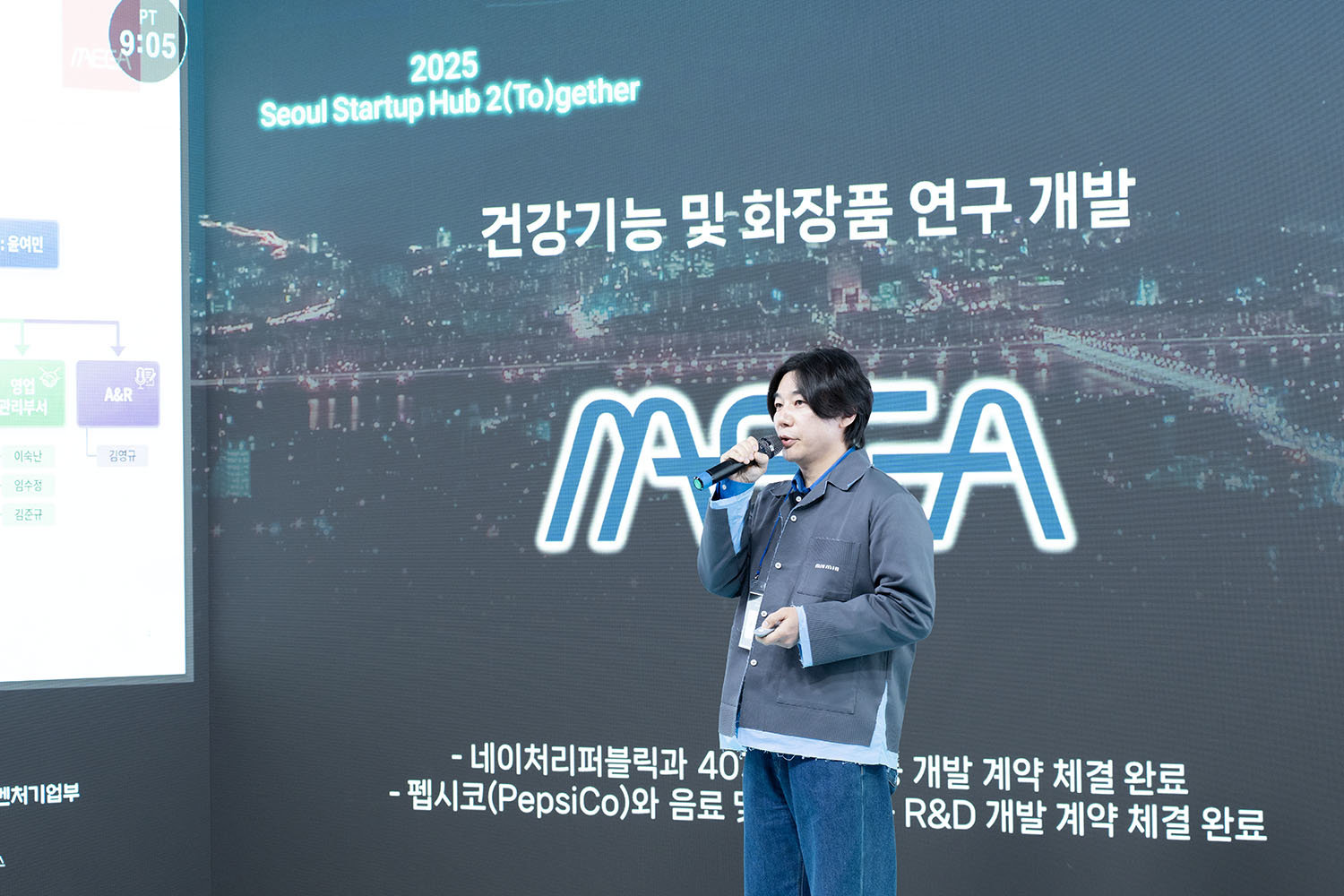
Yoon Yeo-min, CEO of Megalab / Source=IT Donga
Megalab (CEO Yoon Yeo-min) is an R&D company developing health functional food and cosmetic raw materials using probiotic-based biotransformation technology. With a research team of 16 PhDs, the company has secured 10 registered patents and 20 applications. Megalab's differentiator is its complex strain composition. It selected and combined 14 strains from over 1,000 strain groups. The combination resulted in a more than 35% increase in protein content compared to a single strain, according to CEO Yoon Yeo-min. Megalab saw results after moving into Chang-dong post-startup, securing raw material supply contracts with companies like PepsiCo, Jeong Kwan Jang, and Nature Republic.
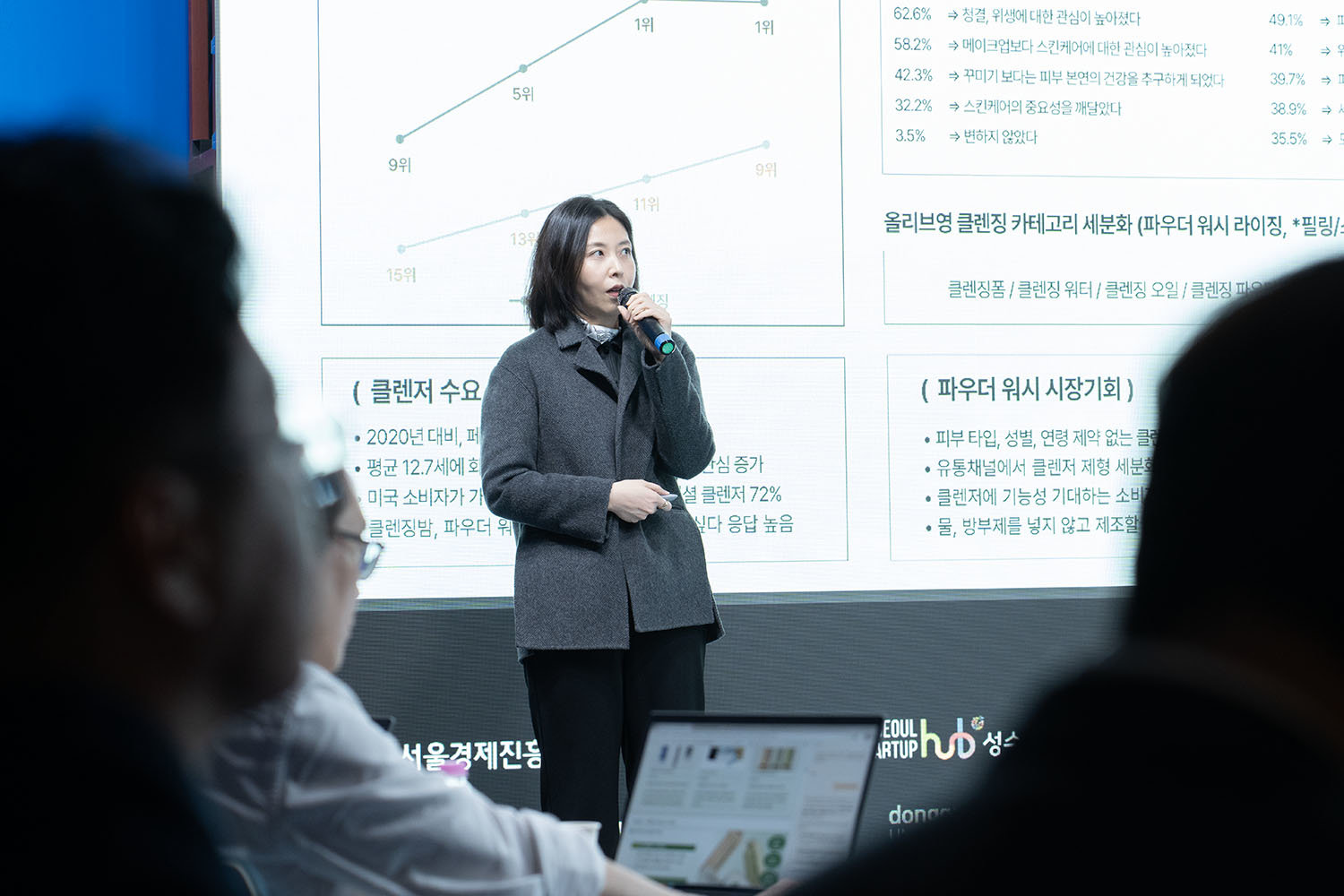
DearC (CEO Baek Jin-joo) operates the vegan functional cosmetics brand Skin Signal. It laid the foundation for growth by being selected for the SBA Technology Commercialization Support Project Cloud Funding Type in 2022. Its main product is the Clay Enzyme Cleanser. While general cleansers were peeling products used once a week, DearC added the concept of blackhead and sebum management. By increasing the clay content to 10%, it transforms into a foam cleanser, scrub, or clay pack that hardens in 60 seconds by simply adjusting the water concentration. DearC attracted investments from Wadiz and Cosmax. In 2023, it entered 1,400 Olive Young stores and achieved success by entering Qoo10 and Loft stores in Japan.
Baek Jin-joo, CEO of DearC / Source=IT Donga
Haloa (CEO Kwon Hyuk-jin) provides an AI-based customer experience management and marketing integration solution. It automates the entire process from customer response to data analysis and marketing execution, enhancing operational efficiency for companies. Haloa's AI classifies customer inquiries first and connects them to consultants if necessary. It analyzes customer response data in real-time, automatically sending personalized marketing messages and tracking conversion rates. By integrating CRM and advertising platforms, it manages the entire customer journey in one system. Haloa has secured references in various industries, including distribution, finance, and healthcare. According to CEO Kwon Hyuk-jin, client companies have reduced consultation costs by over 30% while increasing customer satisfaction.
Padotada (CEO Ko Jun-seong) creates a lifestyle-customized supplement brand based on an influencer network. Beyond product sales, it aims to build a system for continuous brand expansion like APR. Padotada launched its own brand, Littlemore, with arginine vitamin powder supplements and swelling care liquid supplements. It applied the GCC Littlemore formula, co-developed with Hanyang University's Department of Food and Nutrition, to solve heartburn issues when consuming high-dose supplements. It also acquired patents related to chili seed and pine bark extracts to develop new blood sugar control products. It has entered eight warehouse pharmacies in Korea and aims to enter 100 pharmacies by 2026.
Seoul Startup Hub Seongsu Company Performance SharingSeongsu-dong has evolved from an industrial area to a cultural district where red bricks and art coexist. The Seoul Startup Hub Seongsu Center reflected the area's characteristics in its startup support business. It focused on nurturing social ventures that create social value through ESG (environmental, social, governance) and urban problem-solving. Outstanding companies at the Seoul Startup Hub Seongsu Center include HiLocal and Geogrid.
HiLocal (CEO Yoon Jeong-ho) operates an AI-based platform for foreign workers, providing job and safety education and translation services. The service addresses communication issues for foreign workers residing in Korea. It offers 100% translation of 80 languages via a mobile app. It applied an AI model that learns industrial terms and dialects, such as 'Ohama' (a Japanese term for a large hammer). The image translation function converts the Ministry of Employment and Labor's safety education posters into 40 languages. It also provides an AI learning manager function to aid site safety awareness. HiLocal collaborates with major companies like Samsung C&T, Hyundai Heavy Industries, LG Electronics, and Hanwha, and is pursuing expansion into Japan and Malaysia.
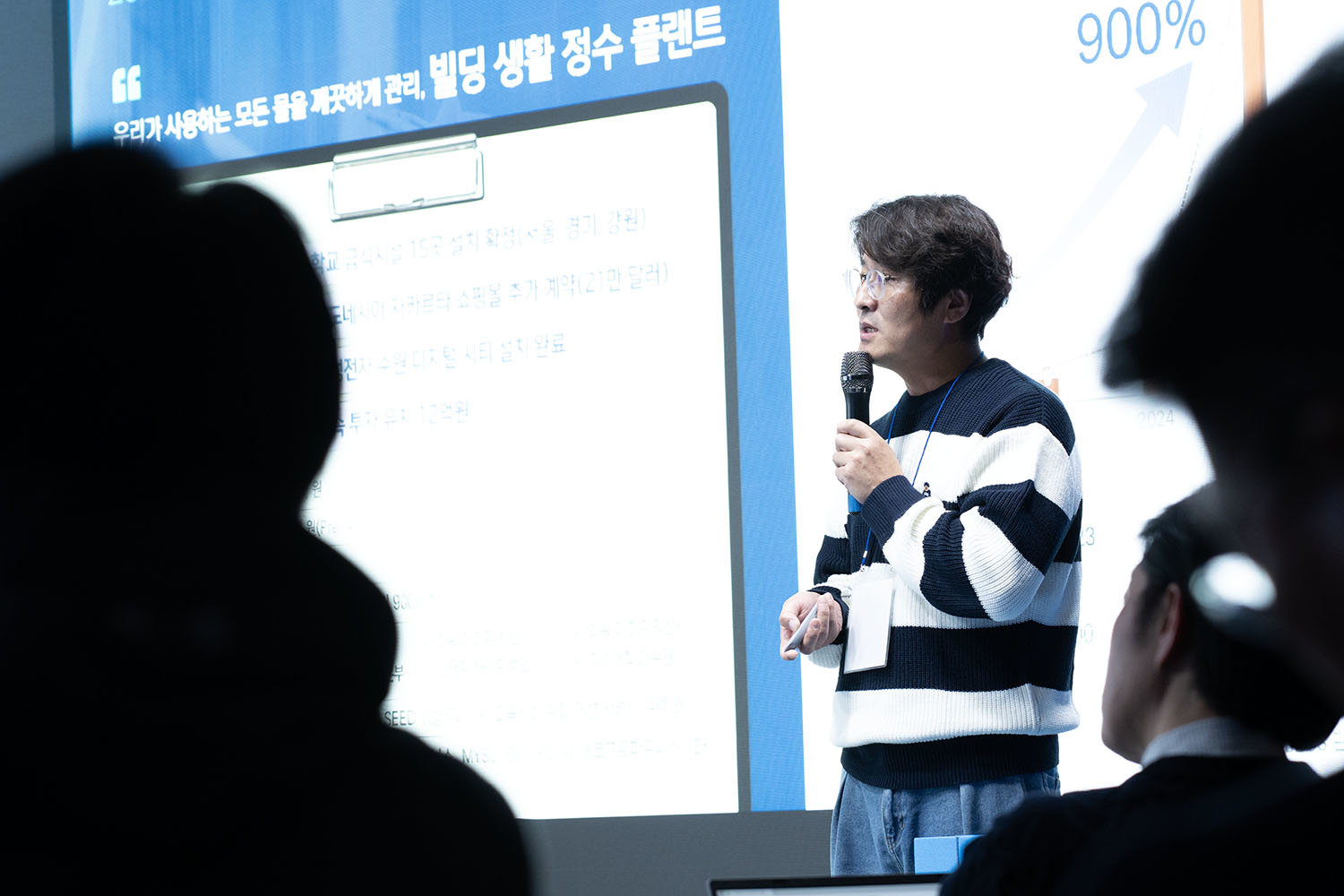
Kim Ki-hyun, CEO of Geogrid / Source=IT Donga
Geogrid (CEO Kim Ki-hyun) addresses tap water quality issues with integrated water purification plant technology for buildings. With 40% of domestic water pipes over 20 years old, rust problems arise. Geogrid attempted the idea of installing a purification device at the building entrance, turning the entire building into a purifier. The differentiator is ionization treatment. It solved the issue of recontamination as purified and sterilized water passes through old pipes with an ionization device. After passing water through a black pipe (unprocessed iron pipe) for six days, the ionized water remained clean, unlike the severely rusted regular water, according to CEO Kim Ki-hyun. Geogrid conducted its first validation in a 50-year-old apartment in Seoul. Three weeks after installation, it received a water quality suitability assessment, and seven weeks later, zinc levels decreased by 98%. Geogrid supplied to over 15 schools through the SBA validation project.
Seoul Startup Center Dongjak Company Performance SharingThe Seoul Startup Center Dongjak serves as the central axis of the southern startup ecosystem. In addition to space support, it operates various programs necessary for company growth, such as demo days, startup education, and networking. It also provides connections and recommendations for open innovation and global expansion programs operated by the Seoul Startup Hub. The Dongjak Center is widely open to middle-aged entrepreneurs. It also focuses on diversity, including startups in the fields of women, the disabled, and companion tech. For startups preparing for technology-based entrepreneurship in the southern region, the Dongjak Center is a reliable starting point. Outstanding companies at the Seoul Startup Hub Dongjak Center include Pharmarobotics and First Page Company.
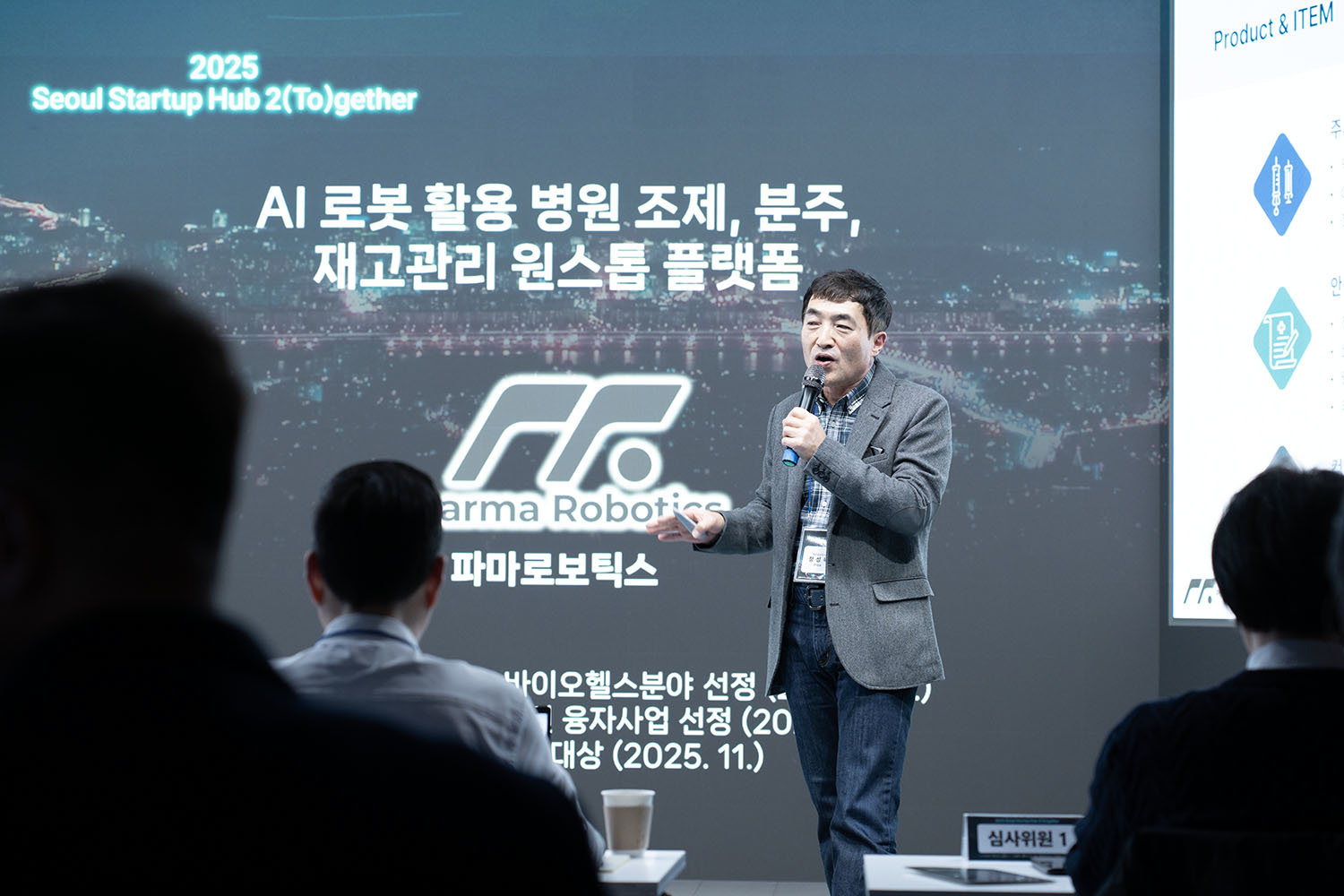
Jung Sung-wook, Deputy CEO of Pharmarobotics / Source=IT Donga
Pharmarobotics (CEO Yoo Je-cheong) develops an automated robot platform for medical tasks. It focuses on automating the preparation of injectable drugs, which takes up more than one-seventh of nurses' daily tasks. In Korea, nurses repeatedly perform tasks such as adding saline to vials, dissolving it, drawing it with a syringe, and labeling it with the patient's name to prepare antibiotic injections. Pharmarobotics replaces this process with a robot. The robot, about 1.8 meters high and 1 meter wide, can be installed at a nurse's workstation. It operates on household electricity, requiring no additional facilities. As a Class 2 medical device, it can be approved with only a suitability assessment for hospital use, without clinical trials, according to Pharmarobotics. It is preparing suitability assessments with Asan Medical Center, Ewha Womans University Medical Center, and Korea University Guro Hospital. The goal is to complete a prototype by December.
First Page Company (CEO Jang Won-bong) provides a platform service for trading columbarium niches. With the public columbarium saturation rate reaching 95%, private columbariums are a necessity, but they come with a high cost. In response, First Page Company built a platform that allows columbariums to be traded like real estate. It has built a database of over 200 burial sites nationwide and plans to expand to allow spatial verification in collaboration with XR companies. By combining burial site brokerage and transfer services, it targets a market worth KRW 240 billion annually. First Page Company gained growth momentum by being selected for the 2025 SBA Middle-aged Team Building Support Project. It also attracted seed investment from New Paradigm Investment and Hanyang University Holdings, and was selected for the TIPS program.
SBA Super Gap Program Performance SharingThe SBA is developing super gap open innovation projects by business sector through the Seoul Startup Hub Seongsu, Chang-dong, and Dongjak. It strives to create an ecosystem in the super gap field through R&D technology commercialization support and global expansion programs. The SBA Super Gap Open Innovation Project focuses on 'customized growth support'. It operates programs necessary for commercialization, such as open innovation opportunities with large and medium-sized companies, proof of concept (PoC) support, coworking spaces, and investor matching programs. Outstanding companies in the super gap sector include Ecomarine and Superb AI.
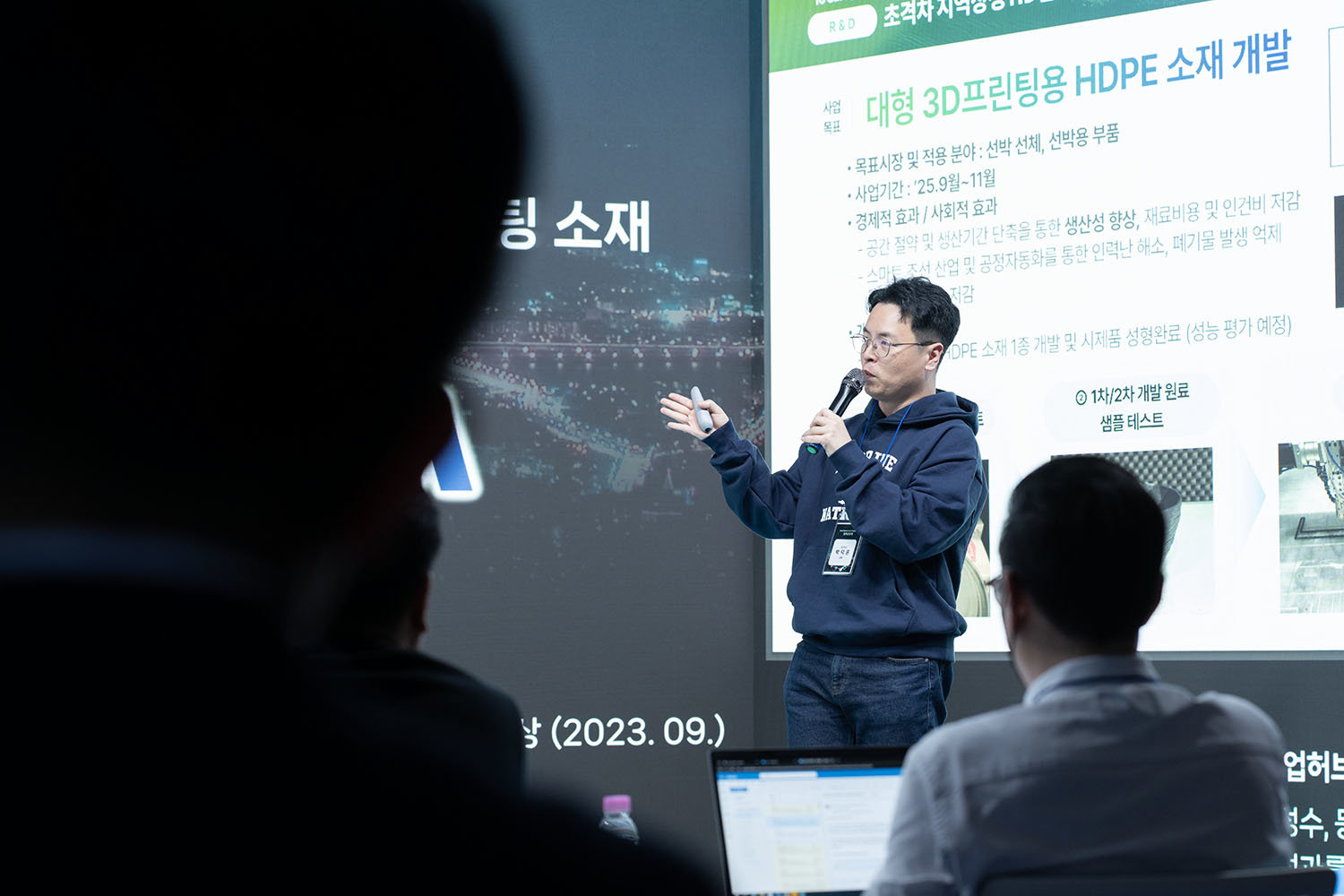
Park Deok-hoon, CEO of Ecomarine / Source=IT Donga
Ecomarine (CEO Park Deok-hoon) develops materials for eco-friendly ship manufacturing. Most small ships worldwide are made of FRP (fiber-reinforced plastic), which is non-recyclable, generating 600,000 tons of waste annually. Ecomarine addresses this waste issue by manufacturing ships with recyclable HDPE (high-density polyethylene). Ecomarine's EM001(B) is a ship-grade HDPE material certified by the Korean Register of Shipping. It reduces greenhouse gas emissions compared to FRP and enhances impact strength and weather resistance. It has been recognized for its capabilities through a two-year lifespan test in the United States.
Ecomarine produced 16 HDPE ships domestically, supplying them to the Navy, Coast Guard, and shipowners. The 3-ton fishing boat co-developed with the Ministry of Oceans and Fisheries is faster than FRP, and by downsizing the engine, it reduces greenhouse gases and costs. According to CEO Park Deok-hoon, it can reduce total operating costs by up to 45% over 20 years of operation. Ecomarine is preparing a fishing boat proposal with the Ministry of Oceans and Fisheries and is conducting a ship validation project with the Malaysian Fire Department to explore overseas markets.
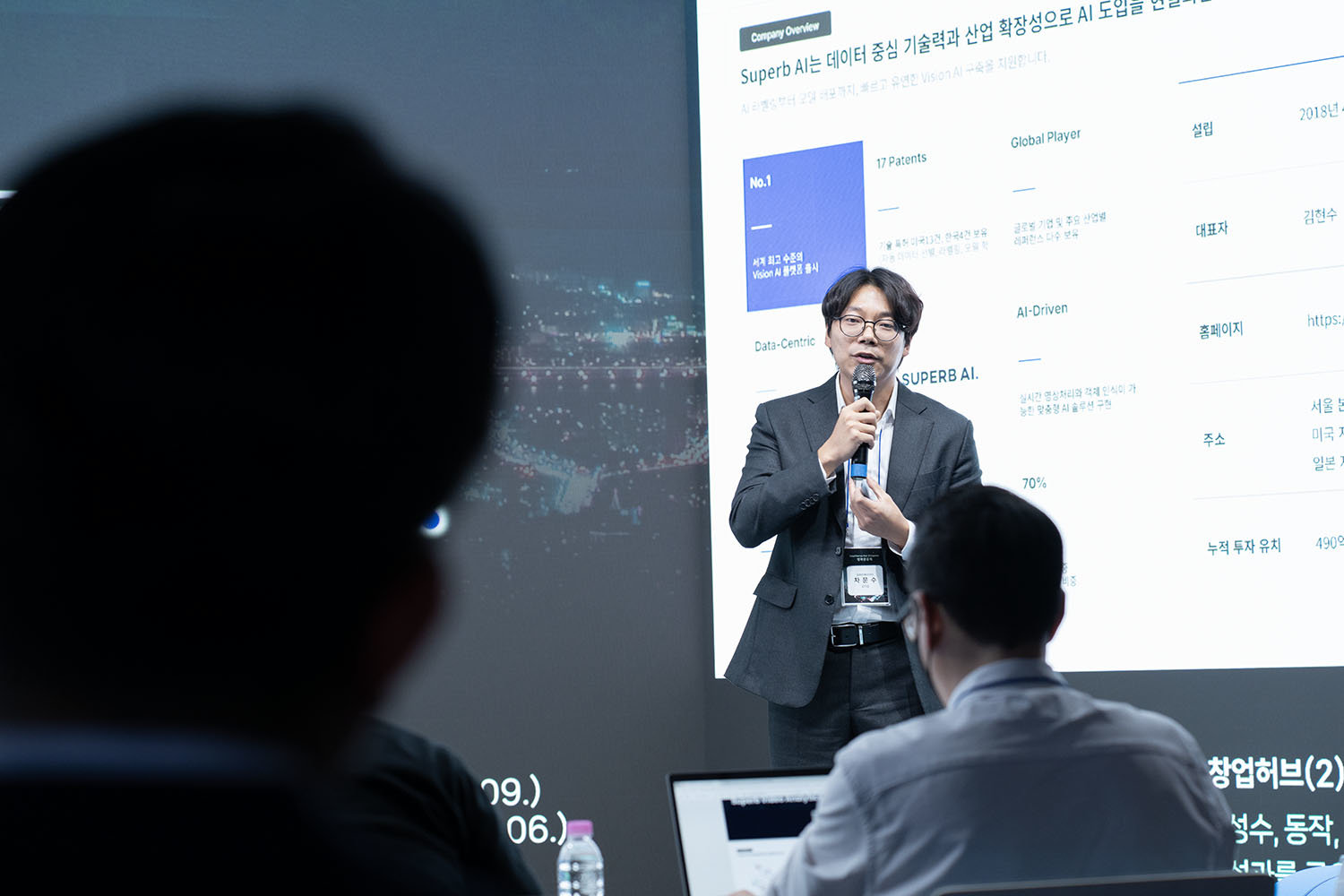
Cha Moon-soo, CTO of Superb AI / Source=IT Donga
Superb AI (CEO Kim Hyun-soo) provides a computer vision AI platform specialized for industrial environments. The Superb AI platform offers end-to-end services for data labeling, curation, training, and deployment. It uses its self-developed vision foundation model to instantly find untrained objects with just images or text. This technology won second place at CVPR, a computer vision conference, in 2025.
Superb AI is advancing its video analysis products by conducting a super gap large language model (LLM) project with Oracle. It completes the first AI inference on edge devices and conducts second-stage analysis based on VLM and LLM (vision language model and large language model) in the cloud. Superb AI has achieved results through various projects, including congestion analysis at KT and Suwon Wiz Park, concept verification (PoC) for tracking individuals at Incheon Airport, and safety control at domestic power plants. Since its founding in 2018, it has attracted a cumulative investment of KRW 49 billion over eight years and has been recognized for its capabilities by collaborating with companies such as Samsung, LG, Hyundai, and Toyota.
ESG Forum Covering Eco-friendly Solutions to Social Contribution PlatformsThe achievements of the ESG (environmental, social, governance) support project conducted by SBA culminated in the 'ESG Forum'. The ESG Forum discussed how the startup ecosystem can implement sustainability. It also highlighted the stories of outstanding companies active in various areas, from eco-friendly solutions to social contribution platforms.
First on stage was Liberation (CEO Lee Min-sung), introducing cases of sustainable product transition by companies through its eco-friendly product and package development solution system. H Energy (CEO Ham Il-han) covered the case of building an eco-friendly energy platform encompassing solar power production, consumption, and trading.
Cases of solving social problems through financial innovation were also mentioned. 276 Holdings (CEO Shin In-geun) presented an operating capital procurement solution to alleviate the financial difficulties faced by small businesses and SMEs. Coconut Silo (CEO Kim Seung-yong) aimed to improve logistics industry efficiency with its AI-based logistics matching platform, CocoTruck.
Representatives from 10 outstanding companies participating in the ESG Forum / Source=IT Donga
In the field of environmental protection, Circular Labs (CEO Choi Hee-jin) attracted attention. Circular Labs introduced a smart reusable container integrated management service using RFID (radio-frequency identification) technology. CEO Choi Hee-jin proposed a circular economy model that minimizes the use of disposable products. Sixty Hertz (CEO Kim Jong-kyu) emphasized its contribution to advancing the era of energy transition with its renewable energy integrated IT solution.
Social value in solving everyday inconven
ⓒ dongA.com. All rights reserved. Reproduction, redistribution, or use for AI training prohibited.
Popular News