[SBA x IT Donga] The Seoul Business Agency (SBA) is leading the super-gap open innovation that connects startups researching the top 10 super-gap technologies with large and mid-sized companies to foster mutual growth. Based on super-gap open innovation, it introduces the capabilities and achievements of promising startups that will be active globally.
“Call a taxi to Hapjeong Station.”
With a single voice command from the user, the smartphone autonomously opens the taxi-hailing app, inputs the departure and destination, and even completes the payment. The user successfully calls a taxi without moving a finger. This is not a scene from a science fiction movie. It is made possible by the app autonomous execution AI agent FluidGPT developed by the startup Fluiz.
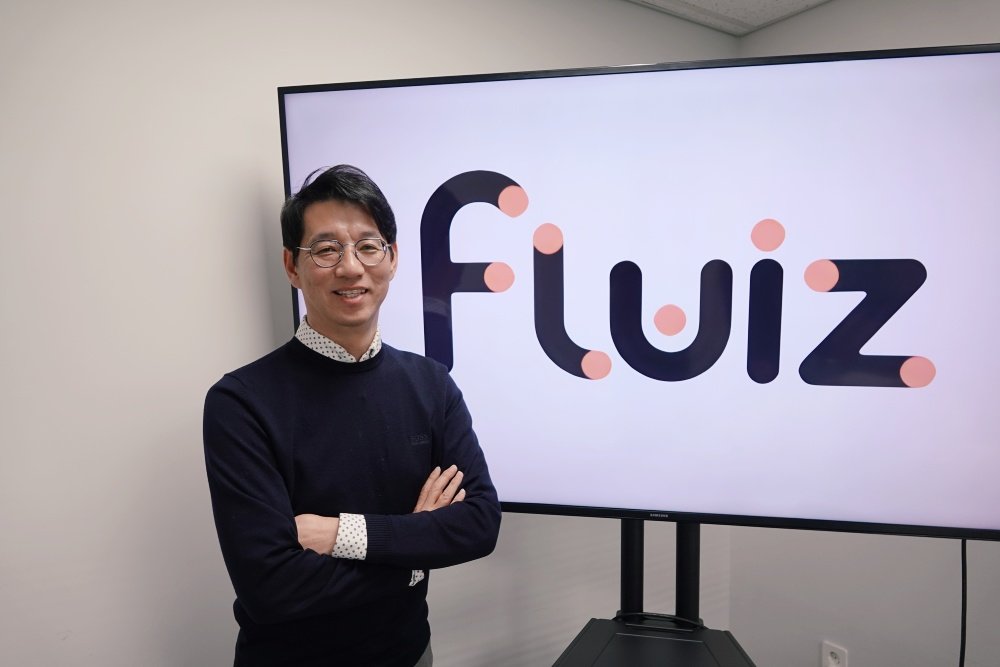
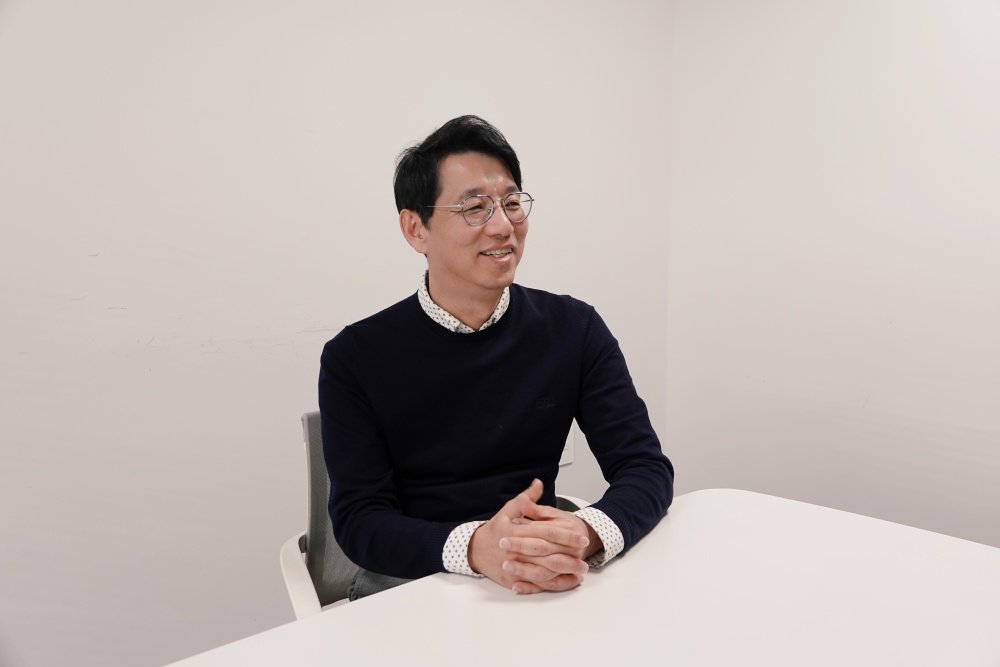
Shin In-sik, CEO of Fluiz / Source=IT Donga
Fluiz is a faculty startup established in 2020 to industrialize mobile platform technology developed by KAIST faculty. Shin In-sik, CEO of Fluiz and a professor at KAIST's School of Computing, shared the background of the technology development, growth strategy, and vision.
Successful Development of Non-Invasive Mobile AI Agent TechnologyFluiz is derived from the English word 'Fluid', meaning smooth movement, aiming for 'fluid and natural connection' or 'seamless experience'. It is a mission based on CEO Shin In-sik's philosophy of 'breaking down the boundaries between apps, devices, and user experiences to provide fluid services'.
CEO Shin In-sik stated, “At KAIST, we conducted world-class mobile and AI research, which was recognized at prestigious international academic conferences. I continuously felt the need to expand these research achievements into technologies used in the industry,” and added, “I founded Fluiz to actively realize a virtuous cycle that connects industry demands with research and expands research achievements back into the industry.”
Fluiz's core technology is FluidGPT. FluidGPT enables a smartphone to understand a user's voice command, autonomously execute related apps, and automatically handle complex tasks such as selection, input, and payment. According to Fluiz, it is the world's first non-invasive (API-Free) mobile AI agent technology that allows smartphone use through voice alone. It does not require API usage or code modification, making it applicable to any app.
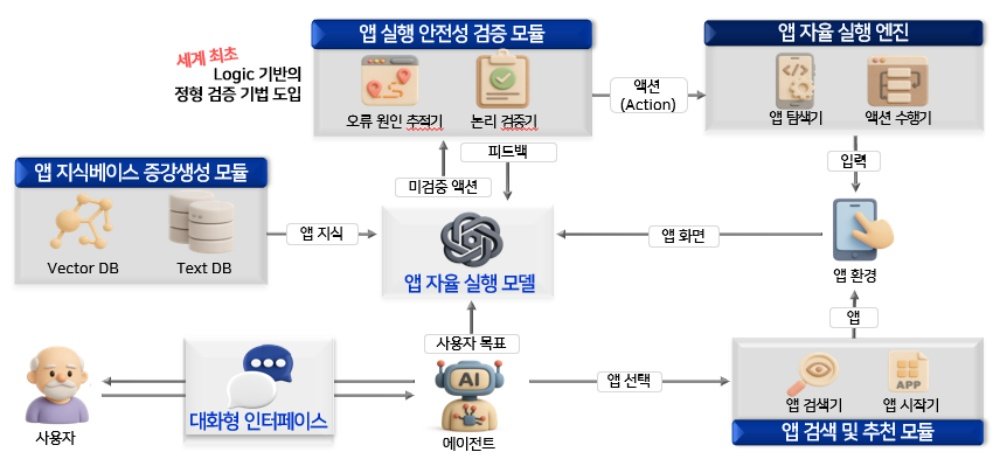
FluidGPT can directly recognize and manipulate the screen without an API, executing most apps installed on a smartphone as they are / Source=Fluiz
Notably, FluidGPT differentiates itself from existing voice assistants like Apple's 'Siri' on iPhones or Samsung Electronics' 'Bixby' on Galaxy devices, which rely on APIs and can only execute a limited set of functions. Fluiz's experiments showed that existing voice assistants could not support over 80% of the top 100 frequently used apps, such as the mobile messenger KakaoTalk and the delivery app Baedal Minjok. In contrast, FluidGPT can directly recognize and manipulate the screen without an API, executing most apps installed on a smartphone as they are. Additionally, while macro-based services cannot respond to various apps, devices, and user inputs, making universal application difficult, FluidGPT operates flexibly even with pop-ups and in various devices and situations.
Continuous Challenges… Solved in an Original WayThe development process of FluidGPT was not smooth. The biggest challenge was that each app has a different UI structure. Button positions, menu configurations, and screen flows vary, and the same app can look completely different when the device or version changes. Consequently, there were many trials and errors before completing the technology for AI to understand and execute consistently.
Fluiz solved these challenges in an original way. Instead of creating separate rules for each app, the AI was designed to analyze the screen and learn the app's functions as 'App Skills'. If an app performs the same task functionally, regardless of the screen, the AI generalizes it with common technology. Logic-based action verification was applied to ensure the learned App Skills do not execute in the wrong direction, providing a safety mechanism.
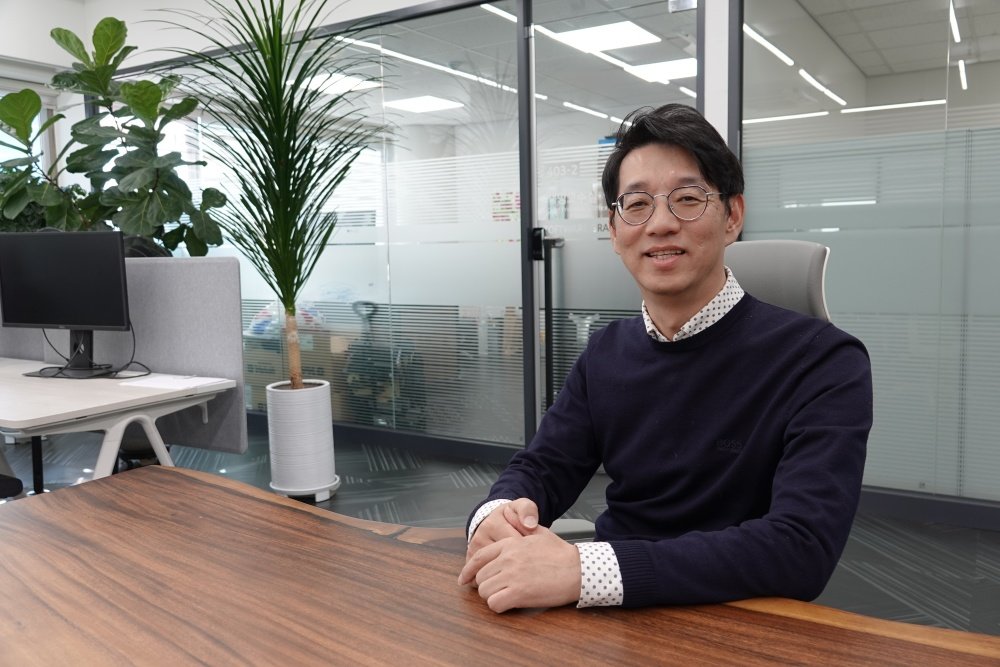
Fluiz completed FluidGPT based on Fluid, the initial technology at the time of its founding / Source=IT Donga
CEO Shin In-sik explained, “Initially, I thought developing a mobile agent would be easy using a large language model (LLM). In reality, it was not at all. LLMs are powerful but have structural limitations for mobile autonomous execution,” and added, “To overcome this, we developed a Neuro-Symbolic Hybrid structure, combining flexible neural networks with robust symbolic algorithms, enabling stable autonomous execution across various apps.”
Fluiz completed FluidGPT based on Fluid, the initial technology at the time of its founding. CEO Shin In-sik stated, “The mobile platform technology Fluid was designed to transfer specific UIs by linking multiple devices. For example, when using the YouTube app, only the video can be viewed on a tablet PC, and only the comment section on a smartphone. This increased the understanding of UIs, allowing expansion to FluidGPT.”
Overcoming a 630:1 Competition Ratio to Become the First AI ChampionFluiz's technology is recognized both domestically and internationally. It achieved the feat of publishing papers on GUI (Graphic User Interface)-based mobile agents related to FluidGPT for two consecutive years from 2024 at the world's top academic conference in the mobile field, 'ACM MobiCom', acknowledging its originality and innovation. It has also completed domestic patent registration and international patent applications.
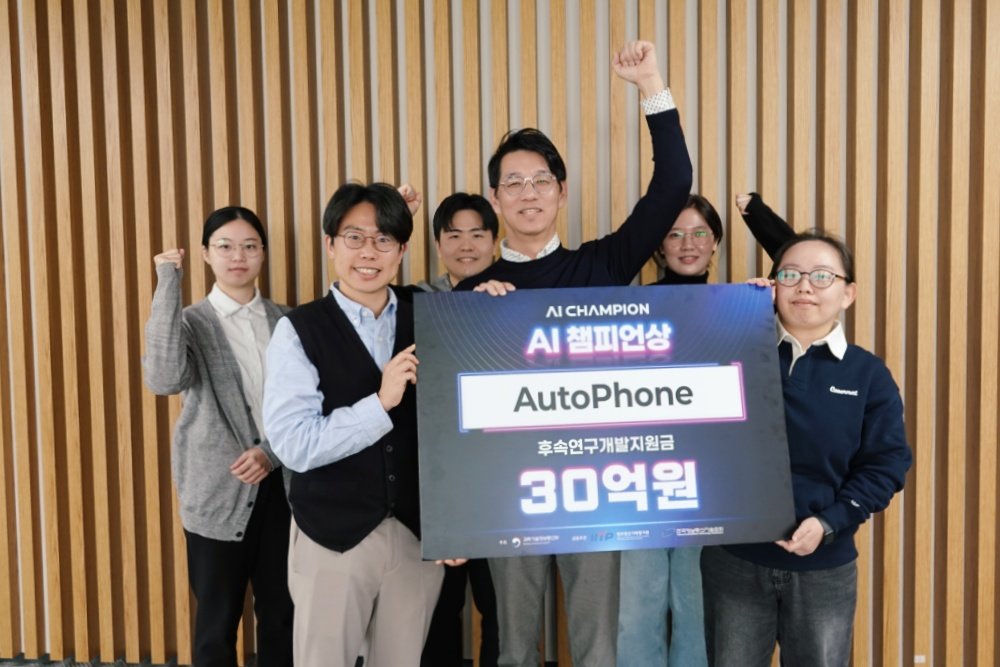
Fluiz emerged as the first AI Champion by winning the AI Champion competition / Source=IT Donga
Most notably, Fluiz emerged as the first AI Champion by winning the 'AI Champion' competition hosted by the Ministry of Science and ICT in 2025, out of 630 teams. Competing in a three-month survival competition with outstanding AI R&D talents made the result even more meaningful. CEO Shin In-sik shared, “The reason for participating in the competition was to confirm whether our technological direction was truly correct,” and added, “Winning first place validated our technological direction and provided a valuable opportunity to publicly promote our technology.”
FluidGPT is also useful for digital vulnerable groups such as the elderly or disabled. It can bridge the digital divide by increasing smartphone accessibility. As a result, it was selected for the Seoul Companion for the Weak pilot project, promoting a citizen AI agent. Seoul Companion for the Weak is a project that supports digital vulnerable groups to use major public apps and some private services through voice alone.
CEO Shin In-sik stated, “The citizen AI agent equipped with FluidGPT allows immediate use of necessary smartphone apps without complex operations, helping to practically reduce the digital divide,” and added, “We aim to start the pilot service in the second half of 2025 and officially launch it in 2026.”
Fluiz plans to advance its technology by automatically training over 1,000 apps from the current 50 levels. It is also working on creating an on-device AI model that operates entirely within the smartphone. To this end, it is focusing on developing app knowledge automatic learning technology and lightweight models. In the future, it plans to apply FluidGPT to various devices through partnerships with companies, creating new agent services.
Plans to Offer FluidGPT Services Worldwide
Fluiz aims to provide an experience where anyone can use all apps with a single word / Source=IT Donga
Fluiz is participating in the super-gap open innovation promotion support program of the Seoul Business Agency (SBA). This program is a support project to enhance the external promotion and marketing capabilities of super-gap selected companies through effective promotional support. CEO Shin In-sik stated, “Through SBA, we received R&D support, expert connections, and promotional support. It was especially helpful for initial technology verification and building corporate networks. We also gained many collaboration ideas.”
The future envisioned by Fluiz is clear. A world where smartphones do not need to be operated directly by humans. CEO Shin In-sik emphasized, “Fluiz aims to be the core technology company in the AI phone era, where people do not need to use smartphones directly.”
For example, when a user needs kimbap, they can say, “Compare and buy cheap and good kimbap ingredients,” and FluidGPT will simultaneously execute shopping apps like Coupang and Kurly, autonomously search for kimbap ingredients, compare reviews and prices, and complete the purchase. There is no need to learn complex app usage or switch between multiple apps. This holds even greater significance for digital vulnerable groups. As they can freely use services they gave up on due to complex UIs with just their voice, true digital inclusion, not barriers created by technology, becomes possible.
CEO Shin In-sik expressed, “Within three years, we aim to offer FluidGPT services worldwide, providing an experience where anyone can use all apps with a single word.” He explained that since LLMs are more specialized in English, there is no issue with FluidGPT's overseas expansion.
Fluiz is fully prepared not just to enhance convenience but to change the smartphone usage paradigm itself. The AI phone era opened by Fluiz, where machines understand and execute human intentions rather than humans learning the language of machines, is gradually approaching.
IT Donga Reporter Park Gui-im (luckyim@itdonga.com)
ⓒ dongA.com. All rights reserved. Reproduction, redistribution, or use for AI training prohibited.
Popular News