Inside Hyundai Motor’s Pune Plant
Provided by Hyundai Motor Company
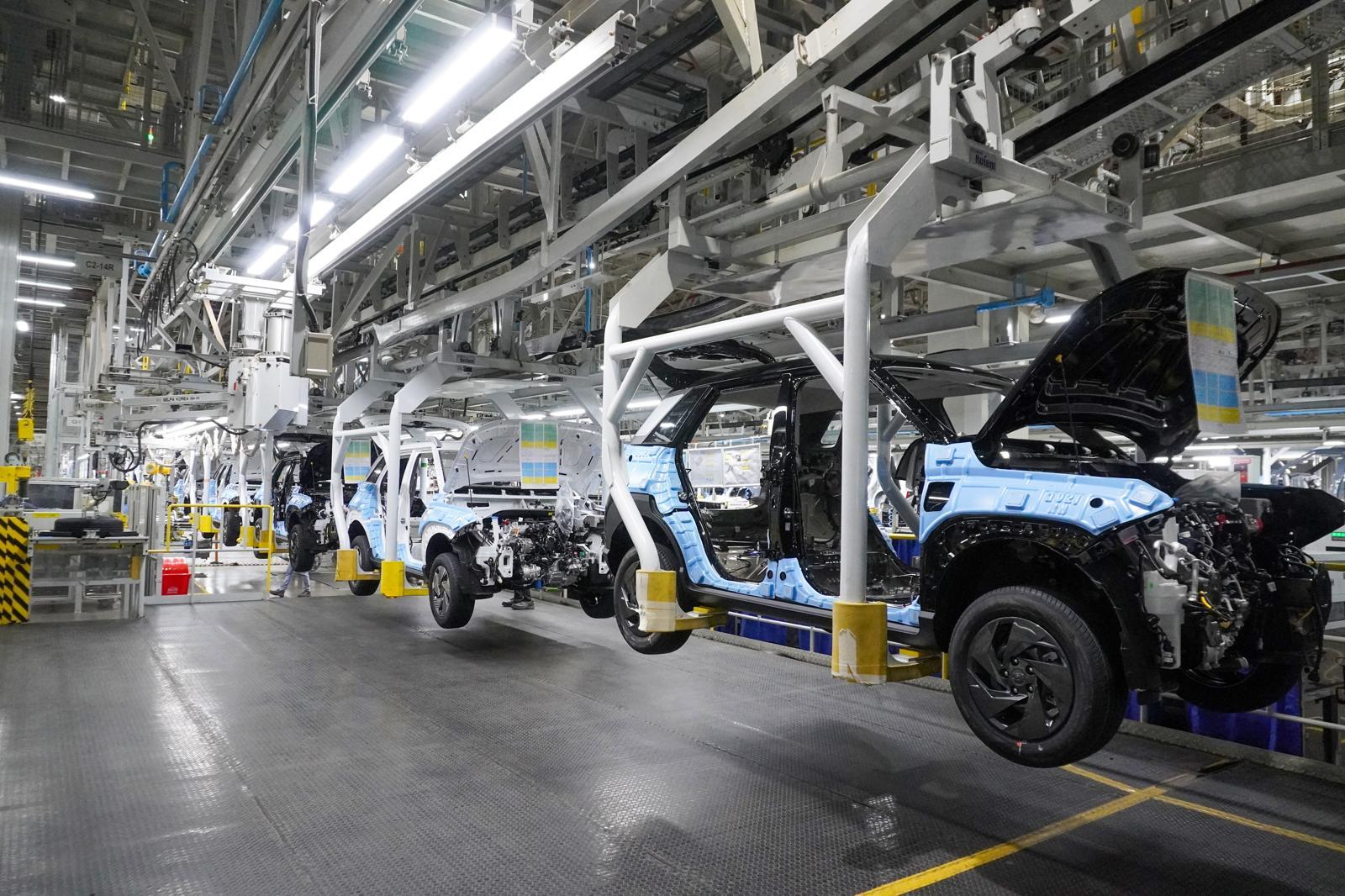
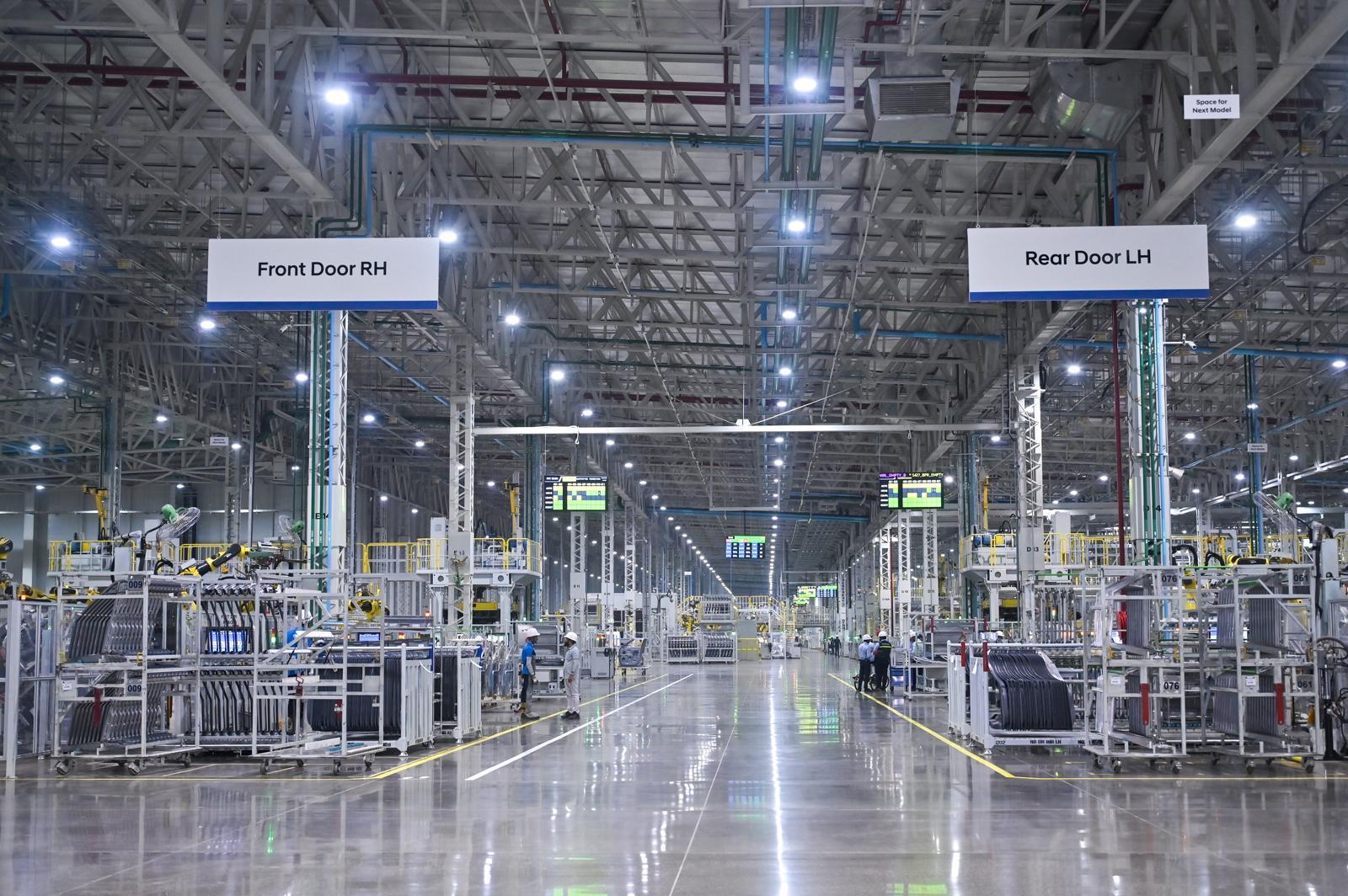
Outside, it was an October day in India with scorching sunlight, but inside the plant it was a completely different world. In the open steel-framed factory interior filled with cool air, only yellow robotic arms moved busily without any noise. While 204 robots lined up along the production line carried out their tasks, local Indian workers, who were only occasionally visible, simply repositioned raw materials or monitored whether there were any issues with the robots’ operations. This was the first impression of Hyundai Motor Company’s Pune plant in Talegaon, Maharashtra, India, visited on the 14th (local time).
Provided by Hyundai Motor Company
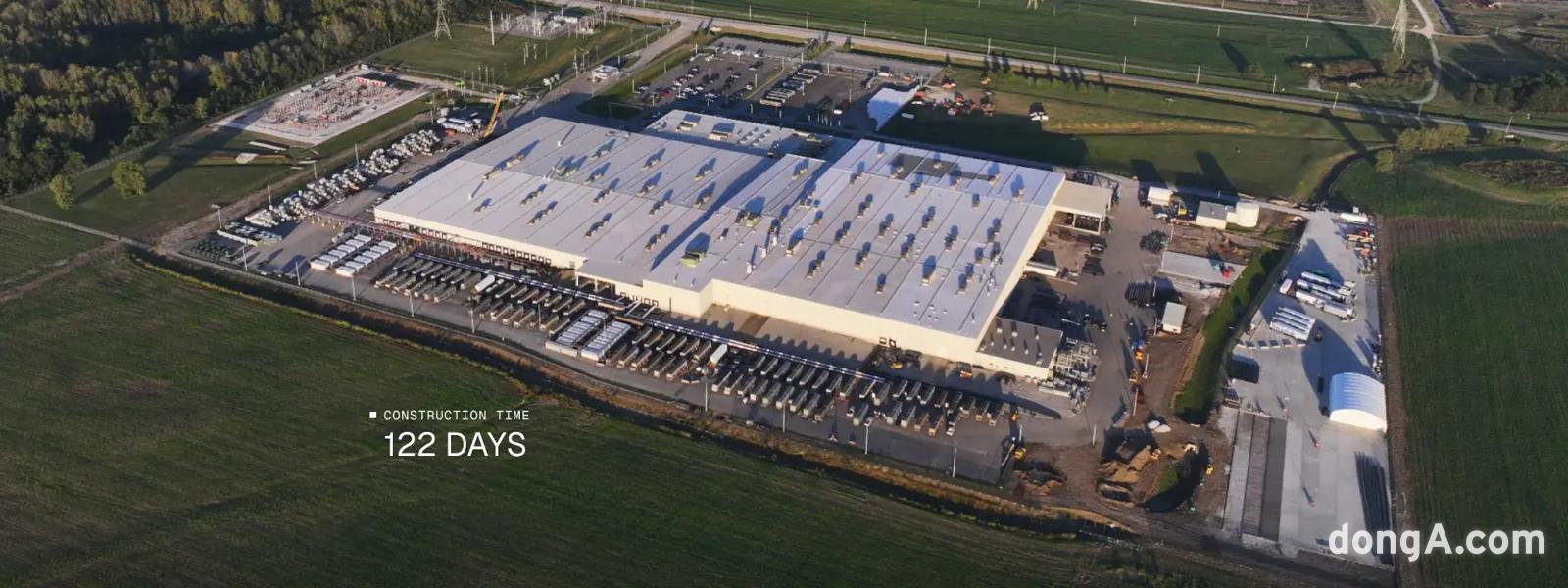
Amid Hyundai Motor Group Executive Chair Chung Euisun’s announcement that the group will invest USD 15.5 billion (approximately KRW 20.8 trillion) in India by 2032, he personally visited the Pune plant, regarded as the “first investment” project. The plant is a former General Motors (GM) facility, whose operations were halted in 2020 and which Hyundai acquired at the end of 2023. Since the fourth quarter (October–December) of last year, it has been producing the compact sport utility vehicle (SUV) “All New Venue.” Following the Chennai Plants 1 and 2, this is Hyundai’s third local production base in India, established after an 18-year interval.
Provided by Hyundai Motor Company
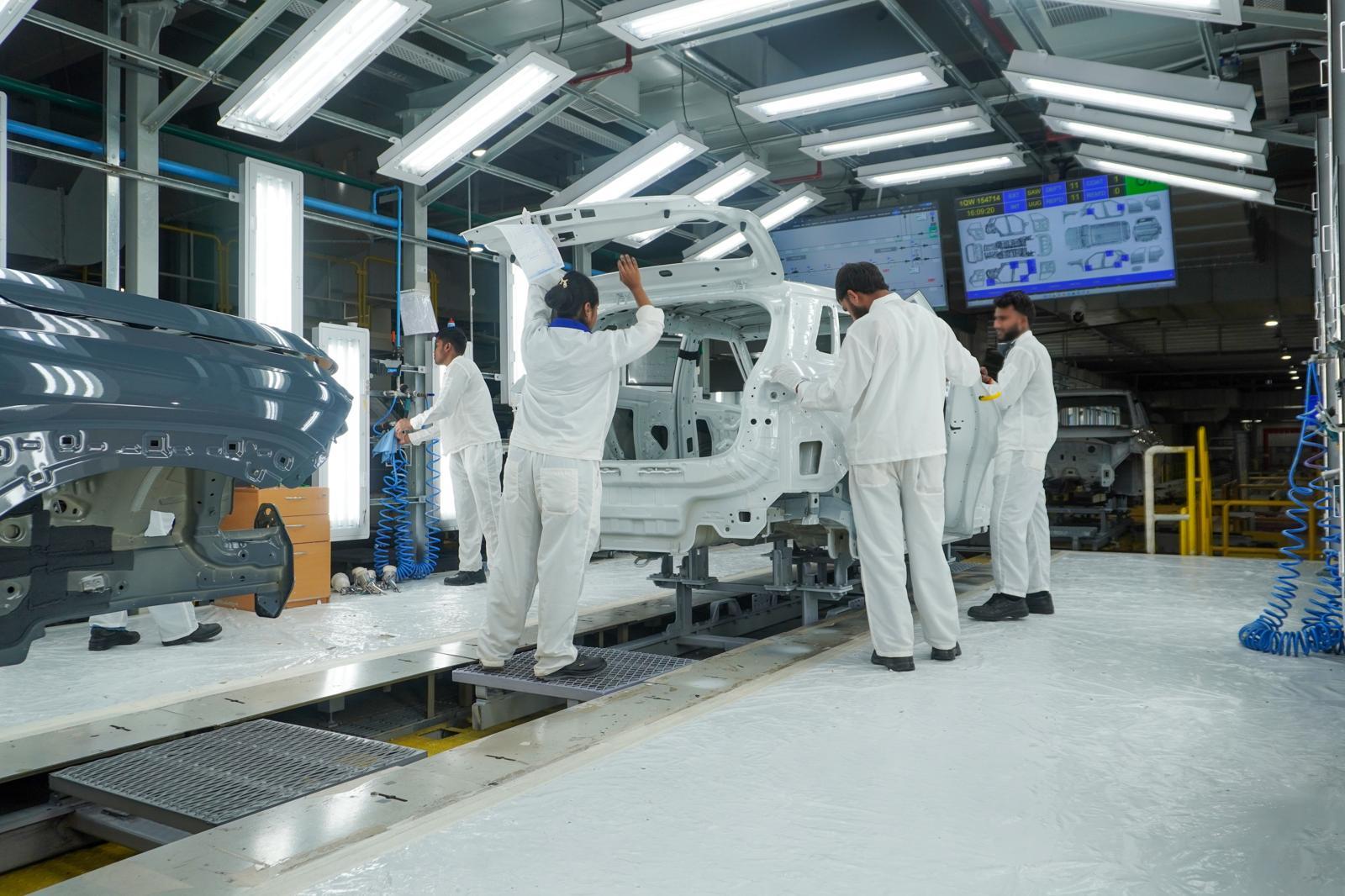
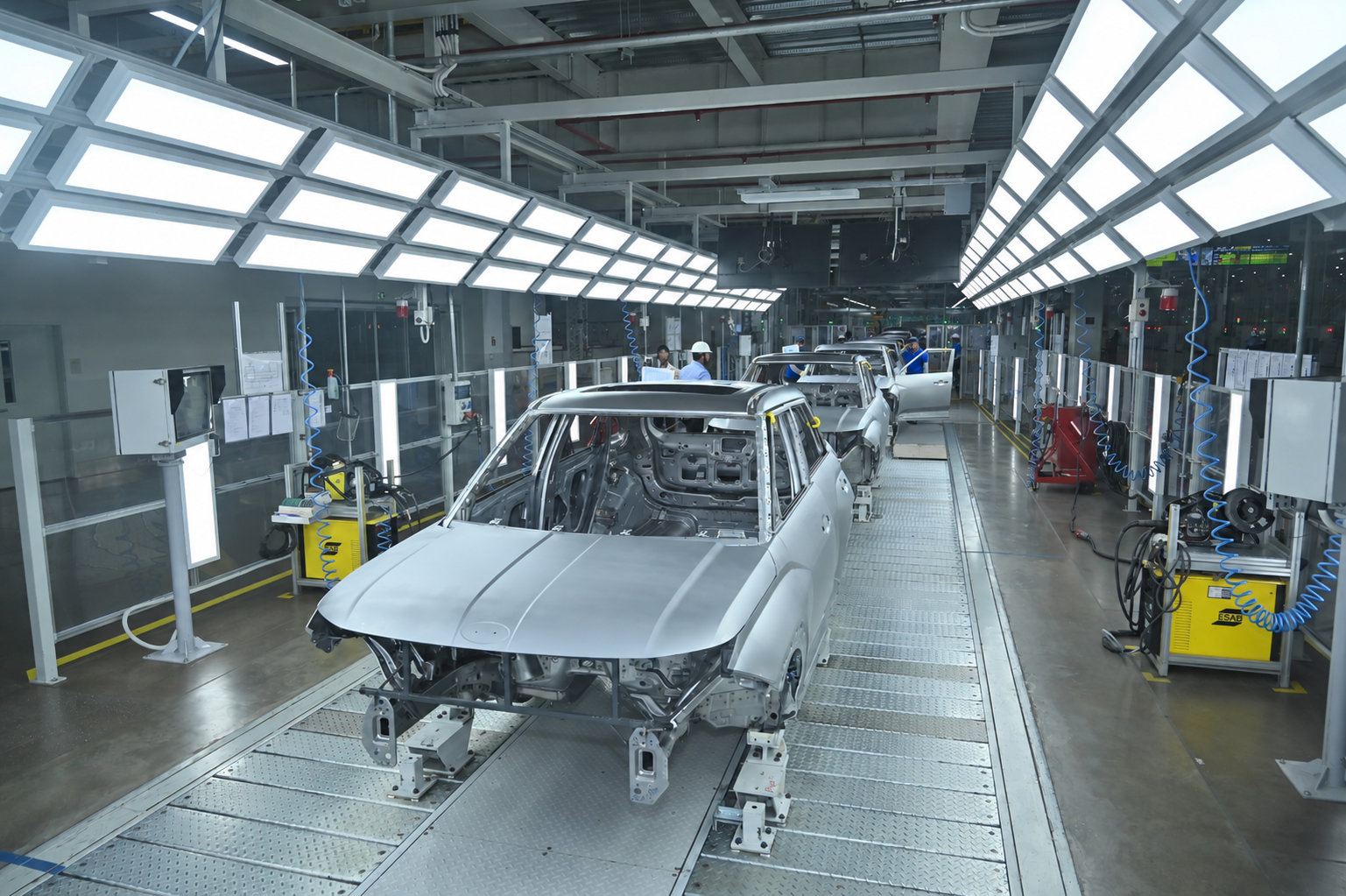
Despite occupying a site of 1.2㎢ and employing around 4,700 workers in total, the interior of the plant was quiet. Automotive production processes are generally divided into four main stages: “press,” which creates the vehicle frame; “body,” which welds body parts; “paint,” which applies the exterior finish; and “assembly,” where complete vehicles are built. Although the plant is located in India, the world’s most populous country with low labor costs, it was difficult to find workers in the press and body processes, contrary to common preconceptions. This marks a change from when GM operated the facility, at which time it was a typical labor-intensive plant with six machines spread across the site. Lee Doo-hyung, a Hyundai Motor manager responsible for the body process on site, said, “In welding, it is already impossible for humans to work as perfectly as robots,” adding, “Regardless of labor cost considerations, automation was adopted because using robots delivers better quality.”
Aside from some Indian employees on the shop floor, it was not easy to recognize that this was a plant in India. This is because most of the robots and equipment are manufactured in Korea and then transplanted locally as is. Since Hyundai Motor introduced a standardized factory system, the configuration of its production plants has become almost identical whether in Korea, the United States, Europe, or India. A Hyundai Motor official said, “It took two years from acquiring the Pune plant to starting vehicle production, but only about one month of that was needed to bring in and install the Korean robots and equipment,” explaining, “The rest of the time was spent on raising quality levels.”
Provided by Hyundai Motor Company
As a new plant that has been in operation for less than a year, it is actively utilizing artificial intelligence (AI). AI cameras are installed in the press process, where accidents can occur. The AI monitors the video feed and, if the number of people entering the site does not match the expected count, stops the process to prevent safety incidents. AI is also used to detect minute defects that occur on vehicle surfaces.
Hyundai Motor plans to invest in facilities at its other plants in India going forward. In response to reporters’ questions on how the USD 15.5 billion India investment will be allocated, Hyundai Motor President and CEO Chang Jae-hoon said, “Around 60% will be invested in upgrading and expanding production-related facilities, including aging equipment.” The Pune plant likewise plans to expand its annual production capacity from the current 170,000 units to 320,000 units by 2030 and add new vehicle types such as hybrids to its production lineup.
ⓒ dongA.com. All rights reserved. Reproduction, redistribution, or use for AI training prohibited.
Popular News