Market research firms cite “advanced AI impact” Samsung and SK emerge as new demand drivers
Getty Images Bank
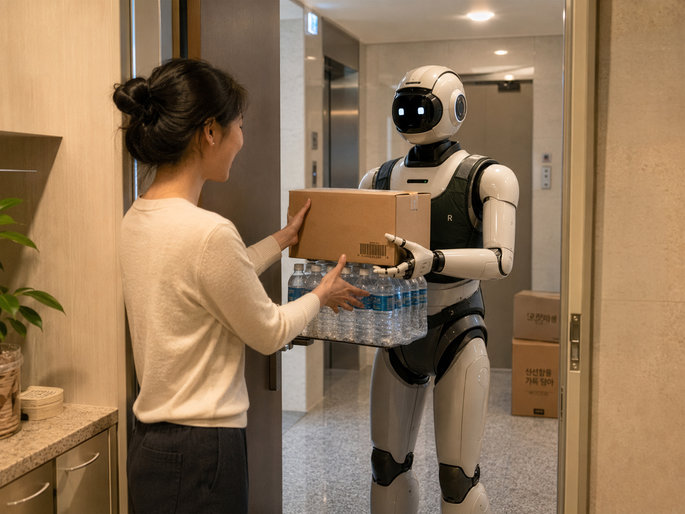
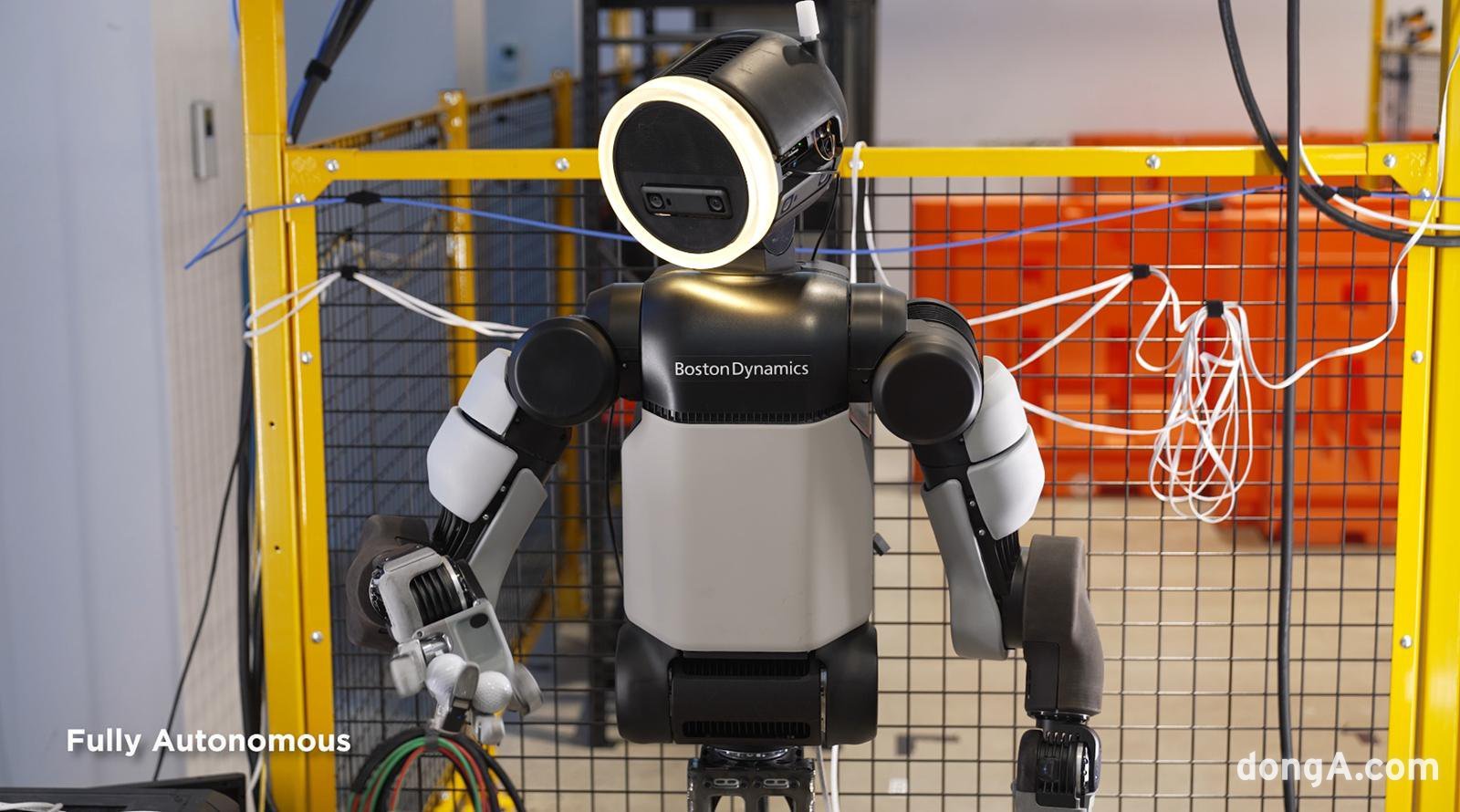
The demand for DRAM installed in humanoid robots is projected to expand to about 20 times this year’s level by 2030. Robots are emerging as a new demand source for memory companies such as Samsung Electronics and SK hynix.
On the 11th, market research firm Counterpoint Research forecast that demand for DRAM used in computing units that function as the “brain” of humanoid robots will surge from about 8,300 Tb (terabits) this year to 172,000 Tb in 2030, a 20.7-fold increase. DRAM capacity per robot is also expected to rise over the same period from 19 GB (gigabytes) to 39 GB. This is attributed to the advancement of artificial intelligence (AI) models that autonomously make decisions by analyzing camera and sensor information in real time.
Counterpoint Research analyzed that, given robots operate on batteries, demand will grow more for low-power DRAM (LPDDR) and high-capacity NAND flash than for high-bandwidth memory (HBM), which consumes more power.
Samsung Electronics and SK hynix, which compete for the top two positions in the global memory market, have moved to preempt the memory market for humanoids. In its earnings conference call in July, Samsung Electronics announced a plan to supply semiconductor solutions for physical AI—such as robots—by bundling high-bandwidth and low-power memory with image sensors, foundry services, and advanced packaging. In June, SK hynix joined forces with Nvidia to jointly develop next-generation memory to be used in the robot computing platform “Jetson Thor.”
Lee Dong-hun
AI-translated with ChatGPT. Provided as is; original Korean text prevails.
ⓒ dongA.com. All rights reserved. Reproduction, redistribution, or use for AI training prohibited.