MFDS approves Hanmi Pharma’s ‘Epe’ for market launch
45th new drug developed in Korea and first GLP-1 class locally… Injectable treatment for obesity and overweight in adults
Average 9.7% weight reduction in domestic trials… Poised for price competition with Wegovy and Mounjaro
?Affordable ‘Korean Wegovy’ to Be Launched
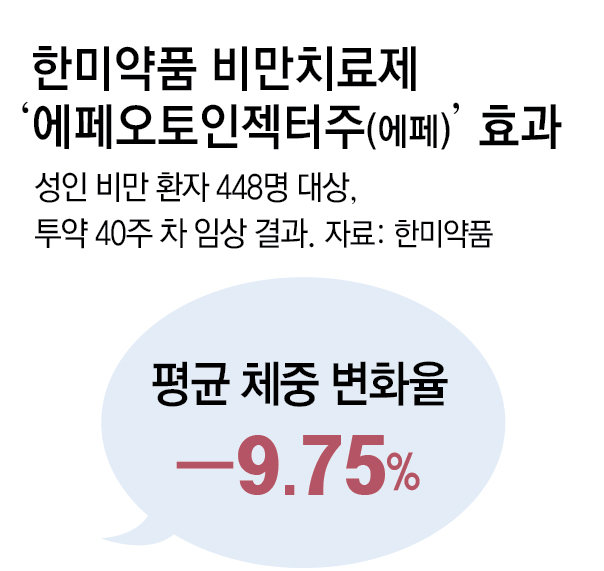
The so-called “Korean Wegovy” is expected to be released as early as the end of this month. On the 7th, the Ministry of Food and Drug Safety approved Hanmi Pharmaceutical’s “Efe Autoinjector Injection (Efe),” the first domestically developed glucagon-like peptide-1 (GLP-1) class obesity treatment, as a new drug. As its price is expected to be significantly lower than that of previously launched Wegovy and Mounjaro, a fierce three-way competition is anticipated in the domestic obesity treatment market. In the latest clinical trial, Efe demonstrated an average weight reduction of 9.75% based on 40 weeks of administration. Although the weight-loss effect is somewhat lower than that of Mounjaro, it was developed as a Korean-tailored drug and is reportedly associated with relatively fewer side effects.?
In a domestic obesity treatment market virtually dominated by Wegovy and Mounjaro, the first GLP-1 class new drug developed by a Korean pharmaceutical company has cleared the approval hurdle and will be available for sale as early as the end of this month. As it is less expensive than existing obesity treatments, it is expected not only to reshape the market landscape but also to reduce the cost burden for long-term treatment patients.
The Ministry of Food and Drug Safety announced on the 7th that it has approved the marketing of Efe Autoinjector Injection (Efe), an obesity treatment developed by Hanmi Pharmaceutical. It is the 45th new drug developed in Korea.
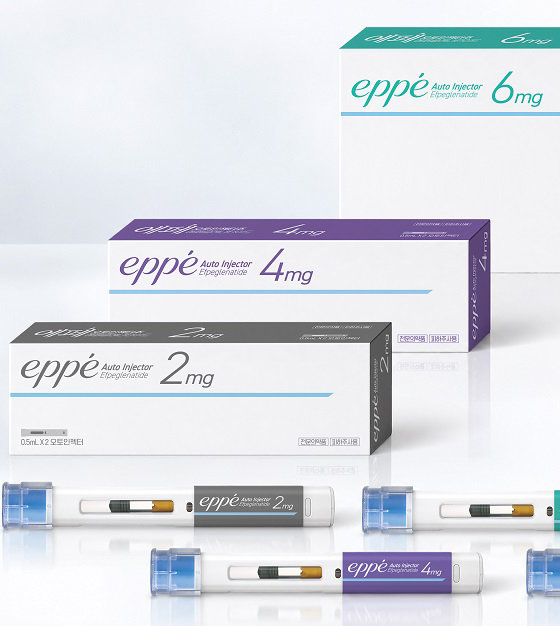
Efe is an injectable medication used in combination with diet and exercise therapy for weight management in adult patients with obesity or overweight without diabetes. Like Wegovy and Mounjaro, it acts on GLP-1 receptors to reduce appetite and prolong the feeling of fullness. The approved doses are five strengths of 2, 4, 6, 8, and 10 mg, administered once weekly. It is indicated for obese patients with a body mass index (BMI) of 30 or higher, or for patients with a BMI of 27 to less than 30 who have at least one chronic condition such as hypertension or dyslipidemia.
In a Phase 3 clinical trial involving 448 adult obese patients in Korea, the average weight reduction after 40 weeks of treatment was confirmed at 9.75%. About half of the patients in the Efe treatment group saw their weight decrease by 10% or more. In particular, among women with a BMI below 30, the average weight reduction rate was highest at 12.20%, and some patients experienced a weight loss of around 30%.
The average weight reduction rate is lower than that of existing obesity treatments such as Wegovy at 14.9% (based on 68 weeks) and Mounjaro at 20.9% (72 weeks). On the other hand, side effects such as vomiting and indigestion occurred less frequently with Efe. However, medical experts note that direct comparison of the three treatments is difficult due to differences in clinical trial duration and study populations. Shin Hyun-young, a professor in the Department of Family Medicine at Seoul St. Mary’s Hospital, said, “Because Efe’s clinical trials were conducted in Korean patients, it is expected to be more effective for the Korean population.”
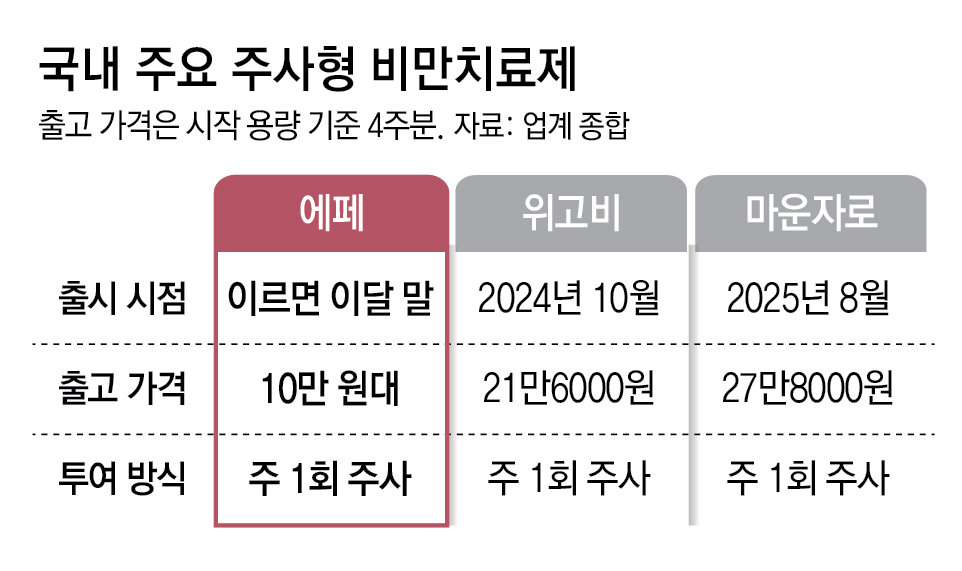
Hanmi Pharmaceutical has not yet disclosed the price, but the pharmaceutical industry widely expects the 4-week treatment cost to be in the KRW 100,000 range. Currently, the 4-week supply price from pharmaceutical companies to hospitals and clinics is KRW 216,000 for Wegovy and about KRW 278,000 for Mounjaro.
Accordingly, once Efe is launched, price competition with existing obesity treatments is expected to intensify. After Mounjaro was released last year, Wegovy’s price fell by about 10–40%, depending on the dosage. Shim Kyung-won, a professor in the Department of Family Medicine at Ewha Womans University Mokdong Hospital, said, “Obesity rates are higher in low-income groups, and if the cost burden decreases with the launch of the new drug, more obese patients will be able to benefit.”
Hanmi Pharmaceutical plans to produce Efe at its plant in Pyeongtaek, Gyeonggi Province. Following the ministry’s approval on this day, Hanmi Pharmaceutical stated, “We are preparing with the goal of supplying the product to the market as early as the end of this month.” Kim Na-young, vice president of Hanmi Pharmaceutical, said, “The approval of Efe is meaningful in that it enables the supply of an obesity treatment tailored to the characteristics of Korean patients,” and added, “We will pursue thorough quality control and the establishment of a rational pricing system to ensure successful entry into the domestic market.”
ⓒ dongA.com. All rights reserved. Reproduction, redistribution, or use for AI training prohibited.
Popular News