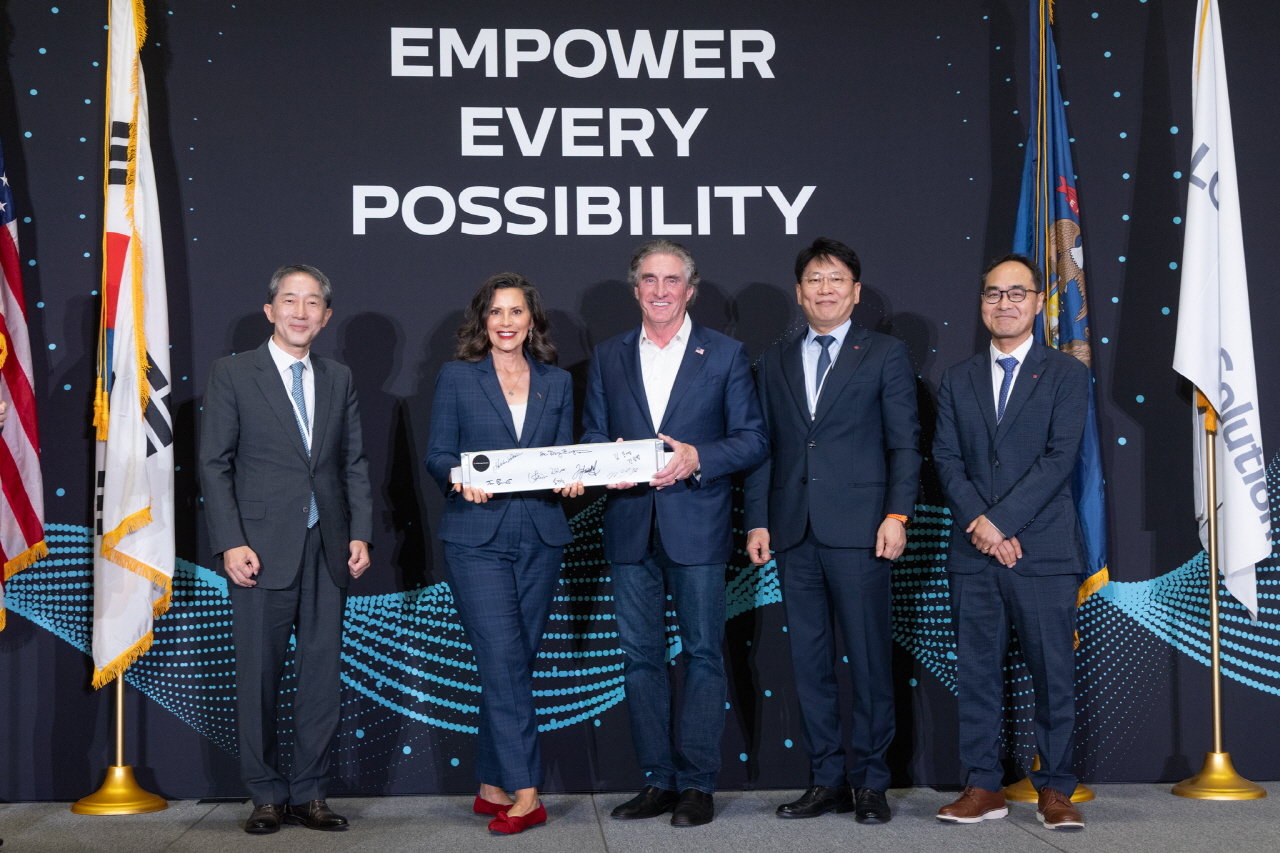
On the 18th (local time), key attendees pose for a commemorative photo at the opening ceremony of LG Energy Solution’s Lansing plant in Lansing, Michigan, United States. From left: Hong Sang-woo, Consul General of the Republic of Korea in Chicago; Gretchen Whitmer, Governor of Michigan; Doug Burgum, U.S. Secretary of the Interior; Kim Dong-myung, President and CEO of LG Energy Solution; Choi Dae-sik, Head of LG Energy Solution Michigan. Provided by LG Energy Solution.
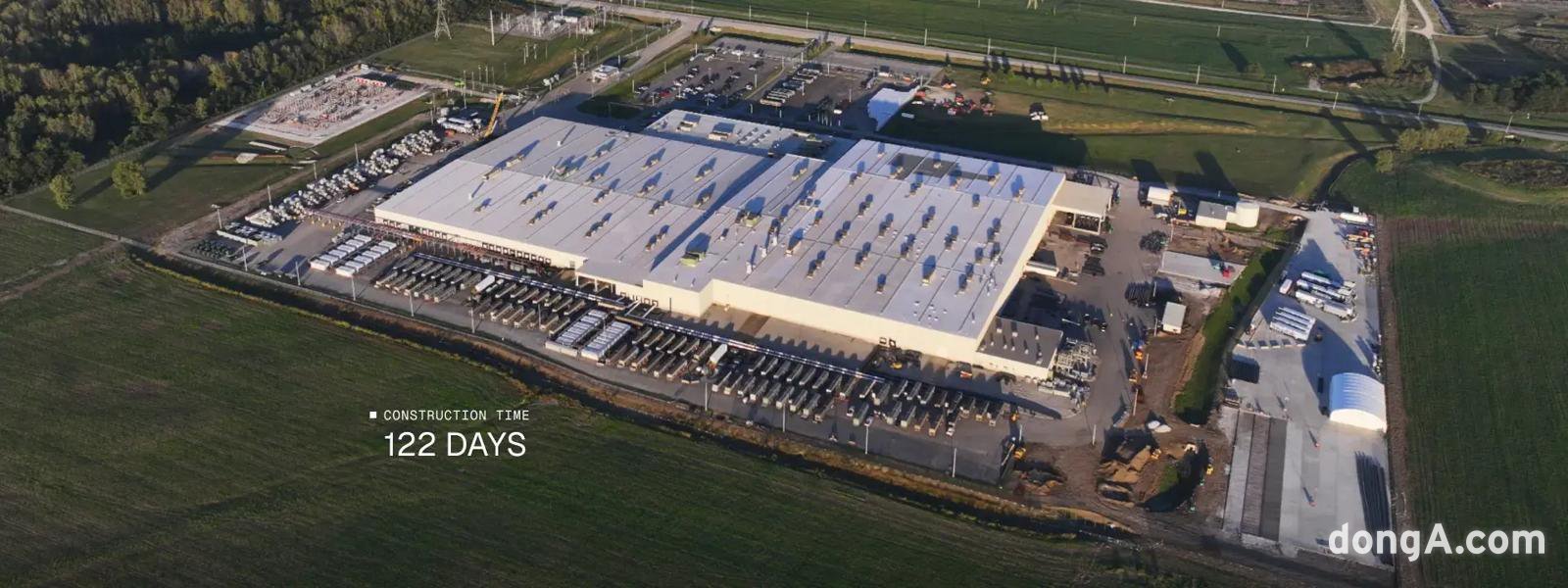
LG Energy Solution announced on the 19th that it has commenced operations at its Lansing plant in the U.S. state of Michigan, where it will simultaneously produce lithium iron phosphate (LFP) batteries for energy storage systems (ESS) and nickel cobalt manganese (NCM) batteries for electric vehicles.
LG Energy Solution held an opening ceremony for the Lansing plant in Michigan on the 18th (local time). The event was attended by Gretchen Whitmer, Governor of Michigan; Doug Burgum, U.S. Secretary of the Interior; Republican Representative Tom Barrett; Consul General Hong Sang-woo in Chicago; LG Energy Solution President Kim Dong-myung; and Michigan Head Choi Dae-sik.
The Lansing plant is LG Energy Solution’s seventh production plant in North America and is expected to secure an annual battery cell production capacity of more than 35 GWh. It will operate as a complex manufacturing hub producing both LFP batteries for ESS and NCM batteries for electric vehicles at a single site.
The LFP batteries for ESS will be supplied through LG Energy Solution’s ESS system integration (SI) subsidiary, Vertech, to customers in the power infrastructure and AI data center sectors. As of the end of last year, LG Energy Solution had secured an ESS order backlog of approximately 140 GWh, mainly in North America, and concluded new ESS orders worth more than KRW 3 trillion in the first half of this year, the company explained.
The NCM batteries for electric vehicles will be supplied to Toyota. They are scheduled to be installed in vehicles such as the 2027 model-year Highlander produced at Toyota’s plant in Georgetown, Kentucky, United States. LG Energy Solution and Toyota signed a battery supply agreement in 2023.
With the start of operations at the Lansing plant, LG Energy Solution now has five production hubs dedicated to meeting demand in the North American ESS market. The system consists of three production bases—the Lansing and Holland plants in Michigan and the NextStar Energy plant in Ontario, Canada—plus the Ohio L-H Battery Company, a joint venture with Honda, and the Ultium Cells plant in Tennessee, a joint venture with GM.
LG Energy Solution has been pursuing a rebalancing strategy, converting production facilities that were focused on electric vehicles to meet ESS demand. With North American ESS demand increasing due to the expansion of AI data centers and investment in power grids, this measure aims to enhance the utilization of existing production facilities and secure local production capacity.
Through this, the company plans to secure more than 50 GWh of LFP battery production capacity for ESS in North America by the end of this year. Market research firm Wood Mackenzie forecasts that the U.S. ESS market will grow by about four times by 2031, with new installations reaching 499 GWh.
Kim Dong-myung, President of LG Energy Solution, said, “The start of operations at the Lansing plant is an important milestone that will accelerate the growth of our North American business,” adding, “We will build a battery manufacturing network that supports the U.S. mobility industry and energy infrastructure and continue to expand our local production capabilities.”
Gretchen Whitmer, Governor of Michigan, said, “The Lansing plant is the result of Michigan’s investment efforts in clean energy, electric vehicle manufacturing, and energy storage,” adding, “We look forward to continuing our long-term partnership with LG Energy Solution.”
Doug Burgum, U.S. Secretary of the Interior, also said, “Battery production in the United States is a foundation for reducing dependence on overseas sources, creating jobs, and at the same time strengthening energy competitiveness,” emphasizing the need to expand the local battery supply chain.
ⓒ dongA.com. All rights reserved. Reproduction, redistribution, or use for AI training prohibited.
Popular News