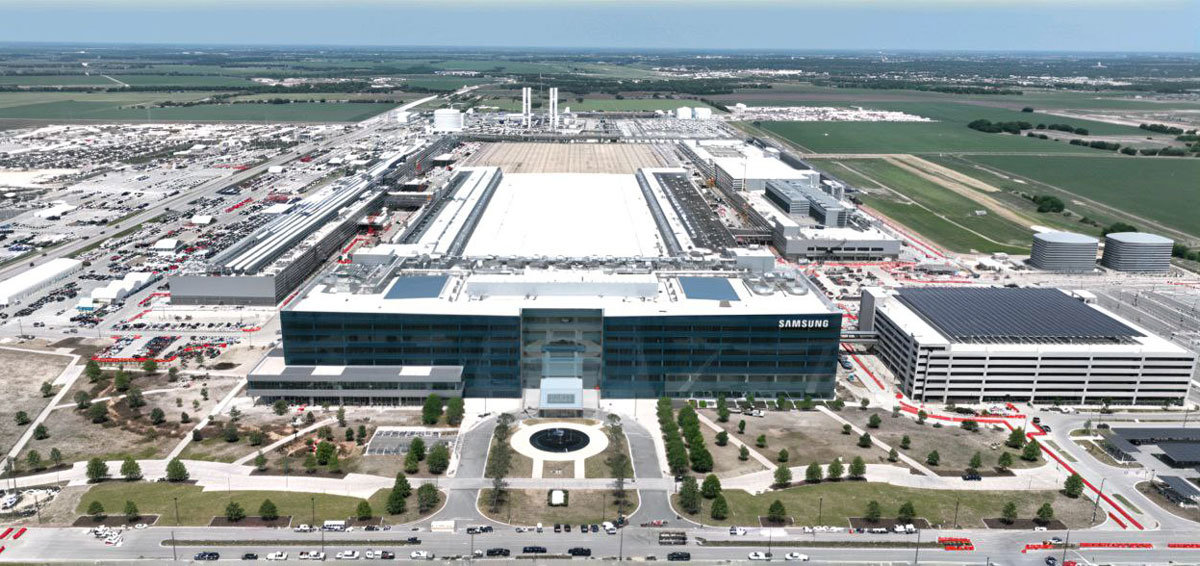
Samsung Electronics’ semiconductor manufacturing plant (fab) built in Taylor, Texas. Samsung Electronics announced that it will build a second plant at this site within the year. Provided by Samsung Electronics
Despite concerns about a semiconductor “peak-out” (decline after reaching a peak) in the second half of the year, Samsung Electronics is moving ahead with aggressive investments across the entire semiconductor spectrum, including foundry (contract chip manufacturing) and memory. This is seen as reflecting confidence driven by results exceeding market consensus and the expansion of the artificial intelligence (AI) industry. However, due to market doubts over the investment capacity of big tech companies that purchase semiconductors, the share price remained flat.
● Samsung Electronics posts Q2 operating profit of KRW 89.5 trillion… 70% profit margin in semiconductors
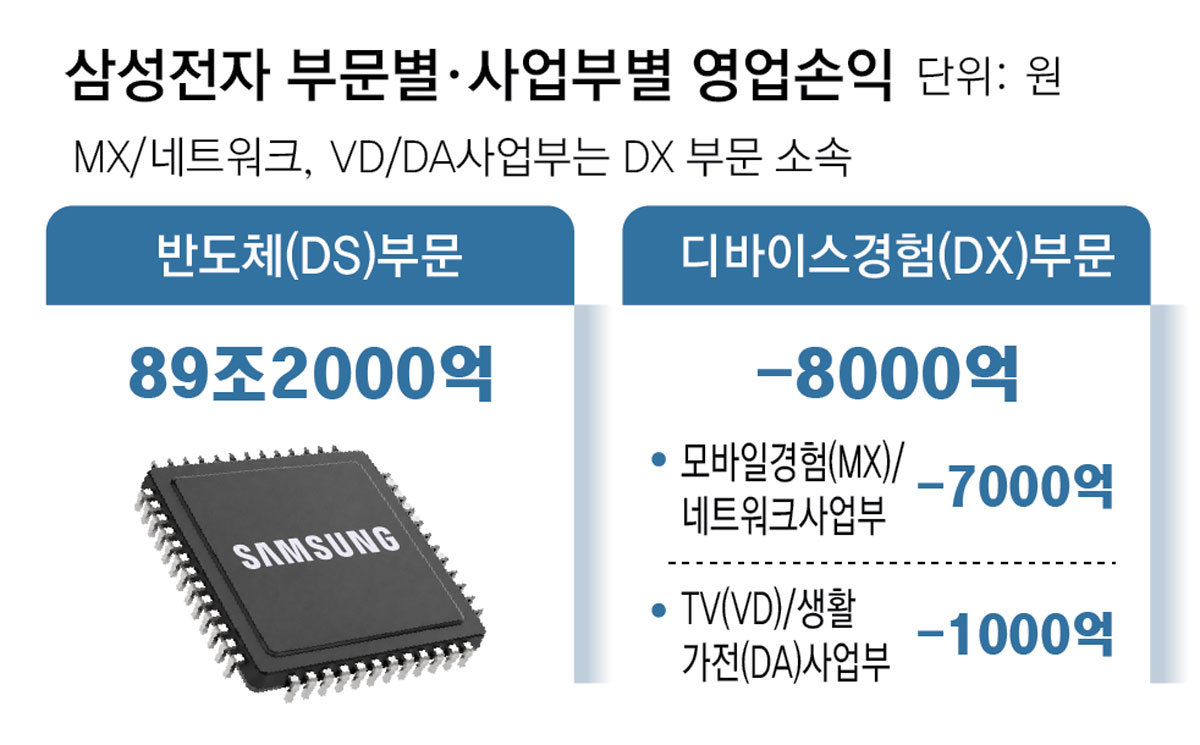
On the 30th, Samsung Electronics announced that on a consolidated basis for the second quarter of this year (April–June), it recorded sales of KRW 171.5 trillion and operating profit of KRW 89.5 trillion. Compared with the same period a year earlier, sales surged 130.0% and operating profit 1,813.8%. Both sales and operating profit renewed record highs for the third consecutive quarter.
Of total operating profit, 99.7% came from the Device Solutions (DS) division, which oversees the semiconductor business. Operating profit from the DS division alone was KRW 89.2 trillion. Driven by strong demand for high-bandwidth memory (HBM) for AI servers and high-capacity enterprise solid state drives (eSSD), the average selling price of memory rose sharply, while losses at the System LSI and Foundry business units narrowed. As a result, the DS division’s operating margin in the second quarter reached 70%.
Regarding concerns about a semiconductor peak-out, Samsung Electronics assessed that semiconductor supply shortages will persist through 2028. During the conference call that day, Kim Jae-joon, head of Strategic Marketing, Memory Business Division at Samsung Electronics, said, “Considering the time required for physical capacity expansion and yield stabilization, the shortage in memory semiconductor supply will continue until 2028,” adding, “(Next year) the scale of the supply shortage will expand further compared with this year.”
Samsung Electronics also explained that it has completed long-term contracts with the world’s top five data center operators and is in final negotiations with an additional five major customers. A Samsung Electronics official said, “At present we can only meet about 70% of the volumes requested by key customers.”
The outlook is also bright for the foundry business. Following last year’s contract with Tesla in the United States for next-generation autonomous driving AI chip contract manufacturing worth about KRW 23 trillion, the company this month announced a turnkey (end-to-end) cooperation plan with Broadcom for memory and foundry valued at USD 200 billion (about KRW 276 trillion).
● Share price fails to rebound despite record results
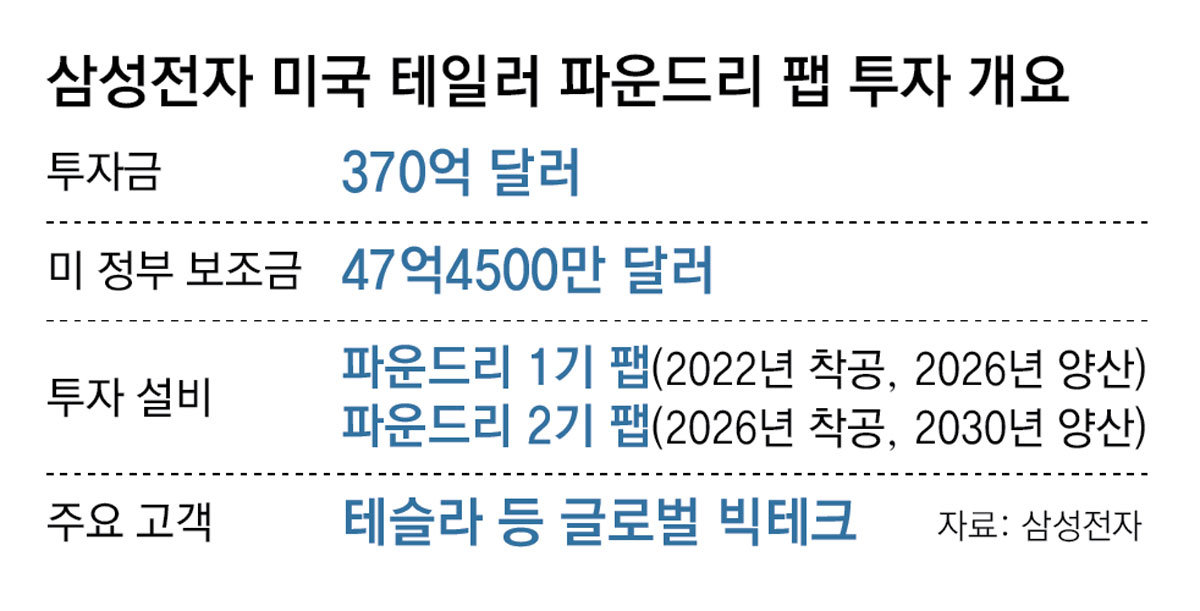
In response, Samsung Electronics is expediting expansion of production both at home and abroad. It officially announced that it will break ground within the year on a second foundry plant (fab) in Taylor, Texas, and will move into full-scale mass production from 2030. Domestic semiconductor investments will proceed in parallel. The company will inject KRW 400 trillion to build two memory fabs in the newly designated Jeonnam Gwangju Unified Special City, and invest KRW 1,650 trillion to upgrade existing metropolitan clusters in Pyeongtaek and Yongin, Gyeonggi Province.
Meanwhile, the board of directors of Samsung Electronics resolved to pay a cash quarterly dividend of KRW 374 per common share and preferred share. The total quarterly dividend payout amounts to about KRW 2.45 trillion. Chief Financial Officer (CFO) Park Soon-chul said, “We will soon provide an update regarding shareholder return policies, including special dividends.”
Following SK hynix the previous day, the market remained tilted toward concerns over a semiconductor peak-out despite Samsung Electronics’ record results and shareholder return policy. On the day, Samsung Electronics’ share price closed at KRW 207,000, down 0.72% from the previous day, while SK hynix fell 5.64% to close at KRW 1,322,000. The Wall Street Journal (WSJ) analyzed the recent weakness in semiconductor stocks, saying, “The myth of AI investment is shaking,” and diagnosing that “the premise that massive investments by (big tech companies) in data centers will translate into huge profits is being called into question.”
In fact, on the 29th (local time), Meta announced in its second-quarter earnings that the company’s free cash flow was USD 784 million (about KRW 1 trillion), a 91% plunge from the same period a year earlier. Free cash flow is the cash remaining after deducting capital expenditures, such as facility investments, from cash generated by operations. Alphabet, Google’s parent company, saw its free cash flow turn negative in the second quarter. This means that virtually all cash earned has been spent on AI infrastructure investments, depleting cash reserves.
In the case of Samsung Electronics, market wait-and-see sentiment over the pace of earnings recovery in the foundry business unit is also seen as weighing on the share price. Noh Geun-chang, an analyst at Hyundai Motor Securities, said, “While memory earnings are expected to maintain an upward trajectory, the foundry business needs clear turnaround indicators, such as generating operating profit of more than KRW 1 trillion on a quarterly basis.”
ⓒ dongA.com. All rights reserved. Reproduction, redistribution, or use for AI training prohibited.
Popular News