“AI-driven memory shortage means fabs will quickly turn profitable”… Micron to invest USD 250 billion in the US
Chinese players using IPO funds to develop processes… Korean government accelerating power infrastructure and more
Taiwan’s TSMC raises its US capital spending plan
The decision by the government and Samsung Electronics to move up the start of operations at the first fab within the Yongin National Industrial Complex to 2029, two years earlier than initially planned, reflects an assessment that it is urgent to secure a new production base early and preempt demand amid AI-driven memory supply shortages. As a “memory super-cycle” has emerged in which “what is produced immediately generates cash,” building plants as quickly as possible has become the optimal strategy. U.S.-based Micron and rapidly rising Chinese firms are also announcing large-scale capital expenditure plans, further intensifying the global battle for semiconductor supremacy.
● Global companies locked in a race to expand production facilities
According to the semiconductor industry on the 12th, the government and Samsung Electronics have decided to advance the operation schedule of the Yongin National Industrial Complex in order to fill the gap in memory supply. The complex had initially been projected to focus on system semiconductors (foundry/contract semiconductor manufacturing), but with the recent memory supply shortage, there is growing possibility that it will be developed as a combined memory–foundry complex. Given current market conditions, the first fab targeting operation in 2029 is also increasingly expected to be either dedicated to memory or to operate memory in parallel with foundry.
In the AI era, memory semiconductors are commanding a truly “high price.” With “multimodal AI,” which processes images and video together, becoming the mainstream, the volume of data that must be processed is surging even faster. Despite some concerns over a possible “memory peak-out,” players in the industry expect the supply shortage to be prolonged. Samsung Electronics Chairman Lee Jae-yong also stated at a national briefing on 29 June that “the market’s view is that even with aggressive investment, it is difficult to fully respond to the explosive growth in demand.” SK hynix President Kwak Noh-jung likewise predicted in a foreign media interview on the 10th that “through the 2030s, memory demand will exceed companies’ production capacity.”
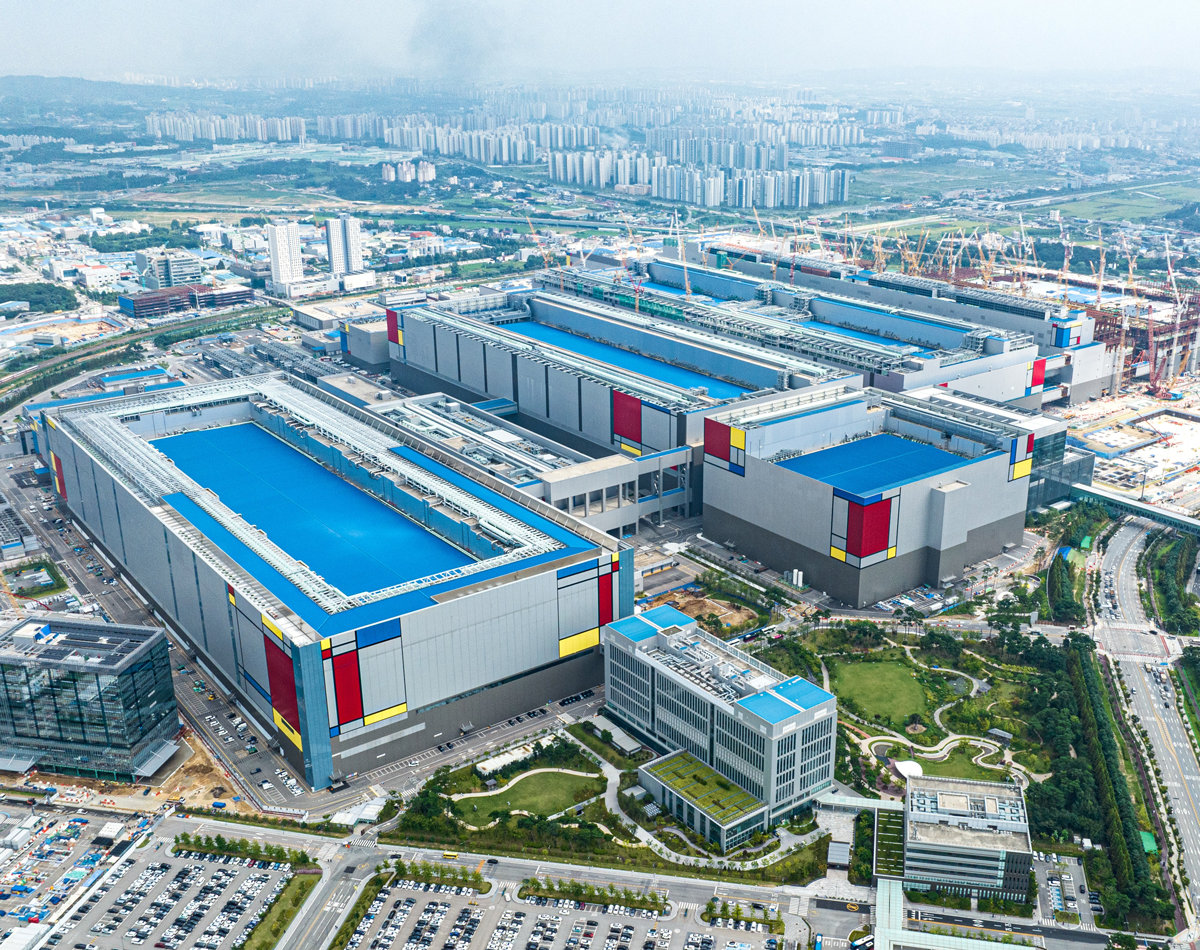
A view of Samsung Electronics’ Hwaseong Campus in Hwaseong, Gyeonggi Province. Courtesy of Samsung Electronics
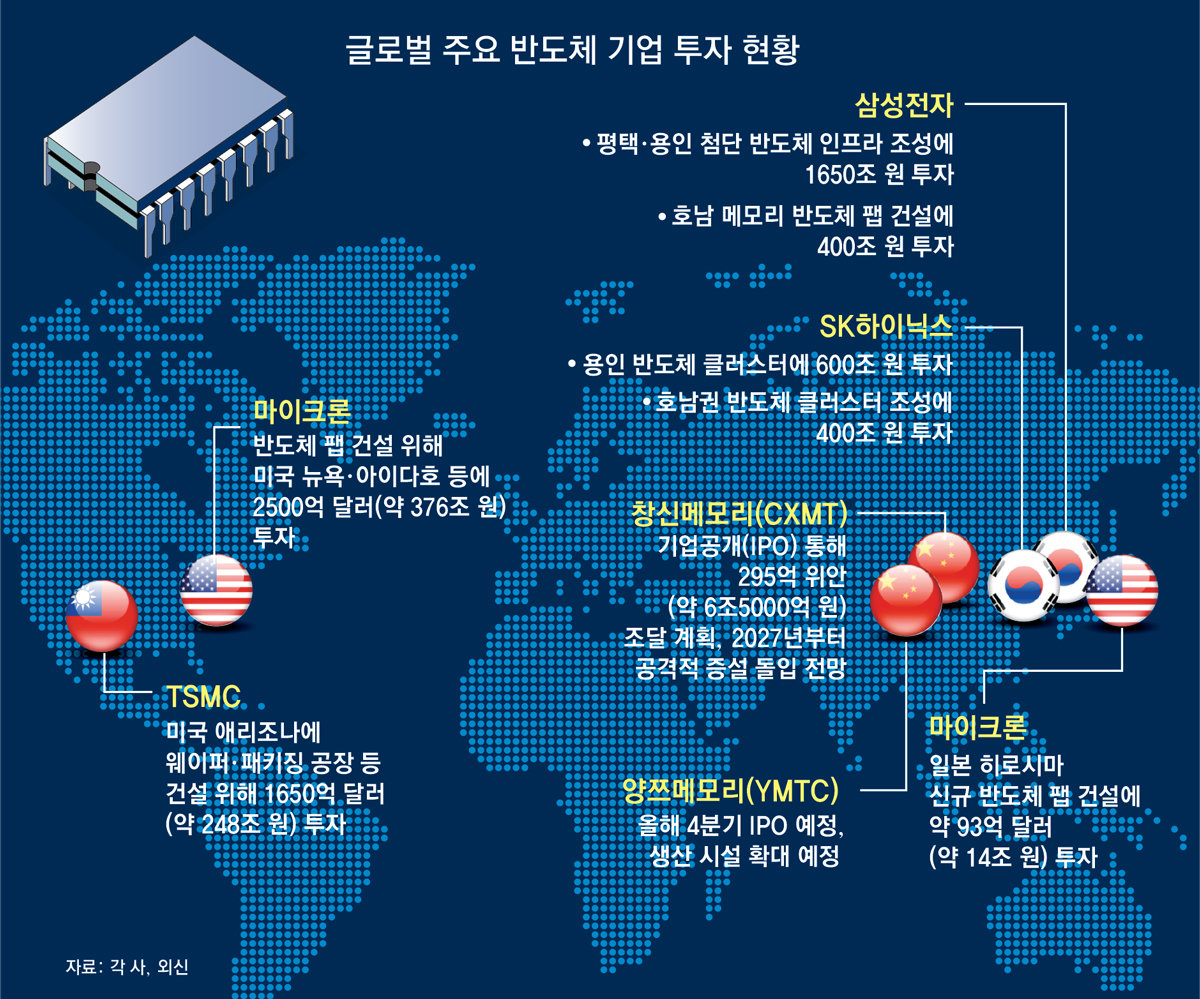
Samsung Electronics and SK hynix’s plan to invest KRW 400 trillion each, a total of KRW 800 trillion, in Gwangju-Jeonnam Special City to build four memory fabs is also aimed at responding to the shortage in supply. In addition, Samsung Electronics will invest a total of KRW 1,706 trillion in semiconductor infrastructure in Pyeongtaek and Yongin in Gyeonggi Province and in the Chungcheongnam-do region, while SK hynix plans to execute investments totaling KRW 700 trillion in Yongin, Gyeonggi Province, and Cheongju, North Chungcheong Province.
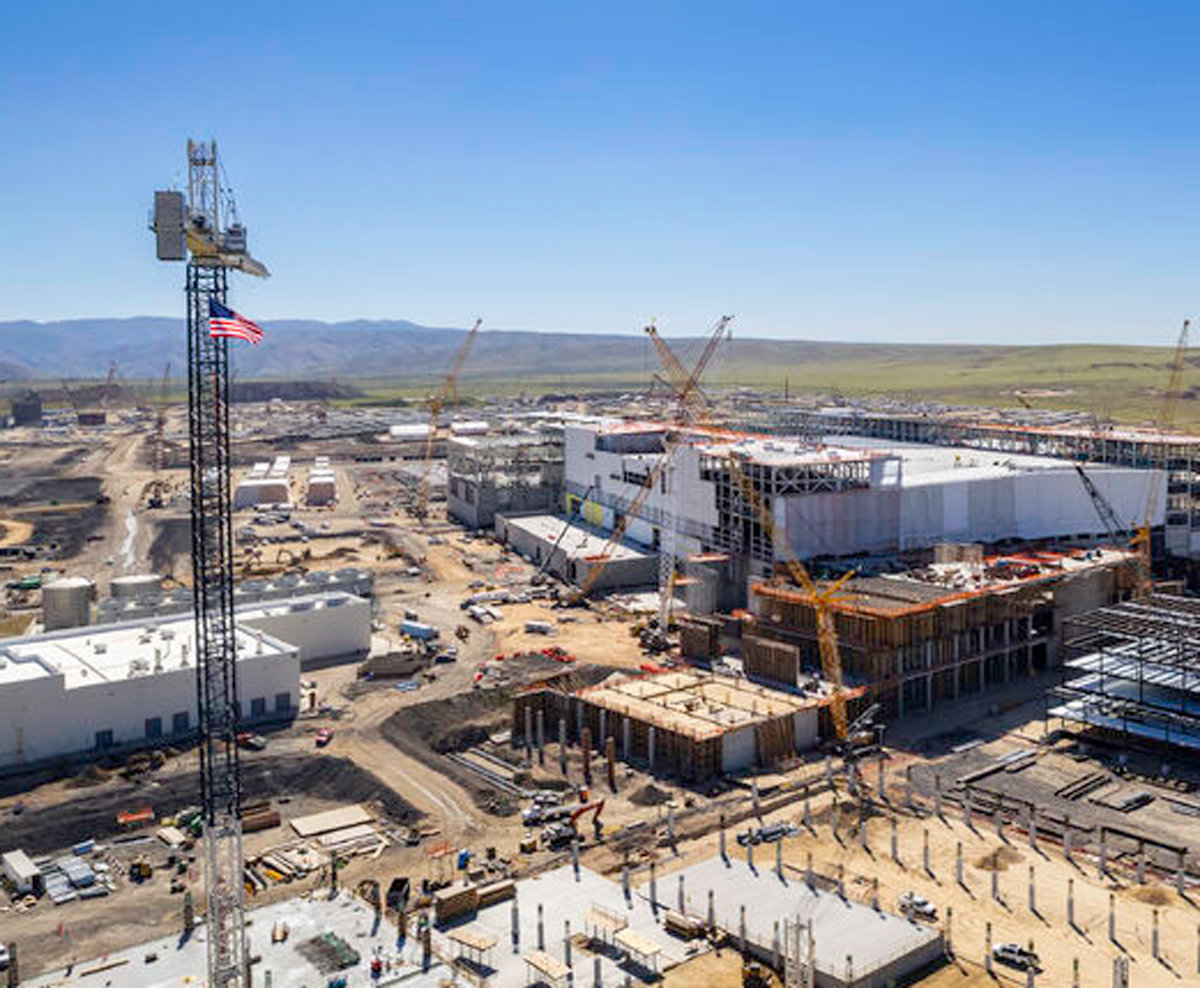
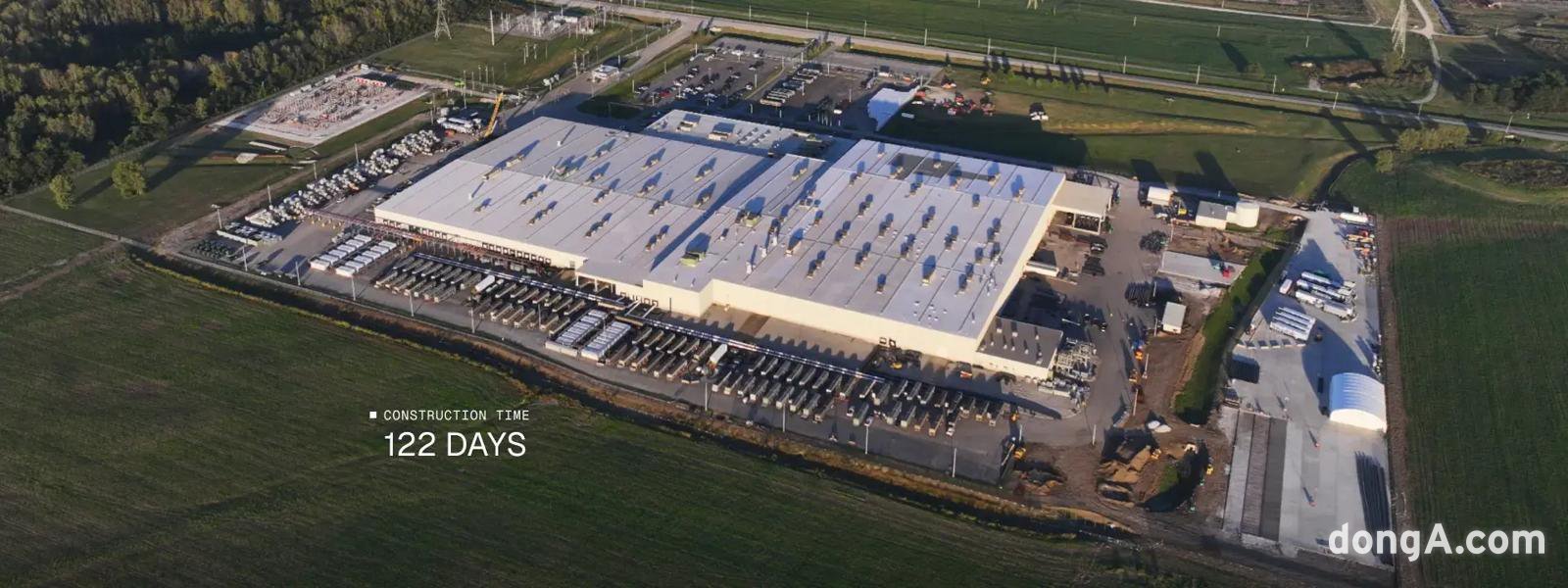
Micron’s mega fab under construction in New York. New York = Newsis
Global competitors are also rushing to make aggressive investments to capture the memory market. U.S. firm Micron plans to spend USD 250 billion (about KRW 376 trillion) on expanding its domestic facilities by 2035 and invest USD 9.3 billion (about KRW 14 trillion) in an HBM line at its Hiroshima plant in Japan. China’s Changxin Memory Technologies (CXMT) and Yangtze Memory Technologies (YMTC) also plan to use funds raised through IPOs for development of advanced-node process technologies. Professor Yoo Hoe-joon of KAIST analyzed that “memory companies have no choice but to continue global investments in order to maintain market share.”
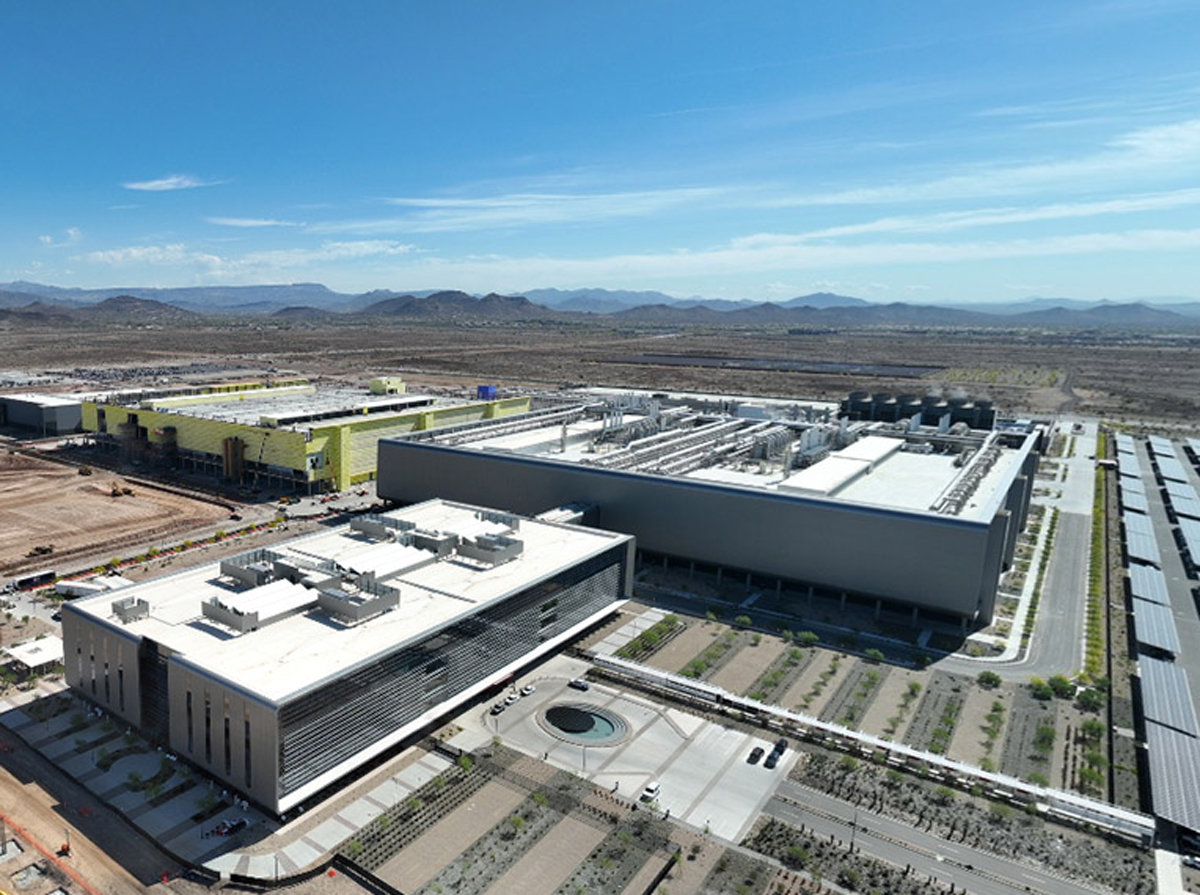
TSMC’s semiconductor wafer and packaging plant under construction in Arizona. Courtesy of TSMC
Facility expansion is also underway in the foundry segment. Taiwan-based TSMC has raised its foundry facility investment in the United States to USD 165 billion (about KRW 248 trillion), while Intel will invest more than USD 100 billion (about KRW 150 trillion) to develop advanced process technologies. The Japanese government has decided to provide Rapidus, a domestic company, with subsidies totaling JPY 2.35 trillion (about KRW 22 trillion). Samsung’s strategy is to structure the six lines in Yongin as a combined memory–foundry complex so it can respond flexibly if future foundry demand surges.
● Government mounts full-scale effort to defend memory leadership Although there are numerous “preconditions” for early capacity expansion, such as infrastructure build-out, the government has also committed to move as quickly as possible in line with the pace of complex development. Lee Sung-hoon, President of Korea Land & Housing Corporation (LH), which is responsible for site development at the Yongin National Industrial Complex, plans to personally review progress every week and oversee the schedule. LH intends to shorten the project period by conducting land compensation procedures in parallel with construction preparations. More than 70% of all private land has either completed compensation through agreement or is awaiting an adjudication process (objection review), and the compensation procedures are expected to be completed within this year.
The Ministry of Climate, Energy and Environment is pursuing plans to build power and water infrastructure before plant operations begin. Korea East-West Power, Korea Southern Power, and Korea Western Power will each build a 1GW liquefied natural gas (LNG) combined-cycle power plant to give priority to supplying 3GW of electricity needed for initial operations. The government then plans to expand ultra-high-voltage transmission lines connecting the Honam region and Yongin. Industrial water will be secured through wastewater reuse, use of power plant cooling water, and the construction of integrated dual pipelines linking national and general industrial complexes. The government intends to process related licensing procedures, including environmental impact assessments and implementation plan approvals, as swiftly as possible to minimize delays in semiconductor facility investment and operations.
Kim Sung-sik, Vice Chair of the Presidential National Economic Advisory Council, stated on the 12th, “The government must practically break through various legal and regulatory bottlenecks in infrastructure investment for the three mega projects,” adding, “It must demonstrate that this can serve as a breakthrough for rationalizing regulations across the advanced industry sector, which has long been sluggish. That is the starting point of trust.”
ⓒ dongA.com. All rights reserved. Reproduction, redistribution, or use for AI training prohibited.
Popular News