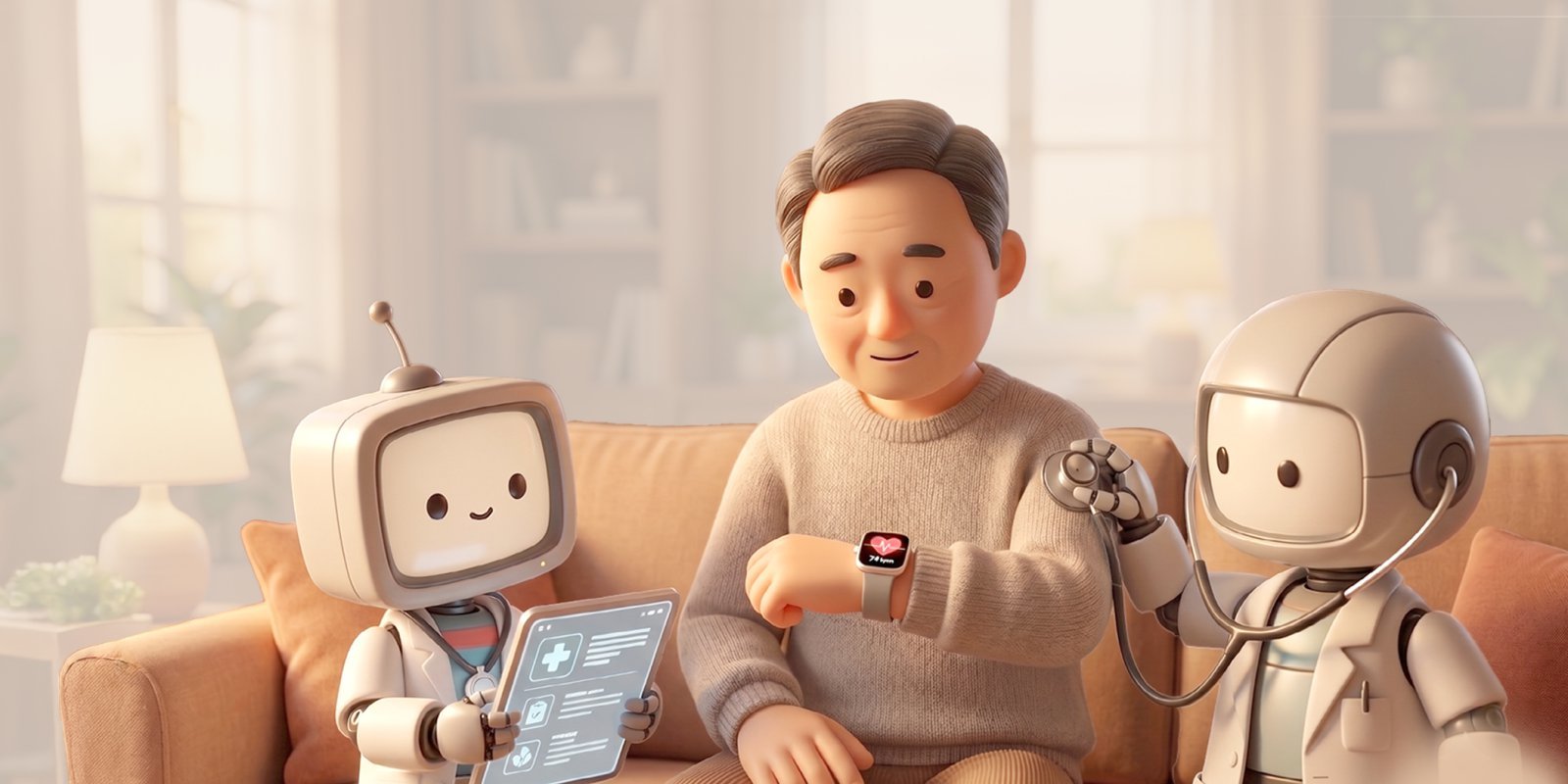
One of Korea’s “Big 5” hospitals, Samsung Medical Center, operates a smart ward system. In wards equipped with Daewoong Pharmaceutical’s smart bed monitoring system “THINK,” a palm-sized wearable sensor attached to the inpatient’s chest records biometric signals such as electrocardiogram, body temperature, and oxygen saturation 24 hours a day. Artificial intelligence (AI) analyzes the accumulated data in real time and detects abnormalities such as arrhythmia before the medical staff do.
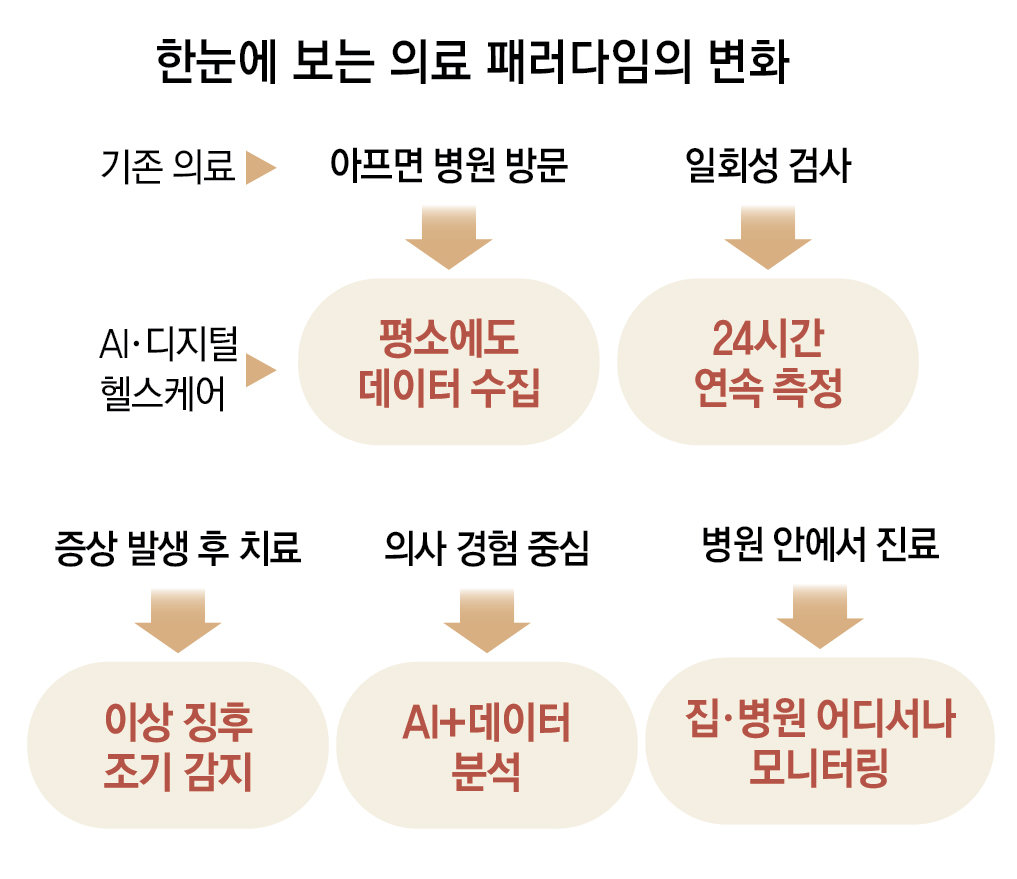
Medical care that focuses on “post-treatment” after symptoms appear is thus rapidly shifting to an era of “predictive medicine,” in which AI continuously collects and analyzes biometric data to detect and prevent diseases in advance.
The core enabler of predictive medicine is “continuous data.” Traditional checkup methods were closer to a “snapshot” approach, checking blood pressure or blood glucose at a specific point in time when a patient visited the hospital. However, biometric signals such as blood glucose, blood pressure, and heart rate change several times a day, making it difficult to fully understand a patient’s condition through one-off tests alone. In contrast, wearable medical devices record biometric data continuously over several days to several weeks, capturing changes that are difficult to detect with conventional tests, such as postprandial spikes in blood glucose or early-morning hypoglycemia. Based on the accumulated data, medical staff can more precisely identify a patient’s condition and disease progression patterns to establish personalized treatment plans, while AI analyzes large volumes of data to support diagnosis and monitoring.
According to the Korea Biotechnology Industry Organization, the global digital healthcare market based on AI and related technologies is projected to grow from about USD 240.8 billion (approximately KRW 333 trillion) in 2023 to USD 1.6351 trillion (approximately KRW 2,263 trillion) in 2033, expanding nearly sevenfold over 10 years. As the market expands, pharmaceutical companies are accelerating efforts to foster digital healthcare as a future growth engine beyond new drug development. The range of applications is also broadening, from inpatient monitoring inside hospitals to chronic disease management outside hospitals, disease risk prediction, and digital therapeutics.
Daewoong Pharmaceutical’s continuous glucose monitor (CGM) is being used for chronic disease management in everyday life outside the hospital. It continuously records changes in blood glucose for up to 14 days, enabling the detection of blood glucose variability that is easily missed by conventional one-off tests, such as postprandial spikes and nocturnal hypoglycemia. Medical staff use the accumulated data to detect abnormalities in glucose metabolism at an early stage, establish personalized treatment and lifestyle management plans for each patient, and thereby help slow the progression of diabetes and reduce the risk of complications.
The scope of use is also expanding into the field of disease risk prediction. Dong-A ST has introduced an AI-based retinal diagnostic solution that analyzes retinal images and automatically detects retinal abnormalities, glaucoma, and media opacity, thereby supporting ophthalmologists’ diagnoses. In addition, by using only retinal imaging, it can predict the future risk of cardiovascular disease, contributing to early detection and prevention.
Handok has launched “SleepQ,” a digital therapeutic device for insomnia, in partnership with Welt. SleepQ analyzes the user’s sleep patterns to provide personalized cognitive behavioral therapy for insomnia (CBT-I) and supports medical staff in continuously managing the treatment progress of prescribed patients.
As the market grows rapidly, the competitiveness of medical AI is being reorganized around new standards. Observers note that, rather than simply having developed an advanced AI model, competitiveness will be determined by how much biometric data can be safely accumulated and how meaningfully it can be utilized in clinical settings.
ⓒ dongA.com. All rights reserved. Reproduction, redistribution, or use for AI training prohibited.
Popular News