■ Daewoong Pharmaceutical installs ‘AI monitoring system’ in two national university hospitals
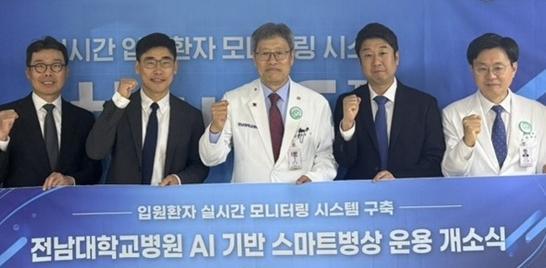
Daewoong Pharmaceutical announced that it has completed the installation of the artificial intelligence (AI)-based smart bed monitoring system ‘thynC’ at Chonnam National University Hospital and Chonnam National University Hwasun Hospital. Covering a total of 558 beds (217 beds at Chonnam National University Hospital and 341 beds at Chonnam National University Hwasun Hospital), it is the largest installation case among national university hospitals.
ThynC is a smart bed monitoring system that continuously collects and analyzes biometric information such as heart rate and respiratory rate by attaching a wearable device to inpatients and provides real-time alerts to medical staff when abnormal signs occur. This enables early detection of changes in patients’ conditions and supports prompt treatment and emergency response.
Chonnam National University Hospital plans to strengthen its patient safety management capabilities by introducing thynC in wards with a high proportion of critical and emergency patients, such as the cardiology, neurology, and emergency medicine departments. Chonnam National University Hwasun Hospital has established the system mainly in wards treating cancer patients, including the oncology, hematology, and surgery departments, to put in place an early response system for risk situations such as infections and sepsis.
Daewoong Pharmaceutical stated that this installation is a case of responding to the government’s restructuring of tertiary general hospitals to focus on critical patients and to the increasing demand for real-time patient monitoring as the country enters a super-aged society.
Jeong-shin, president of Chonnam National University Hospital, said, “In connection with the New Smart Hospital construction project, the hospital will accelerate its transition to a future-oriented smart hospital.” Lee Wan-sik, president of Chonnam National University Hwasun Hospital, also stated, “Real-time patient monitoring will further strengthen the patient safety management system.”
Lee Chang-jae, CEO of Daewoong Pharmaceutical, said, “This is a meaningful case of combining a data-based patient management system with the treatment environment for critical patients,” adding, “Daewoong will support rapid decision-making by medical staff through the expansion of smart ward infrastructure.”
■ Korea University Guro Hospital opens cerebrovascular center for high‑complexity treatment
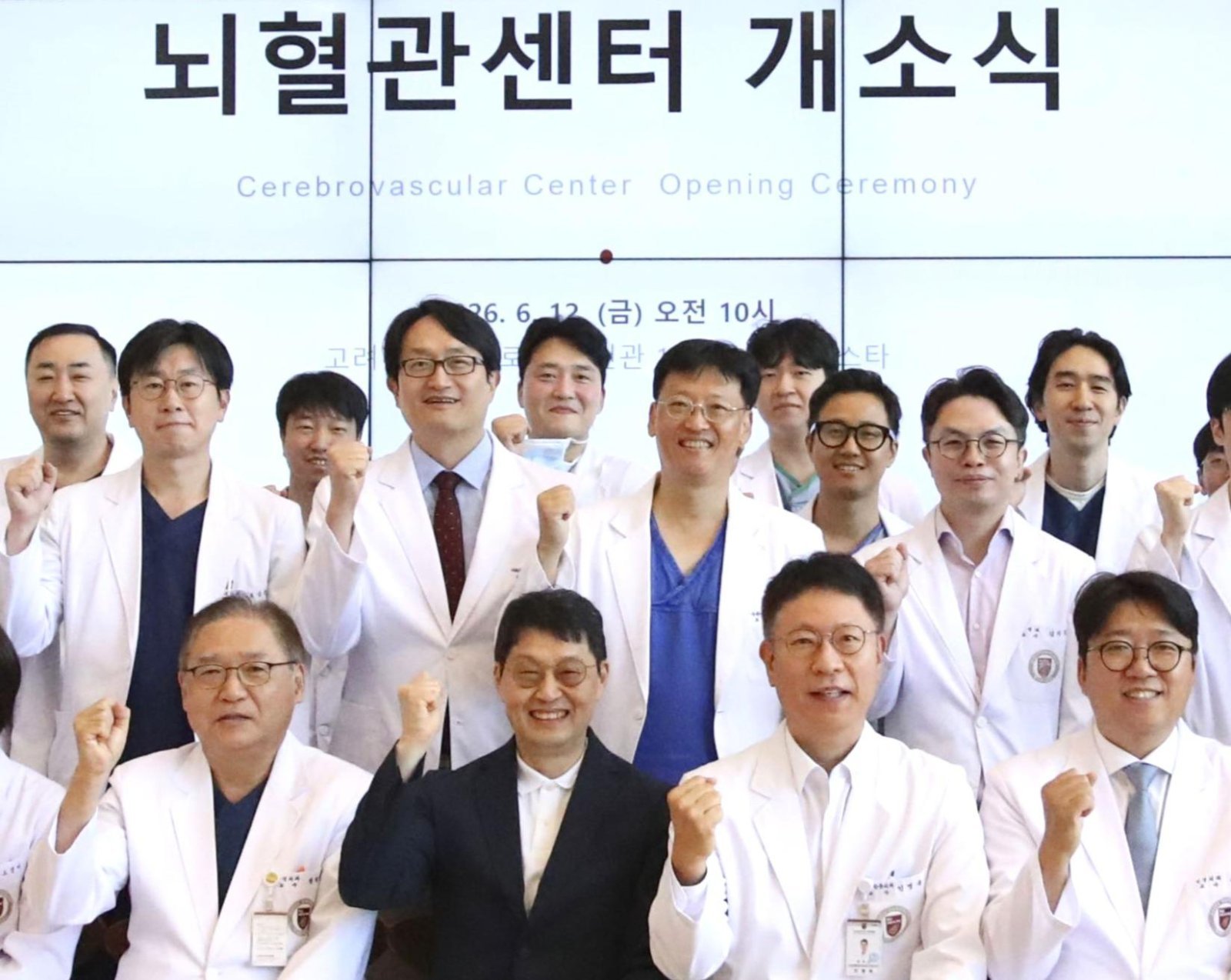
Korea University Guro Hospital announced that it has opened a cerebrovascular center to strengthen its capabilities in treating severe cerebrovascular diseases. The opening ceremony was held on the 11th floor Sky Vista of the new building on the 12th, and was attended by Hospital President Min Byeong-uk, Cerebrovascular Center Director Yoon Won-gi, Korean Society of Interventional Neuroradiology President Park Seok-gyu, and Korean Stroke Society President Cha Jae-gwan, among others.
As the number of patients with severe cerebrovascular diseases such as stroke, cerebral aneurysm, and cerebral hemorrhage increases due to population aging, Korea University Guro Hospital has established a specialized medical care system for rapid diagnosis and treatment. The cerebrovascular center operates an emergency medical care system 24 hours a day, 365 days a year, and runs a fast-track system under which neurologists, neurosurgeons, radiologists, and emergency medicine specialists provide simultaneous care when a patient arrives at the emergency room.
In addition, the center provides a full range of advanced treatments from precision diagnosis using high-resolution magnetic resonance imaging (MRI), multi-channel computed tomography (CT), and the latest angiography equipment to thrombolytic therapy, mechanical thrombectomy, cerebral aneurysm coil embolization, and craniotomy.
The center has established a collaborative care system led by neurosurgery professor Yoon Won-gi, with professor Kwon Taek-hyun and neurology professors Kim Chi-gyeong and Oh Gyeong-mi, and provides integrated care not only for acute-phase treatment but also for early rehabilitation coordinated with the rehabilitation medicine department, prevention of recurrence, and long-term follow-up management.
President Min said, “With the opening of the cerebrovascular center, the hospital has significantly strengthened its capabilities in treating severe cerebrovascular diseases,” adding, “It will serve as a key hospital for severe cerebrovascular disease treatment in the southwestern region of the Seoul metropolitan area.” Director Yoon stated, “The center will operate an advanced medical care system and collaborative treatment framework to ensure optimal treatment within the golden hour.”
■ Pharmpharm unveils AI-based automatic meal detection platform ‘MealTracker’
Digital healthcare startup Pharmpharm will participate in the BIO International Convention 2026 (BIO USA 2026), the world’s largest bioindustry event, to be held in San Diego, United States, from June 22 to 25 (local time), where it will unveil its artificial intelligence (AI)-based meal detection platform ‘MealTracker’.
MealTracker is a platform that automatically recognizes whether a user has eaten based on biometric signals collected from a smartwatch and smartphone, without requiring the user to separately record meal details. It is characterized by overcoming the limitation of existing healthcare services, which automatically collect data such as sleep, heart rate, and activity level, but require users to manually enter meal information.
Through MealTracker, Pharmpharm is building an integrated management system that not only analyzes eating patterns but also provides self-care coaching and hospital-linked medical services. The company plans to expand its business into various fields that require diet information-based health management, including pharmaceutical companies, fitness businesses, nursing facilities, and insurers.
Pharmpharm CEO Kwon Min-seong said, “Automatic tracking of eating information is one of the challenges that the digital healthcare sector has not yet solved,” adding, “By linking dietary data with medical data, the company will provide a complete health management service and use participation in BIO USA 2026 as a springboard for entry into global markets.”
Pharmpharm is a digital healthcare company developing AI-based meal detection technology that uses biometric signals, and is building a behavioral biomarker platform that analyzes health status using dietary data.
ⓒ dongA.com. All rights reserved. Reproduction, redistribution, or use for AI training prohibited.
Popular News