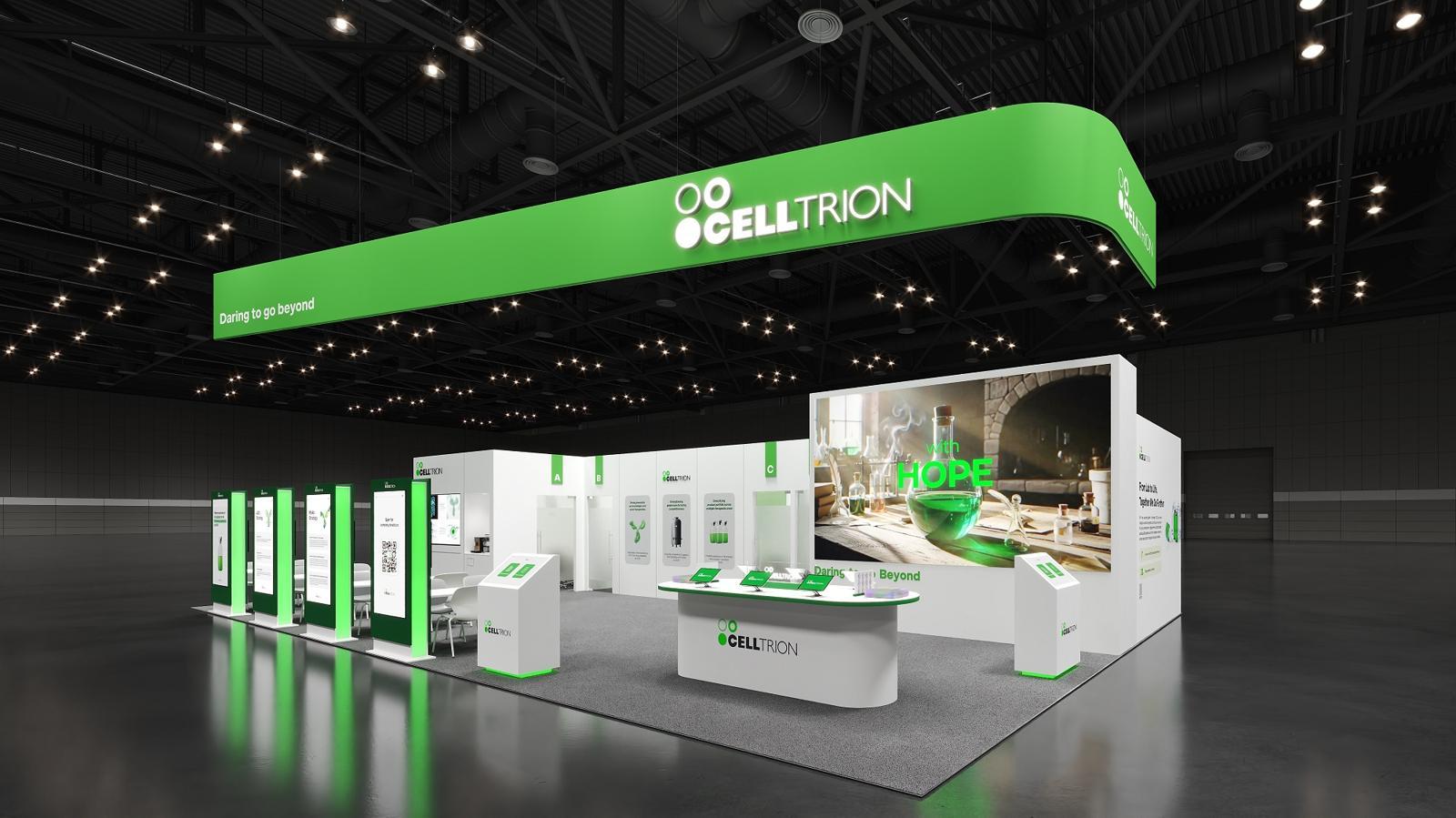
Celltrion BioUSA booth. Provided by Celltrion
Celltrion will showcase its artificial intelligence (AI)-based drug development technology, antibody-drug conjugate (ADC) and multi-specific antibody pipelines at the “2026 BIO International Convention (BIO USA),” the world’s largest bioindustry event. The company also plans to seek opportunities for joint development and technology collaboration with global pharmaceutical companies in order to expand its biosimilar-centered business structure into the new drug domain.
Celltrion announced on the 18th that it will participate in BIO USA, to be held in San Diego, United States, from June 22 to 25 (local time).
BIO USA is a bioindustry convention where global pharmaceutical companies, biopharma firms, investment institutions, and research organizations discuss joint research, technology transfer, investment, and business alliances. According to Celltrion, this year’s event is expected to draw more than 20,000 participants from over 1,500 pharmaceutical and biotech companies, as well as investment and research institutions.
Celltrion has taken part in the convention for 17 consecutive years since 2010. This year, it will operate an independent booth of approximately 139㎡ and present its new drug development strategy and next-generation pipelines, the company said.
Expanding new drug collaboration with AI, ADC, and multi-specific antibodies at the forefront
At this year’s event, Celltrion plans to highlight its capabilities in identifying new drug candidates and designing antibodies using AI as its core technologies.
The company explained that at its exhibition booth in the AI zone, it will present its “Healthcare Intelligence Bank,” a data-driven research platform, as well as its capabilities in discovering new therapeutic targets, expanding pipelines, designing next-generation multi-specific antibodies, and assessing development feasibility.
Celltrion stated that it is conducting research that uses AI to predict in advance the design, physicochemical properties, manufacturability, and immunogenicity of antibody candidates. The goal, it added, is to select at an early stage those candidates with high clinical development potential, thereby reducing the time and cost of new drug development.
The company also said it is building a multimodal AI-based research platform that integrates and analyzes different types of research data. Through this, it intends to strengthen data-driven decision-making across candidate discovery and non-clinical and clinical development processes.
Next-generation new drug pipelines such as ADCs and multi-specific antibodies will also be introduced at the convention. ADCs are technologies that enhance therapeutic effects by conjugating drugs to antibodies that recognize cancer cells, while multi-specific antibodies are designed so that a single antibody can bind to two or more targets.
Celltrion explained that it is fostering these two areas as growth pillars beyond biosimilars, pursuing both in-house R&D and external technology in-licensing. At this event, it plans to present its related technologies and pipeline development status to global pharmaceutical companies, biotech firms, and investors.
The company plans to extend the R&D, manufacturing, and global commercialization experience it has accumulated through its biosimilar business into the new drug sector. It also intends to emphasize to potential global partners that it can leverage its internal capabilities not only for the development of new drug candidates but also for their production and sales.
Celltrion added that global partnering is also a key objective of its participation in this year’s event. During the convention, it will hold business meetings with global pharmaceutical and biotech companies and discuss potential license-in deals, joint development, and technology cooperation to expand its biosimilar and new drug pipelines.
The company’s strategy is to broaden its development portfolio by introducing new drug candidates and platform technologies from external sources while promoting joint research that leverages its own technologies. It also stated that it is reviewing collaboration opportunities with materials, components, and equipment companies to enhance production efficiency and strengthen manufacturing technologies.
A Celltrion official said, “At this event, we will present our AI-based new drug development platform, as well as ADCs and multi-specific antibodies, to the global market as next-generation growth areas,” adding, “We will secure opportunities for joint development and technology cooperation with global companies to reinforce our competitiveness in the new drug business.”
ⓒ dongA.com. All rights reserved. Reproduction, redistribution, or use for AI training prohibited.
Popular News