Initially planned for the second half, timeline pulled forward
Improved performance and power efficiency over existing 6th generation
Samples apparently provided to big tech players like Nvidia
Amid mass production race among Samsung, SK and Micron… Korea’s memory development roadmap accelerates
On the 8th of this month, SK Group Chairman Chey Tae-won (left) walks while conversing with Nvidia CEO Jensen Huang, who visited Korea, at SK Group’s Seorin headquarters in Jongno-gu, Seoul. On this day, SK Telecom announced that it would work with Nvidia to build AI infrastructure targeting the global market. Provided by SK Telecom
SK hynix has supplied 12‑high stack samples of its seventh-generation High Bandwidth Memory (HBM), “HBM4E,” to major customers. Following Samsung Electronics, which delivered HBM4E samples ahead of schedule last month, SK hynix has also shipped HBM4E samples earlier than planned. Industry assessments indicate that Korea’s memory sector is accelerating its development roadmap and is progressing smoothly in the next-generation high-performance memory market.
● Development schedule pulled forward for early supply
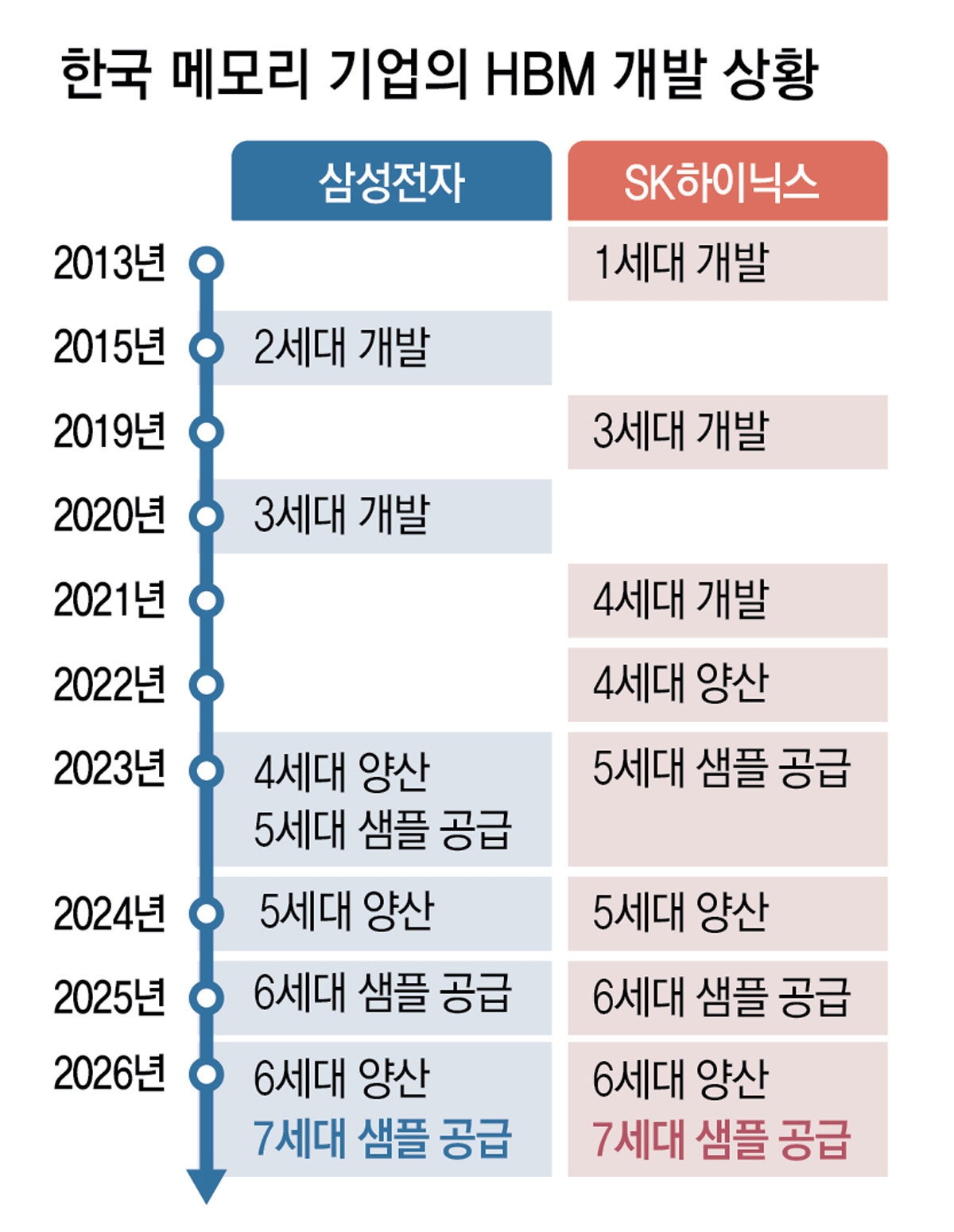
On the 18th, SK hynix announced, “We have unveiled 12‑high HBM4E samples to customers.” Earlier, in its first-quarter (January–March) earnings announcement, SK hynix stated, “We plan to begin supplying (HBM4E) samples in the second half (July–December),” and “Development is proceeding smoothly with the goal of mass production next year (2027).” The company has therefore moved up its original sample supply schedule. Samsung Electronics also advanced its own sample supply plan, delivering HBM4E samples to customers at the end of last month instead of in the third quarter (July–September) as previously indicated. It is reported that samples have been supplied to big tech companies such as Nvidia, which mount HBM on AI chips.
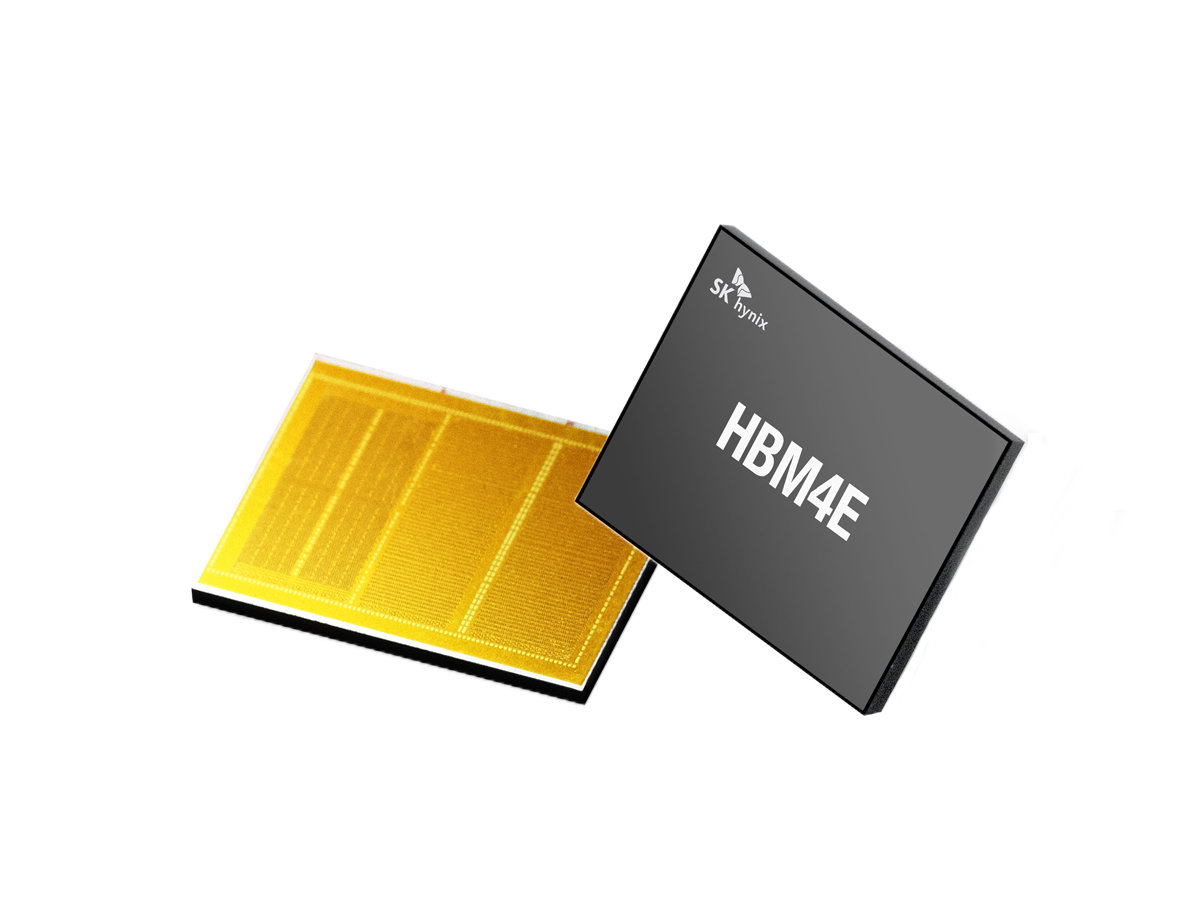
SK hynix, “7th-generation” HBM4E
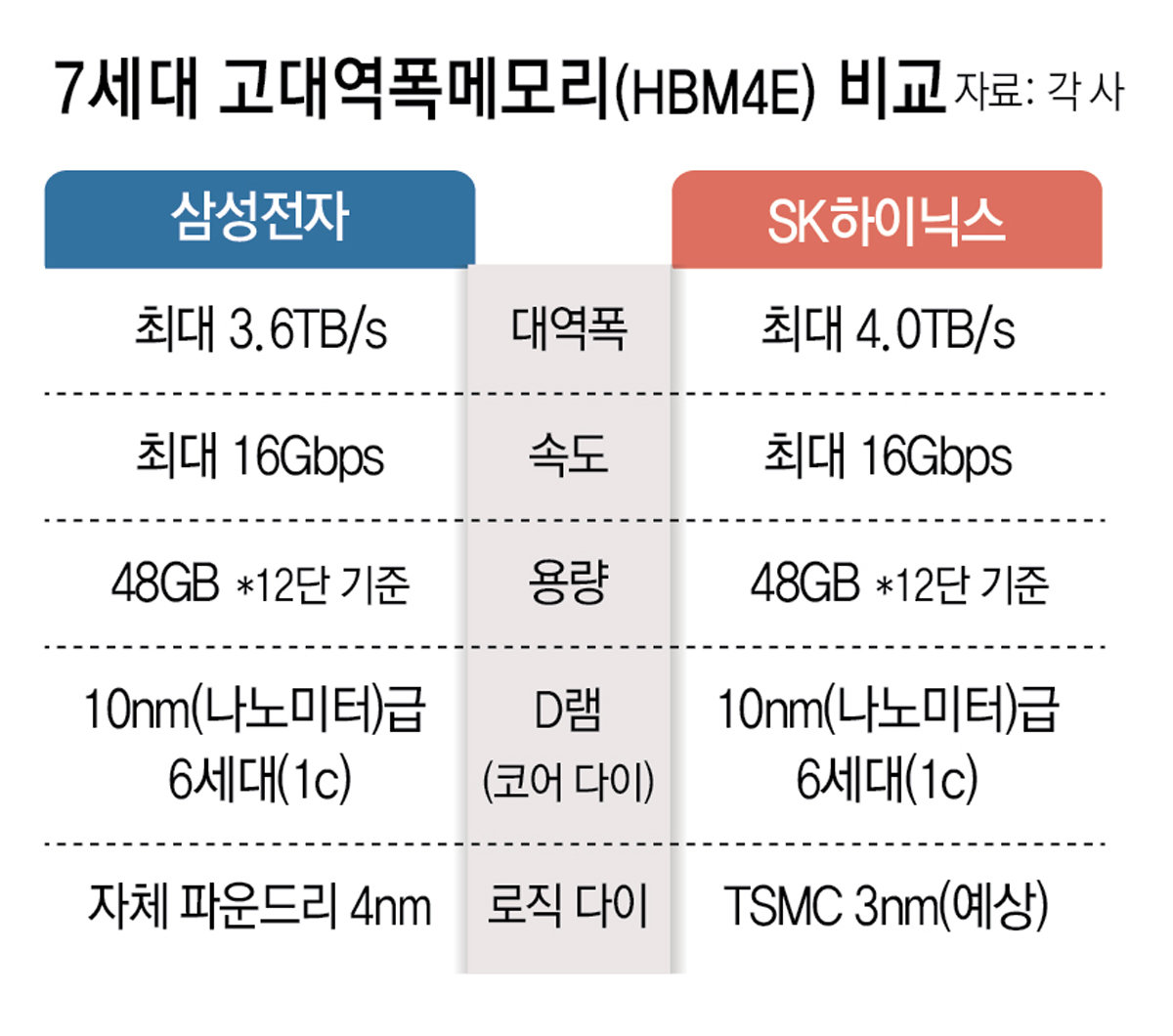
SK hynix explained that HBM4E delivers improved performance and power efficiency compared with the previous-generation HBM4. It supports data processing speeds of up to 16 Gbps (gigabits per second) per pin, and its energy efficiency is more than 20% better than its predecessor. Bandwidth, which indicates the amount of data processed per second, reaches up to 4.0 TB/s (terabytes per second), a specification that outperforms the bandwidth (up to 3.6 TB/s) of Samsung Electronics’ previously announced HBM4E. For the “logic die” that connects DRAM and the graphics processing unit (GPU) and serves as the brain of the HBM, SK hynix is known to be using Taiwan’s TSMC 3 nm process at customers’ request. Samsung Electronics, by contrast, uses its in-house foundry’s 4 nm process.
Building on mass-production capabilities validated in earlier generations, SK hynix intends to accelerate the transition to actual mass production and delivery. SK hynix stated, “Based on our experience in mass production and supply across HBM3, HBM3E, and HBM4, we have been providing memory products optimized to customer requirements in a timely manner,” and added, “With market-proven quality and supply capabilities, we plan to work with customers to resolve bottlenecks in AI systems with HBM4E as well.”
● K-memory launches HBM speed race
Korean memory companies such as Samsung Electronics and SK hynix, by supplying HBM4E samples faster than planned, are seen as securing an advantage over Micron in the mass-production race that is expected to intensify in 2027. For HBM, an “optimization” period is essential, during which the supplier and the customer repeatedly exchange samples to align performance and yield. In addition, as global big tech firms that require HBM are each developing their own AI chips, the HBM market trend has shifted toward “customer-tailored” products. The earlier the sample shipment, the sooner suppliers can communicate with customers and move toward optimization, creating a favorable structure for mass-production supply.
Micron is also expected to ship HBM4E samples in the second half of this year. Like Samsung Electronics and SK hynix, Micron is expected to use the 1c process (sixth-generation 10 nm-class process). Manish Bhatia, Micron’s executive vice president of global operations, said at a recent JP Morgan conference, “HBM4E development is progressing smoothly, and we expect a ramp-up in 2027.”
ⓒ dongA.com. All rights reserved. Reproduction, redistribution, or use for AI training prohibited.
Popular News