LG AI Research Institute signs definitive agreement with D&D Pharmatech
LG AI Research Institute to design AI-driven drug candidates
D&D Pharmatech to lead validation, clinical trials, and approvals
Chairman Koo Kwang-mo’s ‘pick’ to secure an early lead in bio-AI
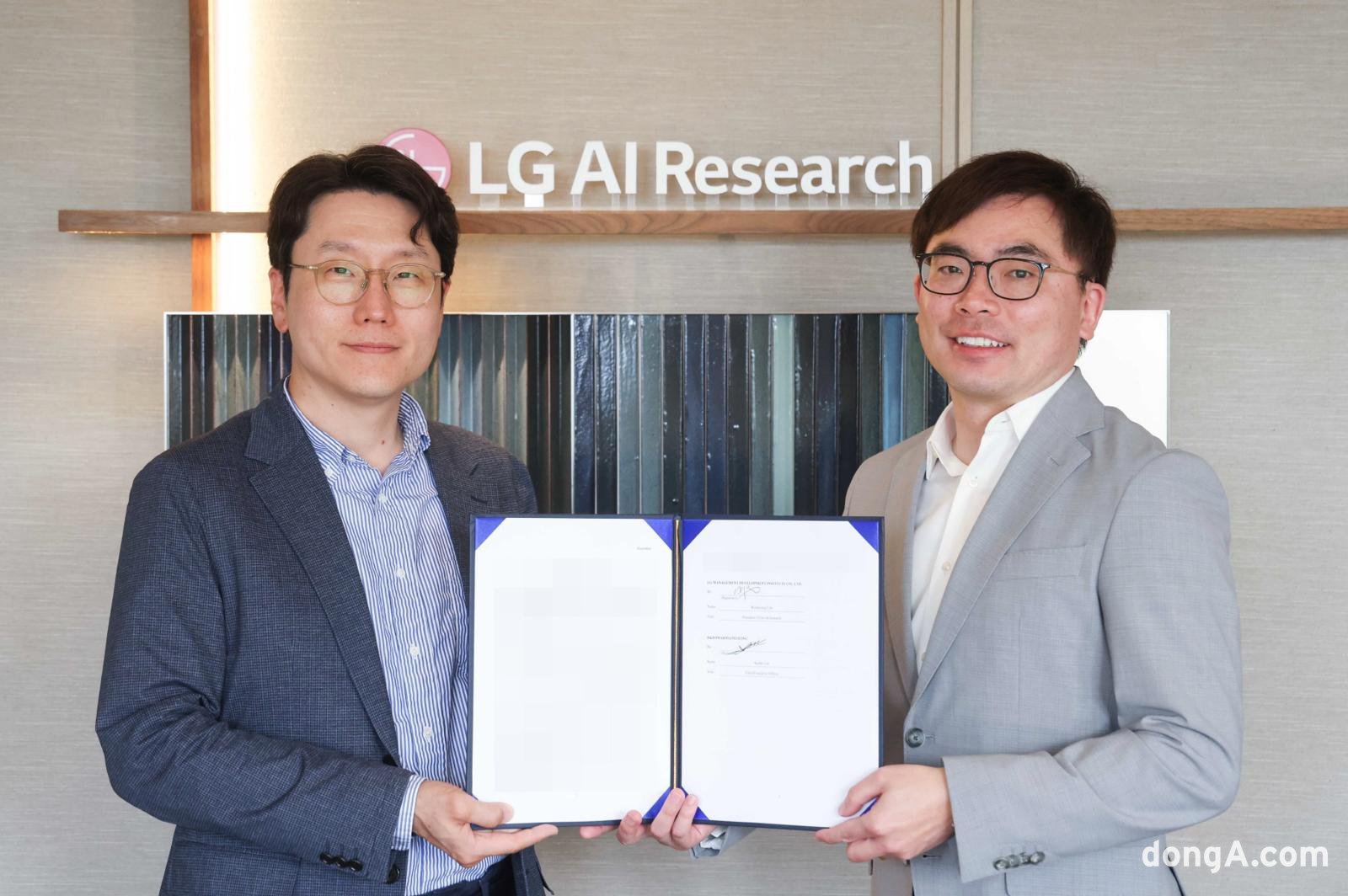
Woo-Hyung Lim, Head of LG AI Research Institute (left), and Seulgi Lee, CEO of D&D Pharmatech, take a commemorative photo after signing the main contract for the joint development of next-generation peptide drugs. Provided by LG
LG is moving to secure leadership in the artificial intelligence (AI) bio market by leveraging differentiated technological capabilities.
LG Group’s AI think tank, LG AI Research Institute, announced on the 17th that it signed a main contract with D&D Pharmatech on the 16th at LG Twin Towers in Yeouido, Seoul, for a joint project to develop next-generation peptide drugs. The signing ceremony was attended by Woo-Hyung Lim, Head of LG AI Research Institute, Executive Director Hwa-Young Lee, Head of Business Development, and Jong-Sung Jang, Head of Bio Intelligence Lab, as well as D&D Pharmatech CEO Seulgi Lee, Executive Vice President Sung-Hun Hong, and Head of R&D Division Eun-Ji Park, among other key stakeholders.
D&D Pharmatech is a specialized company focused on developing peptide-based drugs for the treatment of chronic diseases such as obesity, metabolic dysfunction-associated steatohepatitis (MASH), and degenerative brain diseases. It holds oral drug delivery technology that converts injectable peptide drugs into tablet form. Its main pipelines include oral obesity treatments and MASH therapies based on this platform.
Peptide drugs can be understood as pharmaceuticals whose main components are peptides, chains of multiple amino acids linked together. They are considered next-generation medicines because they maximize the advantages of existing synthetic and biologic drugs, enhancing therapeutic efficacy while reducing side effects.
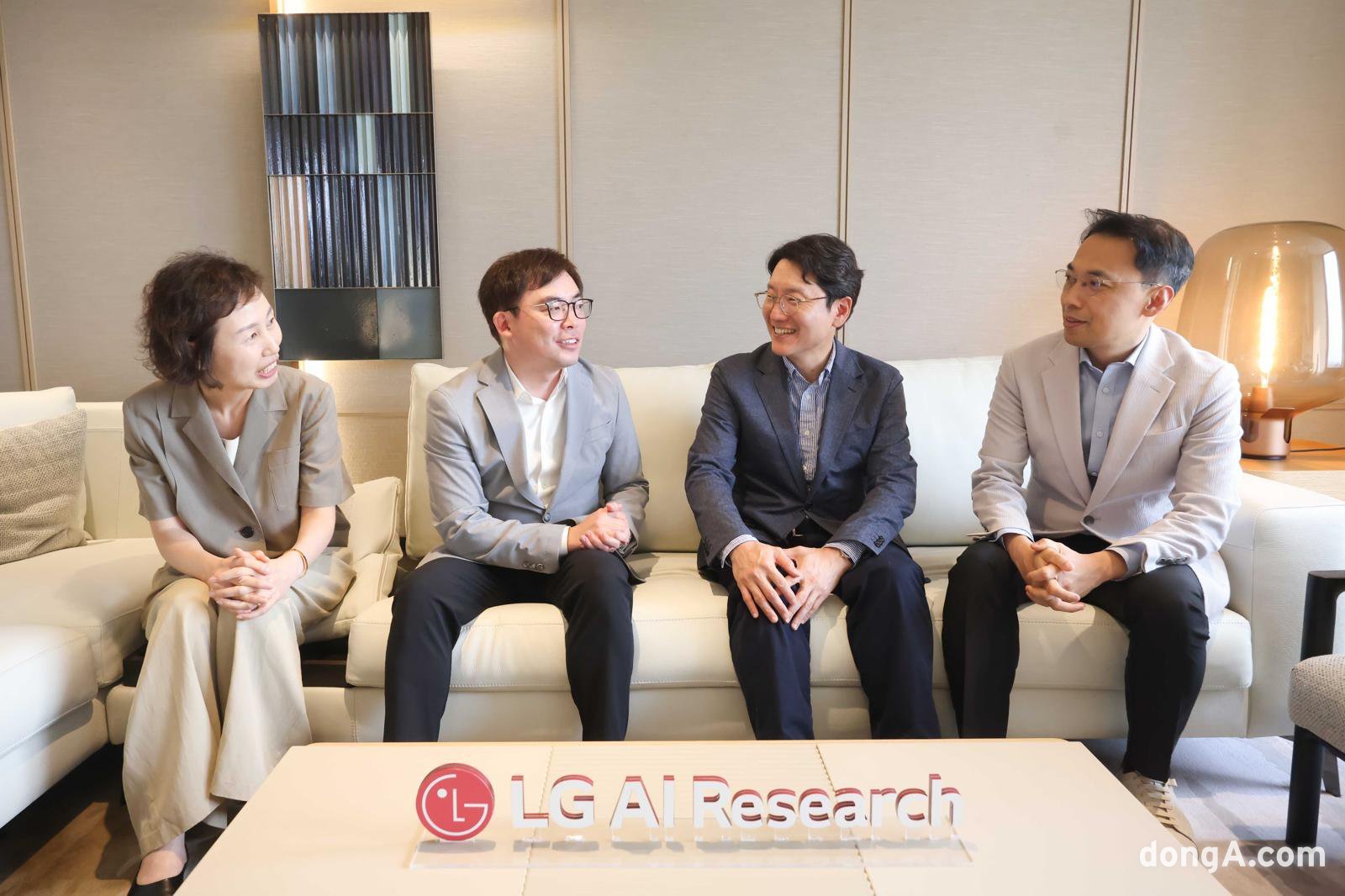
Executives from LG AI Research Institute and D&D Pharmatech discuss their joint project to develop next-generation peptide drugs. (From left) D&D Pharmatech Head of R&D Division Eun-Ji Park, D&D Pharmatech CEO Seulgi Lee, LG AI Research Institute Head Woo-Hyung Lim, LG AI Research Institute Head of Business Development Hwa-Young Lee. Provided by LG
Peptides are bioactive substances consisting of short chains of amino acids that form proteins and play a key role in finely regulating the body’s recovery and growth. They are known for high safety as they act selectively only on disease-causing substances inside cells that are difficult for antibody drugs to target. In the past, they were mainly developed as injectables because they are easily degraded by gastrointestinal digestive enzymes, but advances in technology are driving an active trend toward developing oral peptide drugs.
Under the main contract, LG AI Research Institute and D&D Pharmatech plan to jointly develop oral therapies in the fields of intractable diseases and precision medicine, with AI technologies applied to achieve breakthrough improvements in safety and absorption. In particular, they intend to shorten the development time and reduce costs for new drugs through AI-based molecular design technologies, while increasing clinical success rates for peptide drugs.
Woo-Hyung Lim, Co-Head of LG AI Research Institute, said, “This collaboration goes beyond simple technology adoption and is part of the process of building bio-specialized AI that solves the complex challenge of new drug development with AI,” adding, “Based on AI protein design technologies, we will simultaneously accelerate the development and enhance the success potential of next-generation peptide drugs.”
Woo-Hyung Lim, Head of LG AI Research Institute (right), and Seulgi Lee, CEO of D&D Pharmatech, pose for a commemorative photo. Provided by LG
● LG AI Research Institute to design AI-based drug candidates
Specifically, LG AI Research Institute and D&D Pharmatech aim to develop next-generation peptide drugs by combining AI technological capabilities with expertise in peptide drug development.
LG AI Research Institute will be responsible for developing AI models that analyze the structures of disease-causing substances. It plans to design optimal peptide sequences that are difficult to identify using conventional approaches and to discover drug candidates. D&D Pharmatech will handle the structural design, synthesis, and evaluation of the candidates generated by AI. Applying its proprietary technology for molecular shape optimization, it will conduct oral formulation development, preclinical and clinical trials, and global regulatory approval processes.
In particular, the two companies plan to establish a feedback loop in which D&D Pharmatech validates the candidate substances designed by LG AI Research Institute’s AI and feeds the results back into the AI models, thereby continuously enhancing model performance.
Koo Kwang-mo, Chairman of LG Group
● LG Bio AI backed by ‘Koo Kwang-mo pick’… Evolving from cancer diagnosis and treatment recommendations to new drug development
As Koo Kwang-mo, CEO of LG Corp., has emphasized AI and bio as future technologies that will transform customers’ lives, LG is seen as continually evolving in the AI-bio convergence field based on open innovation.
LG AI Research Institute has been continuously developing innovative technologies that support the treatment of various diseases through AI-bio convergence. A representative example is the personalized precision medicine AI platform “Cancer Agentic AI,” being developed in collaboration with Professor Taehyun Hwang at Vanderbilt University Medical Center in the United States. Cancer Agentic AI supports the entire AI-driven process from cancer tissue analysis to treatment strategy design, assisting clinical decision-making by medical professionals.
It can shorten tissue testing in hospital settings, which previously took more than two weeks, to real time, enabling rapid treatment. In the pharmaceutical sector, it can dramatically reduce the duration and cost of clinical trials.
In addition, LG AI Research Institute has completed patent registration for the core technologies of its AI-based new materials development platform, “EXAONE Discovery,” and is utilizing them in research. According to LG AI Research Institute, EXAONE Discovery incorporates an “AI Co-Scientist” system in which AI responds to researchers’ queries like a colleague and carries out tasks such as experiment design and outcome prediction, allowing the discovery of promising candidate substances at speeds tens of times faster than conventional methods.
ⓒ dongA.com. All rights reserved. Reproduction, redistribution, or use for AI training prohibited.
Popular News