Top-line Phase 3 clinical results for intravenous Laennec injection announced Intravenous (IV) added following subcutaneous (SC) and intramuscular (IM) administration Expected to improve personalized treatment and prescription convenience “Annual additional sales of Laennec injection projected at around KRW 20 billion”
GC Green Cross Wellbeing announced on the 16th that it has obtained top-line results demonstrating that the high-dose intravenous drip regimen of its chronic liver disease treatment “LIVACT Injection (LIVACT)” met the primary endpoint in a Phase 3 clinical trial.
The intravenous drip regimen refers to a method of administering a large dose of a drug by mixing it with an infusion solution such as normal saline or glucose injection and slowly delivering it via intravenous infusion. Although it takes more time than subcutaneous (SC) or intramuscular (IM) injections, it offers advantages in enabling high-dose administration and allowing adjustment of the infusion rate according to drug concentration and patient condition. It is also known to be favorable for preventing pain or tissue damage that can occur when the drug is injected directly into muscle or subcutaneous tissue. The existing LIVACT Injection has been prescribed via SC and IM routes.
This Phase 3 clinical trial has been conducted since April 2024 at 18 sites in Korea, involving 226 patients with chronic liver disease. GC Green Cross Wellbeing directly compared a high-dose intravenous drip LIVACT Injection group with a subcutaneous injection group, observing liver function improvement and safety, among other factors. At week 6, the change from baseline in alanine aminotransferase (ALT), a marker of liver injury and the primary endpoint, showed a statistically significant difference in the LIVACT intravenous drip group compared with the subcutaneous group, thereby demonstrating the prespecified treatment effect (P=0.0098; generally, a P-value less than 0.05 is considered scientifically reliable).
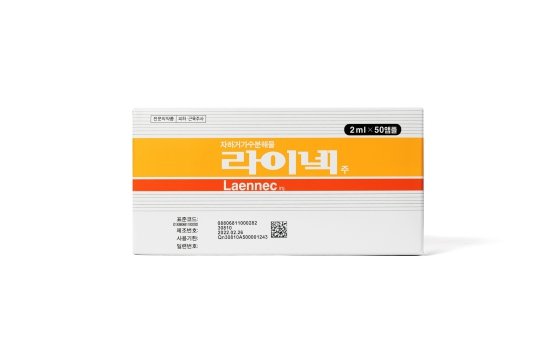
GC Green Cross Wellbeing LIVACT Injection product image. Courtesy of GC Green Cross Wellbeing
The study results are being evaluated as demonstrating the potential to dramatically improve convenience and efficiency of treatment in clinical practice. Under the existing SC and IM regimens, administration of more than 1–2 ampoules was cumbersome. If intravenous injection becomes available, administration of up to 10 mL in line with clinical judgment is expected to become easier. An improvement in patient adherence to treatment is also anticipated.
According to GC Green Cross Wellbeing, since its launch in 2005, LIVACT Injection is on track this year to surpass a cumulative sales volume of 100 million doses (approximately 200,000 liters, estimated 200 tons by weight). The company expects that the expansion of the administration regimen will generate more than KRW 20 billion in additional annual sales going forward.
Jeong Si-young, Head of the R&D Division at GC Green Cross Wellbeing, said, “These successful clinical results scientifically demonstrate the clinical value of intravenous administration of LIVACT Injection,” adding, “Based on the data obtained, we will swiftly proceed with applying for product approval to the Ministry of Food and Drug Safety (MFDS) within the year and do our utmost to provide healthcare professionals and patients with a more effective and safer treatment option.”
GC Green Cross Wellbeing plans to obtain the final clinical study report (CSR) based on the top-line results and proceed with filing for a label change with the MFDS.
Kim Min-beom
AI-translated with ChatGPT. Provided as is; original Korean text prevails.
ⓒ dongA.com. All rights reserved. Reproduction, redistribution, or use for AI training prohibited.