SpaceX listing opens a new chapter for the space industry… plans to build a space data center by late next year
Affiliate LG Energy Solution well-positioned in space ESS… Hanwha Solutions also set to benefit from ‘solar tandem cells’
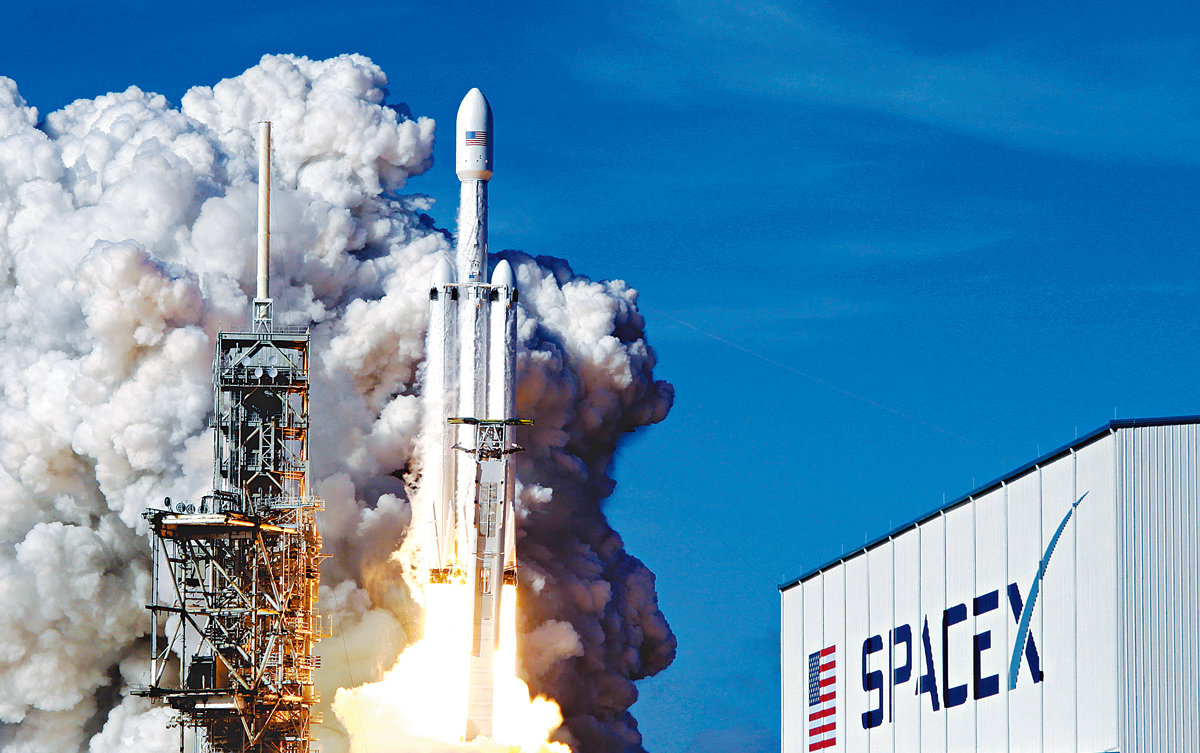
With SpaceX’s successful completion of the largest-ever initial public offering (IPO) on the 12th (local time), analysts say a new phase has opened in the global space industry. The space data center market, which had remained largely in the realm of potential, is expected to enter full-scale development, while the commercialization timeline of SpaceX’s “Starship,” capable of carrying more than four times the payload of existing launch vehicles, is being brought forward, likely reshaping the space transportation market. As space AI data centers powered by solar energy gain momentum, expectations are also rising in the domestic solar and battery industries.
● Space data center construction by the end of next year
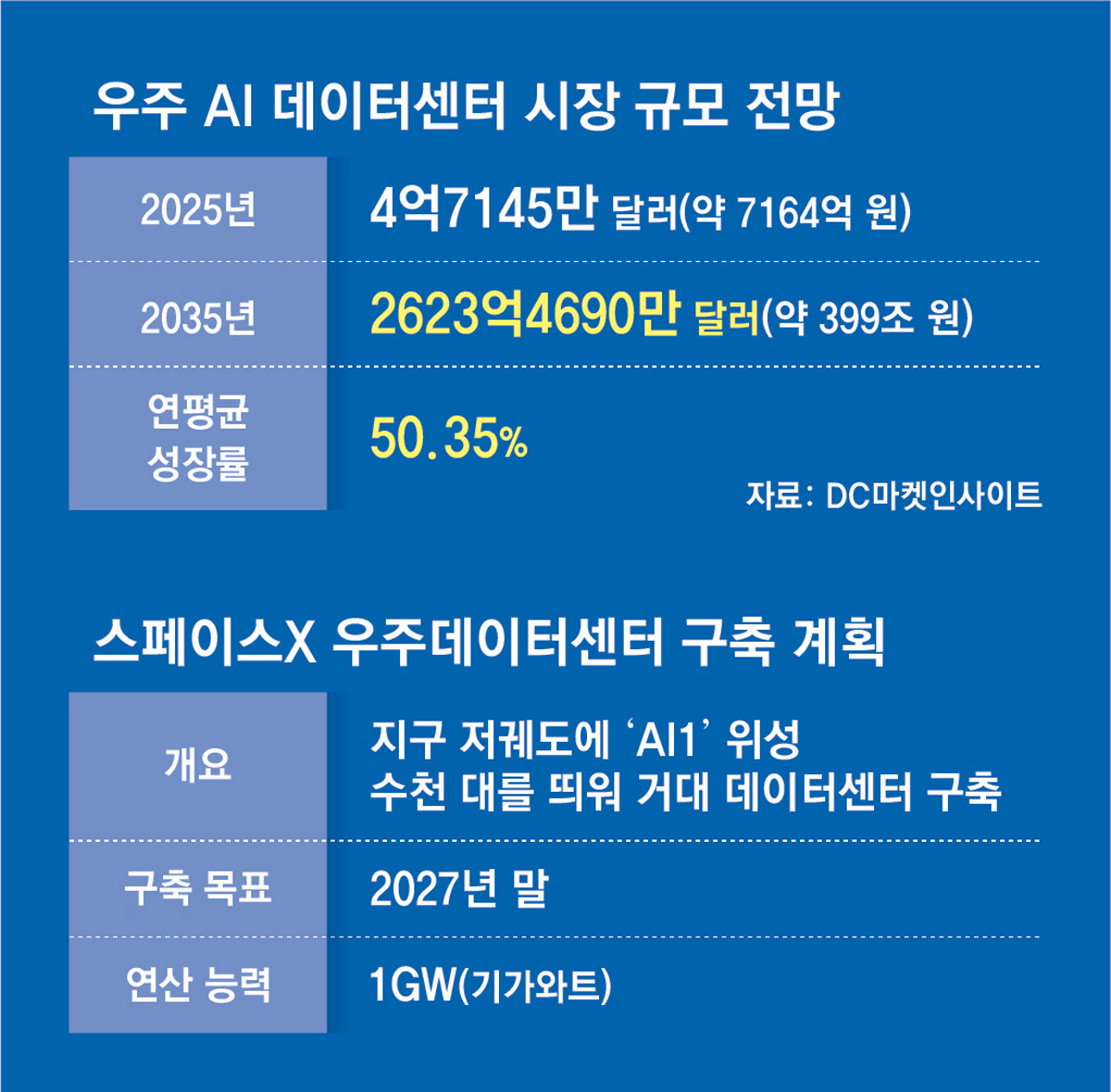
According to the space and aerospace industry on the 14th, the future business that Elon Musk, CEO of SpaceX, is currently emphasizing most is the space AI data center. On the 8th of this month (local time), Musk introduced the GigaSat plant under construction in Bastrop, Texas on his social networking service (SNS) X, stating that the company plans to produce the “AI1” satellites that will form the basis of the space data center. SpaceX plans to place multiple AI1 satellites, capable of AI computation, into low Earth orbit and build a single massive data center by connecting communications between the satellites.
Each AI1 is capable of computing equivalent to 150 kW (kilowatts) of power, and SpaceX plans to build a space data center with an annual capacity of 1 GW (gigawatt) by the end of 2027. A simple calculation suggests that this means launching more than about 6,000 AI1 satellites over the next year. Musk has announced plans to gradually increase the number of AI1 launches and expand capacity to 100 GW within three years.
According to a report released in October last year by global investment bank McKinsey, global investment in ground-based data centers is projected to reach about USD 6.7 trillion (around KRW 10 quadrillion) by 2030. Park Soon-young, Director of the Reusable Launch Vehicle Program at the Korea AeroSpace Administration, said, “Even if only 1% of this is captured, that amounts to KRW 100 trillion,” adding, “In other words, if competitiveness is not secured in this value chain now, there is a risk of being completely excluded.” Kim Seung-jo, Emeritus Professor at the Department of Mechanical and Aerospace Engineering at Seoul National University, also advised, “In Korea as well, competitive areas such as artificial satellites must be intensively fostered.”
In the space transportation sector, the commercialization of the next-generation launch vehicle “Starship V3” is expected to accelerate further. Starship V3 has more than quadrupled the payload capacity compared with “Falcon 9,” SpaceX’s current main reusable launch vehicle. The goal is also to reduce launch costs by about 90% compared with Falcon 9.
● Growing importance of securing ‘sovereign space technology’ As various space business concepts become more concrete following SpaceX’s listing, there are expectations that new business opportunities will open for Korean companies. A representative example is battery manufacturer LG Energy Solution. LG Energy Solution is known as a related company supplying special batteries used in SpaceX’s next-generation spacecraft.
In outer space, at minus 270 degrees Celsius, the core lies in securing technology that ensures stability and durability. As the construction of the space AI data centers championed by Musk moves into full swing, building energy storage system (ESS) infrastructure to store generated power will be essential. This is why some predict that LG Energy Solution, which already has experience producing batteries destined for space, could gain a competitive edge.
The same applies to solar power generation. Within the industry, it is expected that demand will surge for perovskite-based tandem cells, materials with outstanding light absorption, once the era of space AI data centers begins in earnest. Hanwha Solutions’ Qcells division has already embarked on technology development targeting commercialization in 2029, including supplying tandem cells to a space science and technology demonstration project at the Georgia Institute of Technology in the United States.
ⓒ dongA.com. All rights reserved. Reproduction, redistribution, or use for AI training prohibited.
Popular News