Showcasing bipedal robot Atlas technology through World Cup campaign
Applying new technologies such as motion capture to overcome mechanical limits differing from the human skeletal structure
Completed development of a precise full-body control mechanism
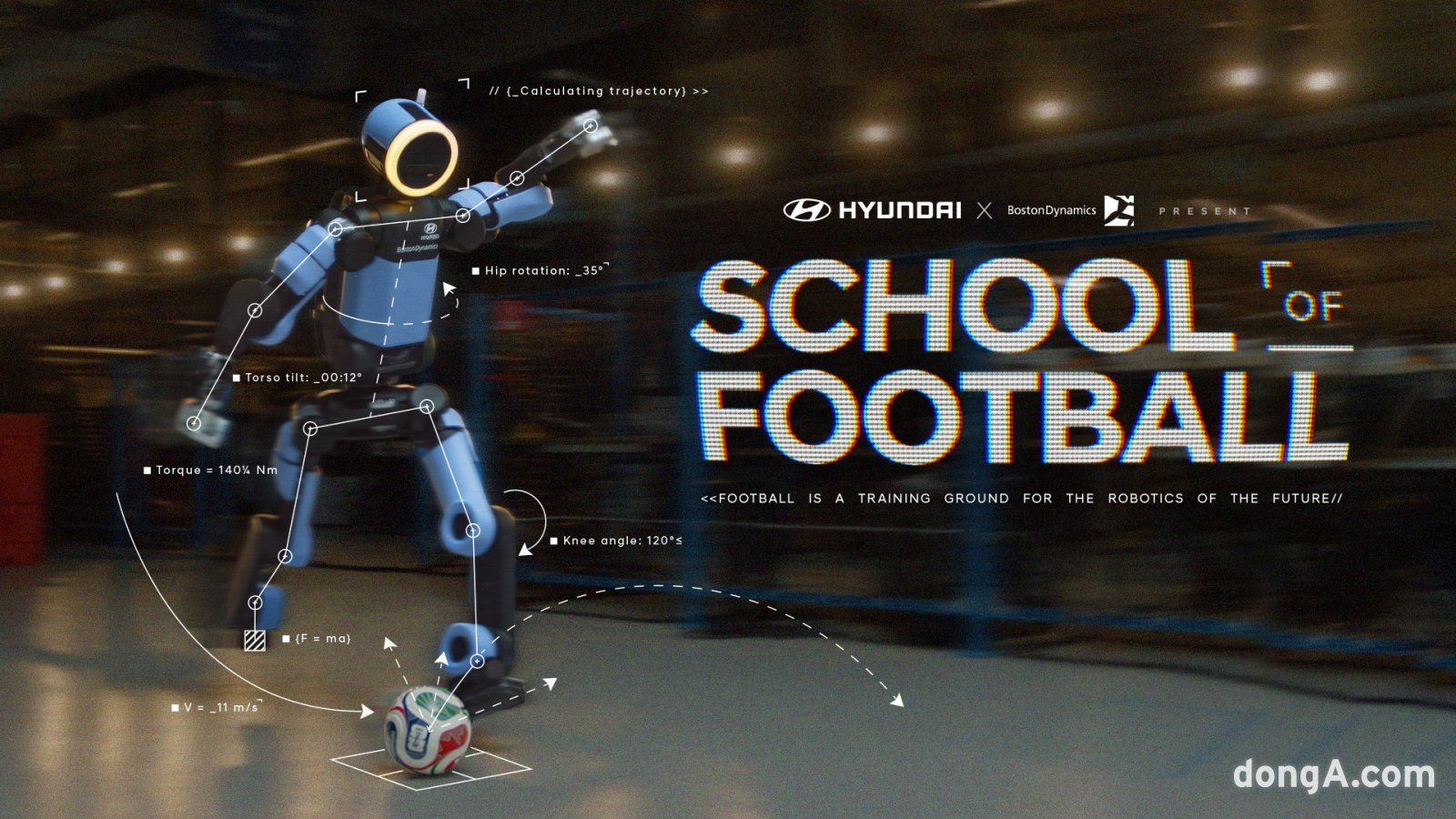
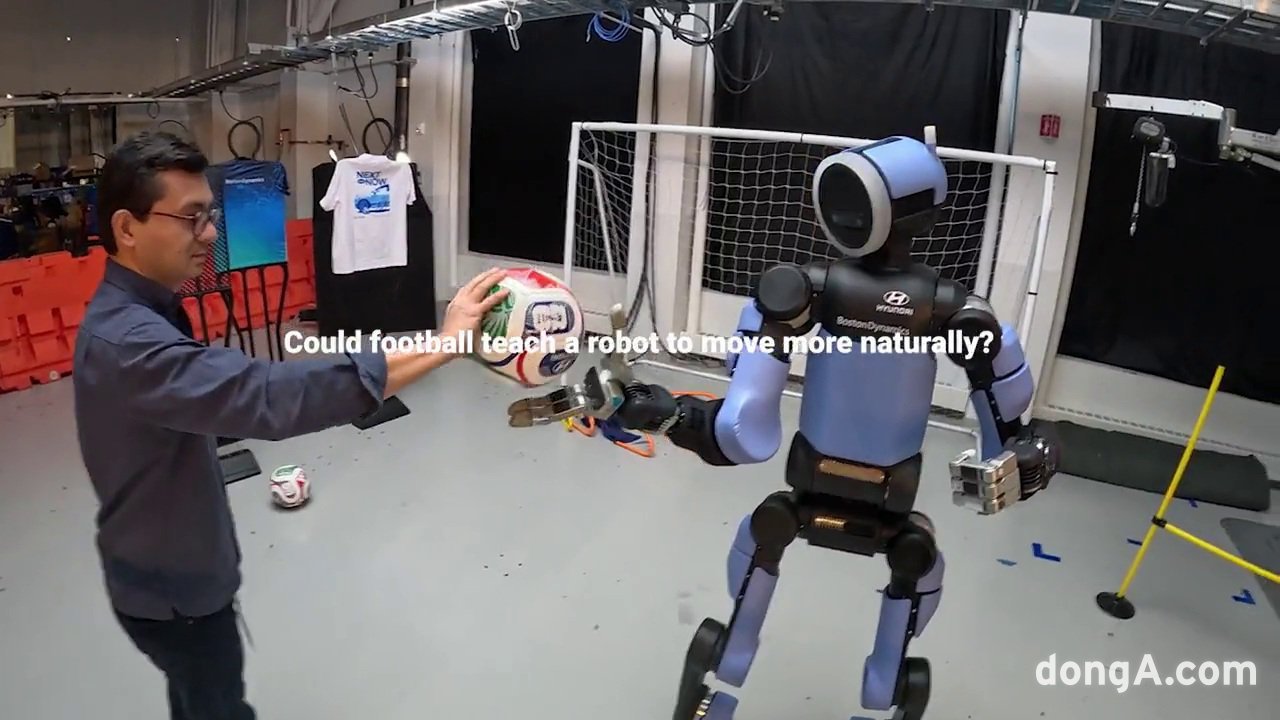
Hyundai Motor unveils the behind-the-scenes of Atlas’s soccer skills training, akin to that of a professional player. Provided by Hyundai Motor
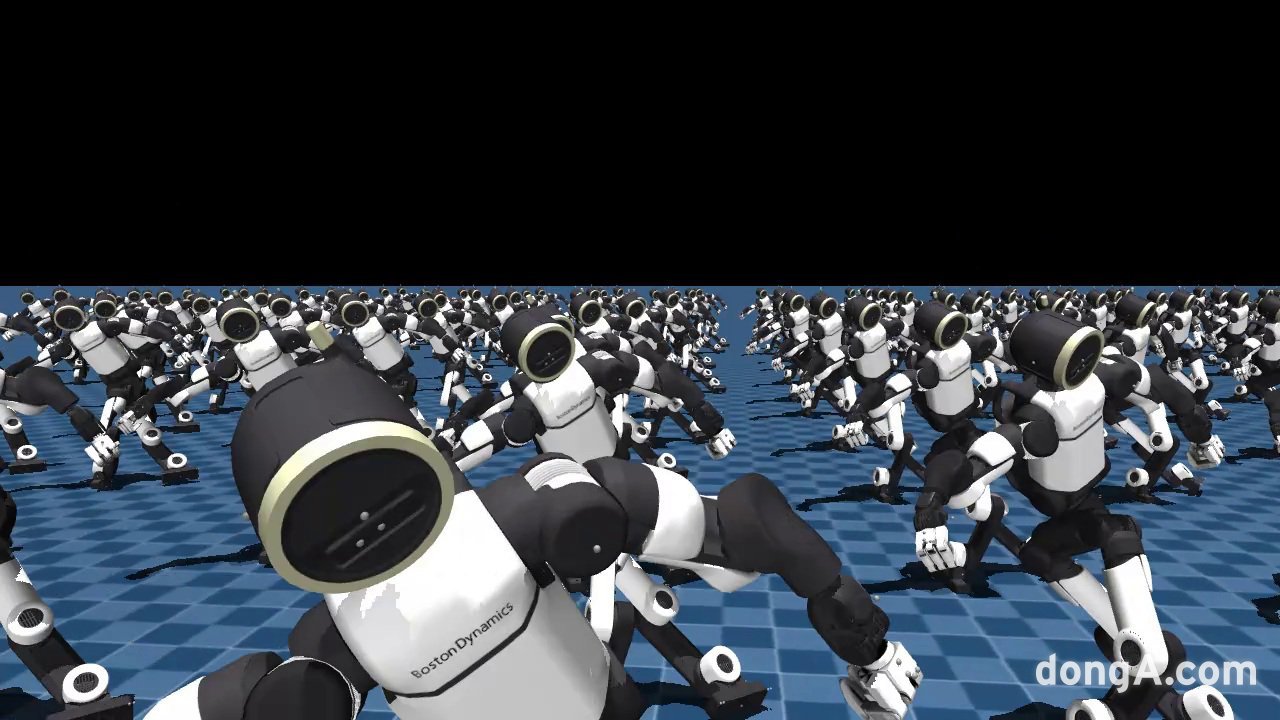
Hyundai Motor unveils the behind-the-scenes of Atlas’s soccer skills training, akin to that of a professional player. Provided by Hyundai Motor
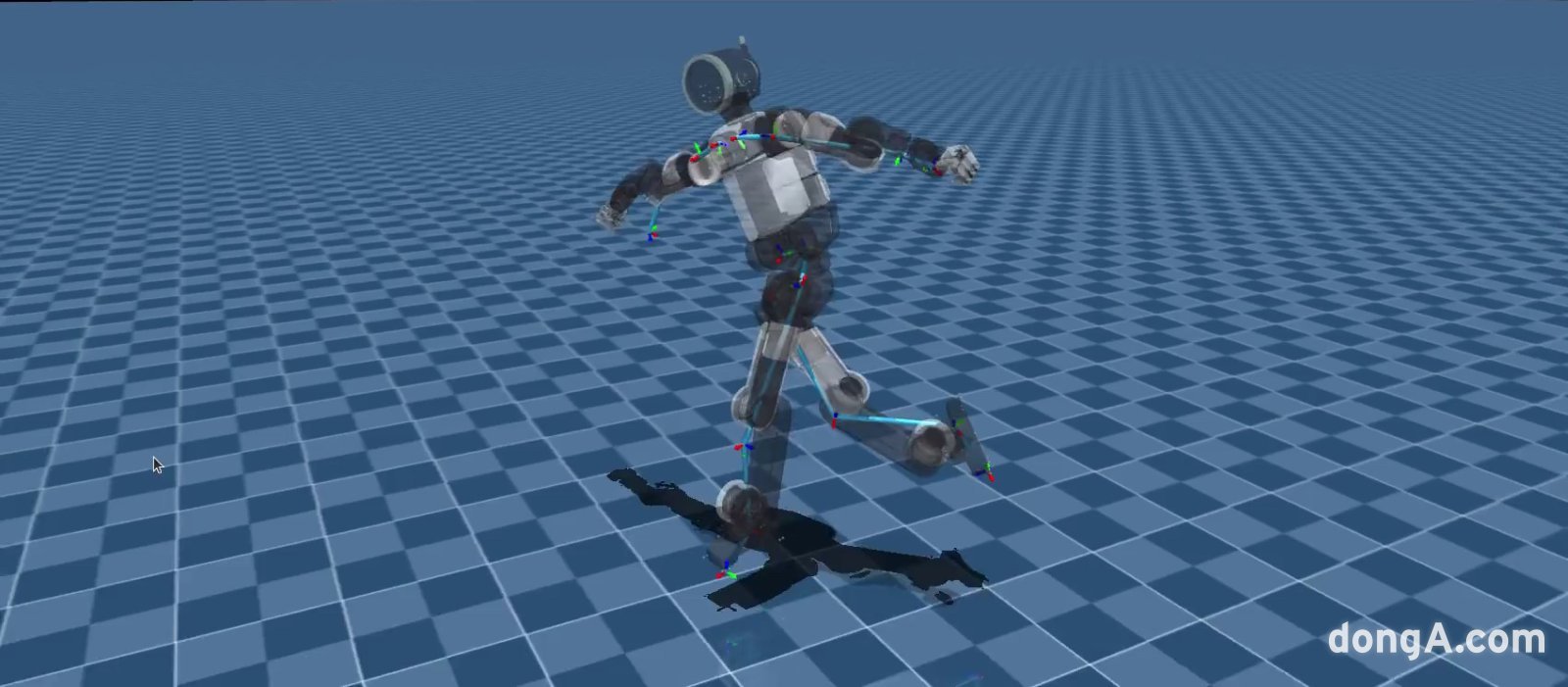
Hyundai Motor unveils the behind-the-scenes of Atlas’s soccer skills training, akin to that of a professional player. Provided by Hyundai Motor
Hyundai Motor Company has disclosed in detail the process of developing flexible robot movements ahead of the upcoming global festival. On 4 June, Hyundai Motor released a documentary-style video capturing how a bipedal robot learns high-difficulty athletic movements performed by humans. In parallel, Boston Dynamics, which led the technology development, shared the specific training methods through which its humanoid robot Atlas acquired advanced soccer techniques.
This project is part of Hyundai Motor’s World Cup-linked technology campaign. By demonstrating a proof-of-concept process in which machines learn human sports movements and thereby expand the realm of autonomous control, the company aims to prove that next-generation automation technology has already entered the stage of real-world implementation. In practice, Atlas drew attention from both the industry and the public by performing not only basic ball passing and shooting but also the highly sophisticated “ghost rabona kick,” in which it crosses its leg behind the standing leg to deceive an opponent before striking the ball.
According to the development team, for a bipedal machine to move as smoothly as a human, bodily balance, dynamic timing calculations, limb coordination, and environmental adaptability must be organically integrated. This is also why the researchers chose soccer among countless sports. Because soccer requires full-body control and precise movements to occur simultaneously and continuously, they judged it to be the most suitable environment to test and advance the physical control limits of a robot.
The first step in implementing the technology was motion capture, which converts the dynamic biomechanical movements of actual players into data. The collected information then went through a retargeting process to fit the robot’s mechanical specifications. Although its external form resembles that of a human, the range of joint motion and mechanical limits differ clearly, making a precise mathematical transformation process essential for proper adjustment.
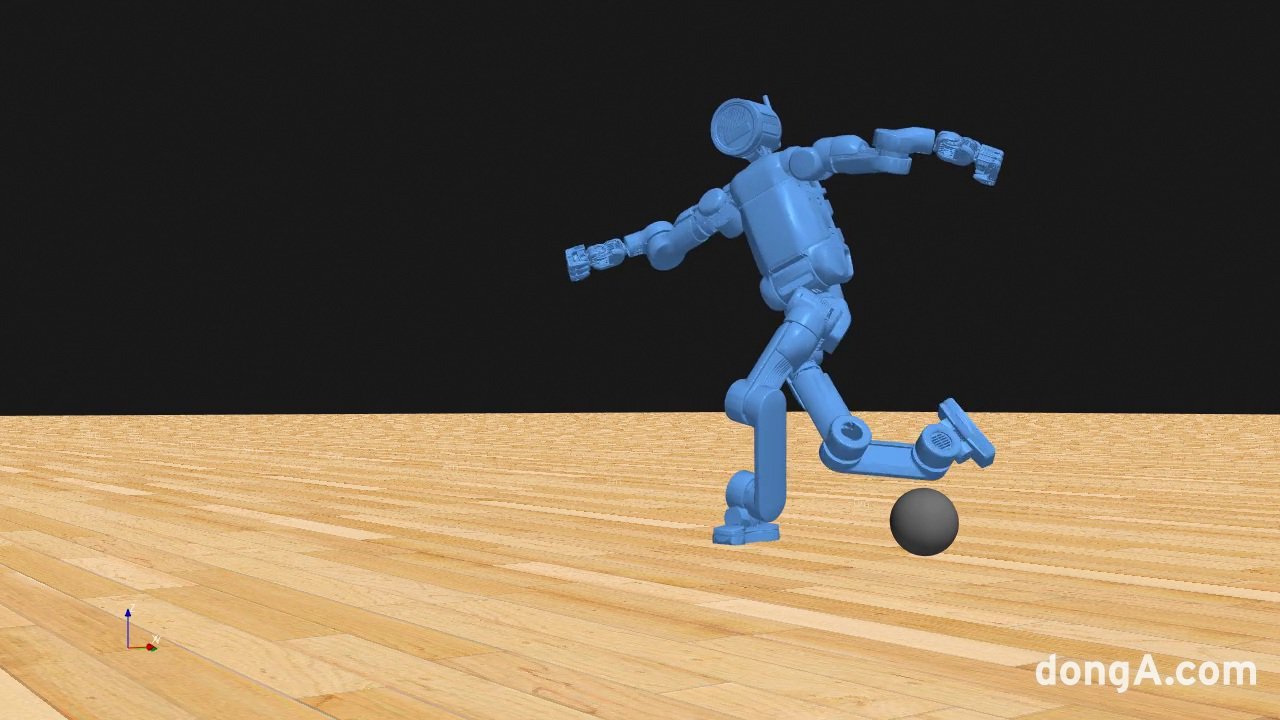
Hyundai Motor unveils the behind-the-scenes of Atlas’s soccer skills training, akin to that of a professional player. Provided by Hyundai Motor
Hyundai Motor unveils the behind-the-scenes of Atlas’s soccer skills training, akin to that of a professional player. Provided by Hyundai Motor
The linked data were refined through artificial intelligence reinforcement learning. Rather than merely copying the given movements, the robot learned for itself the optimal balance and physical force transmission by calculating its own weight and the output characteristics of its electric motors. In this process, it developed the ability to autonomously compensate for inertia and shifts in its center of mass that accompany movement.
In particular, the team utilized cloud-based computing infrastructure to run thousands of virtual simulations in parallel. As a result, the machine was able to collect compressed trial-and-error data equivalent to about one year of human experience within just a single day, dramatically accelerating its learning speed. When the control values completed in the virtual environment were applied to the actual hardware, the robot operated with minimal error from the first attempt.
For the highly challenging ghost rabona kick, the greatest difficulty lay in controlling the feint movement that abruptly changes running direction, as well as the rotational inertia generated during takeoff and landing. The researchers secured both mobility and balance by applying whole-body control technology, which treats all joints in the body as a single integrated network.
They also explained that this sports-based learning will directly translate into real industrial settings in the future. Algorithms that perform locomotion and precise manipulation simultaneously in variable environments can be applied as-is to advanced tasks in logistics warehouses or manufacturing processes, such as carrying heavy loads while avoiding obstacles. The ultimate goal is to develop these systems into devices that are deployed in high-risk or highly repetitive workplaces to reduce the burden of human labor.
In fact, Atlas has already demonstrated its precise control capabilities by lifting a 23 kg structure and placing it onto a designated shelf. Beyond simply transporting heavy objects, it has now succeeded in dynamic full-body movements, achieving a new level in humanoid control technology. Hyundai Motor and Boston Dynamics plan to continue expanding the practical applications of bipedal robots through a range of joint projects.
ⓒ dongA.com. All rights reserved. Reproduction, redistribution, or use for AI training prohibited.
Popular News