Joining Ajou University’s industry-academia-research consortium Securing proprietary assets such as next-generation in-rack cooling technology Planned for priority rollout at the Seoul and Yongin centers Internalizing capabilities spanning design, construction, and operations
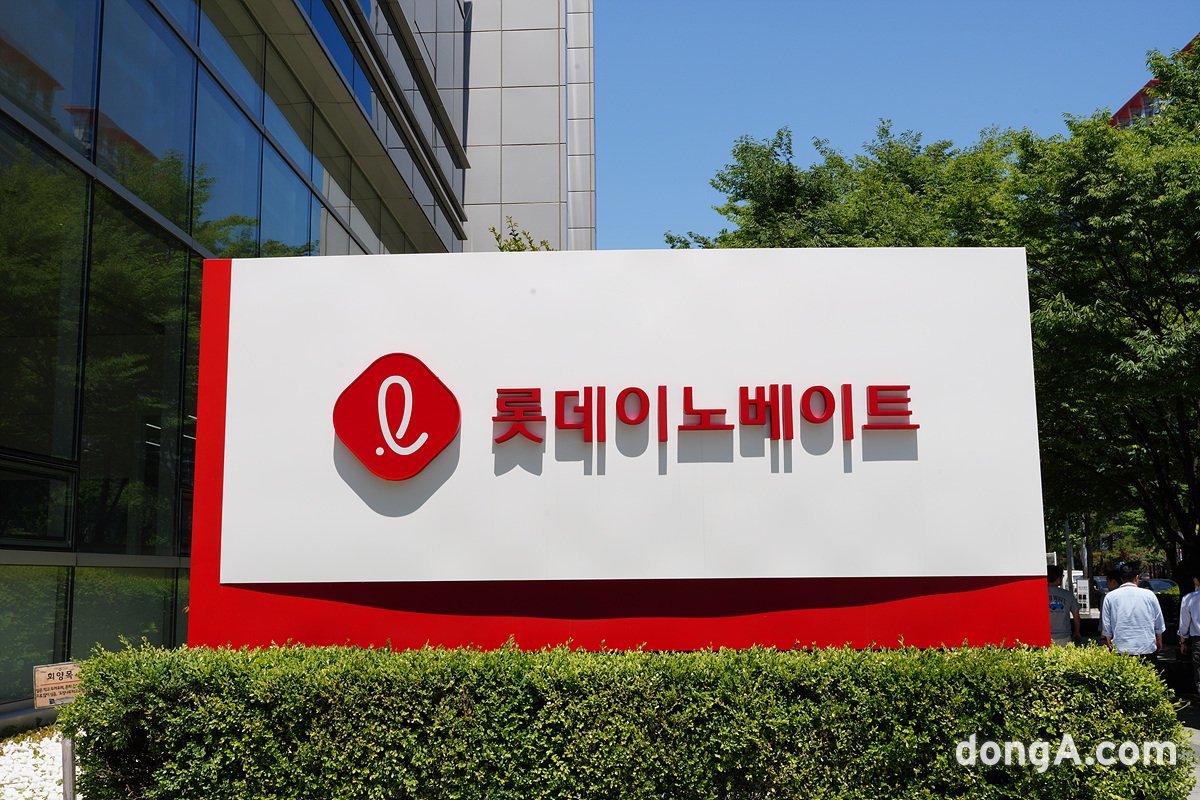
Lotte INNOVATE headquarters building. Provided by Lotte INNOVATE
Lotte INNOVATE has joined a government research and development project focused on improving power efficiency at data centers and responding to climate change. Through this, the company plans to further strengthen its DBO (Design-Build-Operate) capabilities—an integrated business model covering planning, construction, and operation—to reinforce its market dominance.
The recent explosive expansion of the artificial intelligence market has led to a surge in demand for high-performance graphic processing units (GPUs). This has sharply increased the power density of server equipment, making improvement of the Power Usage Effectiveness (PUE) index and reduction of carbon dioxide emissions the industry’s top priority. In particular, conventional air-cooling systems that use airflow have clear limits in heat control, making it an urgent task to secure next-generation thermal management technologies that can maximize efficiency.
To carry out a thermal management technology development task aimed at achieving carbon neutrality in data centers, Lotte INNOVATE has joined a consortium led by the Industry-Academic Cooperation Foundation of Ajou University. This project is part of the new R&D initiatives for 2026 in the battery and electrical/electronic sectors, overseen by the Korea Evaluation Institute of Industrial Technology (KEIT).
This government project focuses on resolving the chronic energy consumption issues of air-cooled data centers and curbing carbon emissions. The plan is to develop and validate in real operating environments an optical-sensing-based Distributed Temperature Sensing (DTS) system, an artificial intelligence-based thermal management algorithm, and high-performance in-rack cooling equipment. The aim is to build a next-generation cooling ecosystem that directly controls heat generated inside equipment by integrating sensing technology with AI.
The national project includes participation from the Korea Institute of Machinery & Materials, Chung-Ang University, and SM Instrument, and joint research will be carried out over approximately five years.
Lotte INNOVATE intends to use its own infrastructure for demonstration tests and aims to achieve a PUE of 1.2 or lower. If this technology is applied to currently operating infrastructures in locations such as Seoul and Yongin and the target is reached, it is expected to reduce annual carbon emissions by approximately 22,000 tons.
According to statistics from related government ministries, the total annual power consumption of domestic data centers last year was about 8.2 TWh. If this research enables the industry-wide PUE to be lowered and stabilized from the current 1.5 to 1.2, it could lead to a nationwide reduction of greenhouse gas emissions of up to 684,000 tons per year.
Lotte INNOVATE plans to fully apply the core technologies acquired through this project to its DBO business. The company’s strategy is to embed high-efficiency cooling solutions from the initial design phase and present a proprietary eco-friendly data center model to the market.
A Lotte INNOVATE official stated that in the era of AI-driven transformation, the success or failure of data centers depends on thermal management technology, and added that the company will take the lead in building an eco-friendly data center ecosystem based on the capabilities secured through this national project.
Kim Sang-jun
AI-translated with ChatGPT. Provided as is; original Korean text prevails.
ⓒ dongA.com. All rights reserved. Reproduction, redistribution, or use for AI training prohibited.