〈2〉 Innovative finance that cuts corporate production costs
Solar power company HAESOOM, founded less than 15 years ago
Installed panels at Kolon Industries’ plant… Rapid growth powered by venture capital from card and securities firms
Energy and AI companies nurtured by innovative finance… Playing a key role in cost reduction and decarbonization management
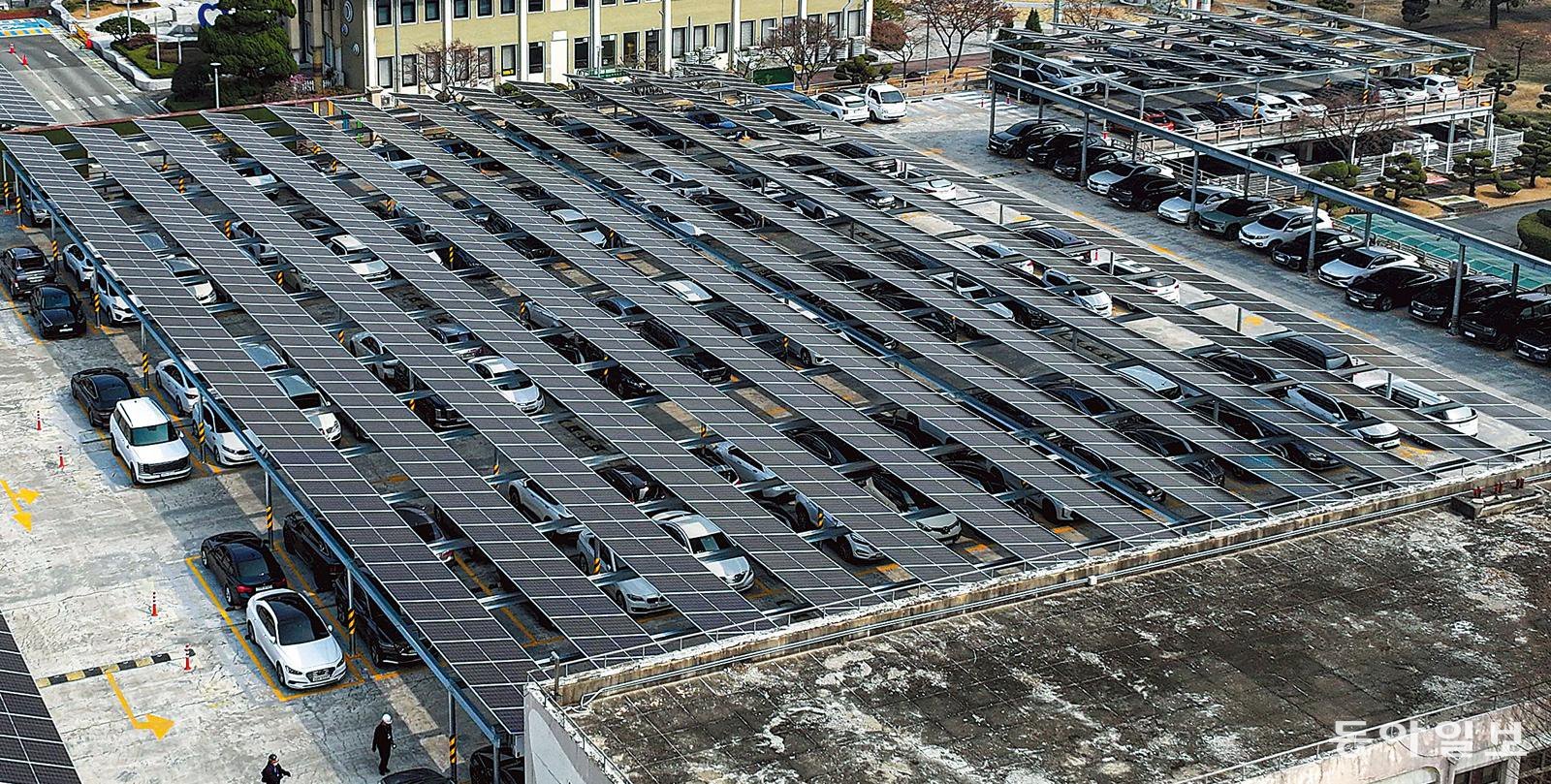
On the 25th of last month, solar panels installed by startup Hajum were set up in the north-side parking lot of Kolon Industries’ Gumi Plant 1 in Gumi, North Gyeongsang Province. The 3,405 panels installed throughout the plant site (14,400㎡) represent the optimized volume calculated by combining Hajum’s proprietary satellite data with artificial intelligence (AI) technology. Gumi = Reporter Lee Han-gyul always@donga.com
“We are increasing solar panel installations not only in Gumi, North Gyeongsang Province, but also for companies located in Changwon, South Gyeongsang Province, and Paju, Gyeonggi Province.”
At 2 p.m. on the 25th of last month at Kolon Industries’ Gumi Plant 1 in Gumi, North Gyeongsang Province, Lee Dong-hwi, Head of New Business in the Energy Business Division at Hajum, said, “Demand for solar energy is growing rapidly,” making this remark.
Recently, energy price increases have been driving up industrial electricity tariffs, but this plant is able to ease concerns about electricity bills to some extent. This is because it uses some relatively inexpensive solar energy. As of 2024, Korea Electric Power Corporation’s (KEPCO) purchase cost per kWh (kilowatt-hour) by energy source is in the mid-KRW 175 range for liquefied natural gas (LNG), while new and renewable energy sources, including solar power, are in the mid-KRW 138 range.
The share of solar power in the total electricity used at this plant was around 1% right after the solar panels were completed in January this year, but in just about three months it rose to around 10%. Startup Hajum, which installed the solar panels at this plant and operates the energy business, has grown thanks to support from “innovative finance,” through which financial companies invest boldly and creatively in new industries.
● Card companies rewrite their investment formula
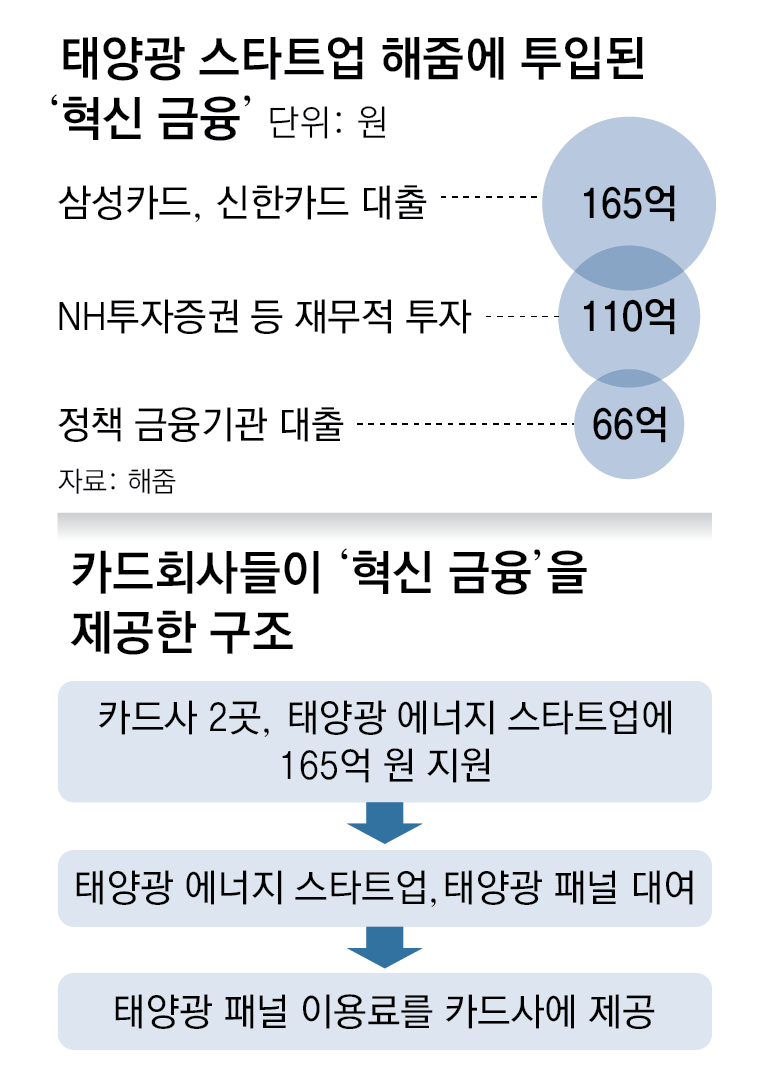
Hajum, founded less than 15 years ago, has overcome several difficult turning points thanks to innovative finance funds flowing in at each growth stage in various forms. From August 2013, in its early business phase, policy finance institutions extended loans of about KRW 6.6 billion. Initial investment costs needed up to the completion of power plants were financed through bank loans backed by a guarantee from Korea Technology Finance Corporation based on its technology evaluation. Thanks to this funding, the company was able to pass through the “death valley” (the insolvency crisis faced by startups when they fail to secure funding).
During the period when it was establishing its business foundation, it received an unconventional form of investment from card companies that broke away from traditional lending practices. In April 2015, when Hajum was pushing a business to lease solar panels to apartment complexes and others for seven years, it needed capital to install panels on a large scale. Around this time, Samsung Card and Shinhan Card injected about KRW 16.5 billion into Hajum. In return, the card companies decided to collect usage fees from the companies or customers using Hajum’s solar panels. The fees were to be collected over seven years. Hajum CEO Kwon Oh-hyun explained, “At that time, a long-term installment structure spread over seven years was not common in the financial sector.”
Innovative finance also supported the company during its business take-off stage. In September 2022, NH Investment & Securities and others invested KRW 11 billion. This enabled Hajum to expand its virtual power plant (VPP) business, which manages renewable energy strategies based on information and communication technology. Hajum’s VPP business experience is helping drive business expansion, including winning the solar project for Kolon Industries’ Gumi Plant 1.
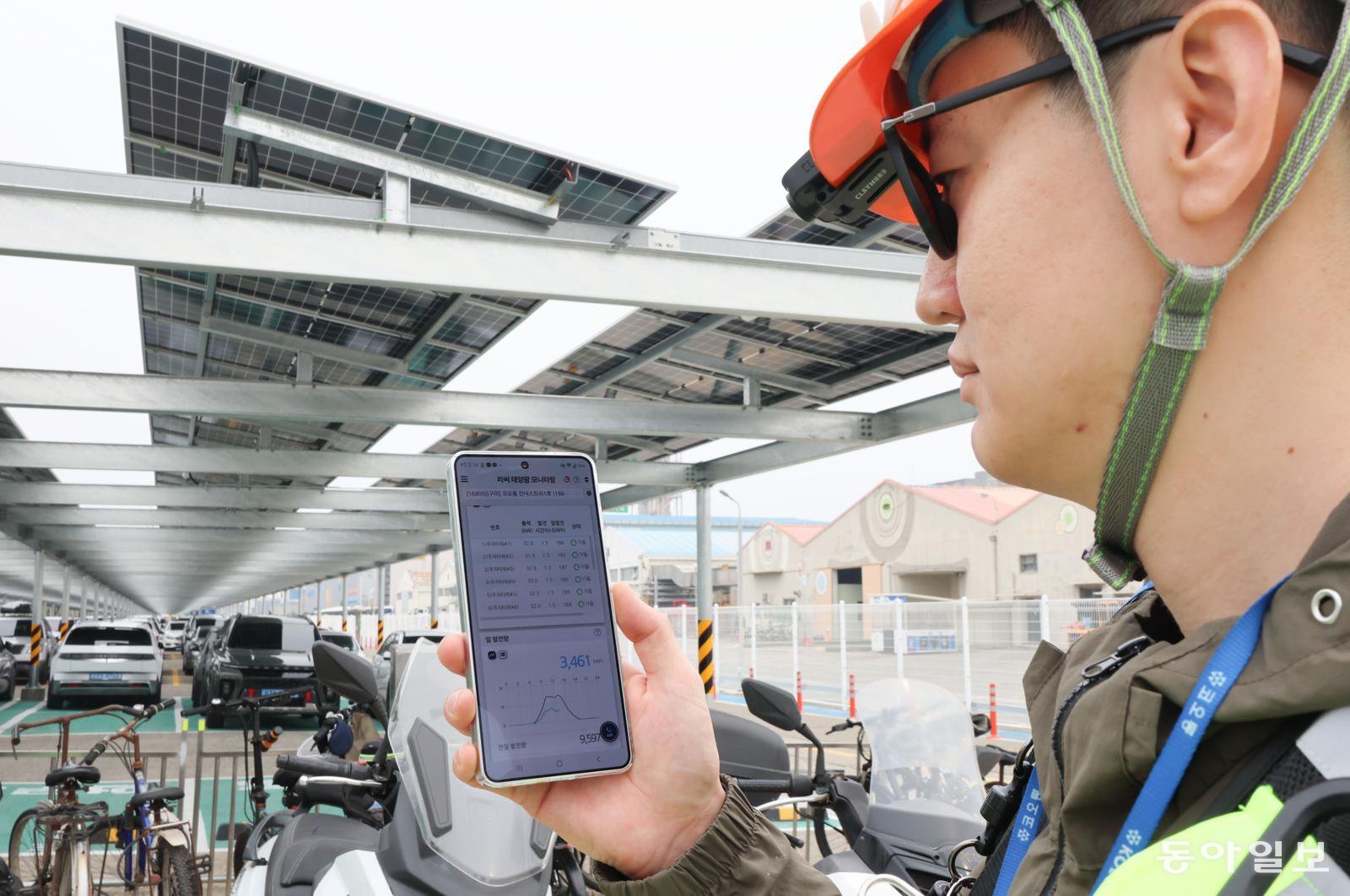
A Hajum official monitors in real time via smartphone the power output of solar panels installed in the parking lot. Gumi = Reporter Lee Han-gyul always@donga.com
● Venture capital also flows to AI startups boosting plant efficiency Energy startups nurtured by innovative finance help companies reduce energy costs, while at the same time mitigating risks arising from excessive dependence on oil and liquefied natural gas (LNG).
Startup Parity, founded in 2019, is developing next-generation reconnaissance and attack hydrogen drones capable of long-duration flights using liquid hydrogen. Liquid hydrogen has a higher storage density than gaseous hydrogen, allowing more hydrogen to be stored in the same space and making it advantageous for long-duration operation. To expand its product line to include multicopters and vertical take-off and landing aircraft, the company received a KRW 13 billion investment from IBK Industrial Bank of Korea in 2024. Water electrolysis startup Ahes, established in 2021, received bank investment last month. Water electrolysis is a technology that produces hydrogen by decomposing water using electricity.
Recently, a variety of startups that help cut corporate production costs have been receiving injections of venture capital. Onepredict, founded in 2016, provides artificial intelligence (AI) solutions that make plants safer and more efficient. When unexplained heat occurred in a generator at a GS Power plant, its solution helped resolve the issue quickly. Typically, experienced experts visit the site to analyze the cause, but this startup investigated the cause by analyzing plant data. Leveraging its technological capabilities, it raised KRW 49 billion in investment from institutions including Korea Development Bank and Shinhan Bank.
Voice AI specialist company Return Zero aims to transform corporate communication methods. By providing services that convert spoken content from various meetings into text, it can enhance work efficiency. Its proprietary speech recognition engine improves accuracy based on more than 15 million hours of Korean-language voice data. In recognition of its technological strength, it secured an investment of KRW 5 billion from Woori Venture Partners and Shinhan Venture Investment.
Kim Nam-jong, Research Fellow at the Korea Institute of Finance, advised, “For a virtuous cycle to occur, productive finance must flow not only into high-tech industries such as semiconductors, where it is mainly deployed, but also into startups in areas such as energy and artificial intelligence (AI) that enhance corporate productivity.”
Special Reporting Team
▽ Team Leader: Cho Eun-ah, Deputy Editor, Economic News Department achim@donga.com
▽ Jeonnam Mokpo·Shinan = Kang Woo-seok, Gumi, North Gyeongsang Province = Shin Mu-kyung
Osan, Gyeonggi Province = Lee Dong-hoon, Ho Chi Minh City, Vietnam = Joo Hyun-woo
Seoul = Jeon Joo-young, Park Hyun-ik, Park Jong-min
ⓒ dongA.com. All rights reserved. Reproduction, redistribution, or use for AI training prohibited.
Popular News