POSCO Holdings moves to secure premium lithium assets despite slowing EV demand
Secures rights to 15 million tons of brine lithium in Argentina and concentrate supply in Australia
Prioritizing stable procurement over price… laying groundwork for cost competitiveness in materials business
Due to lithium price adjustments, the secondary battery materials industry has entered a breather phase, but POSCO Holdings is not slowing the pace of securing raw material assets. Placing greater weight on mid- to long-term supply chain competitiveness than on short-term price movements, the company is successively securing lithium brine resources in Argentina and lithium mines in Australia.
On the 30th of last month, POSCO Holdings additionally secured large-scale brine lithium resources in Argentina and then signed an equity investment agreement for a lithium mine in Australia. Even as the secondary battery market undergoes a correction due to slowing electric vehicle demand and declining lithium prices, the company’s strategy is to preempt high-quality raw material assets in preparation for a future recovery in demand.
POSCO Holdings has turned its attention to two regions with different lithium production methods. In Argentina, it has secured brine-based lithium resources from salt lakes, while in Australia, it has obtained offtake rights for hard-rock lithium concentrate mined from deposits. Brine lithium tends to be a long-term development asset, whereas hard-rock lithium can provide relatively rapid stability in raw material procurement, creating a portfolio diversification effect.
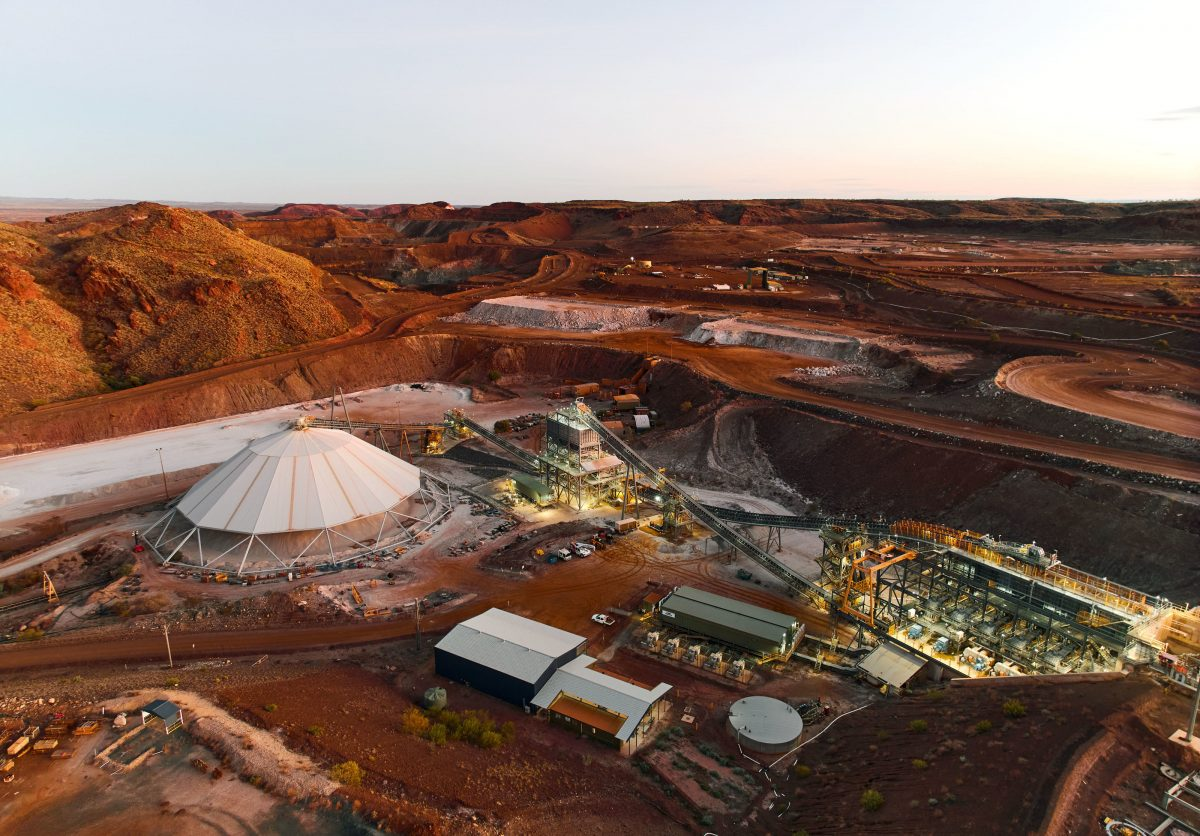
Wodgina lithium mine in Western Australia. Provided by POSCO Holdings
In Australia, POSCO Holdings signed a lithium mine equity investment agreement worth about USD 765 million (approximately KRW 1.1 trillion) with Mineral Resources. POSCO Holdings will participate in the investment by jointly establishing a new intermediate holding company with Mineral Resources and acquiring a 30% stake in this entity.
The core of this agreement lies in securing offtake rights for lithium concentrate rather than simply making an equity investment. POSCO Holdings has obtained the right to receive 30% of the lithium concentrate secured by Lithium Co, a joint venture with Mineral Resources, from the Wodgina and Mount Marion mines in Western Australia. This enables the company to secure both dividend income from its equity stake and raw material procurement rights at the same time.
Wodgina and Mount Marion are regarded as major lithium mines in Australia. The Wodgina mine is assessed as having concentrate with a grade of around 5.5% and reserves equivalent to about 6.2 million tons in lithium carbonate terms. The Mount Marion mine holds reserves of around 2.2 million tons and is an asset whose production capabilities have been verified through its existing operating track record.
For POSCO Holdings, acquiring mine equity is also linked to its future refining business. Once it secures a stable inflow of lithium concentrate, it can connect this to the production of key secondary battery material raw materials such as lithium hydroxide. In a market with high raw material price volatility, securing stable procurement sources is regarded as a key factor determining the profitability of the materials business.
In Argentina, the company has expanded its brine lithium resource base. Through its subsidiary POSCO Argentina, POSCO Holdings has completed the 100% acquisition of the Hombre Muerto Norte salt lake mining rights held by Canada-based Lithium South. The acquisition price is about USD 65 million (approximately KRW 95 billion).
The Hombre Muerto Norte salt lake is known to have estimated lithium reserves of about 1.58 million tons. With high lithium content and low impurity levels, it is regarded as a high-grade resource. Through this acquisition, POSCO Holdings has secured a total of around 15 million tons of brine lithium resources in Argentina in terms of reserves, including its existing mining rights.
POSCO estimates that, taking into account minable reserves and recovery rates, it will be possible to produce at least 3 million tons of lithium. This is sufficient for the production of about 70 million electric vehicles. The underlying assumption is that even if lithium prices are currently in a correction phase, competition to secure raw materials could intensify again if the electric vehicle and energy storage system markets grow over the long term.
Changes in local regulations in Argentina are another variable. POSCO Holdings is awaiting approval under RIGI, Argentina’s regime for attracting large-scale investment. RIGI is a system established to attract large-scale investment in strategic industries such as energy, mining, and technology. Once approved, the company can expect tax benefits such as lower corporate tax and customs duty exemptions, as well as eased foreign exchange controls.
If POSCO Holdings obtains RIGI approval, it will become the first Korean company to receive Argentina’s investment incentives. This could help reduce the cost burden of its local lithium business and enhance flexibility in capital management.
View of the Hombre Muerto salt lake in Argentina. Provided by POSCO Holdings
The latest lithium resource acquisitions are also aligned with the drive to strengthen raw material competitiveness that has been emphasized since POSCO Group Chairman Chang In-hwa took office. POSCO Group appears to be seeking to apply to the secondary battery materials business the experience it gained in the steel business by combining raw material procurement and production technology to build competitiveness.
The secondary battery materials business is heavily influenced by the prices of key minerals such as lithium, nickel, and graphite, as well as by supply chain stability. Lithium in particular is a raw material that directly affects the cost of cathode materials and batteries. For materials companies, it is difficult to secure price competitiveness with processing and production capabilities alone; the key is how stable a procurement structure they have at the raw material stage.
This is why POSCO Holdings is securing both brine lithium and hard-rock lithium. Relying on a specific region or a single production method can heighten risks related to prices, policies, and disruptions in production. By holding both salt lakes in Argentina and mines in Australia, the company can diversify its raw material procurement sources while splitting its portfolio between long-term development assets and short-term offtake rights.
The short-term mood in the lithium market is unfavorable. Lithium prices have declined sharply from their peak due to overlapping factors such as slowing electric vehicle demand, oversupply from China, and inventory adjustments in battery materials. As a result, some companies are adjusting the pace of new investments. POSCO Holdings, however, views the period of price decline as an opportunity to secure high-quality assets.
There is also an assessment that resource investments can be made on more favorable terms when the market is undergoing a correction rather than when prices are rising. If demand recovers again, the cost competitiveness gap between companies that hold stable raw material assets and those that rely on external procurement could widen.
POSCO Holdings’ lithium investments are focused more on building a long-term supply chain than on short-term earnings improvement. At a time when lithium prices are under downward pressure, the investment burden may stand out, but once the secondary battery materials business enters a full-fledged recovery phase, self-sufficiency in raw materials is highly likely to function as a core competitive edge.
The background to POSCO Holdings continuing its resource investments even in a period of low lithium prices lies in the judgment that the ability to secure raw materials equates to competitiveness in materials. The company’s intention appears to be to diversify lithium procurement sources by securing both salt lakes and mines and to link these to refining and materials production.
ⓒ dongA.com. All rights reserved. Reproduction, redistribution, or use for AI training prohibited.
Popular News