High-performance HBM era’s biggest challenge: heat generation
Applying cooling elements within the package for easier heat dissipation
Ensuring stable operation under high-temperature, high-load conditions
HBM as a “basic T-shirt,” iHBM as a “functional mesh T-shirt”
Greater compatibility with existing customer designs… “Lowering the barrier to adopting the technology”
Image of SK hynix HBM product. Courtesy of SK hynix
SK hynix on the 26th unveiled its “iHBM” technology, a memory solution that dramatically reduces heat generation. The company described it as a technology that applies an integrated cooling element, “ICE (Integrated Cooling Elements),” to HBM (High Bandwidth Memory) packages. ICE is a cooling element that uses silicon material with high thermal conductivity but no electrical conductivity to form an additional heat dissipation path inside the HBM package. This demonstrates SK hynix once again widening its technology gap in the ultra-high-performance HBM memory solution market.
HBM performance has been advancing through increased stacking and higher speeds in response to surging demand for AI computation. As performance increases, the accompanying issue of heat generation grows. As a result, technology capable of effectively controlling the heat density (power density) in the D2D PHY (Die-to-Die Physical Layer) section that connects HBM and GPUs is cited as a core competitiveness factor for next-generation HBM technologies.
D2D PHY is the physical connection channel that enables ultra-high-speed data communication between the HBM base die and the AI high-speed die. In the D2D PHY section, “heat density” refers to the amount of heat generated per unit area. It is also a key indicator that determines the cooling efficiency and lifespan of devices or systems.
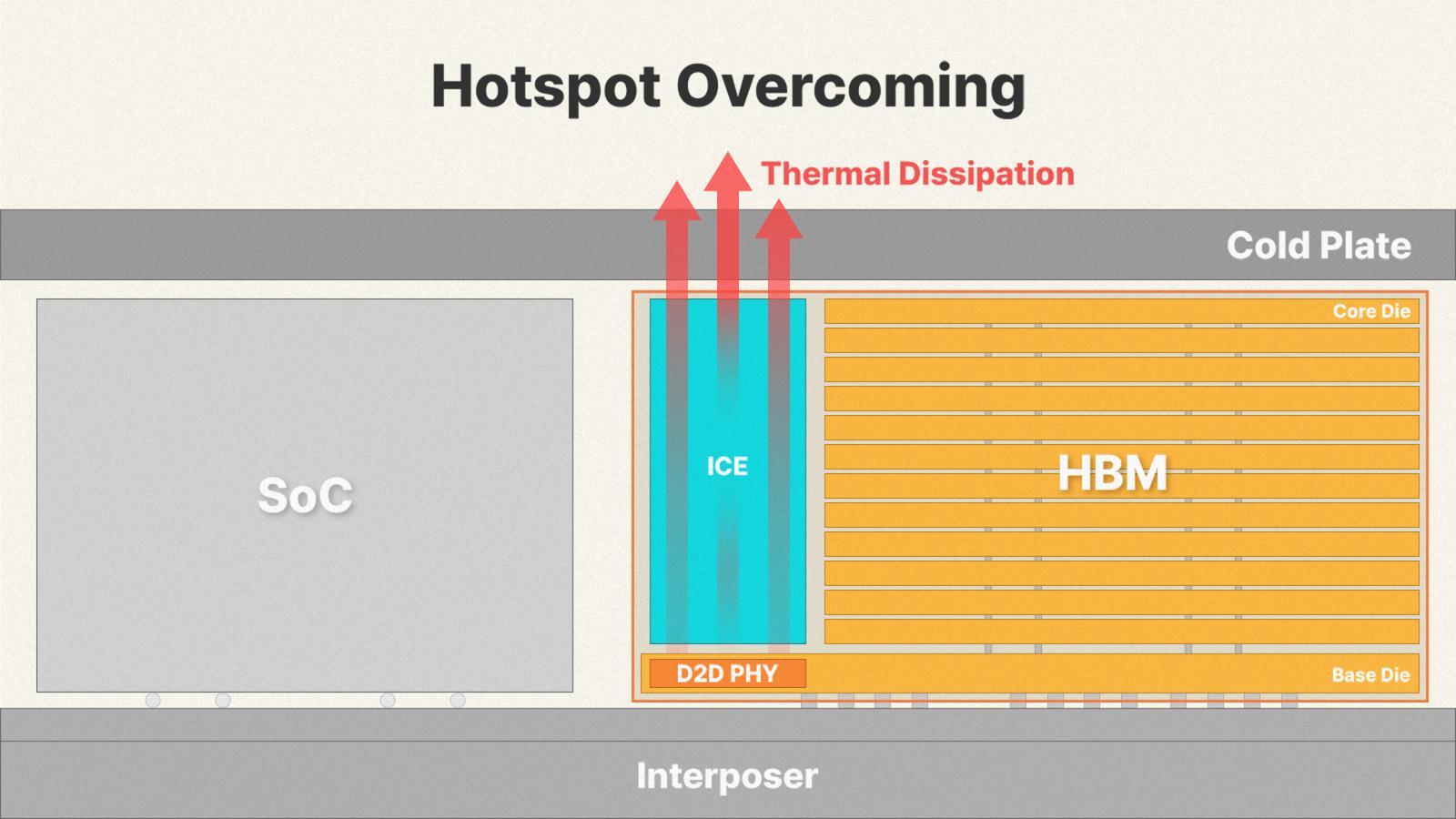
Concept diagram of SK hynix’s ‘iHBM solution’ for heat management. Courtesy of SK hynix
SK hynix stated that its iHBM technology is characterized by structurally resolving this heat issue. While conventional HBM has relied on an indirect method of releasing heat externally via the core die, iHBM places a thermal control element (ICE) within the D2D PHY region where heat concentration is highest, creating a dedicated heat path through which heat can escape.
For example, if conventional HBM is comparable to a regular cotton T-shirt, iHBM can be seen as a functional mesh T-shirt that applies a dedicated ventilated material to areas where sweat and heat are concentrated. Through this, SK hynix reported that it can reduce thermal resistance by more than 30% compared with conventional products and maintain stable operating characteristics even in high-temperature and high-load environments.
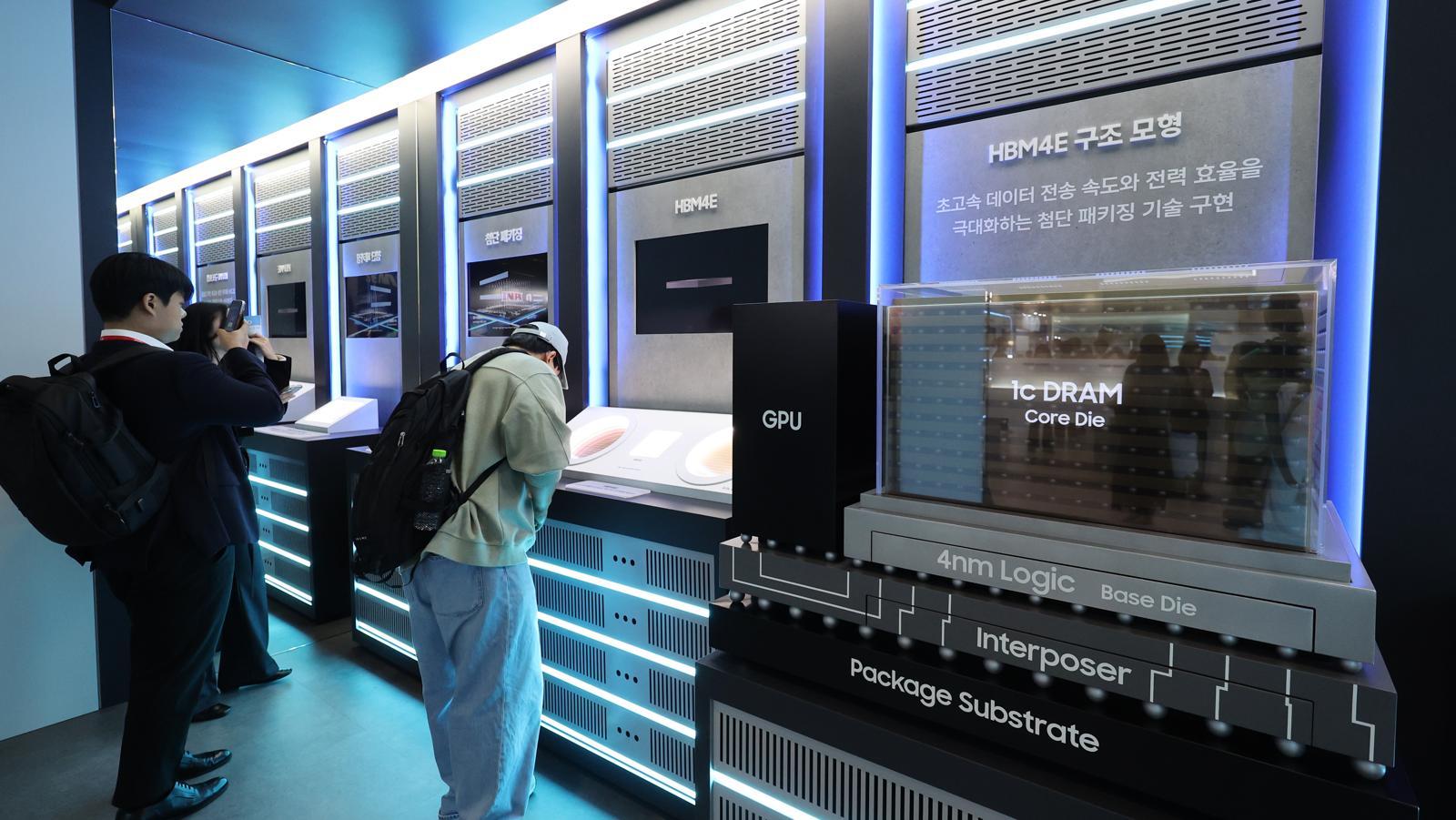
Image of SK hynix HBM4 product. Courtesy of SK hynix
Lower burden for adopting new technology… “Compatible with customers’ existing SiP environments and designs”
The company also addressed mass production concerns, stressing that the technology instead offers strengths in manufacturability. It explained that stable mass production is possible by applying the Advanced MR-MUF (Mass Reflow Molded Underfill)-based WLP (Wafer Level Packaging) process, which has already been validated in the market. MR-MUF refers to a process in which, after semiconductor chips are stacked, a liquid protective material is injected and cured into the spaces between the chips to protect the inter-chip circuits. WLP is a technology that conducts packaging processes and testing at the wafer level before dicing into individual chips. It is known as a process technology that can dramatically reduce chip size and improve electrical characteristics.
In particular, SK hynix explained that, as it has secured high design compatibility with customers’ existing SiP (System in Package) environments, customers can apply the technology immediately with minimal design changes, thereby reducing the practical burden of adopting the new technology.
SK hynix plans to apply iHBM technology starting with next-generation products such as HBM5, to meet the thermal management requirements in ultra-high-density and ultra-high-bandwidth environments such as high-performance computing (HPC) and AI data centers, thereby enhancing system-wide stability and operational efficiency.
Lee Kang-wook, Vice President and Head of PKG Development at SK hynix, said, “iHBM is an optimal solution for minimizing heat generation, developed by combining memory design capabilities with advanced packaging technology,” adding, “The company will proactively provide the value customers require in AI environments and further solidify its leadership in AI memory.”
ⓒ dongA.com. All rights reserved. Reproduction, redistribution, or use for AI training prohibited.
Popular News