Korea Zinc’s role re-examined amid intensifying competition to secure supply chains
As the U.S. pushes to build an integrated smelter, Australia also calls for nurturing its own facility
Korea Zinc SMC: “Reviewing the establishment of a triangular axis linking Onsan and Tennessee”
Chairman Choi Yoon-beom’s past tenure as SMC CEO forged ties with Australia
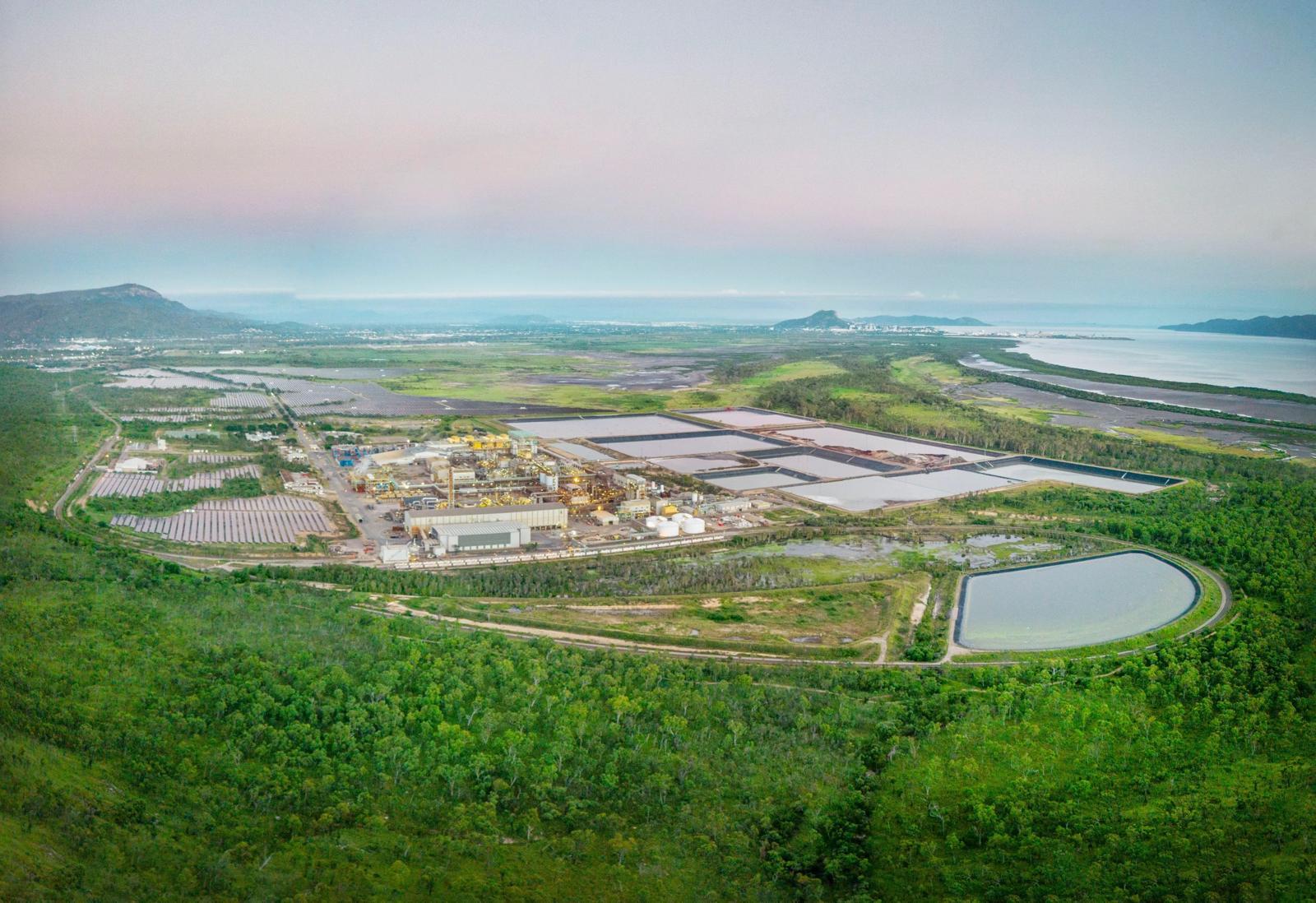
View of Korea Zinc’s Australian subsidiary SMC Smelter
Korea Zinc is emerging as a key mineral supply chain company in Australia, following its presence in Korea and the United States. As competition to secure key minerals, including rare earth elements, has become a core issue in the global supply chain, some are even raising the possibility of a “key minerals triangular axis” linking Korea, the United States, and Australia with Korea Zinc at the center. Australia is one of Korea Zinc’s core bases, where it has been operating the Sun Metals Corporation (SMC) smelter established in 1996. In particular, as global supply chain competition intensifies, the role of Korea Zinc’s SMC Smelter, which handles key minerals locally in Australia, is being re-evaluated.
Amid this situation, since Korea Zinc announced at the end of last year its “Project Crucible,” a plan to build an integrated smelter in the U.S. state of Tennessee, calls have been growing within Australia to foster the country as a hub in the key mineral supply chain.
According to industry sources on the 26th, in Australia, political and business circles are reportedly proposing that Korea Zinc’s Australian subsidiary SMC should establish an integrated smelting system through expansion, and that on this basis Australia should be reborn as a key mineral production hub, similar to the United States.
SMC is also said to be keeping the door open to such proposals. At the recent “Townsville Enterprise 2026 Mining and Manufacturing Forum” held locally, SMC reportedly presented a direction to take on board community demands and proceed with concrete feasibility studies and discussions. This is seen as SMC responding to the ongoing calls within Australia to strengthen the country’s processing capabilities for key minerals.
Previously, Korea Zinc had been pushing ahead with a project to build an integrated smelter in Tennessee, in cooperation with the U.S. government, with completion targeted for 2029. On top of this, a similar project has now been proposed in Australia. As a result, there is an increasing assessment that in Australia, particularly in North Queensland, the possibility is growing that efforts will be made more concrete or become reality to combine Korea Zinc’s non-ferrous metal smelting technology with Australia’s resources and capital to strengthen competitiveness in the key mineral supply chain.
Ron Lee, CEO of SMC, said at the forum, “We are seriously reviewing the request to apply Korea Zinc’s technology and know-how accumulated through the Onsan Smelter to North Queensland, Australia, following U.S. Project Crucible,” adding, “This forum will serve as a starting point for concrete discussions aimed at strengthening Australia’s key mineral capabilities.”
A U.S. government official attending the forum also lent support to this direction. Jeremy Cornforth, U.S. Consul General to Australia, said, “If the rich mineral resources held by Australian communities are combined with U.S. capital and Korea Zinc’s industrial capabilities, major synergies can be expected,” positively assessing the potential for Korea-U.S.-Australia cooperation.
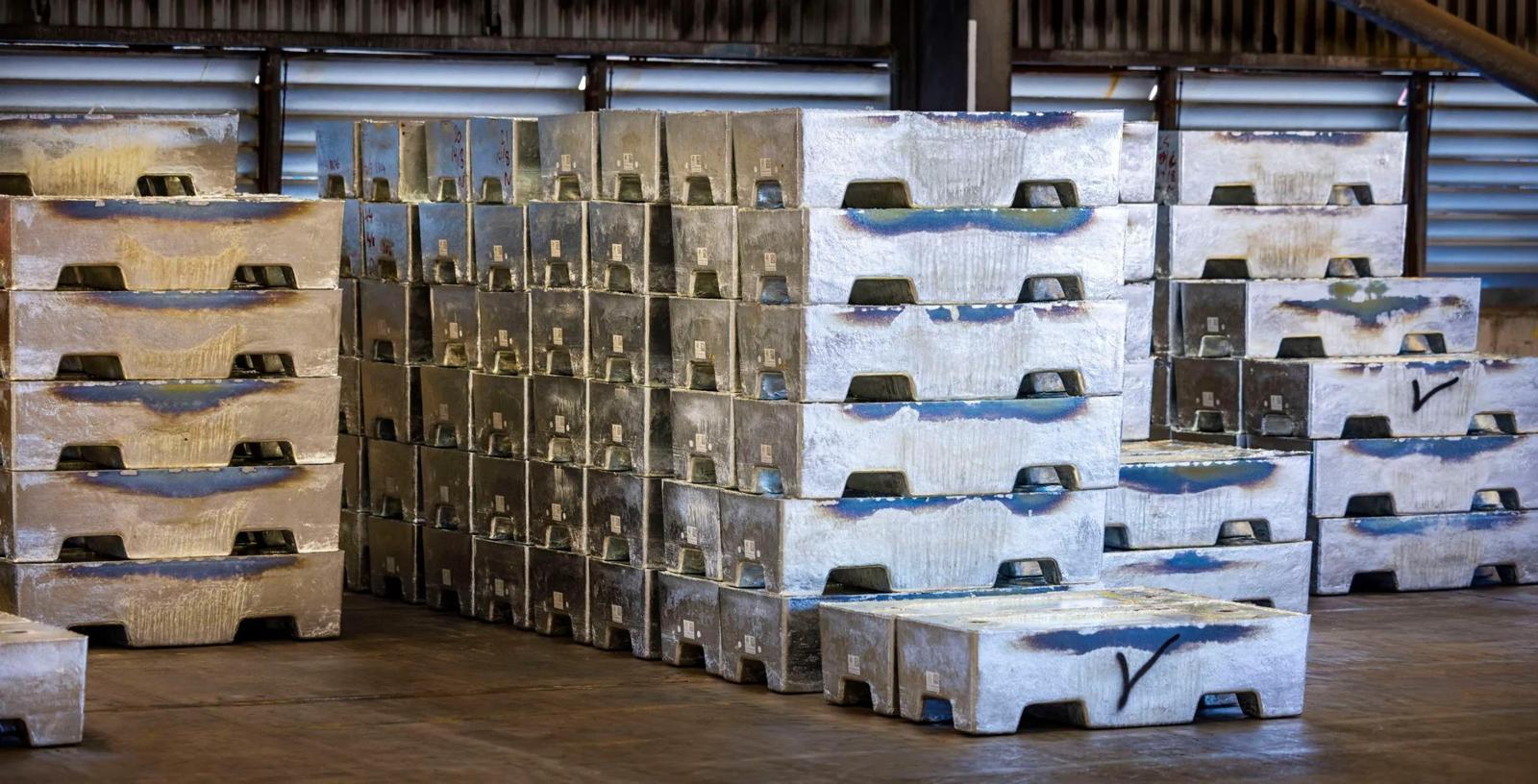
Zinc products produced at the SMC Smelter
Expectations are also rising within Australia. Nick Dametto, Mayor of Townsville, said, “Korea Zinc’s SMC has played a pivotal role in Townsville’s economy for nearly 30 years,” adding, “If cooperation talks with Korea Zinc are advanced to the next level, it is expected to become a turning point that could transform the future of Australian manufacturing, while strengthening regional industrial competitiveness and creating jobs.”
This optimism about SMC is viewed as being positively influenced by the deep ties between the current management of Korea Zinc, including Chairman Choi Yun-bum, and Australia. Chairman Choi served as president of SMC from 2014 to 2019, transforming the company from a chronic loss-maker into a profitable operation. This is cited as a representative example demonstrating his management capabilities. Subsequently, by expanding renewable energy and hydrogen businesses based in Australia, Korea Zinc built a close cooperative relationship with local stakeholders.
In addition, during Chairman Choi’s tenure in 2018, SMC completed the largest industrial solar power plant in Australia (125MW) near the Townsville zinc smelter, laying the foundation for a transition to eco-friendly energy. This facility is currently regarded, along with Ark Energy’s green energy business, as a representative example demonstrating Korea Zinc’s long-term commitment to investment. Based on these business achievements and cooperative efforts, Korea Zinc and Australia’s political and business communities have built a high level of trust. In fact, when Korea Zinc’s management rights were under threat from the Yeong Poong–MBK Partners alliance, Australia backed Korea Zinc. Members of the Australian Federal Parliament and the Premier of Queensland publicly expressed support for Chairman Choi and the current management of Korea Zinc, and voiced concerns over the possibility that a private equity fund could exert influence over Australia’s core industrial assets.
Industry observers believe that if local demands in Australia evolve into concrete project discussions, the supply chain cooperation framework among Korea, the United States, and Australia centered on key minerals will be further strengthened. There is also analysis that if this trilateral cooperation, underpinned by strong supply chain competitiveness, expands into strategic industries such as defense, shipbuilding, and energy, it could form a new axis of economic and security cooperation.
ⓒ dongA.com. All rights reserved. Reproduction, redistribution, or use for AI training prohibited.
Popular News