Foraminal expansion surgery that widens space by resecting ligaments
Semi-rigid fixation that stabilizes while enhancing flexibility
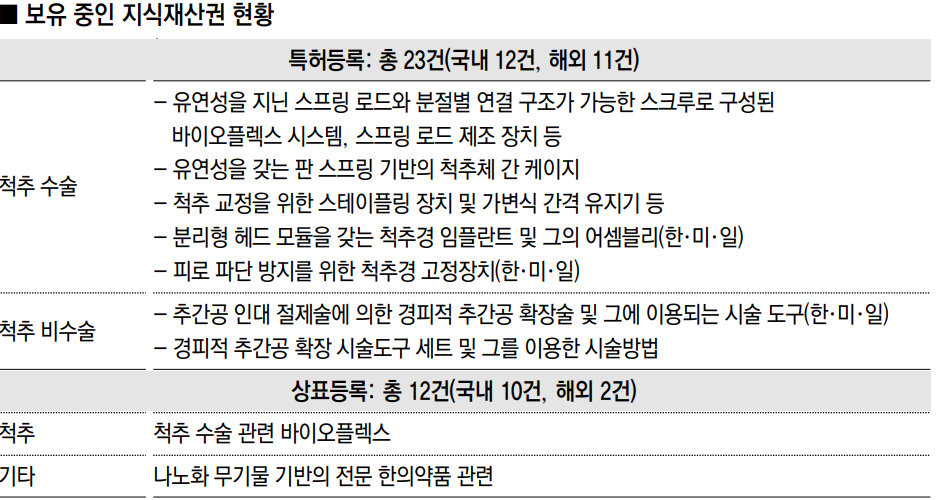
23 spine-related patents held by Seoul Gwanghye Hospital Spine Center
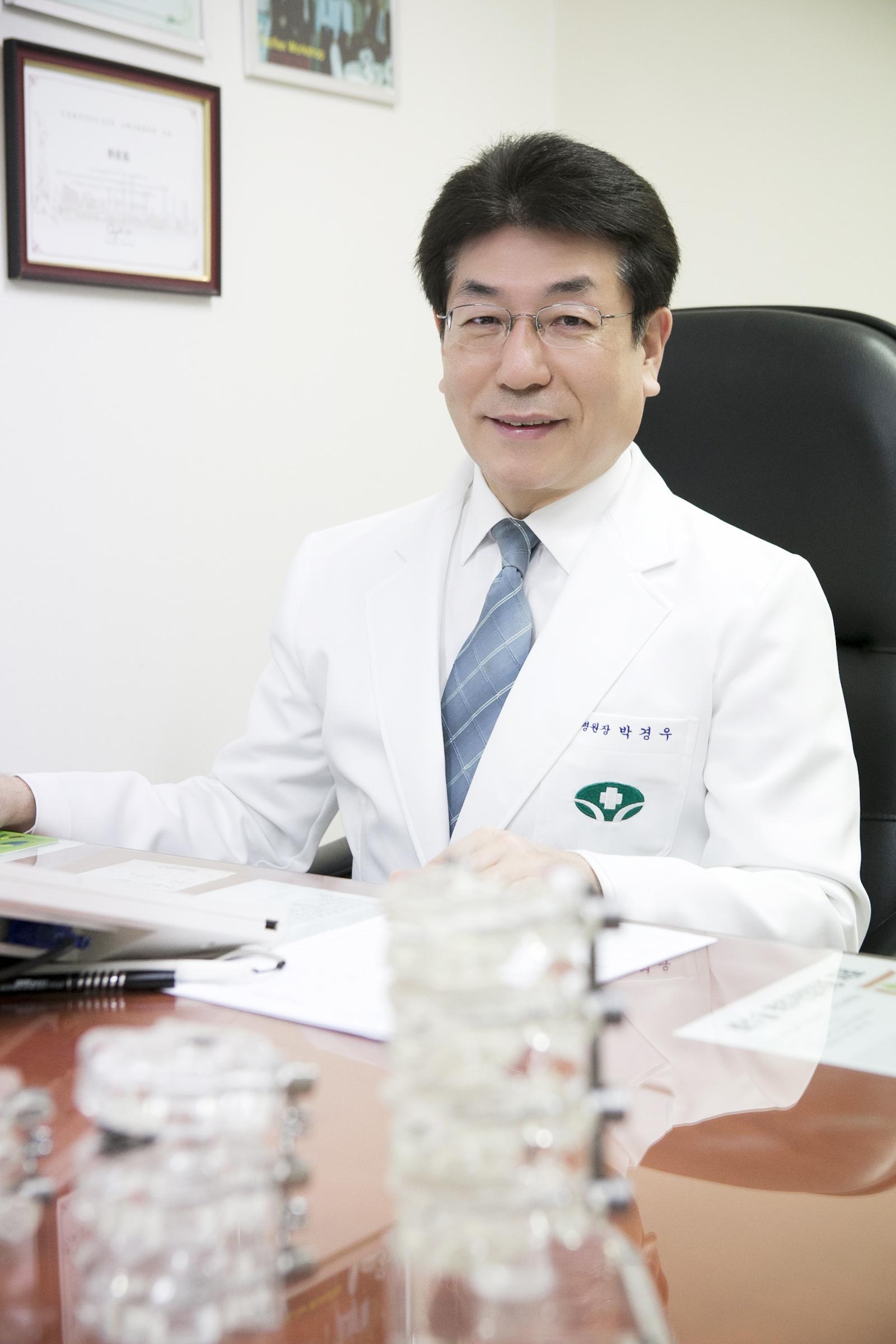
Amid a trend of increasing segmentation and sophistication in domestic spinal treatment technology, medical staff who have accumulated both clinical and research outcomes are drawing attention. Park Kyung-woo (photo), CEO and Director leading the Spine Center at Seoul Kwang Hye Hospital, has over the past 30 years presented new alternatives that compensate for the limitations of existing treatment methods based on a broad range of clinical experience. He has continually advanced treatment strategies that not only reduce pain but also consider functional recovery of the spine and long-term stability.
Even during the period when overseas technologies and devices were being imported into Korea in their original form, Park distinguished himself by moving beyond simple replication and pursuing in-house development, judging that improvements and new approaches tailored to the characteristics of Korean patients were necessary. These efforts have led to intellectual property achievements across both spinal surgery and non-surgical techniques and instruments, culminating so far in 23 registered patents and 12 trademarks in Korea and abroad.
The most notable achievement in the spinal surgery field is “semi-rigid fixation.” While conventional rigid fixation focuses on completely immobilizing the spine to resolve pathology, semi-rigid fixation emphasizes a “balanced design” that maintains stability while allowing a certain degree of flexibility.
The core components are a nitinol spring rod and a screw structure that allows independent connection by segment. This system is designed to absorb shock and distribute loads while enabling selective, segment-by-segment access if a problem arises in a particular spinal segment. In other words, even when reoperation is unavoidable, it reduces the burden of full replacement while securing flexibility in treatment.
In particular, the durability of the rod has recently been reinforced and design elements to prevent fatigue fracture have been added. After related patents were registered in Korea and Japan, a U.S. patent was also granted on April 28. Prior to this, a U.S. patent for the modular Bioflex system had been registered, further enhancing the technological sophistication and ease of surgery, and significantly highlighting the economic value of this technology group.
Various collaboration and investment proposals are reportedly being made, mainly by multinational medical device companies and global venture capital firms. The significance lies in the recognition not only of the export potential of medical technology itself, but also of the industrial-level scalability of the underlying core technologies.
A pre-surgical option: foraminoplasty Technological advances are also continuing in the field of non-surgical treatment. A representative example is “foraminoplasty.” This procedure directly addresses pain caused when the intervertebral foramen—the passage through which spinal nerves travel—narrows or is blocked by adhesions.
Foraminoplasty goes beyond simple drug injection or nerve blocks, using a special kit to access the lesion site, resect ligaments, and widen the space. It is characterized by its multifaceted approach to improving both the physical and biochemical causes of pain: it relieves mechanical compression while discharging inflammatory mediators.
The special kit developed by Park was recently redesigned in terms of the trocar handle and needle structure, improving directionality, straightness, and steerability. It has been evaluated as effective in enhancing precision in reaching the target area, minimizing tissue damage during the procedure, and shortening procedure time. This approach is becoming a practical alternative for patients for whom surgery poses a burden due to advanced age or underlying conditions such as diabetes and cardiovascular disease, and it has high clinical utility as a pre-surgical option to alleviate pain caused by various spinal disorders.
Research leading to patents and expanding treatment domains Park’s research is not confined to a single technology. It extends widely across spinal surgical instruments, non-surgical procedural tools, and pain treatment-related technologies. He has also broadened the treatment spectrum by conducting parallel research on intractable pain conditions such as postherpetic neuralgia and diabetic peripheral neuropathy, combining nano-inorganic-based therapies with traditional Korean medicine approaches.
More recently, he has been conducting research that integrates artificial intelligence (AI)-based surgical and non-surgical navigation systems with medical big data. His goal is to develop an image-conversion system that minimizes reliance on imaging equipment such as C-ARM, while precisely segmenting and schematizing each patient’s anatomical structure and lesion characteristics to lower the entry barrier for users.
Park stated, “In spinal treatment, it is becoming increasingly important to move beyond simply removing lesions and destroying tissue, and to focus on how naturally the spine’s original function can be restored,” adding, “The plan is to concentrate on building a more precise and safer medical environment by combining advanced digital technologies such as new materials and AI.”
ⓒ dongA.com. All rights reserved. Reproduction, redistribution, or use for AI training prohibited.
Popular News