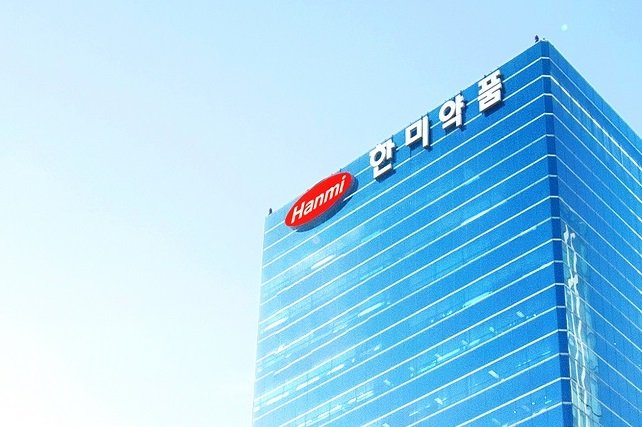
Headquarters of Hanmi Pharmaceutical. Provided by Hanmi Pharmaceutical
Hanmi Pharmaceutical announced on the 8th that it had carried out an organizational restructuring, aimed at strengthening competitiveness in its obesity treatment and new drug businesses. This is the first full-scale organizational overhaul since the transition to a professional management system, and the company plans to accelerate the execution of its “2030 Mid- to Long-Term Vision” by reallocating its research and development (R&D), marketing, manufacturing and sales divisions around core businesses.
Hanmi Pharmaceutical recently reorganized its organizational structure around four main divisions: ▲Innovation Growth ▲Sustainable Growth ▲Future Growth ▲Growth Support. The key change is the integration of the former headquarters-level units into a division-based structure centered on business objectives.
This restructuring is seen as a step to give concrete form to the “2030 Mid- to Long-Term Vision” announced by Hanmi Group last year. At that time, Hanmi Group identified obesity, anti-aging, digital healthcare and robotics as future growth pillars and presented a strategy to expand the new drug and bio businesses as core pillars of the group.
The most significant change is the establishment of the “Innovation Growth Division” focused on the obesity treatment business. Hanmi Pharmaceutical placed the New Product Development Center, Marketing Center, Pyeongtaek Manufacturing Center, Pharmaceutical Innovation Center and overseas sales organization under a single division, thereby reinforcing the integrated structure that links development through to production and sales. The industry views this as a measure to strengthen the company’s capability to respond to the obesity treatment market, which has recently emerged as the biggest topic in the global pharmaceutical industry.
In particular, Hanmi Pharmaceutical is focusing on the development of long-acting obesity new drug candidates in the global obesity treatment market. It is assessed to be strengthening its strategy to target the next-generation GLP-1 class market based on its existing competitiveness in the diabetes and metabolic disease sectors.
The R&D organization has also been reinforced as a separate pillar. The existing R&D Center has been reorganized as the “Future Growth Division,” under which the Obesity & Metabolism Center, Oncology Center and Convergence Center have been placed. The strategy is to secure long-term growth engines by strengthening early pipeline discovery and research independence.
The status of the domestic sales organization has also been elevated. The former Domestic Sales Headquarters has been promoted to the Sustainable Growth Division. Hanmi Pharmaceutical is regarded as a strong player in cardiovascular areas such as hypertension and hyperlipidemia in the domestic prescription drug market, and this move is interpreted as an intention to maintain the competitiveness of its existing flagship products while simultaneously pursuing expansion into new therapeutic areas.
The industry views this organizational restructuring as more than a simple streamlining exercise, assessing it as a strong shift toward a “business-centric organization.” The company is departing from its former function-based organizational structure to group development, marketing, sales and production organizations under a single business objective, thereby enhancing speed and execution capability.
Hanmi Pharmaceutical has also established a “Portfolio Committee” to oversee large-scale clinical investments and new pipeline strategies. The company plans to reorganize the Clinical Center under this committee and manage company-wide portfolio strategies in an integrated manner, including new projects and product adjustments.
In a recent CEO letter to employees, CEO Hwang Sang-yeon explained the direction of the organizational restructuring by referring to “Solyeon,” the snake of Mount Changshan (常山) that appears in the ancient Chinese military text “The Art of War” by Sun Tzu. Like Solyeon, whose head, tail and body react organically and simultaneously, the intention is to reduce boundaries between organizations and establish a rapid decision-making system.
Hwang said, “This organizational restructuring is not a simple departmental reshuffle but is focused on concentrating company-wide capabilities on achieving business objectives,” adding, “We will build an integrated system in which each division is organically connected, and thereby achieve both innovative new drug development and sustainable growth.”
He went on to stress, “We will create an organizational culture in which performance and capability are evaluated fairly, and enable employees to focus on creating core value rather than ‘work for the sake of work.’”
ⓒ dongA.com. All rights reserved. Reproduction, redistribution, or use for AI training prohibited.
Popular News