LG Group is transforming into a next-generation tech company centered on services and solutions. Building on the solid technological capabilities accumulated in traditional manufacturing fields such as home appliances and chemicals, it is now accelerating a major shift toward becoming a “platform” company that goes beyond simple product sales to solve customer problems and deliver new experiences. Chairman Koo Kwang-mo has emphasized a management philosophy of “speed,” stating that swift execution takes precedence over a perfect plan. This “speed of execution” is manifesting as a powerful structural overhaul across LG’s core business lines. In particular, in the artificial intelligence (AI) domain, the group is accelerating AX (AI transformation) by using its proprietary model “EXAONE” to enhance efficiency across the entire value chain from manufacturing processes to customer services. Growth in next-generation mobility-focused vehicle components and battery businesses is also notable. Leveraging its battery technology, LG is presenting solutions for most mobility domains, from in-vehicle infotainment and lamps to powertrains, thereby solidifying its position as an integrated, key partner. This article explores the story of LG Group’s quiet yet rapid transformation.

In the first quarter of 2026, LG Innotek surprised the industry by delivering record-breaking results despite headwinds such as a slowdown in the global economy and stagnant demand for IT devices. According to earnings disclosed at the end of April, LG Innotek posted revenue of KRW 5.5348 trillion and operating profit of KRW 295.3 billion. Compared with the same period a year earlier, revenue increased by more than 11%, while operating profit surged by approximately 136%. Considering that the first quarter is traditionally an off-season, market consensus is that this performance is effectively an earnings surprise.
This achievement is not a matter of mere luck. While the optical solution business centered on high-performance camera modules has maintained a solid No. 1 market position, the semiconductor substrate business, identified as a future growth driver, has entered a steep growth trajectory. This so-called two-top strategy is generating synergies and structurally improving LG Innotek’s profit base.
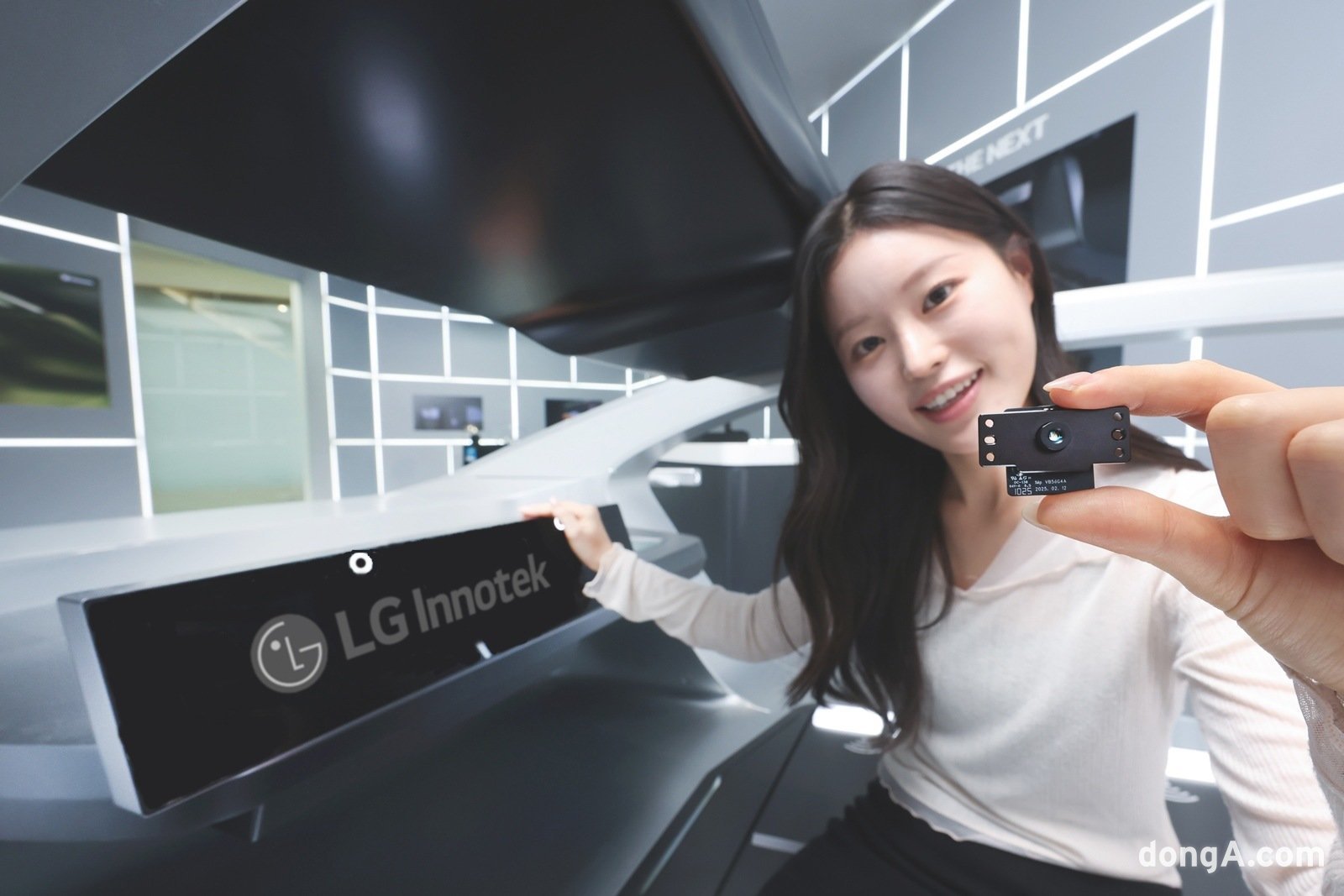
Next-generation under-display camera module unveiled for the first time by LG Innotek at CES 2026. Source: LG Innotek
The “on-device AI boom” driving evolution in optical solutionsThe Optical Solution Business Division led overall performance with first-quarter revenue of KRW 4.6106 trillion. This represents an 11.4% increase year-on-year, sustaining a distinctive growth trajectory even as the smartphone replacement cycle lengthens.
The most decisive factor is the proliferation of on-device AI smartphones. The latest devices equipped with generative AI functions require high-spec cameras for clearer video capture and more sophisticated object recognition. LG Innotek has secured the high value-added market by stably supplying high-magnification optical continuous zoom modules (folded zoom) to a strategic North American customer.
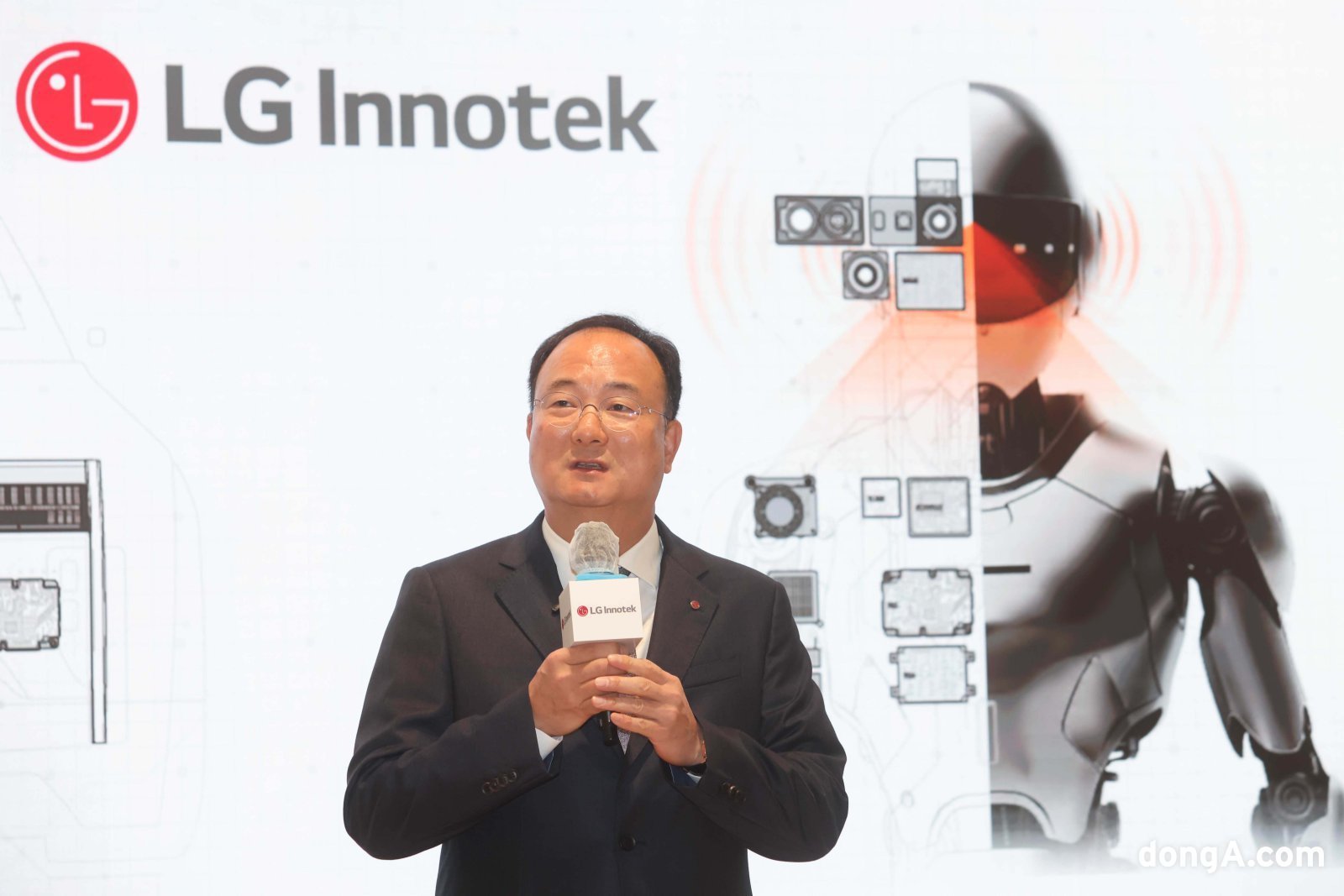
LG Innotek CEO Moon Hyuk-soo answers questions from reporters. Source: LG Innotek
In particular, folded zoom technology is a core technology that arranges lenses horizontally to reduce thickness while achieving high magnification zoom, and is renowned for its extreme difficulty in yield management. Leveraging years of accumulated know-how in ultra-precise manufacturing processes, LG Innotek has achieved overwhelmingly high yields compared with its competitors, thereby maximizing profitability. Camera modules are now evolving from simple photography tools into visual sensors that support AI computation, and LG Innotek stands at the center of this transition.
Semiconductor substrates taking off as a second optical solution
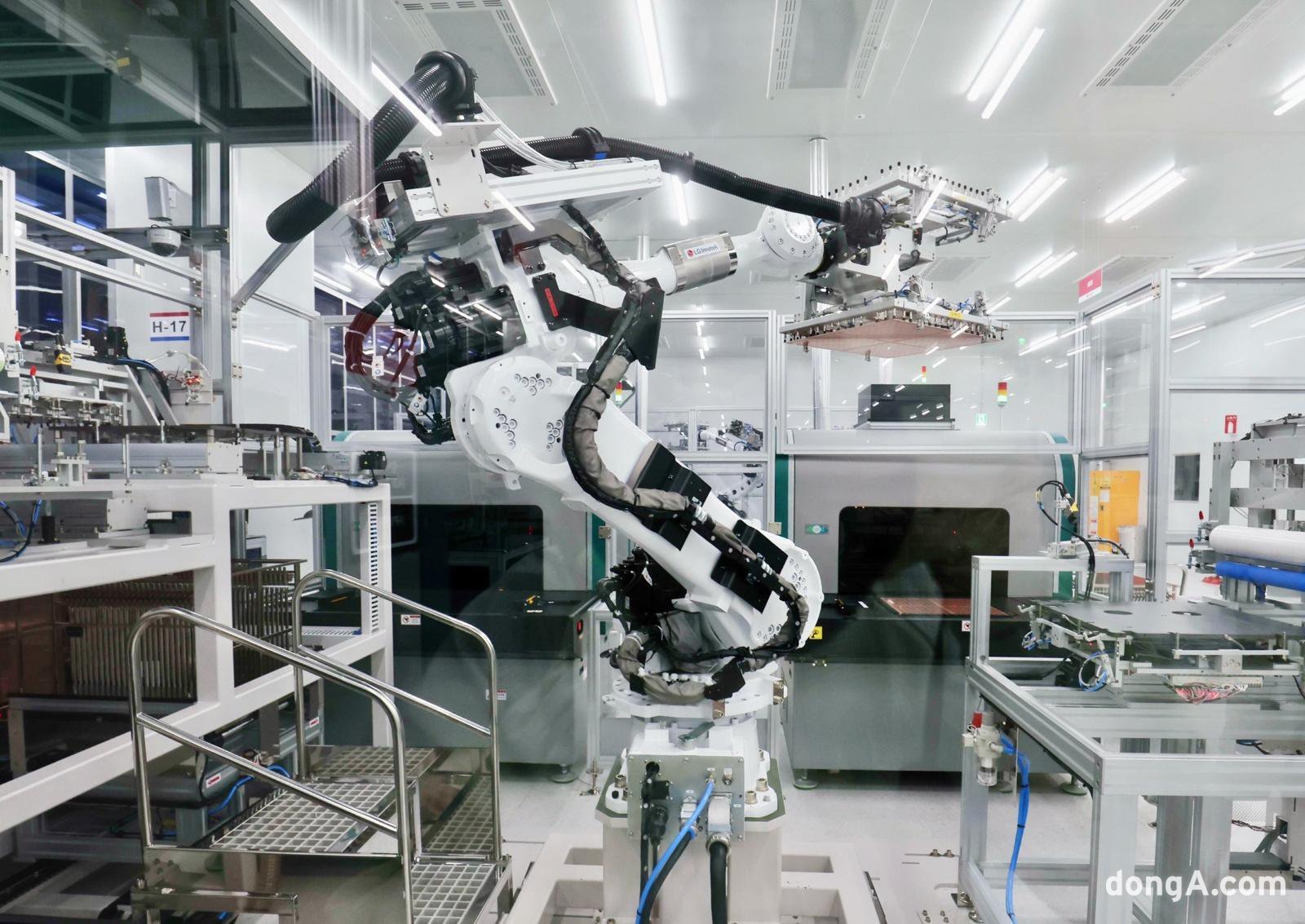
At LG Innotek’s “Dream Factory” in Gumi, North Gyeongsang Province, a robot uses AI vision inspection to determine the quality of flip chip ball grid array (FC-BGA) products. Source: LG Innotek
The most encouraging aspect of this earnings release is the strong performance of the Package Solution Business Division. First-quarter revenue reached KRW 437.1 billion, up 16% from a year earlier. This result shows that LG Innotek’s commitment to diversifying its revenue structure, which had been heavily concentrated in camera modules, is bearing fruit.
At the center is the flip chip ball grid array (FC-BGA). As demand for semiconductors used in AI servers, data centers, and autonomous vehicles soars, the value of FC-BGA, a high-performance substrate, is skyrocketing. By ramping up operations at its new Gumi plant, LG Innotek has significantly expanded production capacity and successfully secured global Big Tech companies as new customers.
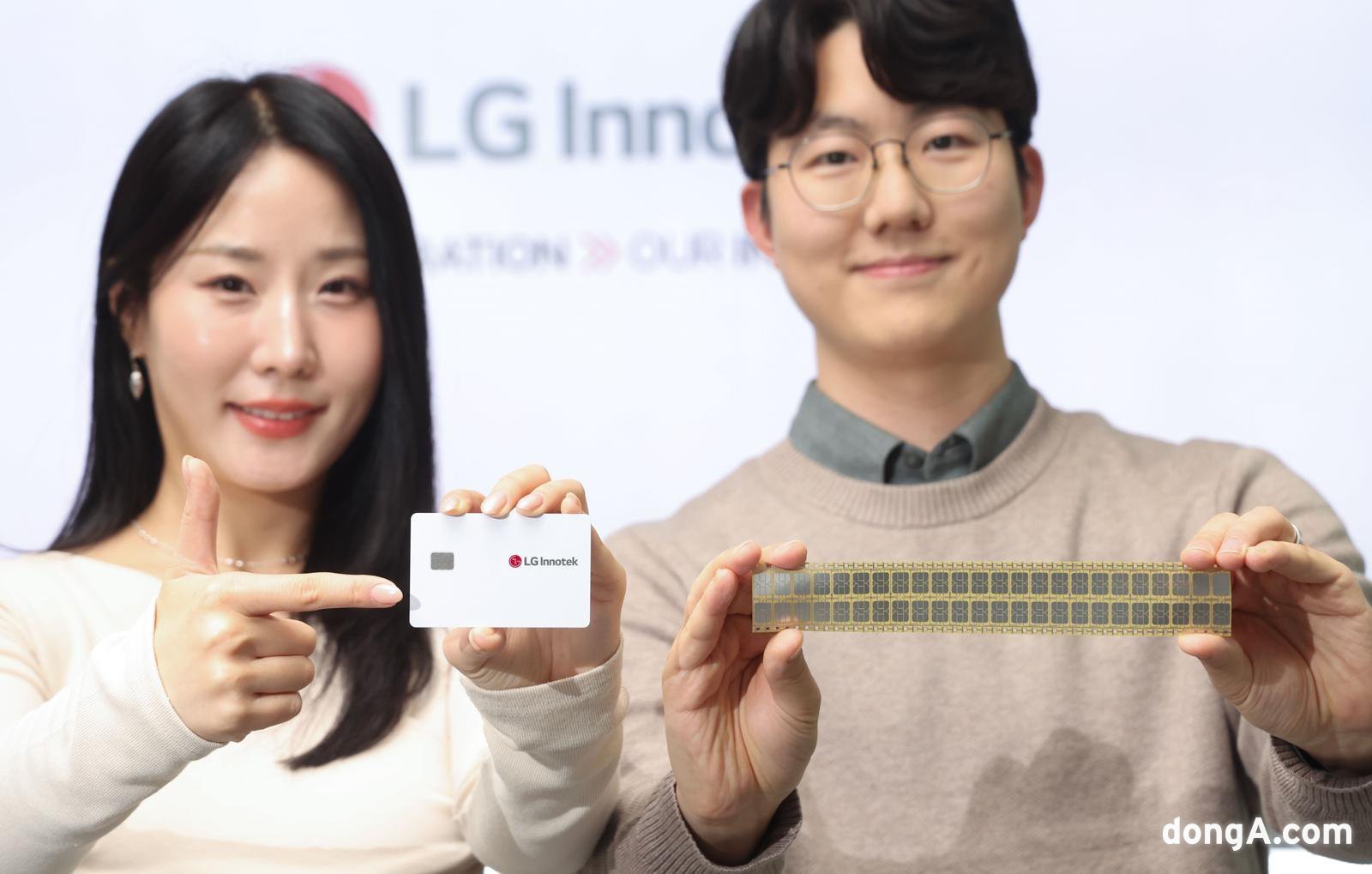
LG Innotek has developed a “next-generation smart IC substrate” for smart cards that halves carbon emissions from IC (integrated circuit) substrates. Source: LG Innotek
At the most recent shareholders’ meeting, LG Innotek CEO Moon Hyuk-soo presented a roadmap to more than double the company’s semiconductor substrate production capacity from current levels. This is not merely quantitative expansion. Based on its technological edge in ultra-fine substrate markets such as RF-SiP (radio frequency system-in-package), the company aims to establish itself as an indispensable partner in the high-performance AI chip market. CFO (Executive Director) Kyung Eun-kook likewise expressed strong confidence, stating that the contribution of the Package Solution business to operating profit will be elevated to the level of a core business division within five years.
The third pillar opening the future: infinite expansion of mobility solutions
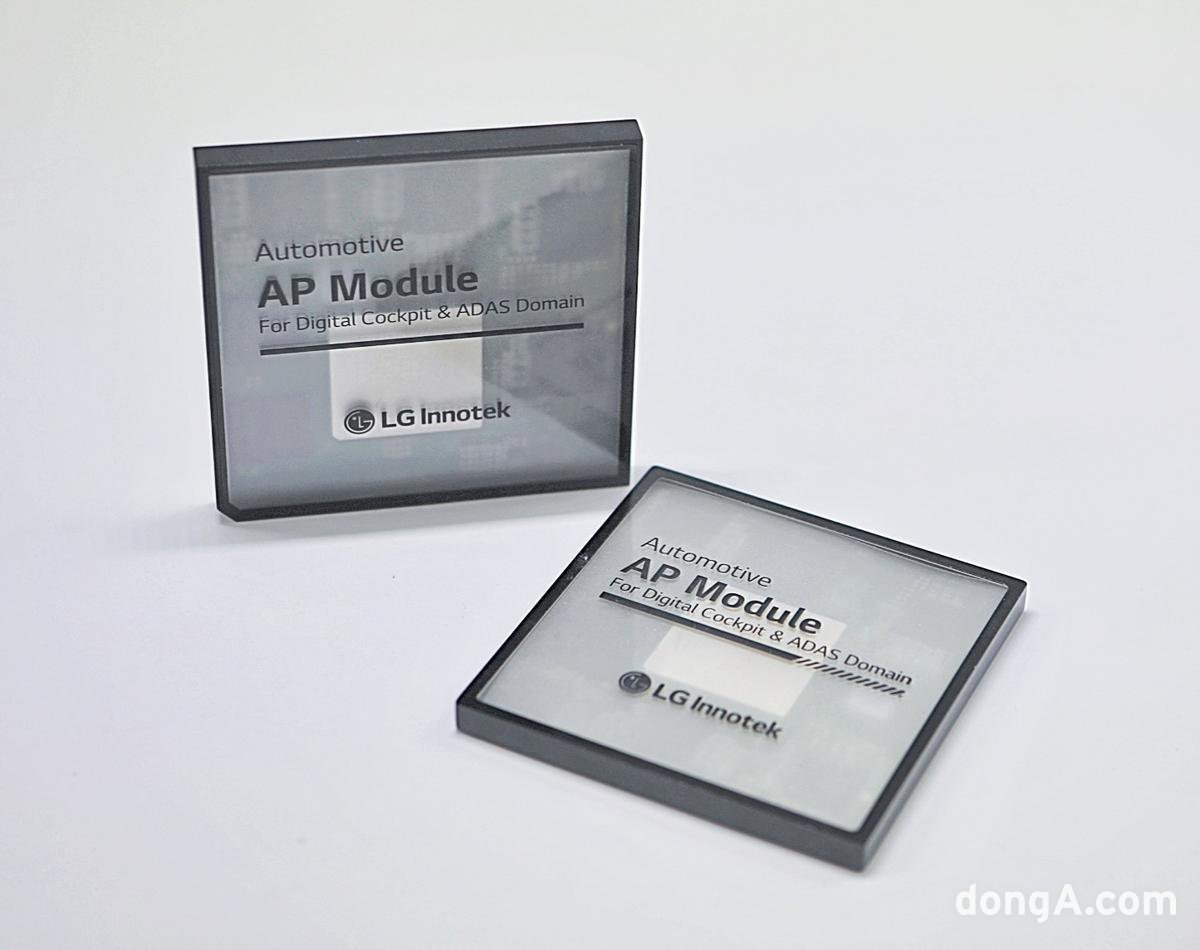
LG Innotek in-vehicle application processor (AP) module. Source: LG Innotek
Following its two powerful engines—cameras and substrates—LG Innotek is nurturing mobility (vehicle components) as a future growth driver. In the first quarter, revenue from automotive components reached KRW 487.1 billion, growing more than 4% year-on-year and maintaining a steady upward trajectory.
The composite sensing module unveiled at CES 2026 earlier this year is being hailed as a game changer in the autonomous driving market. Integrating a vision camera, LiDAR, and radar into a single module, this product provides precise visual data to the “brain” of an autonomous vehicle. By minimizing data interference between sensors while dramatically reducing module size, it is attracting strong interest from automakers.
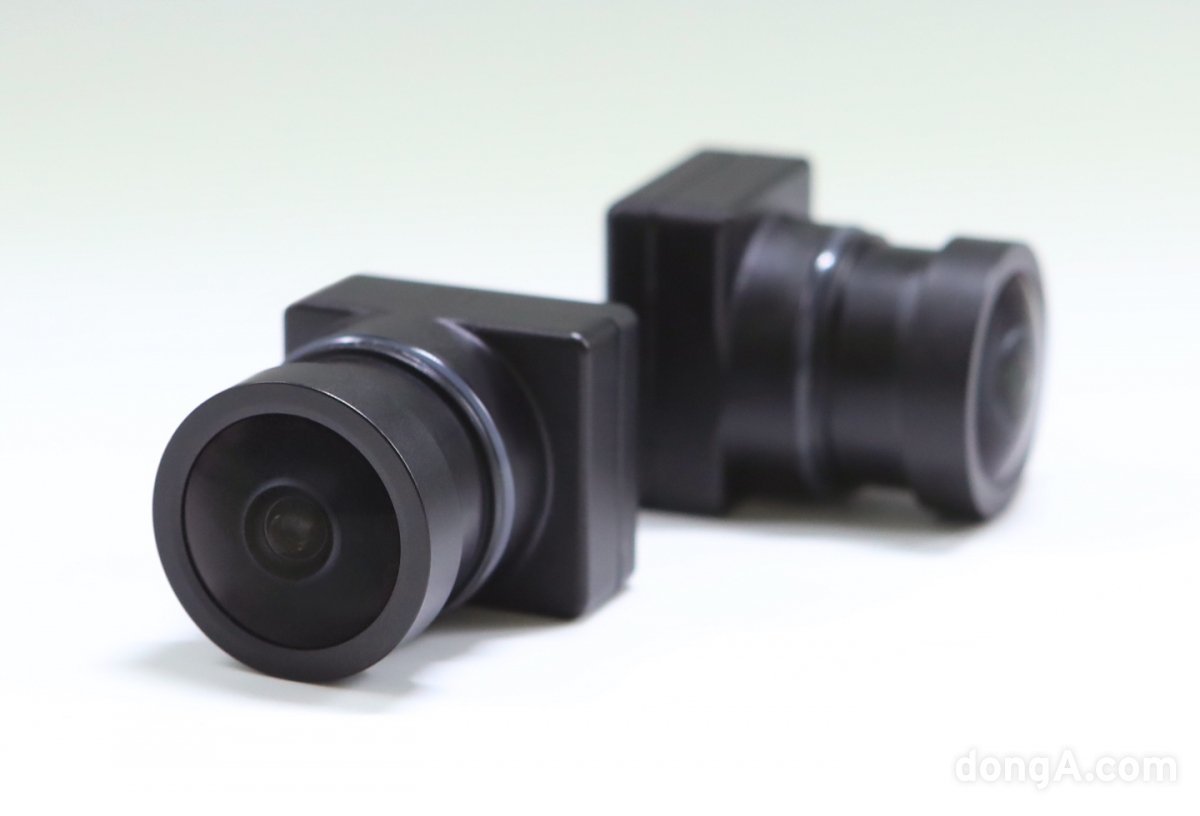
LG Innotek high-performance heating camera module. Source: LG Innotek
LG Innotek is targeting the high-end automotive electronics market with specialized technologies that address customers’ pain points, such as heating cameras that rapidly remove frost from lenses even in severe cold and cleaning cameras that automatically wipe away foreign substances. As the era of Physical AI spanning robots and autonomous vehicles arrives, LG Innotek’s sensing technologies are expected to shine even more.
‘A sustainable growth model built on technological differentiation’
LG Innotek’s recent performance signifies more than numerical growth; it reflects a successful structural transformation. The company has reduced its reliance on specific customers and aligned itself with the major trends of AI and mobility.
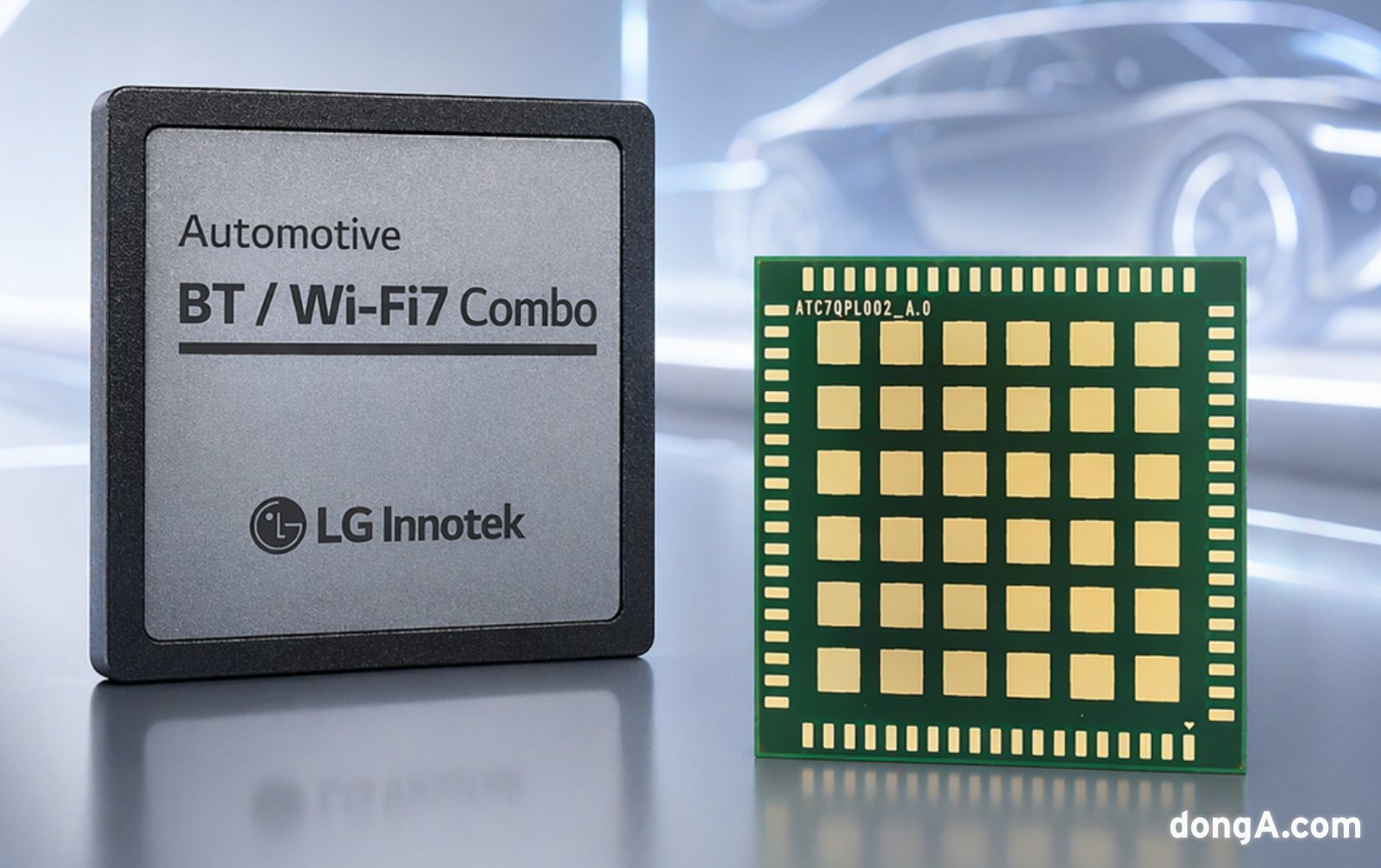
LG Innotek Wi-Fi 7 communication module for vehicles. Source: LG Innotek
Analysts are increasingly optimistic about LG Innotek’s outlook. With the launch of new smartphones in the second half and the expansion of AI infrastructure, demand for semiconductor substrates is expected to peak. In addition, as the order backlog in the automotive components division is rising sharply, the prevailing view is that this segment will soon grow into a core business division generating annual revenue in the trillion-KRW range.
Thorough R&D investment, preemptive capacity expansion, and customized technologies that anticipate customer needs—LG Innotek’s two-top strategy, betting on technology, is now proving highly effective in global markets. The company’s momentum toward becoming a comprehensive components solution provider, extending beyond cameras and semiconductors, is expected to accelerate further.
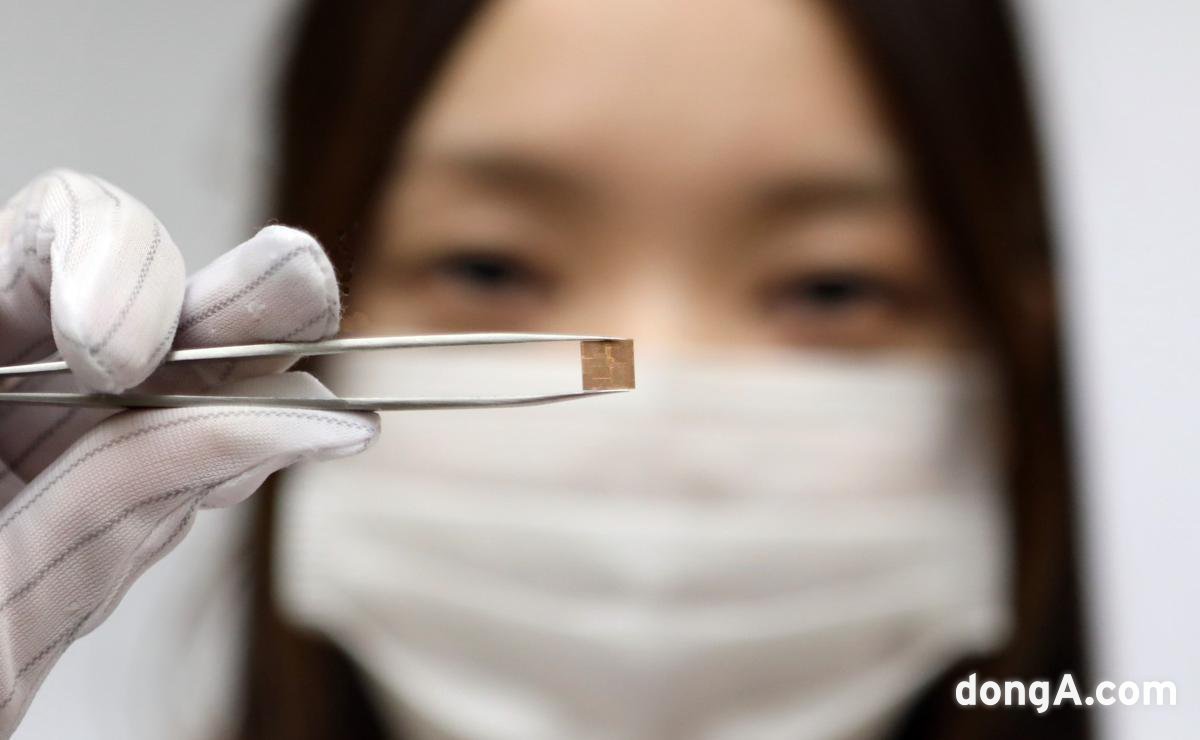
An LG Innotek employee showcases an RF-SiP substrate applying Cu-Post technology. Source: LG Innotek
LG Innotek ‘technological capabilities’ explained in Q&A format
The key point of this article is that LG Innotek recorded an earnings surprise with revenue of KRW 5.5348 trillion and operating profit of KRW 295.3 billion despite the off-season.
The reasons for this success are clear. Strong sales of high-performance smartphone camera modules buoyed by the AI boom, combined with growth in the advanced semiconductor substrate (FC-BGA) business essential for AI servers and data centers, created synergies. On top of this, the burgeoning autonomous driving sensor segment, a future growth engine, added strength, building a perfect three-pronged formation.
Q. What exactly is the on-device AI mentioned in the article?
A. Put simply, it refers to AI that runs directly on the device itself (such as a smartphone) without an external internet connection. Previously, data had to be sent to the servers of companies like Google or OpenAI for AI processing, but now translation and photo editing take place directly on the phone. In this process, AI must see and judge objects more accurately, making high-performance camera modules—the “eyes” of the device—indispensable.
Q. How is folded zoom different from ordinary zoom?
A. The principle is similar to a periscope. To build a telephoto camera, the lens needs to be long front-to-back, but that makes the phone too thick, causing the notorious camera bump. Folded zoom is a technology that refracts light so the lens can be extended sideways. As a result, the phone’s thickness is maintained while allowing clear capture of subjects several to dozens of times farther away.
Q. The term FC-BGA appears frequently. Why is it important?
A. Think of it as an ultra-precise highway connecting the semiconductor chip and the main board. No matter how powerful the semiconductor (the “brain”) is, if the data pathway is narrow or poorly built, it cannot perform to its full potential. FC-BGA is a cutting-edge substrate essential for AI servers, data centers, and semiconductors for autonomous vehicles, all of which require extremely fast data processing. It is a high value-added product whose demand is currently surging worldwide.
Q. What is the difference between LiDAR and radar used in autonomous vehicles?
A. Both technologies are sensors that detect obstacles around the vehicle. LiDAR uses lasers to generate a 3D map of the surroundings. It recognizes shapes very precisely, but is sensitive to weather conditions such as rain and fog. Radar uses radio waves to measure distance and speed. It works well over long distances regardless of weather but is less precise than LiDAR in discerning shapes. LG Innotek is targeting the market with composite sensing modules that combine the strengths of both technologies.
Q. What does Physical AI mean?
A. It refers not to AI that exists only on a screen, like ChatGPT, but to AI with a physical body that moves in the real world, such as robots and autonomous vehicles. For AI to operate in the real economy, it needs components such as sensors (eyes), communications (nervous system), and power control (muscles). The term is used here to indicate that LG Innotek specializes in manufacturing precisely these components.

ⓒ dongA.com. All rights reserved. Reproduction, redistribution, or use for AI training prohibited.
Popular News