Launch of joint development for next-generation secondary battery analysis technologies
Gradual expansion of research infrastructure and talent exchange systems
Establishment of an analysis platform for battery performance diagnostics
Strengthened cooperation on intellectual property and data based on research outcomes
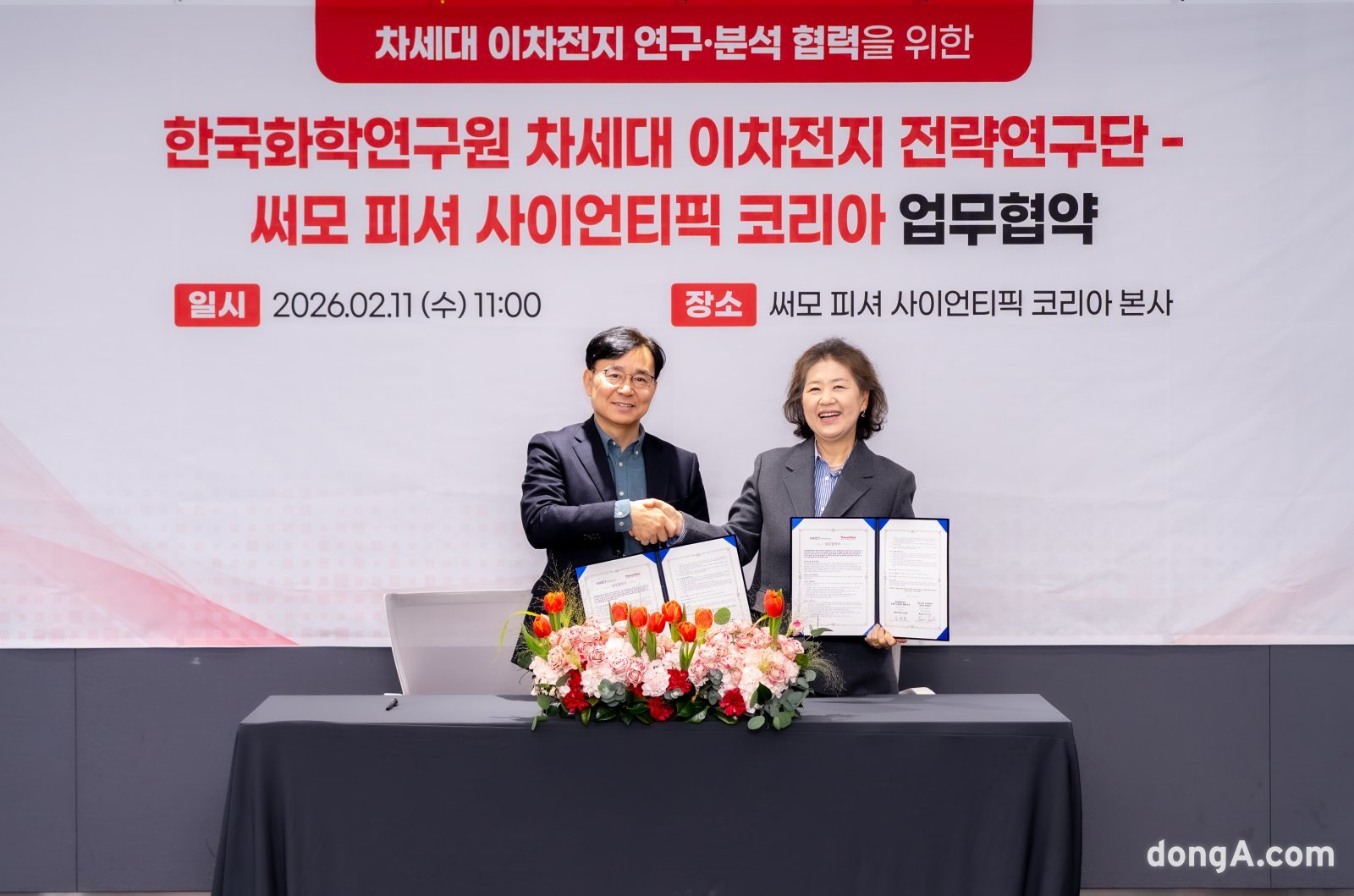
Thermo Fisher Scientific (hereafter Thermo Fisher) announced on the 13th that on the 11th it signed a memorandum of understanding (MOU) with the Next-Generation Secondary Battery Strategy Research Center of the Korea Research Institute of Chemical Technology (KRICT) to cooperate on next-generation secondary battery research and analytical technologies.
The purpose of the agreement is for the two organizations to gradually establish a cooperative framework in various areas, including ▲joint research ▲technology exchange ▲utilization of analytical infrastructure ▲training of specialists.
The KRICT Next-Generation Secondary Battery Strategy Research Center is a national research organization established to strengthen the competitiveness of Korea’s battery technologies, and is conducting research to realize core performance of next-generation batteries, such as energy density, charging speed, and safety. Through the “K-Battery Innovation Consortium (K-BIC),” which is based on collaboration among industry, academia, research institutes, and government, major research institutions and companies are carrying out joint development. Under this agreement, the research center plans to focus on enhancing battery performance and improving analytical precision (increasing the accuracy of analysis).
Leveraging its Battery Customer Experience Center, Thermo Fisher will connect KRICT’s research capabilities with the K-BIC network to promote joint analyses aimed at verifying and optimizing the performance of next-generation batteries. The two sides plan to establish an analytical platform capable of integrated diagnostics of battery life, energy efficiency, and material degradation mechanisms (performance deterioration of materials), thereby creating an environment that can be directly utilized in research settings.
Based on the data obtained in the research process, the parties also plan to review joint paper publication and intellectual property (IP) cooperation measures. Depending on research objectives, they will flexibly respond to diverse on-site research needs by introducing customized analytical frameworks that combine Thermo Fisher’s analytical solutions with K-BIC data.
The two institutions have already confirmed the potential for cooperation through a joint study that has been under way since 2024 to analyze lithium transport mechanisms in the cathode of lithium metal batteries. This agreement serves as an opportunity to further develop their cooperative relationship in a more structured manner, building on that experience.
Seok Su-jin, Country Leader of Thermo Fisher Scientific Korea, stated, “This agreement is a meaningful step toward jointly driving innovation in the secondary battery sector, a national strategic industry. We will continue to support domestic researchers so they can conduct precise, data-driven research.”
Kim Myung-hwan, Head of the KRICT Next-Generation Secondary Battery Strategy Research Center, said, “Collaboration with Thermo Fisher, which possesses global analytical technologies, is an important opportunity to enhance the completeness of our research. We will further solidify the cooperation system between industry and research centered on K-BIC.”
ⓒ dongA.com. All rights reserved. Reproduction, redistribution, or use for AI training prohibited.
Popular News