Korean Cartilage Regeneration and Restoration Surgery Recognized by Coach Guus Hiddink
Dr. Song Jun-seob, Director of Gangnam JS Hospital, Performed Hiddink’s Knee Operation in 2014
Over 3,000 Patients Have Undergone ‘Cartilage Regeneration Surgery’… “A Rising Alternative for Natural Joint Restoration Treatment”
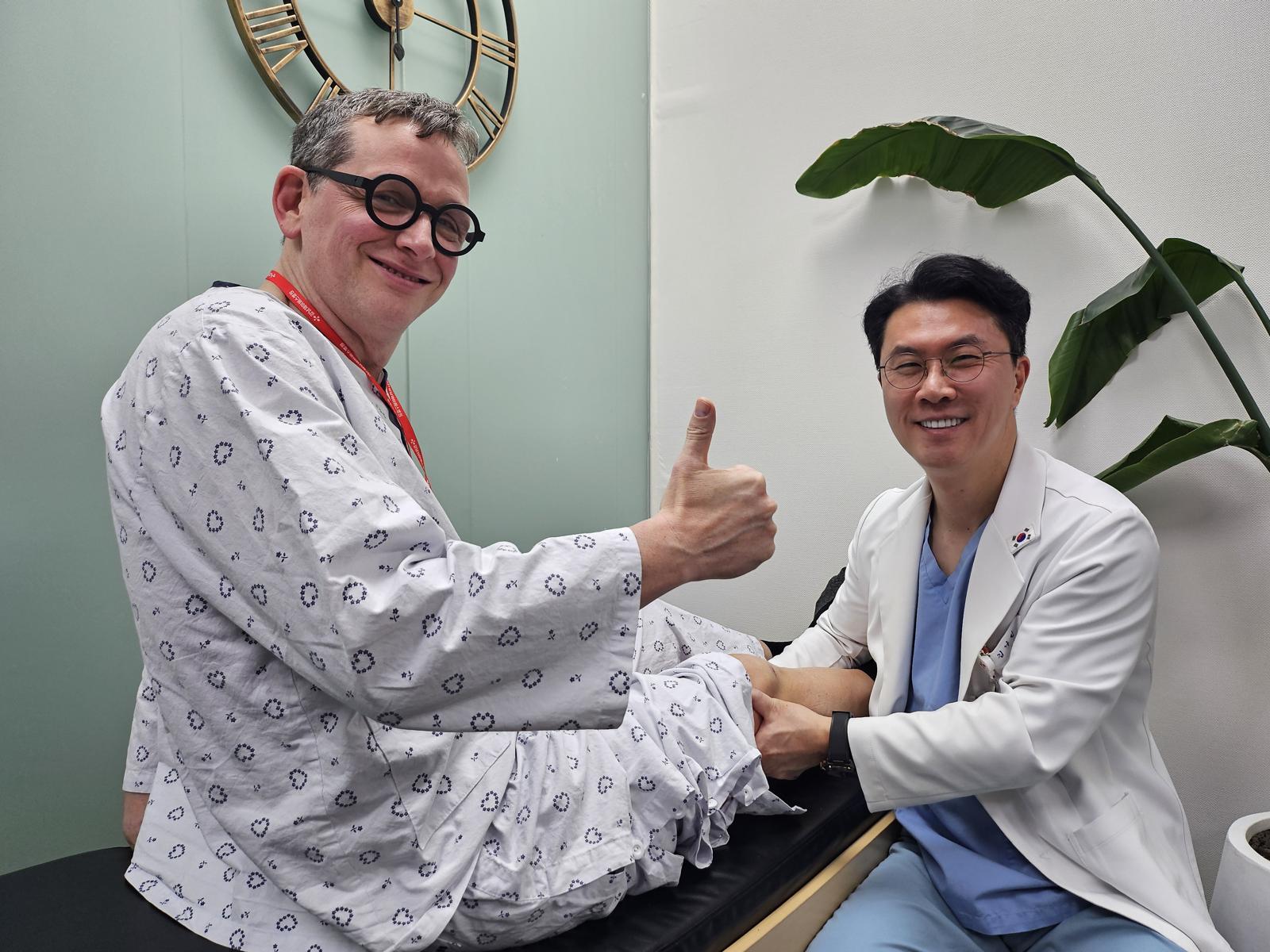
Anselm Muegele (54, left), who came from Germany to Gangnam JS Hospital for articular cartilage restoration surgery and bowleg correction surgery, and Hospital Director Kim Na-min. Provided by Gangnam JS Hospital
“As my knees improved, my life improved as well.”
This is what patients who have undergone cartilage regeneration and restoration surgery commonly say in the consultation room. Patients who had difficulty even walking due to degenerative arthritis are regaining their daily lives after treatment, running, enjoying sports, and recovering their quality of life.
Chief Director Song Joon-seop of Gangnam JS Hospital is a globally noted physician in the field of cartilage regeneration treatment. Over the past 12 years, he has performed thousands of articular cartilage restoration procedures, treating not only domestic patients but also those from overseas. In fact, his clinic receives a steady stream of patients from around the world, including the Middle East, China, Mongolia, Europe, and English-speaking countries. Recently, the number of patients visiting from medical powerhouses such as the United States, Germany, and Australia has been increasing.
Song said, “Now, as the surgical outcomes spread by word of mouth overseas, inquiries are coming in from many countries,” adding, “I feel the greatest sense of reward when I see patients overcome arthritis through surgery and live completely changed lives.”
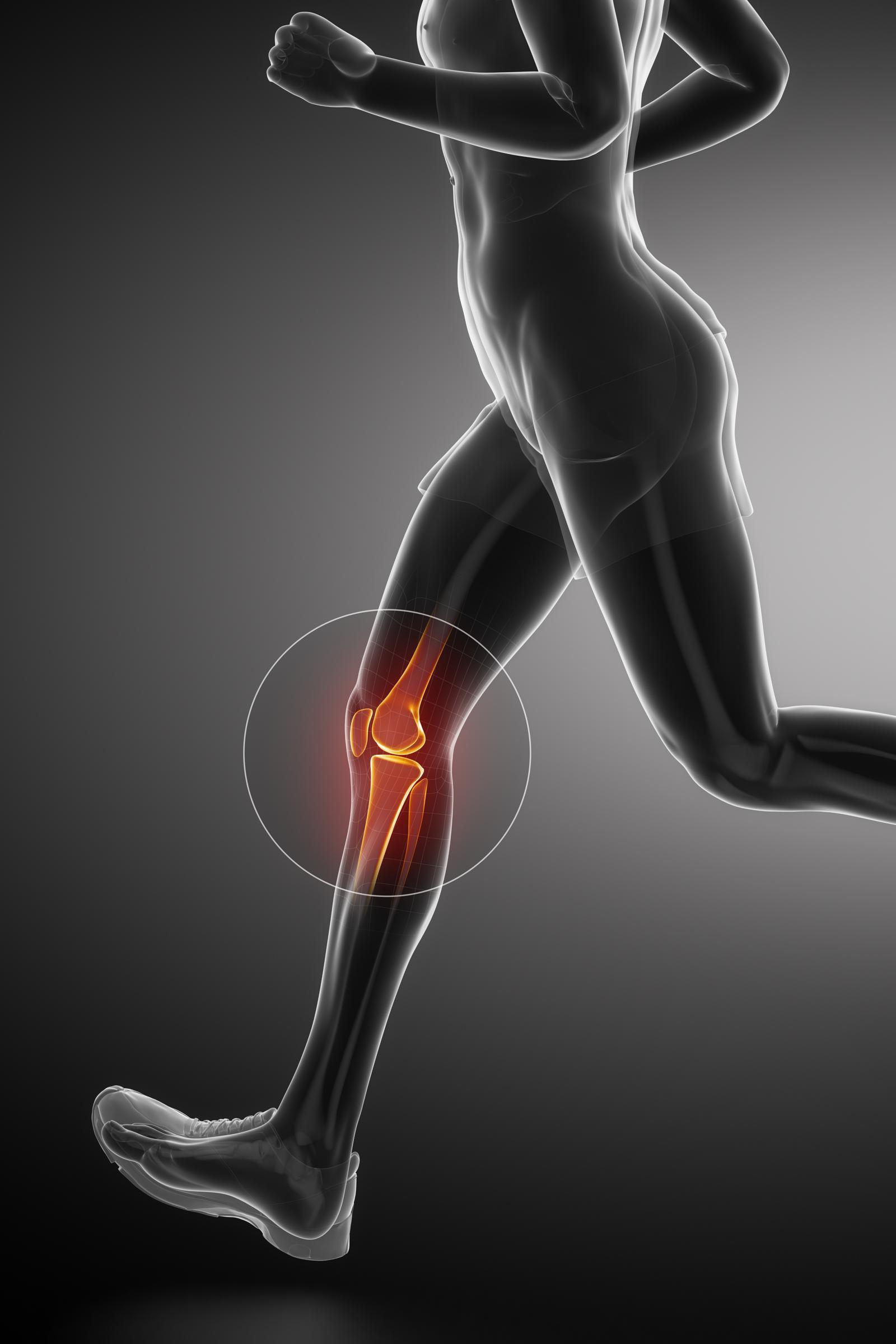
When cartilage is restored, physical activity naturally increases, leading to overall recovery of bodily functions. Getty Images Bank
Gangnam JS Hospital’s first patient, Coach Guus Hiddink
One of the turning points that brought this treatment method to public attention was former Korea national football team coach Guus Hiddink, who led the 2002 FIFA World Cup semifinal run. Hiddink is recorded as Gangnam JS Hospital’s first patient and the first case of undergoing articular cartilage restoration surgery there.
In 2013, Hiddink was suffering from severe knee arthritis and was on the verge of having to give up football and golf. His condition had deteriorated to the point that he was scheduled to undergo artificial joint replacement surgery in Europe just a week before a planned visit to Korea. Most medical staff recommended total knee replacement, but he chose Song as his last resort and visited him in person.
Recalling that time, Song said, “Coach Hiddink asked, ‘Is this surgery really safe?’” and added, “I explained that it was a method based on microfracture surgery using a stem cell therapy product approved by the Ministry of Food and Drug Safety.”
Using the stem cell therapy “Cartistem,” which received domestic approval from the Ministry of Food and Drug Safety in 2012, Song performed Hiddink’s knee surgery in January 2014. After systematic rehabilitation following the surgery, Hiddink recovered to the point where he could again enjoy golf and tennis. He later stated in interviews that “the best gift among the many I received in Korea was the knee surgery,” thereby publicizing the excellence of Korean medical technology to the world. In 2022, he underwent the same surgery on his other knee, and he currently remains healthy enough, in his early 80s, to enjoy playing tennis.
Beyond artificial joints, preserving the natural jointTo date, more than 3,000 patients have undergone Song’s cartilage regeneration and restoration surgery. Unlike conventional surgery, which involves shaving bone and replacing it with an artificial joint, this treatment regenerates the damaged cartilage itself to restore the patient’s original knee function. It preserves the joint structure as much as possible while offering the prospect of long-term benefits.
Song explained, “When cartilage is damaged, pain reduces activity levels, leading to muscle atrophy and impaired blood circulation,” adding, “Once the cartilage is restored, activity naturally increases and this leads to overall recovery of bodily functions.” In fact, a significant number of patients maintain stable joint function even more than 10 years after treatment.
About half of the patients treated by Song underwent bowleg (varus/valgus) correction surgery in combination with cartilage regeneration and restoration. This is because one of the main causes of degenerative arthritis is malalignment of the lower limbs, such as O-shaped (bowleg) or X-shaped legs. If the structural problem is not corrected, excessive load can again be placed on the regenerated cartilage.
“To reduce re-injury, it is necessary to correct the weight-bearing axis along with cartilage regeneration,” Song stressed. “True joint recovery can only be achieved when structural correction is performed together.”
He added, “In the past, once arthritis progressed, artificial joints were the only option, but now treatments that preserve the natural joint are becoming a realistic alternative,” and continued, “Restoring healthy joints leads to the restoration of life as a whole.”
The treatment paradigm for degenerative arthritis, once regarded as an incurable disease, is being rewritten with Korean medical technology at its core.
ⓒ dongA.com. All rights reserved. Reproduction, redistribution, or use for AI training prohibited.
Popular News