As voice-AI-powered smart glasses hit the market, interest surges in ‘hands-free’ AI assistants
OpenAI forms a voice-model enhancement team, while market leader Meta ramps up acquisitions
“Voice AI will play a major role in real-time translation and more”
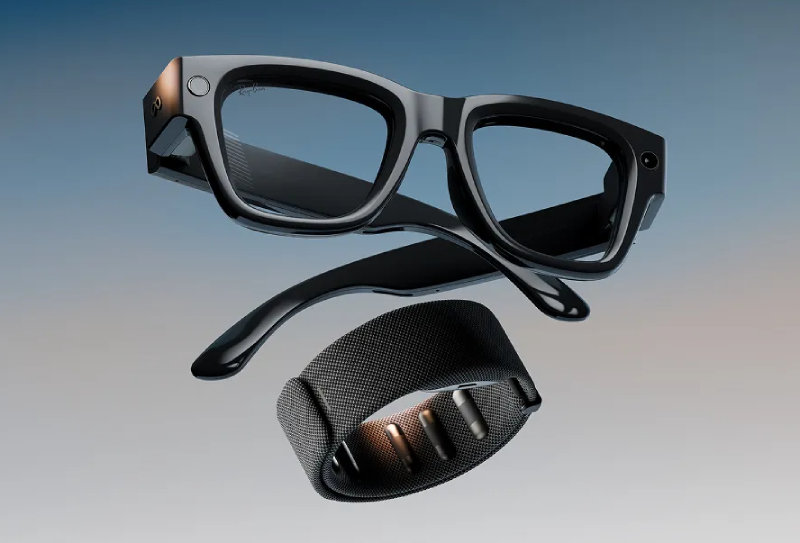
Meta’s smart glasses “Meta Ray-Ban Display,” unveiled in September last year. Provided by Meta
The new year is seeing global big tech companies expand their artificial intelligence (AI) competition from images to voice. As the market for smart glasses equipped with voice AI opens up, interest is growing in hands-free AI assistants that keep users’ hands free. Industry observers forecast that voice AI will bring changes to the existing lifestyle that relies on smartphones.
According to the information technology (IT) industry on the 4th, major global big tech firms such as Meta, Google, and OpenAI have recently accelerated voice AI development. U.S. IT outlet The Information reported that OpenAI has, over the past two months, integrated multiple engineering, product, and research teams to form a new team dedicated to improving its voice model. This team is to be led by Kundan Kumar, a voice AI expert whom OpenAI hired last year from Character.AI.
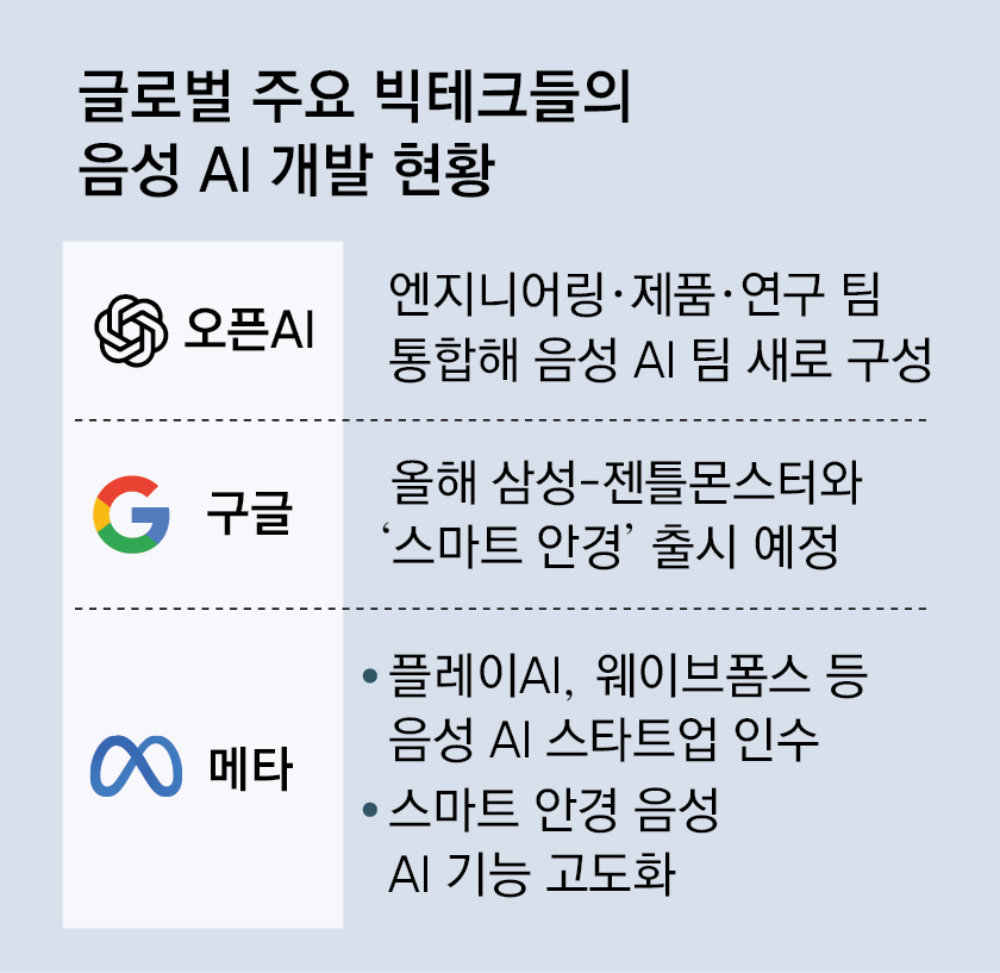
OpenAI’s move into voice AI development is believed to be related to its new device project that has been underway since last year. In May last year, the company acquired io, an AI device startup founded by Jony Ive, who previously led design development for major Apple products such as the iPhone, iPad, and Apple Watch, for USD 6.5 billion (about KRW 9,399.0 billion). The first jointly developed AI device is scheduled to be unveiled this year, but the company has not disclosed what form the device will take. Considering that OpenAI CEO Sam Altman stated at the time that he preferred a device that could be more easily integrated into everyday life rather than a laptop or smartphone, industry insiders see a high possibility that it will be a device like smart glasses that leverage voice AI.
Meta, which currently holds a lead in the smart glasses market, is also strengthening its voice AI capabilities. Meta unveiled its first AI smart glasses, the “Meta Ray-Ban Display,” in September last year. Earlier in July of the same year, the company acquired Play.ai, a startup developing AI that can generate human voices, and a month later it acquired another voice AI firm, Waveforms. Highly advanced voice AI is expected to be incorporated into the next generation of smart glasses that Meta develops.
Google, which significantly enhanced the performance of its AI service Gemini last year, plans to launch AI smart glasses equipped with Gemini this year in partnership with Samsung Electronics and Gentle Monster. To further advance its voice AI performance, Google also launched the “Audio Overview” feature in June last year, which converts search results into conversational voice summaries. When various documents or materials are input, the Audio Overview feature can convert them into podcast-style audio or provide spoken summaries of the content.
Industry observers predict that big tech firms’ voice AI development will, in the short term, lead to competition over new form factors (the physical format of mobile devices) such as smart glasses. Many also analyze that consumers’ AI usage patterns, which currently rely on visual interfaces, will shift toward audio-centered interactions. An official from the domestic AI industry said, “Because the main ways humans perceive information are through sight and hearing, voice AI has critical significance in AI development,” adding, “The accuracy of voice AI will also play a major role in enabling core functions of smart glasses, such as real-time translation.”
ⓒ dongA.com. All rights reserved. Reproduction, redistribution, or use for AI training prohibited.
Popular News