‘G-SeNTInEL’, the core technology behind ai-CANCERCH, is an analysis platform based on whole genome sequencing (WGS). Provided by GC Genome
GC Genome (CEO Ki Chang-seok), which holds the largest clinical genomic testing portfolio in Korea, is accelerating its expansion into global markets this year, leveraging its initial public offering (IPO).
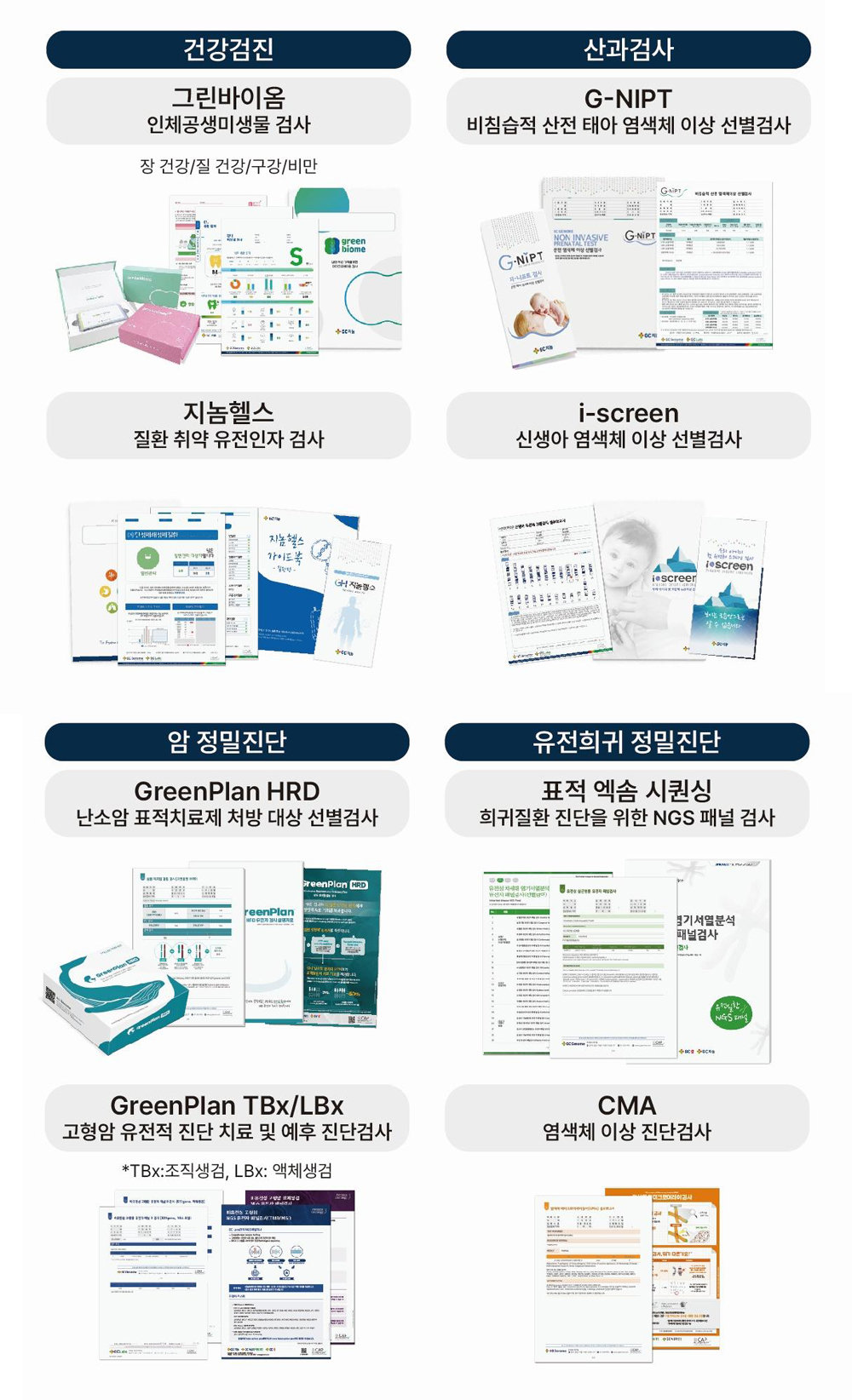
GC Genome offers a wide range of genomic tests from obstetric testing to cancer early detection and rare genetic diseases, and has secured a customer base of around 900 institutions, including tertiary hospitals, domestic advanced medical institutions, and regional hospitals and clinics. Unlike many genomic analysis companies whose revenue structures are centered on research services, GC Genome has focused on clinical testing services used in actual medical practice, driving growth based on “clinical performance.”
GC Genome’s testing system, in which five board-certified laboratory medicine specialists are directly involved in development and operation, has recorded an average annual growth rate of 11.9% over the past four years. In the third quarter of this year, the company achieved its highest quarterly revenue since its founding, continuing stable top-line growth. In a recent report, Samsung Securities described GC Genome as “a company that has secured mid- to long-term growth momentum based on a stable earnings structure.”
The core product currently underpinning GC Genome’s results is the artificial intelligence (AI)-based noninvasive prenatal test (NIPT) “G-NIPT.” This test analyzes fetal cell-free DNA (cfDNA) in maternal blood to assess the likelihood of chromosomal abnormalities. By applying an AI algorithm and its proprietary core technology “G-PrEMIA,” the company has reduced the false positive rate (misidentifying normal as positive) by more than 90% compared with existing technologies. On the back of such technological competitiveness, adoption rates at university hospitals are steadily increasing.
The AI-based multi-cancer early screening test “ai-CANCERCH” is cited as GC Genome’s mid- to long-term growth driver. Its underlying technology, “G-SeNTInEL,” is an analysis platform based on whole genome sequencing (WGS) and is drawing attention for its theoretical capability to detect abnormal signals for all cancer types. To date, the company has verified detection feasibility in more than six major cancers, including lung, liver, colorectal, and pancreaticobiliary cancers, and has achieved a sensitivity of 82.2% based on one of the largest domestic clinical sample datasets of about 7,000 cases. The company plans to expand the number of target cancer types to 10 next year and to secure additional clinical sample data. In practice, as adoption of ai-CANCERCH expands mainly at tertiary hospitals and health screening centers, there are clear signs this year of full-scale multi-center rollout across Korea. Samsung Securities analyzed that “ai-CANCERCH will become a key momentum driver for future global business beyond the domestic market.”
GC Genome plans to concentrate investment of the IPO proceeds on advancing its testing technologies and diversifying its global markets. It has designated the United States, Vietnam, and Japan as three strategic hubs and intends to expand both its technologies and business models there.
The United States is regarded as the top-priority market. Following technology transfer to U.S. company Zenith Healthcare in 2023, GC Genome this November integrated local research, manufacturing, and sales through the merger of Zenith and GC LabTech. On this basis, the company plans to seek U.S. Food and Drug Administration (FDA) Breakthrough Devices Designation in 2026 for a single-cancer (pancreatic cancer) indication of ai-CANCERCH.
In Vietnam, GC (Green Cross Holdings) Group and local Fenika Group have jointly established a premium health screening center, where noninvasive prenatal testing and ai-CANCERCH will be introduced in phases during 2026. The center reportedly has the capacity to provide screenings to more than 100,000 people annually and is expected to contribute to the expansion of overseas revenue. In the Japanese market, the company is pursuing entry into the regenerative medicine clinic and premium health screening segments in cooperation with GC Group affiliate GC Rimpotec. Japan is considered a meaningful market in terms of profitability, as demand for high-priced tests is strong and early entry can lead to a favorable earnings structure.
In parallel, GC Genome is expanding its global footprint by building a network of 51 partners across 22 countries in Asia, Europe, and the Middle East and Africa, including new regions such as Thailand and the Middle East (Qatar).
GC Genome’s strategy is to reinforce its future growth engines with AI-based cancer early detection technologies on top of its stable revenue base from obstetric testing, thereby enhancing its competitiveness in global markets. As the pace of overseas commercialization accelerates following the IPO, observers say the company is at an inflection point, transitioning from a domestic, clinically focused genomic company into a global precision medicine platform player.
ⓒ dongA.com. All rights reserved. Reproduction, redistribution, or use for AI training prohibited.
Popular News