[SeoulTech x IT Donga Joint Planning] Seoul National University of Science and Technology (hereinafter referred to as SeoulTech) operates various support programs to assist the growth of startups, including preliminary and early-stage startup packages, maker spaces, and global collaborations. Furthermore, in collaboration with IT Donga, global news is provided to aid the overseas promotion and advancement of startups. Promising deep tech startups are introduced both domestically and internationally.
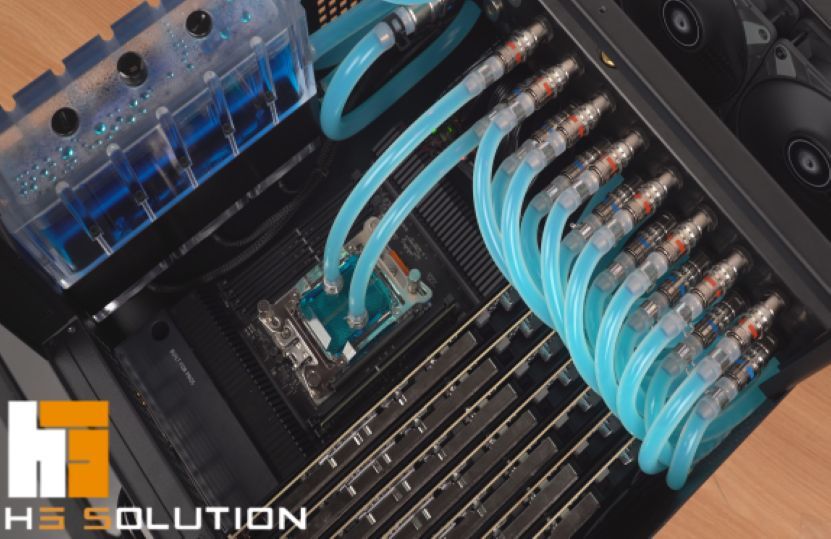
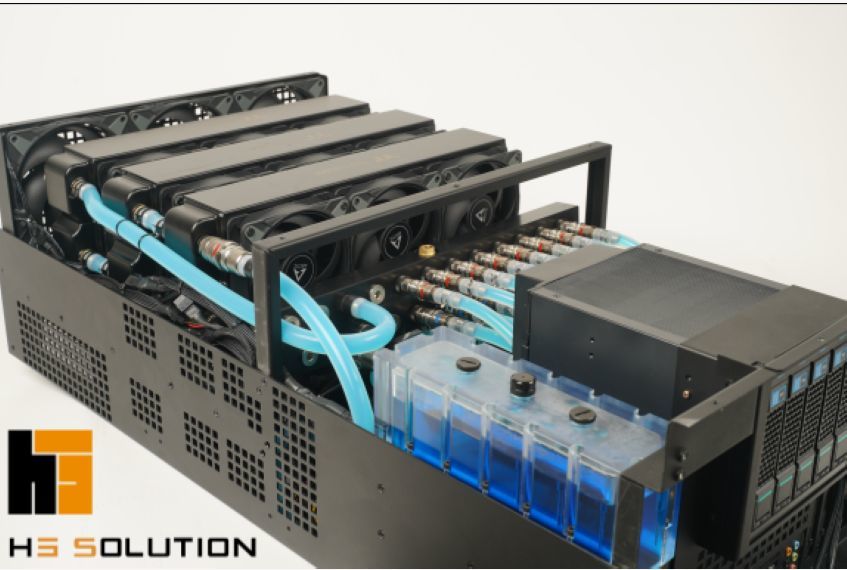
Water cooling systems reduce data center power consumption by up to 40% compared to air cooling / Source=H3 Solution
The proliferation of generative AI has led to a surge in demand for high-performance computing. Large-scale graphics processing units (GPUs) are essential to operate AI models, and the market for AI-dedicated data centers and servers is rapidly expanding.
AI servers are high-performance computers specialized for AI computations. AI data centers are large-scale facilities built by aggregating these servers for AI training and inference. AI data centers are equipped with more robust infrastructure than general data centers to meet the massive power, heat, and high-speed network requirements of the servers. Global big tech companies such as Google, Microsoft, and Amazon, as well as domestic conglomerates, are moving to establish large-scale AI data centers and GPU servers.
Rapid Growth of the AI Server Market, What is the Solution to Heat?The issue is the enormous heat emitted by high-performance GPUs. As high-density environments stacking dozens or hundreds of GPUs increase, server heat has also grown exponentially. Server heat can pose a serious threat to system stability, performance, and lifespan, making it crucial to have a cooling system to maintain servers at an appropriate temperature. The traditional method of cooling servers was 'air cooling.' This method, which uses fans to dissipate heat with air, is widely used due to its simple structure and easy installation, but it has clear limitations in high-density GPU environments. The low thermal conductivity of air makes it difficult to quickly dissipate high heat, and the power consumption required to run the fans is significant.
Amidst this, water-based 'liquid cooling' systems have emerged as a next-generation solution. This method, which directly absorbs heat using water (coolant), utilizes liquid that transfers heat faster than air, reducing data center power consumption by up to 40% compared to air cooling. The cooling efficiency allows fans to run more slowly, resulting in lower noise levels compared to air-cooled servers. Recently, 'immersion cooling,' which cools the entire server by submerging it in an insulating liquid, has also emerged.
In fact, liquid cooling systems are now becoming a necessity rather than an option. According to global market research firm Research Nester, the global data center liquid cooling market is expected to grow from USD 4.58 billion (approximately KRW 6.7 trillion) in 2025 to approximately USD 44.39 billion (approximately KRW 65.3 trillion) by 2035, with an average annual growth rate of 25.5%. NVIDIA's latest GPU, Blackwell, is expected to require only liquid cooling, and KT Cloud opened the Gasan AI data center with a liquid cooling system on November 6. Both domestic and international companies are concretizing their next-generation liquid cooling technology roadmaps, positioning it as a core competitive edge.
Competing with Domestic Technology… H3 Solution's Liquid Cooling Server 'Nautilus'
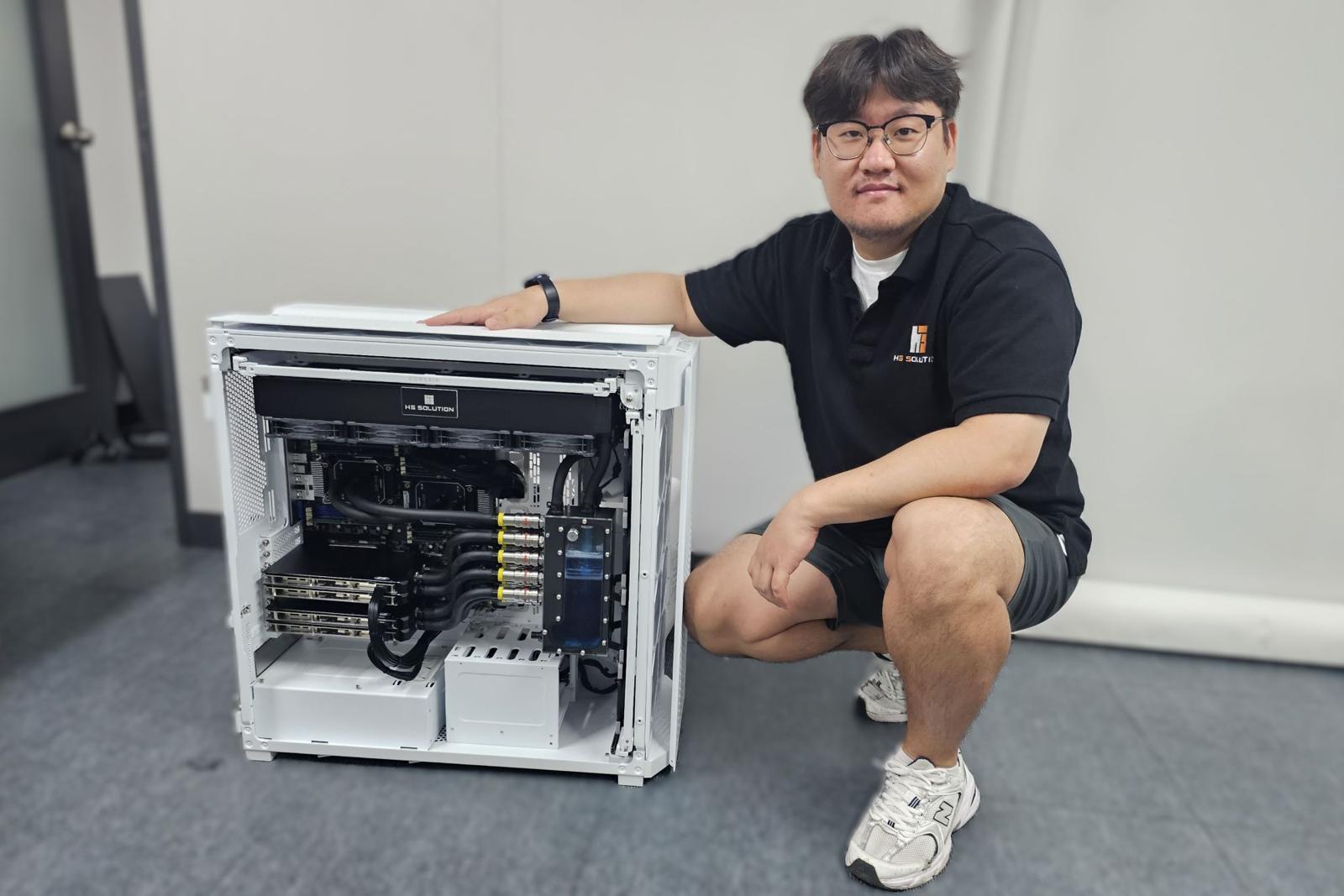
Choi Hyung-seok, CEO of H3 Solution / Source=IT Donga
The domestic liquid cooling server specialist startup 'H3 Solution' has launched its self-developed liquid cooling server brand 'Nautilus' lineup to target the market in response to these rapidly changing market trends. Nautilus consists of seven models optimized for different environments and purposes, covering a wide range of demands from small-scale research environments to large data centers and extreme computing environments.
Key products include ▲ '6U' suitable for small offices where quietness and stability are important ▲ '4U' for data centers focused on maximizing performance ▲ tower-type high-performance servers for environments where rack installation is difficult 'T' ▲ 'HFT' suitable for ultra-second trading environments such as securities firms ▲ personal research tower-type 'M-1' of general desktop size ▲ high-end workstations supporting multi-GPU and high-performance computing 'M-2'.
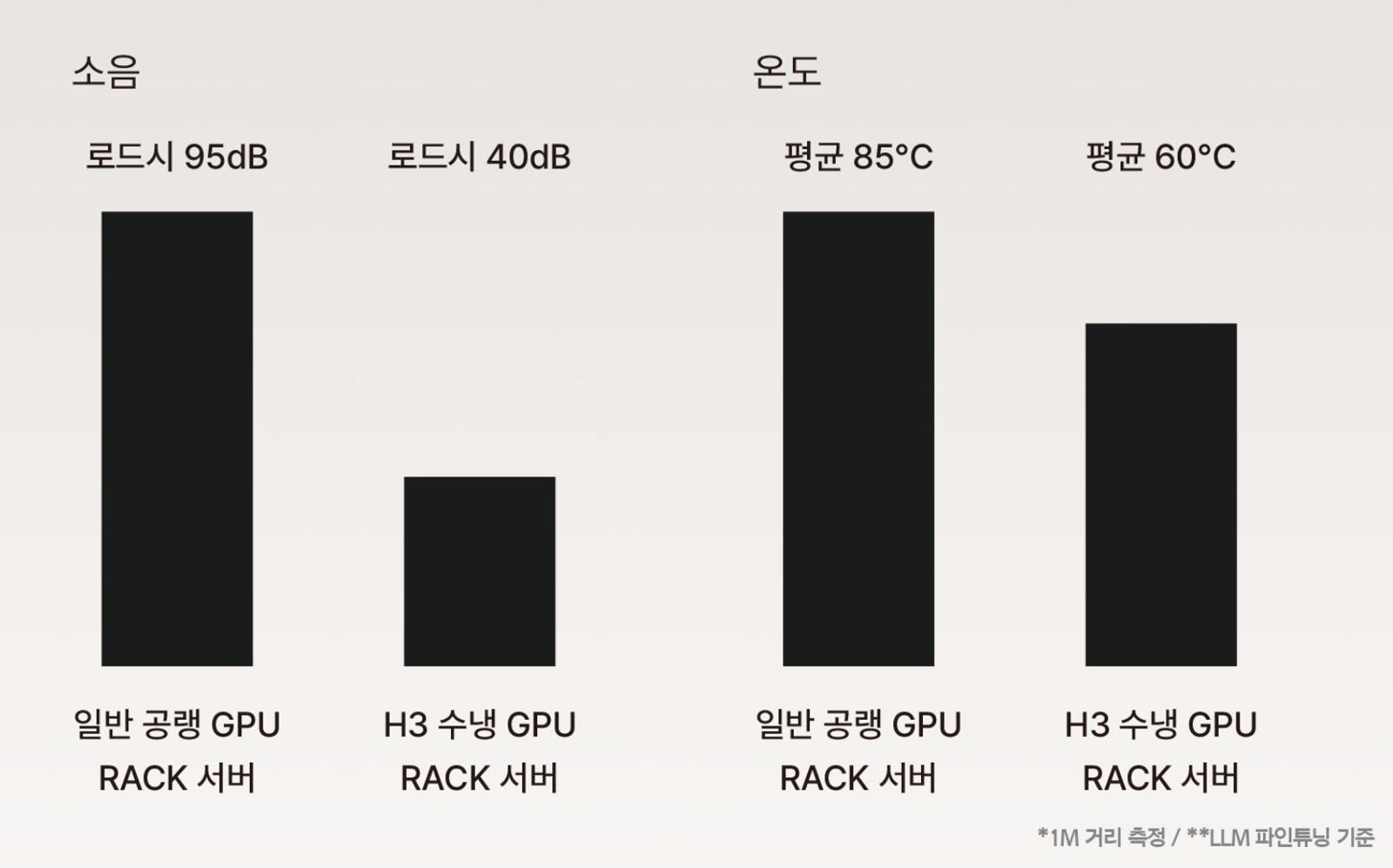
Choi Hyung-seok, CEO of H3 Solution, emphasized the cooling efficiency of Nautilus. He stated, "While air-cooled servers maintain an average GPU temperature of 85 degrees, H3 Solution's liquid-cooled servers maintain an average of 60 degrees." Power consumption, including air conditioning units, is 373.7W for air cooling compared to 339.6W for liquid cooling. The noise level is also about 30dB lower, with liquid cooling at 45-50dB compared to 80dB for air cooling under load, making it suitable for various work environments.
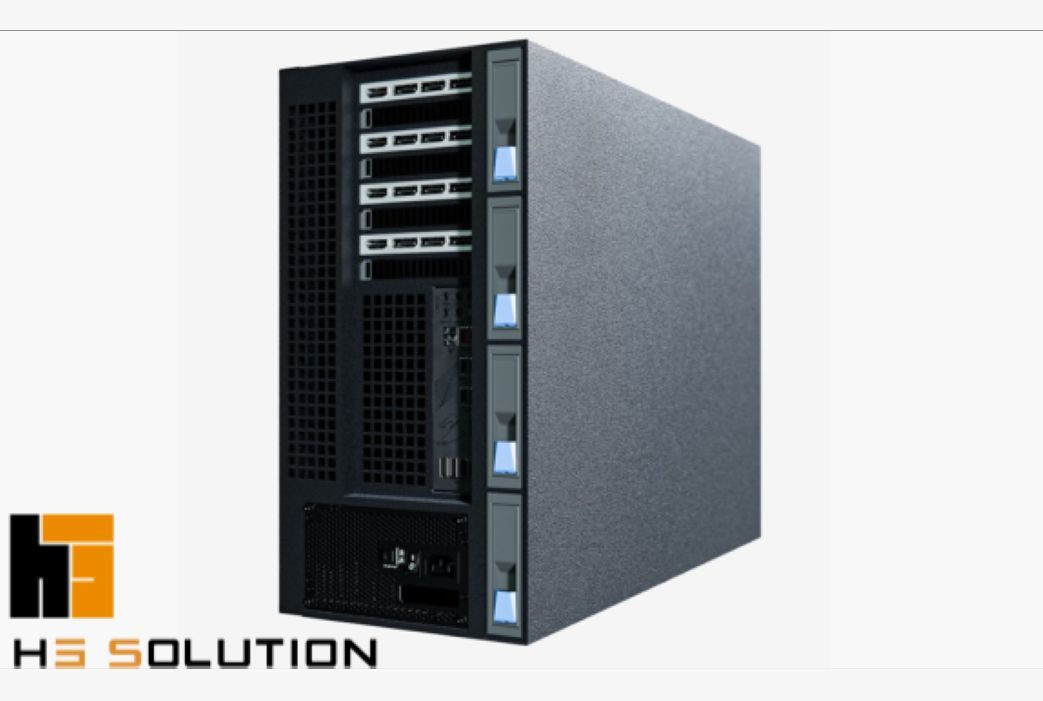
H3 Solution's 5U model / Source=H3 Solution
Particularly noteworthy are the '5U' and '3U' models under development since August this year. The Nautilus 5U is a hybrid high-performance server that can be operated without a dedicated server room and can be mounted on a standard 19-inch rack. It is suitable for university laboratories and early-stage startup customers who require flexible space utilization. It maintains a low noise level of 54dB under load, allowing operation in a quiet environment without soundproofing facilities. CEO Choi stated, "It can be used without a separate rack mount, offering high flexibility, and will be widely utilized from environments with space constraints such as laboratories or development rooms to large-scale centers."
The Nautilus 3U is an external cooling distribution unit (CDU) that easily converts existing air-cooled servers to liquid cooling. The CDU is a key device that reprocesses hot coolant to cool it again for supply. To address the high initial setup costs of liquid cooling systems, the 3U offers an efficient solution by allowing conversion to a liquid cooling system without completely replacing existing facilities.
Core Competitiveness through Internalization… Direct Development of ComponentsThe biggest differentiator of H3 Solution is the 'internalization (self-production)' of core components. While other companies combine generic components from external vendors, H3 Solution designs and manufactures about 50% of the core components of the liquid cooling system. These include the chassis (server exterior), cold plate (metal plate that directly absorbs heat), manifold (pathway that distributes coolant), water block (key component that transfers heat from components to coolant), and water tank.
H3 Solution's 5U model / Source=H3 Solution
CEO Choi explained, "The vertical integration through the self-design of key components that determine cooling performance has enhanced cooling efficiency and stability, and is designed to maintain consistent performance even in high-density GPU environments. Additionally, customers can shorten the product acquisition period from the existing 8 weeks to 2-3 weeks."
Moreover, Nautilus incorporates various technological advancements from H3 Solution. A parallel cooling structure is applied to cool all components simultaneously, improving efficiency. To prevent pump failures, a major cause of liquid cooling system malfunctions, a self-designed pump top is applied, ensuring the system operates normally even if some pumps fail, and making maintenance easy. The system also supports operational convenience by allowing real-time monitoring of spare coolant levels from the outside.
H3 Solution plans to add a real-time monitoring platform 'NautiVision' to support the stable operation of the cooling system. NautiVision monitors the server's temperature, flow rate, and coolant status in real-time and provides immediate alerts in case of issues. By offering an integrated solution that manages the entire lifecycle of the cooling system beyond simple server sales, it guarantees high operational efficiency.
Completion of Liquid Cooling Server Lineup… "Aiming to Become a Global Server Powerhouse"
H3 Solution's 6U model / Source=H3 Solution
Established in 2024, H3 Solution is rapidly advancing product development. While focusing on the development of new products such as the upcoming 5U and 3U, the company is also working on new water block designs for GPUs and CPUs, further internalization of key components, and continuous technological advancement. Additionally, it is targeting potential customers across various industries, including AI, 3D content, bio, robotics, and automotive, while promoting technology verification and partnership expansion. It has signed a technology agreement (MOU) with Professor Oh Joon-ho's laboratory at Hanyang University ERICA's Department of Mechanical Engineering and has been selected as a business partner by HP.
H3 Solution has established a growth foundation through the support program of Seoul National University of Science and Technology. CEO Choi stated, "We received practical support for R&D to enhance the completeness of prototypes, such as design improvements and cooling structure optimization of Nautilus, and for the internalization of components. Additionally, by participating in demo days and IR events, we gained opportunities for investor networking and linkage with follow-up support projects, while also receiving consulting on market development and branding, simultaneously strengthening technology and commercialization."
CEO Choi Hyung-seok of H3 Solution expressed, "We will complete the entire lineup of the liquid cooling server brand Nautilus and expand commercialization. Additionally, we will strengthen industry-academia-research collaboration to solidify brand recognition in the domestic high-performance computing (HPC) and AI server market," and stated, "Ultimately, the goal is to establish ourselves as a proper noun for companies that make computers and servers, like Dell and HP." The liquid cooling server market is just beginning, and explosive expansion is expected alongside the AI boom. As liquid cooling systems, advantageous for cooling efficiency and energy savings, gain attention, the progress of H3 Solution, which internalizes key components with domestic technology, is noteworthy.
IT Donga Reporter Kim Ye-ji (yj@itdonga.com)
ⓒ dongA.com. All rights reserved. Reproduction, redistribution, or use for AI training prohibited.
Popular News