Prof. Kang Seok-ho of Korea University Anam Hospital Partially removes pig’s bladder using a robotic arm Nation’s first proven cross-border remote surgery
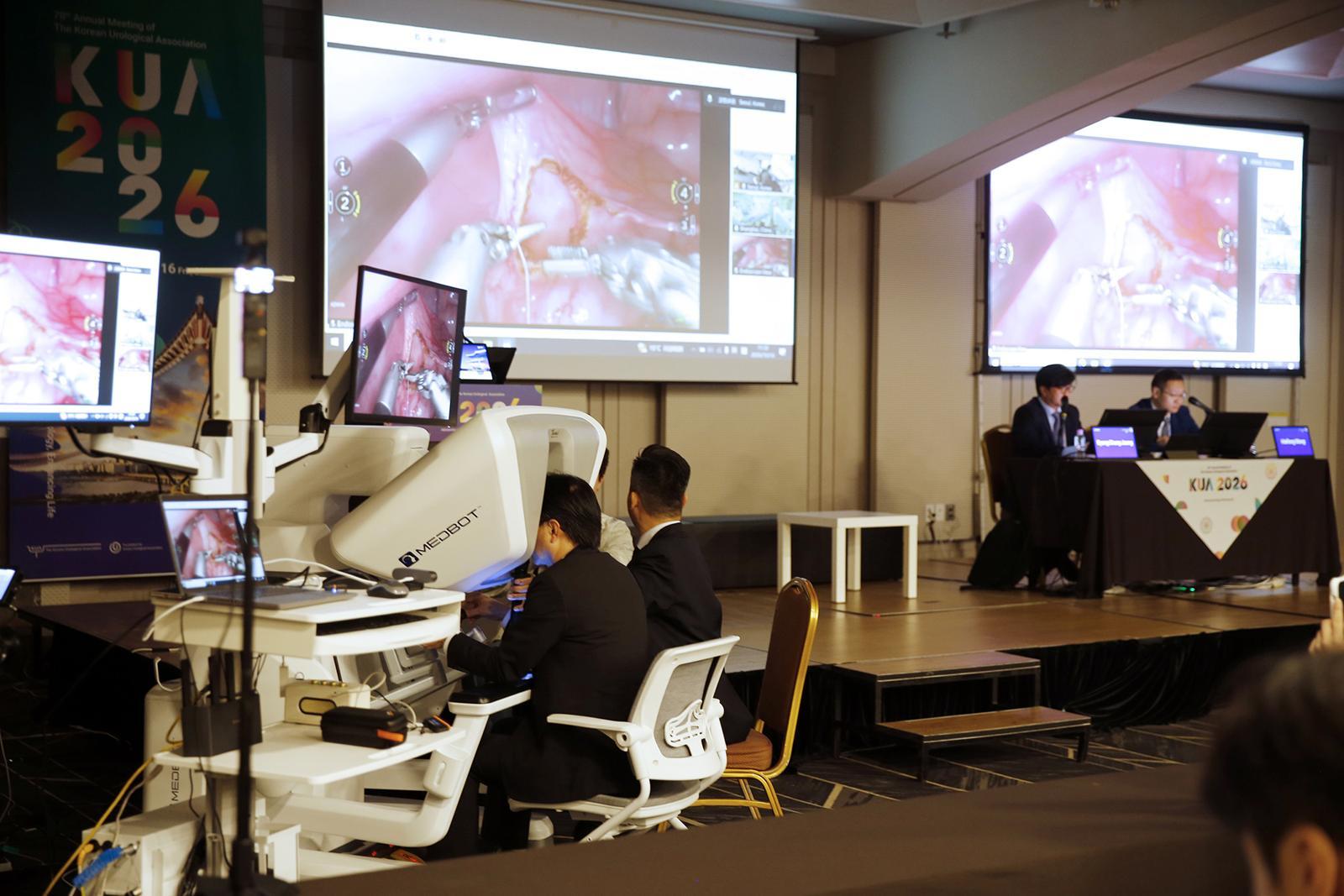
Korea University Anam Hospital announced on the 19th that Professor Kang Seok-ho of the Department of Urology demonstrated cross-border remote surgery connecting Korea and China in real time at the 78th Annual Meeting of the Korean Urological Association (KUA 2026), held at COEX in Seoul on the 16th. Courtesy of Korea University Anam Hospital
Domestic medical staff successfully completed remote surgery on a laboratory animal in Shanghai, China, located 870 km away from Seoul. This is the first case in Korea of implementing cross-border remote surgery using a commercial surgical robot.
Korea University Anam Hospital stated on the 19th that Professor Kang Seok-ho of the Department of Urology successfully performed a remote partial bladder resection on a pig using a surgical robot installed in Shanghai during the Annual Meeting of the Korean Urological Association held at COEX in Gangnam-gu, Seoul, on the 16th. Remote surgery is performed by operating a surgical robot in real time over a communications network when the operating surgeon and the patient are physically separated.
When Professor Kang manipulated the robot through a surgical console (control device) installed in Seoul, the robotic arms at a hospital in Shanghai moved in real time, excising and suturing part of the pig’s bladder. The procedure took about 20 minutes and used the robot “Toumai,” developed by China’s MicroPort MedBot. Partial bladder resection is a procedure mainly performed on patients with bladder cancer.
The first intercontinental remote surgery was a cholecystectomy performed in 2001 by medical staff in New York, United States, on a patient in Strasbourg, France. Since then, more than 1,500 cross-border or long-distance remote surgeries have been carried out worldwide.
Remote surgery is expected to have high utility in medically underserved areas with shortages of medical personnel, as well as in polar regions and disaster zones. However, for actual field application, issues such as regulations on cross-border medical practice, allocation of medical liability, and cybersecurity are cited as challenges that must be resolved.
Professor Kang said, “If institutional foundations for patient safety are established, remote surgery can expand surgical options in areas where access to specialist medical staff is limited,” adding, “In the long term, it can be utilized not only at sea and in polar regions, but also in extreme environments such as outer space.”
Jo Yu-ra
AI-translated with ChatGPT. Provided as is; original Korean text prevails.
ⓒ dongA.com. All rights reserved. Reproduction, redistribution, or use for AI training prohibited.